
How to Adjust Your Front Sight to Get on Target Fast

A shooter stares down the lane at a fresh paper target, spotting three tight holes clustered below the bullseye while the smell of burnt gunpowder hangs in the air. Moving those shots up requires the opposite action at the muzzle: lower the front sight post to raise your bullet impact, or raise the post to bring hits down. For side-to-side misses, move the front sight toward the error, shifting it left if rounds strike left.
The exact steps depend on your firearm build and the adjustment you need. An AR-15 uses a threaded post locked by a spring pin that turns with a prong wrench. An AK platform relies on a barrel drum that needs a screw clamp for height and windage. Handgun blades often require careful taps with a brass punch to slide sideways. Using the right tool for each system prevents stripped parts and keeps your shots landing where you aim.
Move the Front Sight in the Opposite Direction of Your Target Error
Front sight adjustments work in the exact opposite direction of rear sight adjustments. Your eye aligns three points: the rear aperture, the front sight post (the vertical pin at the front of the barrel), and the target downrange. Because the front sight sits at the muzzle, changing its height tilts the entire barrel relative to your line of sight.
If your shots hit low, screw the front sight post down to shorten it. A shorter post forces you to lift the barrel to center the sight, which raises your bullet impact (up-and-down bullet impact). If your shots hit high, screw the front post up to make it taller. A taller post forces you to push the muzzle down, lowering your bullet impact.
For side-to-side bullet impact, known as windage, the same opposite rule applies. Always move the front sight toward your error. If shots hit left of the target center, move your front sight blade left. Shifting the sight left forces you to point the muzzle right when aligning your sights, steering shots back to the bullseye. Remember the simple rule: front opposite, rear same.
Lower or Raise Your AR-15 Front Sight Post for Clean Elevation
Before adjusting your rifle, remove the magazine and pull the charging handle to confirm the firearm chamber is completely clear. AR-15 front sight posts turn on fine threads locked by a spring-loaded detent (a spring-loaded pin that locks the sight in place). Follow these steps to adjust your elevation:
- Check your sight post design: Standard A2 sight posts have four locking notches, while older A1 posts have five. Each notch locks over the spring-loaded detent in the sight base.
- Depress the spring-loaded detent: Push a dedicated prong tool down over the post to press the detent flush with the base. This lets the post rotate freely without gouging the locking pin.
- Rotate the post to adjust height: To raise bullet impact, turn the tool clockwise (looking down from above) to screw the post down. To lower bullet impact, turn the tool counterclockwise to raise the post taller.
- Lock the detent into a notch: Rotate until the detent snaps cleanly into the next notch. Never leave the post resting between notches, or recoil will shake it loose.
- Confirm with a three-shot group: Fire three shots from a bench rest. On a full-length rifle, one click moves impact about 1.25 inches at 100 yards. Continue adjusting until your shots center vertically.
Clamp and Turn AK or SKS Front Sights with a Dedicated Drum Tool
Rifles built on 7.62 platforms, such as the AK-47, AKM, and SKS, adjust both elevation and windage at the front sight block. The threaded sight post sits inside a horizontal cylinder called the sight drum. Follow these steps to make your adjustments:
- Unload and clear the rifle: Drop the magazine, rack the bolt to clear the chamber, check the chamber with your finger, and set the safety on safe.
- Adjust elevation with the post slot: Fit the slotted end of an AK tool over the flats of the front post. Turn counterclockwise to raise the post (lowering bullet impact) or clockwise to screw it down (raising bullet impact).
- Attach the clamp tool for windage: Place a C-clamp sight tool over the front sight hood. Align the hollow port with the side you want the drum to slide toward, and set the driving screw against the opposite side.
- Press the drum toward your miss: If shots hit left, push the drum to the left by tightening the screw from the right. If shots hit right, flip the tool and push the drum to the right.
- Move in tiny increments: AK sight drums are sensitive. Shifting the drum by just the thickness of a fingernail can move your impact several inches at 100 yards. Move it slightly, remove the clamp, and fire three shots to verify.
Drift Handgun Dovetail Sights Gently to Correct Left and Right Misses
Many pistols feature a front sight blade set into a dovetail slot (a horizontal angled channel cut across the slide). While pistol elevation is usually fixed by sight blade height, you can correct horizontal windage by drifting the front blade sideways. Follow this checklist to drift a handgun sight safely:
- Field strip the handgun: Clear the chamber, remove the magazine, and take the slide off the frame. Clamping a fully assembled pistol can crack a polymer frame.
- Clamp the slide in a padded vise: Secure the slide firmly between leather or rubber vise jaws. Never clamp bare slide metal against steel jaws.
- Use a brass drift punch: Set the tip of a brass drift punch (a small metal pin tapped to slide a sight) against the thick base of the sight blade inside the dovetail slot. Soft brass prevents gouging the steel slide.
- Drift the blade toward your error: If your pistol shoots left, tap the front blade toward the left. If it shoots right, tap the blade toward the right.
- Tap lightly with a small hammer: Strike the punch base with light taps using a brass or nylon hammer. Never strike the thin top blade or fragile night sight glass vials.
- Check for bottom mounting screws: Glock front sights do not use dovetails. They attach with a tiny 3/16-inch hex screw under the slide and will snap if hit with a punch.
Align Your Front Sight to Work with a Red Dot Optic
Running backup iron sights alongside a red dot sight allows you to view your iron sights directly through the optic glass, a setup known as co-witness. You can choose absolute co-witness (where the aiming dot aligns directly over the front sight post) or lower one-third co-witness (where the iron sights sit in the lower third of the glass window to give an uncluttered view). If you are building a dual-sight system, review the best iron sights for cowitness with red dot sights in 2026 to confirm your sight heights match your optic mount.
The golden rule when combining these sights is to zero each system independently. Zeroing means adjusting your sight until your shots land exactly where you aim at a chosen distance. Never move your front sight post just to line it up with the red dot reticle.
Turn off your red dot optic first. Fire your groups and adjust your front sight post until your iron sights hit the center of your target. Once your iron sights are locked on target, turn your red dot back on. Adjust the up-and-down and left-to-right click dials on the optic body until the aiming dot matches your bullet holes. Zeroing your iron sights first guarantees both sighting systems hit true without depending on each other.
Avoid Forcing Stuck Detents and Stripping Delicate Sight Threads
Front sight parts are small, finely threaded, and easy to damage under excessive force. Avoiding these common mistakes will save you from stripped screws and damaged hardware:
- Do not use bullet tips to press AR detents: Pushing an AR-15 detent with a live bullet tip is a common shortcut that often slips. The hard tip can scratch your barrel finish, bend the detent pin, or wedge it sideways in its channel.
- Never force a frozen AK sight drum: AK front drums often seize from dried factory grease or carbon fouling. If your clamp tool resists hand turning, stop immediately. Soak the drum in penetrating oil for fifteen minutes to dissolve grime before trying again. Forcing the screw with pliers can bend the sight hood or strip the clamp threads.
- Use thin-wall magnetic drivers on pistol screws: Handguns with screw-on front sights, like Glocks, use tiny 3/16-inch hex screws secured with thread-locking fluid. Standard sockets are too thick to fit the slide recess and will strip the screw corners. Use a dedicated magnetic driver to hold the screw securely.
- Adjust only one axis at a time: If your shots hit low and left, adjust your elevation first. Fire a group to confirm your height, and only then adjust windage. Changing both axes at the same time makes it impossible to tell which adjustment solved your error.
Equip Your Range Bag with the Right Dedicated Sight Adjustment Tools
Carrying dedicated adjustment tools in your range kit prevents damage and makes sighting in fast. Makeshift items like pliers, pocket knives, or flat screwdrivers slip easily, gouging metal coatings and rounding off detent notches.
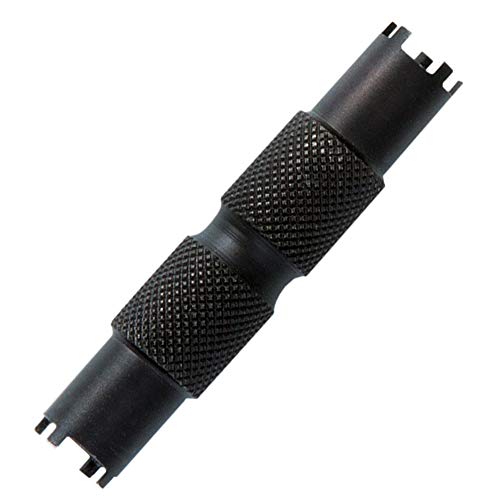
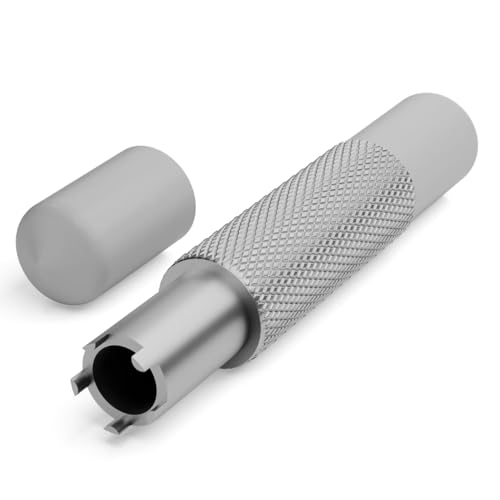
For AR-15 rifles, choose an all-metal prong tool that fits both 4-prong A2 posts and 5-prong A1 styles. A textured center handle gives you a solid grip to depress the spring detent and turn stiff posts with bare hands or gloves. For AK and SKS rifles, keep a heavy-duty C-clamp tool made from hardened steel in your bag. The best AK tools combine a threaded bolt to push the windage drum sideways with an integrated wrench to turn the elevation post. Handgun shooters should carry a thin-wall magnetic hex driver and a brass drift punch to service both screwed and dovetailed front sights safely.

- ARS Mark10.0
ARS Mark is a ranking system developed by bestairriflescopes.com. ARS Mark has no relationship or impact from any manufacturers or sales agent websites. Learn more
- BrandZOEKIM
- ARS Mark9.2
ARS Mark is a ranking system developed by bestairriflescopes.com. ARS Mark has no relationship or impact from any manufacturers or sales agent websites. Learn more
- BrandReal Avid

- ARS Mark9.2
ARS Mark is a ranking system developed by bestairriflescopes.com. ARS Mark has no relationship or impact from any manufacturers or sales agent websites. Learn more
- BrandUrgeeo

- ARS Mark8.8
ARS Mark is a ranking system developed by bestairriflescopes.com. ARS Mark has no relationship or impact from any manufacturers or sales agent websites. Learn more
- BrandAISUNOUTDOOR

- ARS Mark8.6
ARS Mark is a ranking system developed by bestairriflescopes.com. ARS Mark has no relationship or impact from any manufacturers or sales agent websites. Learn more
- BrandAISUNOUTDOOR
- ARS Mark8.6
ARS Mark is a ranking system developed by bestairriflescopes.com. ARS Mark has no relationship or impact from any manufacturers or sales agent websites. Learn more
- BrandPIHSSFULL

- ARS Mark8.4
ARS Mark is a ranking system developed by bestairriflescopes.com. ARS Mark has no relationship or impact from any manufacturers or sales agent websites. Learn more
- BrandFicero

- ARS Mark8.4
ARS Mark is a ranking system developed by bestairriflescopes.com. ARS Mark has no relationship or impact from any manufacturers or sales agent websites. Learn more
- BrandAikertec

- ARS Mark7.6
ARS Mark is a ranking system developed by bestairriflescopes.com. ARS Mark has no relationship or impact from any manufacturers or sales agent websites. Learn more
- BrandNanchroadly
Last update on 2026-09-30 / Affiliate links / Images, Product Titles, and Product Highlights from Amazon Product Advertising API
FAQs
Which way do I turn an AR-15 front sight to raise bullet impact?
Turn the front sight post clockwise (looking down from above the rifle) to raise your bullet impact. Screwing the post clockwise lowers it into the base, which forces you to tilt the barrel upward to aim, lifting your shots on the target.
How far does one click move the bullet impact on an AR-15 front sight?
On a rifle with a 20-inch barrel, one click on an A2 front sight shifts bullet impact roughly 1.25 inches at 100 yards. On a carbine with a shorter sight distance, one click moves impact slightly more, around 1.5 to 1.75 inches at 100 yards.
Can I adjust my front sight if my firearm only has rear windage knobs?
Yes, you can adjust your front sight post for vertical elevation changes while using the rear sight for windage. Keep your front sight centered and screw the post up or down until your vertical bullet impact hits your target point of aim.
Why is my AK front sight drum stuck and refusing to move?
AK front sight drums often lock up from dried storage grease, carbon fouling, or tight factory tolerances. Apply penetrating oil to both sides of the drum, wait fifteen minutes, and use a dedicated steel clamp tool to apply steady mechanical force without hammering the sight block.


12 Best 22 Pcp Air Rifle For Hunting of 2026 With Quiet Power

7 Best 22 Pcp Air Rifle Under 300 of 2026 For Backyard Pest Control

10 Best 22 Break Barrel Air Rifles of 2026 For Backyard Pest Control

10 Best 30 Caliber Pcp Air Rifle of 2026 For Medium Game

Top Best 177 Air Rifle Under 100: Budget-Friendly Picks for 2026

How to Safely Reload Shotgun Shells at Home

11 Best Co2 Air Rifle For Pest Control of 2026 To Ensure Humane Dispatch

12 Best Inexpensive Air Rifles of 2026 For Dependable Backyard Accuracy






