
How to Adjust Iron Sights to Center Your Shots

Spent powder hangs in the air as a shooter peers downrange, staring at three fresh holes clustered two inches to the left of the bullseye. Fixing that gap comes down to one simple rule: move your rear sight the direction you want hits to go, but shift the front sight the opposite way. Following that method prevents you from chasing shots across the paper or burning through boxes of ammunition.
The exact steps vary with the hardware on your firearm. A click-adjustable rifle sight lets you spin dials by hand, while fixed pistol sights require gently drifting the metal sideways with a brass punch. Shooting distance matters just as much, since one click shifts your bullet impact far more at fifty yards than at seven. The walk-through below covers the proper directions, tools, and steps to get your shots centered on the paper without the guesswork.
Remember That Rear Sights Follow the Hit and Front Sights Do the Opposite
Adjusting your iron sights comes down to one golden rule that never changes. Move your rear sight in the exact direction you want your bullet holes to go, but move your front sight in the opposite direction. If your shots land to the left of the bullseye, you move your rear sight to the right. If your shots hit low on paper, you raise your rear sight up. The rear sight always tracks the correction you want to make on the target.
Front sights work in reverse because of how your eye lines up the barrel with the target. When you lower your front sight post, you have to tilt the front tip of your firearm upward to bring that post back into the center of the rear notch. Tilting the barrel upward angles the path of the bullet higher into the air, which raises your shot group. So if your rifle hits low, screwing the front sight post down brings your bullet impacts up toward center.
Two terms describe these movements on any firearm. Windage means your left-and-right adjustment. Elevation means your up-and-down adjustment. Mixing up these directions wastes time and ammunition. When shooters turn dials the wrong way, their next group lands twice as far from the center ring. Memorize the basic rule before you touch any screws: rear follows the hit, front goes opposite.
Set Up a Steady Bench Rest Before You Touch Any Dials
Never try to adjust your iron sights while shooting offhand from a standing position. Your natural body wobble and muscle fatigue will scatter shots across paper, making it impossible to tell whether the sight is off or your hands shook. Follow these steps to establish a reliable baseline:
- Unload and clear the firearm. Drop the magazine, pull back the bolt or slide, and visually inspect the empty chamber. Make sure the firearm points in a safe direction downrange before setting your gear on the bench.
- Set your target at a controlled distance. Place your target at 25 yards for rifles or 10 to 15 yards for handguns. Setting your sights at this distance is known as zeroing, which means adjusting your sights so your shots land exactly where you aim. Starting closer ensures all your initial shots hit paper so you can see what needs correcting.
- Support the firearm on sandbags or a shooting rest. Rest the rifle handguard or pistol dust cover on a stable shooting bag. Keep the bare barrel off the bags, because pressure on the barrel changes how the metal vibrates and shifts your point of impact. Rest both elbows flat on the bench to relax your upper body.
- Fire a slow three-shot group. Align the top of the front sight post level with the top edges of the rear notch, keeping equal light visible on both sides of the post. Place that sight picture right on the center bullseye. Press the trigger smoothly straight back without rushing, firing three careful rounds at the exact same aiming spot.
- Locate the center of your group. Walk downrange or use spotting binoculars to examine your target. Ignore single stray holes. Find the middle point between all three bullet holes, and measure how many inches that cluster sits away from the center bullseye.
Turn Click Dials on Your Rear Sight to Walk Hits onto Center
Most modern rifles and backup flip-up iron sights, often called BUIS, feature click-adjustable rear dials. These dials let you make fast windage and elevation adjustments without needing specialty tools. You will usually find a windage knob on the right side of the sight housing and an elevation dial or rotating wheel beneath the rear aperture ring.
Look closely at the markings stamped into your rear sight base. You will typically see an arrow marked with the letter "R" on the windage knob. Turning the knob in the direction of that arrow pushes the rear aperture to the right, which shifts your bullet impacts to the right. If your three-shot group lands two inches to the left, turn that dial in the "R" direction to steer your shots back toward the center ring.
The distance between you and the target determines how much each click moves your shot. Most rifle rear sights move your bullet impact roughly one-half inch at 100 yards with every single click. When you shoot at shorter distances, that click value shrinks. At 50 yards, that same click moves your shot one-quarter of an inch. At 25 yards, one click moves your impact only one-eighth of an inch. To move your bullet group one inch on paper at 25 yards, you must turn the dial eight full clicks.
If you run backup iron sights on a modern sporting rifle alongside an optical sight, you might use them for co-witnessing. Co-witnessing means lining up your backup iron sights through the optic glass so that both sighting systems agree. Knowing your click adjustments helps you calibrate reliable iron sights for cowitness with red dot sights so you have a working backup ready if your primary optic battery dies.
Adjust Front Sight Posts Carefully to Raise or Lower Your Group
Many classic rifle platforms, including standard A1 and A2 military-style setups, handle elevation adjustments directly at the front sight post instead of the rear sight. The front post sits inside a threaded cylinder held steady by a small, spring-loaded detent pin. Follow these steps to adjust your front post safely:
- Clear the firearm completely. Lock the bolt open and verify the chamber is empty before placing your fingers or tools near the muzzle.
- Locate the spring-loaded detent pin. Look at the base of the front sight post. You will see a small metal pin resting in one of the notches cut into the circular collar of the post. This pin keeps the post from spinning loose under recoil.
- Depress the detent pin. Push the small pin downward so it clears the notch. You can depress this pin with the nose of a dummy cartridge or a punch, but a dedicated multi-prong front sight tool fits over the post and depresses the pin evenly without slipping off.
- Rotate the post in the correct direction. Look for the word "UP" and an arrow stamped into the front sight housing. Turning the post in the direction of the arrow screws the post down into the base. Screwing the post down makes the barrel point higher, which moves your bullet impact up on the target. If your shots are hitting low, rotate the post toward "UP". If your shots are hitting high, rotate the post the opposite way to raise the post out of the base.
- Ensure the detent locks into a notch. Turn the post until the detent pin clicks back up into the next available notch. Never leave the post resting halfway between notches, because shooting recoil will turn the post and ruin your zero.
Drift Fixed Dovetail Sights Gently When You Lack Adjustment Knobs
Many handguns and traditional hunting rifles do not have click dials or threaded posts. Instead, their metal sights sit tightly inside angled grooves cut across the slide or barrel, known as dovetail slots. Adjusting windage on these firearms requires drifting, which means gently tapping the metal sight base sideways inside that groove.
The standard rear-sight rule still applies to fixed pistol sights. If your handgun hits two inches left of your aiming point, you must drift the rear sight base to the right. If your gun hits to the right, drift the rear sight base to the left. If you choose to drift the front sight instead, remember to push it in the opposite direction of where you want your shots to go.
Never hit your firearm sights directly with a steel hammer or a steel punch. Hard steel will dent the metal, ruin protective surface coatings, and shatter delicate glass tritium vials inside night sights. Clamp your pistol slide securely inside a padded bench vise with rubber or leather jaw inserts. Lay a brass punch or a nylon-tipped drift against the lower base of the sight, right above the dovetail seam, and tap the punch with a lightweight hammer.
Make tiny adjustments. Because handguns have a short sight radius, which is the distance between the front and rear sight, shifting a sight by just a few thousandths of an inch moves bullet hits several inches at 15 yards. Draw a light pencil line across the sight base and the slide before you tap so you can monitor how far the metal slides.
Check Your Grip and Trigger Pull Before Blaming Your Iron Sights
Before you tap sights with a brass punch or spin click dials, confirm that your shooting technique is not causing the error. Small flaws in your grip and trigger press produce shot patterns that look like misaligned sights. Review this checklist at the range:
- Trigger snatching: Slapping or jerking the trigger backward pulls the muzzle down and to the left for right-handed shooters. Squeeze the trigger straight back with steady pressure until the shot breaks on its own.
- Inconsistent cheek weld: Placing your cheek at a different spot on the rifle stock between shots changes the angle of your eye looking through the rear aperture. Rest your cheekbone against the exact same spot on the comb for every single shot.
- Blurry front sight post: The human eye cannot focus cleanly on the rear sight, front sight, and distant target at the same time. Keep your optical focus locked sharply on the crisp top edge of the front sight post, allowing the rear ring and the bullseye to blur slightly.
- Sight canting: Leaning the firearm slightly to the left or right angles the bullet trajectory away from center. Keep your front sight post perfectly vertical before pressing the trigger.
- Peeking at the target: Lifting your head off the stock right before the shot breaks to see where the bullet lands pushes hits high. Keep your eye behind the sights until recoil fully settles.
Choose the Right Adjustment Tools to Avoid Damaging Your Sights
Having dedicated adjustment gear makes zeroing your iron sights fast and prevents costly cosmetic damage to your firearms. Improvising with knives, loose flathead screwdrivers, or bare steel nails often leads to slipped tools that scratch barrel finishes or gouge aluminum sight ears.
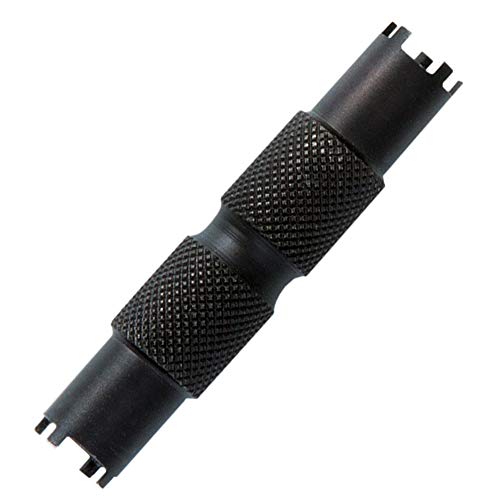
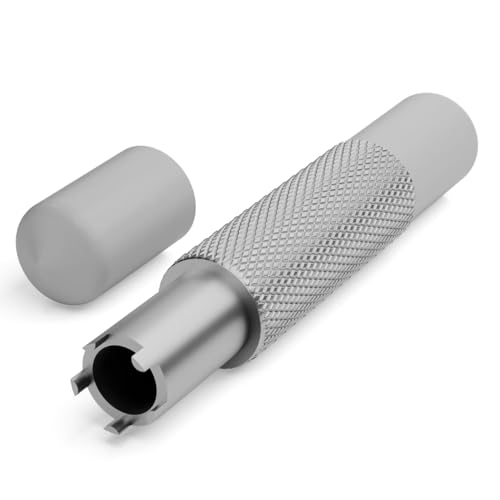
When selecting tools for adjusting rifle front posts, verify the prong layout. Standard front sight posts generally feature either a four-notch pattern common on newer military-style setups or a five-notch pattern found on older vintage designs. Dual-ended elevation tools that combine four-prong and five-prong ends allow you to service multiple firearms with a single pocket tool. Look for tools constructed from solid metal with textured, non-slip knurling along the center grip so you can depress stiff spring detents easily while wearing gloves outdoors.
For handguns with dovetail slots, consider a screw-driven sight pusher tool instead of a hammer and punch. Sight pushers use threaded crossbars to apply smooth, controlled mechanical pressure against the sight base. This method eliminates the shock of hammer strikes, protects your slide rails from bending inside a vise, and lets you make precise micro-adjustments at the shooting bench.

- ARS Mark9.6
ARS Mark is a ranking system developed by bestairriflescopes.com. ARS Mark has no relationship or impact from any manufacturers or sales agent websites. Learn more
- BrandTRUGLO
- ARS Mark9.2
ARS Mark is a ranking system developed by bestairriflescopes.com. ARS Mark has no relationship or impact from any manufacturers or sales agent websites. Learn more
- BrandReal Avid

- ARS Mark9.0
ARS Mark is a ranking system developed by bestairriflescopes.com. ARS Mark has no relationship or impact from any manufacturers or sales agent websites. Learn more
- BrandVisiofire

- ARS Mark8.8
ARS Mark is a ranking system developed by bestairriflescopes.com. ARS Mark has no relationship or impact from any manufacturers or sales agent websites. Learn more
- BrandVisiofire

- ARS Mark8.6
ARS Mark is a ranking system developed by bestairriflescopes.com. ARS Mark has no relationship or impact from any manufacturers or sales agent websites. Learn more
- BrandAISUNOUTDOOR
- ARS Mark8.6
ARS Mark is a ranking system developed by bestairriflescopes.com. ARS Mark has no relationship or impact from any manufacturers or sales agent websites. Learn more
- BrandPIHSSFULL

- ARS Mark8.6
ARS Mark is a ranking system developed by bestairriflescopes.com. ARS Mark has no relationship or impact from any manufacturers or sales agent websites. Learn more
- BrandOZARK ARMAMENT

- ARS Mark8.0
ARS Mark is a ranking system developed by bestairriflescopes.com. ARS Mark has no relationship or impact from any manufacturers or sales agent websites. Learn more
- BrandGeneric
Last update on 2026-09-30 / Affiliate links / Images, Product Titles, and Product Highlights from Amazon Product Advertising API
FAQs
Which way do I move my rear sight if my shots hit to the left?
Move your rear sight to the right. The rear sight always moves in the direction you want your bullet holes to travel on the paper. Shifting the rear aperture or notch to the right brings your point of impact back to the center bullseye.
Why does moving the front sight up make bullets hit lower?
Raising the front sight post forces you to tip the muzzle of your firearm downward to keep the sights aligned with your eye. Angling the barrel downward points the bore lower, which pushes your bullet impacts lower on the target.
How far will one click on an iron sight move my shot at 25 yards?
On most rifle sights with half-minute click values, one click moves your bullet impact roughly one-eighth of an inch at 25 yards. Because the distance is one-fourth of 100 yards, the click value is divided by four. You will need roughly eight clicks to move your hit one full inch at that range.
Can I adjust fixed pistol iron sights without buying a specialized tool?
You can adjust fixed dovetail sights using a padded bench vise, a lightweight hammer, and a soft brass or nylon punch. The brass punch transfers gentle tapping force to the sight base without denting the metal or scratching the slide finish.
What should I do if my iron sight runs out of adjustment before centering?
If your rear dial bottoms out and your shots still miss center, check your mounting hardware first. A loose base, a canted barrel, or an improperly seated front sight will throw off alignment. If the parts are secure and the problem remains, have a qualified gunsmith inspect the firearm for a misaligned barrel or crooked dovetail cut.


12 Best 22 Pcp Air Rifle For Hunting of 2026 With Quiet Power

7 Best 22 Pcp Air Rifle Under 300 of 2026 For Backyard Pest Control

10 Best 22 Break Barrel Air Rifles of 2026 For Backyard Pest Control

10 Best 30 Caliber Pcp Air Rifle of 2026 For Medium Game

Top Best 177 Air Rifle Under 100: Budget-Friendly Picks for 2026

How to Safely Reload Shotgun Shells at Home

11 Best Co2 Air Rifle For Pest Control of 2026 To Ensure Humane Dispatch

12 Best Inexpensive Air Rifles of 2026 For Dependable Backyard Accuracy






