
How to Adjust a Peep Sight on a Compound Bow

Most archers assume fixing an off-center peep sight always requires an immediate trip to a bow shop and an expensive bow press. That belief is usually wrong, because you can solve most view issues at home by sliding the sight along the string to adjust height, or nudging the release loop to fix sideways rotation. Forcing your neck to reach an off-target peep ruins your accuracy, so the small aiming window must meet your eye naturally at full draw.
The exact fix depends on whether the ring sits at the wrong height or simply turns sideways when you pull back. Peeps with a rubber alignment tube snap straight on their own, while tubeless metal peeps rely on string twists to stay square. Some fixes require a bow press (a tool that compresses bow limbs to relax string tension), while others take just a gentle turn by hand. Here is how to line up your sight safely.
The Short Version
- Find your anchor first: Draw your bow with your eyes closed, settle your hand against your jaw, and open your aiming eye to verify if the peep sits directly in front of your pupil.
- Adjust the height: Loosen the serving thread (the protective cord wrapped around the string fibers), slide the peep gently up or down the string strands, and tie it tight once your head stays upright at full draw.
- Correct rotation: Nudge your D-loop (the small cord loop clamped on the string for your release aid) to steer the peep straight, or use a bow press to add or remove half-twists in the bowstring.
- Know your limits: Never use razor blades against bare bowstring strands, avoid makeshift bow presses, and visit an archery pro shop if your string shows signs of fraying or uneven wear.
Finding Your Natural Anchor Point
Before you move your peep sight, you must know where your body naturally wants to rest at full draw. A peep sight is a small aiming ring split between the bowstring strands. When you draw the bow, that small hole sits an inch or two from your aiming eye. If the peep sits even an eighth of an inch too high or too low, you will unconsciously duck your chin, crane your neck, or float your release hand in the air to see through it. Changing your body to fit the bow ruins your form and creates inconsistent arrow groups.
Your anchor point is the consistent spot where your release hand touches your face every time you pull the bow back. For most archers using a mechanical release aid, this means resting the groove between your index and middle knuckles along the bottom edge of your jawbone, while the bowstring lightly touches the tip of your nose and the corner of your mouth. When your anchor point stays identical from shot to shot, your arrows strike the target with repeatable precision.
To check whether your peep sight matches your natural anchor point, use the eyes-closed drill:
- Stand comfortably at a safe distance from a target with an arrow loaded and pointed at the backstop.
- Close both eyes completely.
- Draw the bow smoothly back to your full draw position.
- Settle your hand into your jawbone until your posture feels relaxed, upright, and steady. Do not tilt your head forward or backward.
- Open your aiming eye.
When you open your eye, look directly forward. You should look straight through the center of the peep sight aperture without moving your neck, adjusting your grip, or lifting your chin. If you find yourself looking at the black metal housing above the hole, your peep is sitting too low. If you look underneath the peep hole at the bowstring, your peep is sitting too high. Mastering this step is a basic part of learning how to use a bow sight with repeatable accuracy.
How to Adjust Peep Sight Height Step by Step
Moving a peep sight up or down requires patience and a light touch. Bowstrings are held under hundreds of pounds of tension even at rest. Forcing a peep along tight string fibers can cut the individual strands or cause the peep to shoot out unexpectedly. Follow these steps to adjust your peep height safely.
- Inspect the current serving wraps: Look closely at how the peep sight is anchored. A properly installed peep has serving thread wrapped tightly above and below the sight, and often around the center groove of the peep itself. Serving is protective thread tightly wrapped around bowstring strands to prevent friction wear. Check whether the top and bottom knots are tied separately from the peep housing or if the whole assembly is bound together in one continuous wrap.
- Loosen the serving knots: If your peep is secured with independent top and bottom tie-offs, you can often push those thread wraps up or down by hand or with a smooth, blunt tool such as a plastic pick or wooden toothpick. Never use a utility knife, razor blade, or metal screwdriver near the bare bowstring fibers. Slicing even one or two thin string strands weakens the bowstring and risks catastrophic string failure. If the serving thread is glued with archery adhesive or wrapped too tight to move, carefully cut only the serving thread using a blunt-tipped seam ripper, cutting outward away from the bowstring.
- Slide the peep sight: Apply a small drop of bowstring wax directly above and below the peep sight. The wax lubricates the fibers so the peep can move without excessive friction. With the bow at rest, pinch the string strands lightly and slide the peep sight up or down in tiny movements. A shift of just one-sixteenth of an inch on the string makes a noticeable difference to your eye at full draw. If the peep resists movement, do not force it. You will need to relax string tension using a bow press (a clamp tool that compresses bow limbs to relax string tension).
- Confirm the new position at full draw: Nock an arrow, point the bow in a safe direction at a target, and repeat the eyes-closed drill. Draw the bow, find your natural bone-on-bone anchor along your jaw, and open your eye. Verify that your front sight housing centers perfectly inside the circle of the peep sight. If the peep still sits slightly off, let down smoothly, slide the peep another tiny fraction, and draw again until the sight window appears centered naturally.
- Tie the peep securely in place: Once the height is correct, you must lock the peep sight so it cannot slide during shooting. Use dedicated archery serving thread or durable braided fishing line. Wrap tight loops above the peep, below the peep, and around the middle groove of the peep housing. Finish each section with a secure knot, trim the tag ends to about one-eighth of an inch, and quickly tap the tips with the flame of a lighter to mushroom the nylon cord, preventing the knot from pulling through.
How to Fix a Crooked or Twisted Peep Sight
A peep sight that sits at the perfect height does no good if it twists sideways when you pull the string back. When a tubeless peep rotates, you stare at a flat slit of metal instead of a round opening, blocking your view of your front sight pins. Peep rotation usually happens because modern bowstrings stretch over time, weather changes string tension, or the D-loop has drifted out of alignment.
- Examine the peep angle at rest and full draw: Look at your peep sight while the bow hangs on a rack. Then, draw the bow back in front of a mirror or have a friend watch. Notice how much the peep turns as the string travels from rest to full draw. A healthy bowstring should bring the peep sight square to your eye just as your hand touches your anchor point. If it finishes a quarter-turn or half-turn off target, you need to correct the rotation.
- Adjust the D-loop direction: The fastest way to fix minor peep rotation without using bow shop equipment is by rotating your D-loop. Your D-loop is the small cord loop clamped on the string for your release aid. Because your release aid pulls straight back on the D-loop, the loop pulls the bowstring into a specific alignment at full draw. Using a pair of needle-nose pliers, grasp the D-loop knots on the center serving. Gently twist the D-loop around the serving in the direction you want the peep sight to rotate. If your peep is turned slightly left at full draw, twist your D-loop slightly right. Draw the bow again to check if the loop pulls the peep straight.
- Rebalance the string strands: If D-loop adjustments cannot turn the peep far enough, the string strands split unevenly around the peep. With the string tension slightly relaxed, count the strands on each side of the peep. If one side holds twelve strands and the other holds sixteen, the string pulls unevenly when stretched. Shifting two strands from the heavy side to the light side changes the rotational balance and can bring a stubborn peep into square alignment.
- Add or remove half-twists with a bow press: For major rotation issues, the entire bowstring needs a twist adjustment. Place the bow in an approved bow press and compress the limbs just enough to take tension off the string loops. Slip the top loop off the cam post. Adding a half-twist or full twist to the string will rotate the peep sight significantly. Adding a twist turns the peep one direction, while removing a half-twist turns it the opposite direction. Reattach the string loop to the post, relax the bow press, and check the alignment at full draw.
Tubing Peeps vs Tubeless Aluminum Peeps
Compound bow peep sights fall into two main designs: tubeless aluminum models and rubber tubing models. Understanding how each style functions helps you decide whether you can fix your rotation issues with simple adjustments or if you should change your sight style entirely.
A rubber tubing peep uses a flexible silicone or rubber hose attached to a small barb on the side of the peep housing. The opposite end of the hose anchors to a bow cable or cable slide. When you draw the bow, the rubber tube stretches tight, physically pulling the peep sight straight every single time you pull back. Tubing peeps are forgiving on older bows or budget strings that stretch frequently. They guarantee that your sight aperture faces straight ahead, even if your string twists severely at rest.
Rubber tubing has clear drawbacks, however. The rubber hose is exposed to sunlight, sweat, and cold weather, which causes the material to dry out, rot, and crack. If the tubing snaps during a draw, the rubber can whip backward into your eye or face. Rubber tubing also creates noticeable vibration, adds extra noise to your shot, and robs your bow of roughly three to five feet per second of arrow velocity. Archers who rely on quiet equipment, such as hunters using the best bow sight for treestand hunting, usually avoid tubing peeps for this reason.
Tubeless aluminum peeps have no moving parts and no rubber attachments. They consist of a precision-machined metal ring with angled grooves cut into the sides where the bowstring strands seat. A tubeless peep is silent, lightweight, and durable enough to last for years without maintenance. Because it has no hoses attached, it cannot dry rot or snap back at your face. The trade-off is that a tubeless peep requires a well-built, pre-stretched bowstring and proper initial setup. If your string stretches or your D-loop slips, a tubeless peep will twist sideways until you adjust the string or loop.
Warning Signs and Safety Limits
Working on a compound bow string carries real physical risks. The limbs store substantial mechanical energy, and the bowstring keeps that energy contained. Keep this safety checklist in mind whenever you adjust your peep sight at home:
- Look for strand fraying: If you spot frayed, fuzzy, or cut fibers near the peep sight, stop handling the bow immediately. A bowstring under draw weight holds enough tension to cause severe injury if it snaps. Do not draw the bow again until an archery pro shop inspects or replaces the string.
- Check for peep slippage: If your peep sight slides up or down the string without any resistance when touched with your finger, it is dangerously loose. A loose peep sight can shoot out of the string like a projectile during release. Always tie the sight securely before shooting an arrow.
- Never use makeshift limb presses: If you must add twists to your bowstring or if the string fibers are too tight to move the peep by hand, use an approved archery bow press. Never compress compound bow limbs using ratchet tie-down straps, bar clamps, or car jacks. Makeshift tools slip easily, bend aluminum risers, shatter composite limbs, and cause serious injuries.
- Avoid extreme peep angles: Peep sights feature string grooves cut at specific angles, usually 37 degrees or 45 degrees. If your bow has a short axle-to-axle length, the string bends at a sharp angle at full draw. Using a peep with the wrong groove angle pinches the string fibers, distorts your sight hole into an oval, and damages string serving over time.
- Know when to visit a technician: If you add multiple twists to your string and the peep still turns unpredictably, your bowstring may have internal strand separation or uneven stretching. A qualified technician at a local archery shop has the specialized press equipment and string materials to reset your peep, install fresh center serving, or build a balanced string setup.
Choosing the Right Peep Sight for Your Setup
If your existing peep sight is cracked, bent, or constantly rotating out of place, replacing it with a better-matched unit solves many headaches. When looking for a replacement peep sight, pay attention to the aperture size, the string groove angle, and the housing material.
Aperture size controls how much light reaches your eye and how easily you can see your front sight ring. Smaller openings, such as one-eighth of an inch, provide a sharp, precise view that works well for target archery in bright sunlight. Larger openings, such as three-sixteenths or one-quarter of an inch, allow significantly more light to enter your eye. A wider aperture is preferable for hunting at dawn or dusk, as well as for archers who shoot short hunting bows where the peep sits farther away from the eye.
Housing angle determines how cleanly the peep sits between the strands at full draw. Short hunting bows create steep string angles that require a 45-degree peep groove to keep the sight hole round at full draw. Longer target bows create wider, flatter string angles that work best with 37-degree grooves. Selecting a peep made from durable aluminum alloy with internal anti-glare hoods prevents light reflections from blinding your view when shooting toward the sun, giving you a clean, repeatable sight picture every time you draw.

- ARS Mark10.0
ARS Mark is a ranking system developed by bestairriflescopes.com. ARS Mark has no relationship or impact from any manufacturers or sales agent websites. Learn more
- BrandFUNTRESS
- ARS Mark10.0
ARS Mark is a ranking system developed by bestairriflescopes.com. ARS Mark has no relationship or impact from any manufacturers or sales agent websites. Learn more
- BrandFUNTRESS
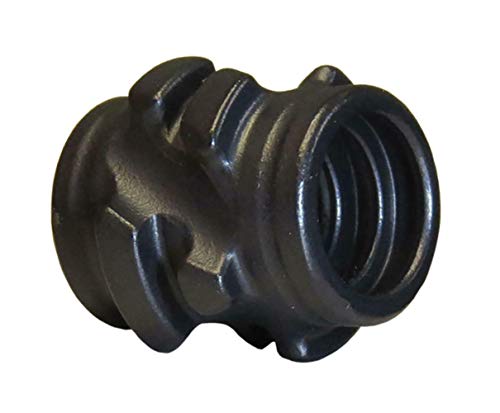
- ARS Mark9.6
ARS Mark is a ranking system developed by bestairriflescopes.com. ARS Mark has no relationship or impact from any manufacturers or sales agent websites. Learn more
- BrandHamskea

- ARS Mark9.2
ARS Mark is a ranking system developed by bestairriflescopes.com. ARS Mark has no relationship or impact from any manufacturers or sales agent websites. Learn more
- Brand- QI HUO JU -

- ARS Mark8.8
ARS Mark is a ranking system developed by bestairriflescopes.com. ARS Mark has no relationship or impact from any manufacturers or sales agent websites. Learn more
- BrandTRUGLO

- ARS Mark8.6
ARS Mark is a ranking system developed by bestairriflescopes.com. ARS Mark has no relationship or impact from any manufacturers or sales agent websites. Learn more
- BrandSOPOGER

- ARS Mark8.4
ARS Mark is a ranking system developed by bestairriflescopes.com. ARS Mark has no relationship or impact from any manufacturers or sales agent websites. Learn more
- BrandSPG

- ARS Mark8.0
ARS Mark is a ranking system developed by bestairriflescopes.com. ARS Mark has no relationship or impact from any manufacturers or sales agent websites. Learn more
- BrandPOEARCUS
Last update on 2026-09-30 / Affiliate links / Images, Product Titles, and Product Highlights from Amazon Product Advertising API
FAQs
Why does my peep sight turn sideways when I draw my bow?
Peep sight rotation happens when your bowstring stretches unevenly, changes temperature, or when your D-loop slips out of line. Modern synthetic strings can settle over several hundred shots, causing the internal strands to twist. Minor rotation can usually be fixed by rotating your D-loop slightly in the opposite direction with pliers.
Can I move my peep sight up or down without a bow press?
Yes, you can slide most peep sights small distances without a bow press if the serving wraps are loosened first. Apply a light dab of bowstring wax to reduce friction, and gently slide the peep along the strand split. Never use sharp metal tools or force a tight peep, as excessive friction can cut individual bowstring strands.
How do I know if my peep sight aperture is the right size?
At full draw, the circular opening of your peep sight should frame the outer ring of your front bow sight housing with a small, even border of daylight around it. If your front sight ring extends past the edges of the peep, your aperture is too small. If the front sight looks tiny and swims inside a giant opening, your aperture is too large.
What happens if I shoot my bow with a loose peep sight?
Shooting a bow with a loose peep sight causes erratic arrow flight because the sight moves slightly on every shot. Even worse, the sudden shock and vibration of the string snapping forward can launch a loose peep out of the strands like a projectile. Always tie your peep sight tightly above, below, and around the center groove before releasing an arrow.


12 Best 22 Pcp Air Rifle For Hunting of 2026 With Quiet Power

7 Best 22 Pcp Air Rifle Under 300 of 2026 For Backyard Pest Control

10 Best 22 Break Barrel Air Rifles of 2026 For Backyard Pest Control

10 Best 30 Caliber Pcp Air Rifle of 2026 For Medium Game

Top Best 177 Air Rifle Under 100: Budget-Friendly Picks for 2026

How to Safely Reload Shotgun Shells at Home

11 Best Co2 Air Rifle For Pest Control of 2026 To Ensure Humane Dispatch

12 Best Inexpensive Air Rifles of 2026 For Dependable Backyard Accuracy






