
How to Adjust Peep Sight Rotation on a Compound Bow

Most archers assume a crooked peep sight means rushing to a bow shop for major repairs. That is rarely true, because you can usually realign the opening at home in minutes. Nudging the D-loop (the small cord loop where your release aid clips) or adding half a twist to the bowstring will pull the aiming window square with your eye at full draw.
The right method depends on how far the ring has turned and the gear you have on hand. A tiny tilt only takes a quick turn of the loop with pliers, while a quarter turn requires a bow press (a tool that flexes the bow limbs to slacken the string). A fresh string also just needs time to settle, whereas an old, fraying string may keep twisting on every shot. Here is how to pick the right fix and get your sight picture clear again.
Why Peep Sights Rotate Out of Alignment
A peep sight is the small aiming ring fitted directly between the strands of your bowstring. When you pull your compound bow to full draw, that ring must point directly at your eye. This gives you a clean, circular window to look through so you can see your sight pins and your target. If the ring twists sideways by even a fraction of an inch, the sight picture disappears, and you find yourself staring at solid metal or plastic instead of your target.
To understand why this twisting happens, look at how a bowstring is built. Bowstrings are not single solid cords. They are made from individual strands, which are single synthetic fibers bundled and twisted tightly together under hundreds of pounds of tension. The peep sight sits wedged in the center of that bundle, dividing the strands into two halves. As you draw the bow, the cams turn, tension spikes, and the entire string naturally wants to twist or untwist along its length.
Several common factors cause the peep sight to rotate out of square over time:
- String settling and stretch: New bowstrings naturally stretch during the first few hundred shots. As the strands settle into their permanent track, the natural rotation of the string shifts slightly.
- Temperature and weather changes: Direct sunlight, summer heat, and damp air cause synthetic string fibers to expand or contract. That small change shifts strand tension and turns the peep sideways.
- Uneven strand division: If your peep sight was installed with thirteen strands on one side and eleven on the other, the two halves pull with uneven force at full draw.
- D-loop slippage: The small cord loop where your release clips can loosen or slide around the center serving (the protective thread wrapped around the string), losing its ability to pull the string straight.
Understanding what causes the twist makes it much easier to choose the right fix. Minor alignment errors can be corrected in minutes at home, while larger turns require adjusting the string itself. To learn more about aligning your sight pins once your peep is straight, read our guide on how to use a bow sight for steady shooting.
Steps to Straighten Your Peep Sight by Adjusting the D-Loop
The D-loop is the small nylon cord loop tied to the bowstring where your mechanical release aid clips on. When you pull the bow back, your release pulls directly on this loop. Because the knots clamp tightly around the string serving, turning the loop places twisting pressure on the string. If your peep sight is only turned an eighth of a turn or less, nudging your D-loop is the fastest and easiest press-free fix.
- Check your peep sight angle at full draw: Draw your bow with an arrow knocked and pointed at a safe backstop to see exactly which way the peep angles. Reason: Bowstrings twist under tension, so you cannot judge the true angle of the peep while the bow rests on a table.
- Determine the required direction of rotation: Look at whether the peep ring needs to turn clockwise or counter-clockwise to square up with your pupil. Reason: You must move the D-loop in the exact direction you want the peep sight to follow.
- Grip the D-loop knots with needle-nose pliers: Place the jaws of your pliers around the base of the top and bottom knots near the serving. Reason: Pliers provide the leverage required to break the static grip of the waxed cord without fraying the loop.
- Nudge both knots slightly around the center serving: Twist the knots just a tiny fraction of a turn in the direction the peep needs to go. Reason: Moving both knots together keeps the loop straight and prevents uneven torque on your release aid.
- Draw the bow again to verify the sight picture: Pull to your anchor point and confirm that the peep sight now faces your eye squarely. Reason: Full draw tension shows whether your small adjustment was enough to straighten the aperture.
- Snug the D-loop knots with opening pliers: Insert the tips of your needle-nose pliers inside the loop and squeeze the handles apart to seat the knots firmly. Reason: Tightening the loop prevents it from slipping back to its old crooked position when you release an arrow.
Using a Clip-In String Tuner for Fine Adjustments
Sometimes your D-loop is already sitting straight, or turning it does not move the peep quite far enough. When you need a tiny correction without using a bow press, a clip-in string tuner provides an ideal solution. A string tuner is a lightweight, durable plastic spacer that clips directly between the string strands. By slightly spreading the strands apart, it redirects fiber tension and rotates the peep sight a few degrees.
- Check the degree of misdirection: Measure whether your peep is turned slightly off center or angled halfway toward the riser. Reason: Smaller alignment errors need a thin spacer, while larger turns require a thicker spacer.
- Select an insertion point above or below the peep: Pick a clean spot on the string about two to three inches away from the sight ring. Reason: Placing the spacer too close to the peep distorts the circular window, while placing it too far away reduces its turning power.
- Part the two strand bundles: Use your fingers or a smooth plastic string separator tool to locate the natural split between the two string colors. Reason: The tuner must sit between the same two bundles that hold the peep to exert leverage on the sight.
- Slide the tuner into the string split: Press the clip-in spacer between the strands until it locks securely into place. Reason: The spacer must grip the fibers firmly so it does not fly off under shooting vibration.
- Slide the spacer up or down to dial in rotation: Move the spacer closer to the peep sight to increase rotation, or slide it farther away to reduce rotation. Reason: Changing the distance between the spacer and the peep fine-tunes the angle of the sight without altering the bowstring's overall length.
- Confirm the view at full draw: Draw your bow to your standard anchor point to ensure the aperture forms a clean, unobstructed circle. Reason: Verifying at full draw confirms that the spacer holds the peep straight when the string reaches full shooting tension.
Permanent Fix: Adding or Removing Half-Twists in a Bow Press
When a peep sight is turned completely sideways or facing the riser, surface tweaks like moving your D-loop will not solve the issue. You need to adjust the actual twist rate of the bowstring. To do this safely, you must use a bow press, which is a specialized tool that flexes the bow limbs to take tension off the string. This is the permanent, professional method used to tune bows for hunting or target setups, such as those discussed in our review of the best bow sight for treestand hunting.
- Note the rotation direction at full draw: Look through the bow at full draw and note whether the rear edge of the peep sight sits turned to the left or the right. Reason: This tells you whether you need to tighten the string bundle by adding a twist or loosen it by taking one out.
- Secure the compound bow in a bow press: Rest the bow limbs into the press fingers according to the press manufacturer instructions. Reason: Proper positioning prevents the bow from slipping or dry-firing under high limb pressure.
- Compress the limbs until the string slackens: Turn the press handle slowly until the bowstring feels loose in your hand. Reason: You only need enough slack to slip the end loop off the cam peg without straining the bow limbs.
- Unhook the top string loop from the cam peg: Lift the string loop carefully off the upper cam post. Reason: Making your adjustments from the top cam directly impacts the upper portion of the string where the peep sight sits.
- Add or remove a single half-twist: Turn the string loop one half-turn (180 degrees) in the direction needed to rotate the peep. Reason: A half-twist rotates the peep roughly 90 degrees; adding a twist tightens the bundle while removing a twist loosens it.
- Reseat the string loop onto the cam peg: Slide the loop back over the post, making sure the string sits squarely inside the cam track groove. Reason: If the string rests outside the track, it will derail and damage the bow when the limbs expand.
- Slowly relax the press: Back the press off gradually, watching the string loops and cables to confirm they stay centered in all cam tracks. Reason: Releasing limb tension slowly prevents sudden slips and ensures the string seats properly.
- Shoot several arrows to settle the fibers: Fire five to ten arrows into a target to seat the new half-twist along the full length of the string bundle. Reason: Shooting pulls the new twist through the center serving, showing you the true final resting position of the peep.
Mistakes to Avoid When Adjusting Peep Sights
Working on bowstrings requires care because high mechanical tension magnifies small mistakes. Damaging a single strand can lead to total string failure. Keep this checklist in mind before making any adjustments:
- Never dry-slide the peep sight: Do not push the peep up or down a tight string without slackening it or using string lubricant. Friction cuts fibers, frays serving, and ruins the string bundle.
- Avoid over-twisting the string: Never add more than three full twists into a bowstring to correct rotation. Adding too many twists bundles the fibers, changes your draw length, and alters your bow's draw weight.
- Do not force the D-loop knots: Avoid twisting the D-loop so violently that the center serving thread bunches up or separates. Once serving separates, the underlying string fibers lose their protection.
- Never draw with bare fingers: Always use your release aid when checking peep alignment. Drawing a compound bow with bare fingers twists the string sideways and gives you a false impression of how the peep sits.
- Do not separate strands with sharp tools: Never use metal screwdrivers, knives, or wire to separate bowstring strands. Use only smooth plastic or rounded aluminum string separator tools designed for archery work.
Signs You Need an Archery Technician or a New String
There are times when adjusting your peep sight at home is no longer safe or practical. If you run into any of the following issues, stop shooting and take your bow to a qualified archery technician:
If you see broken, cut, or fuzzy strands anywhere near your peep sight or under the center serving, the string is no longer safe. Compound bowstrings hold immense kinetic energy. A cut strand weakens the entire bundle, creating a serious risk of string snapping during full draw, which can cause severe injury or destroy your bow limbs.
Separated serving thread is another clear warning sign. Serving is the protective thread wrapped tightly around high-friction areas of the string. If the serving around your peep sight or your D-loop shows gaps or unravels, the peep cannot hold its position. A technician can quickly re-serve the center section or tie a fresh serving collar around the sight.
Persistent string creep means your string has reached the end of its useful life. Quality strings stretch slightly when new and then stay stable for thousands of shots. If your peep sight turns sideways every single time you go to shoot, the internal fibers are breaking down and stretching continuously. In that situation, no amount of twisting will keep it straight, and you need a brand-new bowstring.
Finally, never attempt to compress a modern compound bow using ratchet straps, pipe clamps, or shop vices. If you do not own a proper bow press designed for your bow's specific limb style, visit a local pro shop. A technician can put your bow in a safe press and set your peep rotation in under five minutes.
What to Look for in Peep Alignment Tools
Having the right tools in your range bag makes fixing peep rotation simple, fast, and safe. When shopping for accessories to solve peep alignment issues, focus on gentle tools that protect your bowstring fibers from friction and wear.
String separator tools are essential if you plan to install or adjust peep sights at home. Look for tools made from smooth engineering plastic or polished, rounded aluminum. Sharp corners or rough molding seams on cheap tools can easily snag or sever individual string strands during insertion.
Clip-in peep tuners offer an affordable, press-free way to correct small turns. When choosing a tuner, look for durable, non-stretch materials that hold their shape under shooting vibration without sliding out of place. Multi-packs with different spacer sizes give you the flexibility to handle both tiny nudges and moderate rotation issues.
When selecting a new peep sight, look for models featuring dual string groove angles, such as 35-degree and 40-degree channels, or convex string channels. Angled channels accommodate the steep string angles found on modern short-axle hunting bows, reducing friction on the string strands and helping your aperture stay round and clear even if the string experiences slight rotation.
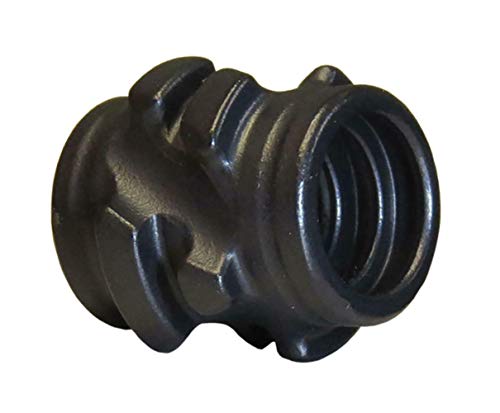
- ARS Mark9.6
ARS Mark is a ranking system developed by bestairriflescopes.com. ARS Mark has no relationship or impact from any manufacturers or sales agent websites. Learn more
- BrandHamskea

- ARS Mark9.4
ARS Mark is a ranking system developed by bestairriflescopes.com. ARS Mark has no relationship or impact from any manufacturers or sales agent websites. Learn more
- BrandG5 Outdoors
- ARS Mark8.8
ARS Mark is a ranking system developed by bestairriflescopes.com. ARS Mark has no relationship or impact from any manufacturers or sales agent websites. Learn more
- BrandVTurboWay

- ARS Mark8.8
ARS Mark is a ranking system developed by bestairriflescopes.com. ARS Mark has no relationship or impact from any manufacturers or sales agent websites. Learn more
- BrandBowmar Archery

- ARS Mark8.8
ARS Mark is a ranking system developed by bestairriflescopes.com. ARS Mark has no relationship or impact from any manufacturers or sales agent websites. Learn more
- BrandTRUGLO

- ARS Mark8.6
ARS Mark is a ranking system developed by bestairriflescopes.com. ARS Mark has no relationship or impact from any manufacturers or sales agent websites. Learn more
- BrandSOPOGER

- ARS Mark8.4
ARS Mark is a ranking system developed by bestairriflescopes.com. ARS Mark has no relationship or impact from any manufacturers or sales agent websites. Learn more
- BrandSPG

- ARS Mark8.0
ARS Mark is a ranking system developed by bestairriflescopes.com. ARS Mark has no relationship or impact from any manufacturers or sales agent websites. Learn more
- BrandPOEARCUS

- ARS Mark7.4
ARS Mark is a ranking system developed by bestairriflescopes.com. ARS Mark has no relationship or impact from any manufacturers or sales agent websites. Learn more
- BrandHDWGGD
Last update on 2026-09-30 / Affiliate links / Images, Product Titles, and Product Highlights from Amazon Product Advertising API
FAQs
Why does my peep sight turn only when the weather gets hot?
Synthetic bowstring fibers expand slightly when exposed to direct sunlight and high temperatures. This slight thermal expansion shifts the tension balance between the inner and outer strands of the bundle, causing the string to rotate slightly. Storing your bow out of direct sunlight and avoiding hot car trunks helps keep your string stable.
How many shots does it take for a new bowstring to settle?
Most modern compound bowstrings require roughly 100 to 200 shots to seat the fibers and stretch to their final resting length. During this break-in period, minor peep rotation is completely normal. It is best to shoot through this settling phase before making permanent half-twist adjustments in a bow press.
Can I use rubber peep tubing to pull my sight straight?
Rubber peep tubing is an elastic line that connects the peep sight to an upward cable, forcing the sight straight every time you draw. While it prevents rotation, the tubing adds weight to your string, slows your arrow speed, and can snap without warning near your face. Learning to balance your string or D-loop alignment is a much safer, quieter, and more reliable long-term solution.
Will adding twists to my bowstring change my arrow flight?
A single half-twist added to correct peep rotation creates a change so small that it will not affect arrow flight or draw length. However, adding several full twists can slightly shorten your string, increasing your draw weight and shifting your sight pin zero. If you must add more than one full twist to center your peep, always confirm your arrow groups at your standard target distances.


12 Best 22 Pcp Air Rifle For Hunting of 2026 With Quiet Power

7 Best 22 Pcp Air Rifle Under 300 of 2026 For Backyard Pest Control

10 Best 22 Break Barrel Air Rifles of 2026 For Backyard Pest Control

10 Best 30 Caliber Pcp Air Rifle of 2026 For Medium Game

Top Best 177 Air Rifle Under 100: Budget-Friendly Picks for 2026

How to Safely Reload Shotgun Shells at Home

11 Best Co2 Air Rifle For Pest Control of 2026 To Ensure Humane Dispatch

12 Best Inexpensive Air Rifles of 2026 For Dependable Backyard Accuracy






