
How to Adjust an SKS Front Sight

Move the front sight toward your misses. To bring low hits up, screw the sight pin down. To push high hits down, turn that pin up. When bullets land off to one side, push the round steel cylinder holding the pin toward the exact side where the shots hit the target. Doing the opposite sends your next group even further away from the center ring.
How smoothly adjustments go depends on a few specific details. Shifting bullet height needs a slotted key, while moving side to side requires a dedicated screw-clamp tool. Trying to drift that tight steel cylinder with pliers or a hammer can easily bend the protective hood. Old surplus storage grease can also freeze the metal parts in place, meaning you might need a drop of penetrating oil before anything budges. The steps below show you how to correct both directions safely and dial in your zero.
The Short Version
- Chase your misses: If your shots hit low, screw the front sight post down. If shots hit high, screw it up. If shots hit left, push the sight drum left. If shots hit right, push it right.
- Use a dedicated C-clamp tool: Never use pliers or a steel hammer. A proper clamp tool pushes the round sight drum smoothly without bending the protective steel hood.
- Clear the firearm first: Drop the magazine floorplate, pull the bolt back, and confirm the chamber is empty before attaching any tool.
- Adjust in tiny steps: Turn the post one-quarter turn or push the drum a fraction of a millimeter at a time, then shoot a group to confirm.
The Golden Rule of Front Sights: Chasing the Bullet Hole
Adjusting an SKS front sight often feels backwards. On a modern scope or rear sight, you move the reticle or notch in the direction you want your shots to go. A front sight works in reverse. You must always move the front sight toward the hole in the paper.
Consider how your eye aligns the rifle barrel. You look through the rear sight notch and center the front sight post (the small vertical aiming pin). If your rifle hits low, your front post is too tall. To center a tall pin in the rear notch, you unconsciously point the barrel downward, driving shots lower.
Screwing the aiming pin down makes it shorter. A shorter pin forces you to lift the rifle muzzle to restore your sight picture, raising your bullet impact height right into the bullseye.
The same logic applies to windage (left-to-right bullet shift). If your shots land left, you push the sight drum (the round metal cylinder holding the post) to the left. Centering that left-shifted post forces you to steer the barrel slightly right. Following your misses prevents wasted ammunition and walks your groups straight to the center.
Adjusting Bullet Impact Height With a Slotted Post Wrench
Always practice safe firearm handling before touching the sight. Point the muzzle in a safe direction, unlatch the magazine to empty all cartridges, and pull the bolt back to verify an empty chamber.
To correct bullet impact height, adjust the front sight post using these steps:
- Engage the post with your wrench: Slide the slotted cylinder end of your sight tool over the front post. Make sure the two small prongs seat firmly into the notches on the collar of the post.
- Turn the post to correct height: Turn clockwise to raise your shots. Screwing the post deeper into the cylinder makes it shorter and raises bullet impact height. Turn counter-clockwise to lower your shots. Unscrewing the post makes it taller and lowers bullet impact height.
- Make fine quarter-turn adjustments: At 100 yards, one full turn of the post shifts bullet impact roughly four to five inches. Rotate the wrench just one-quarter turn or one-half turn between shooting groups.
- Check post stability: Verify that the post remains secure in its threads. If it wobbles or rises above the protective side hood, confirm that your rear sight slider sits on the proper distance setting.
Adjusting Left-to-Right Bullet Shift With a Clamp Tool
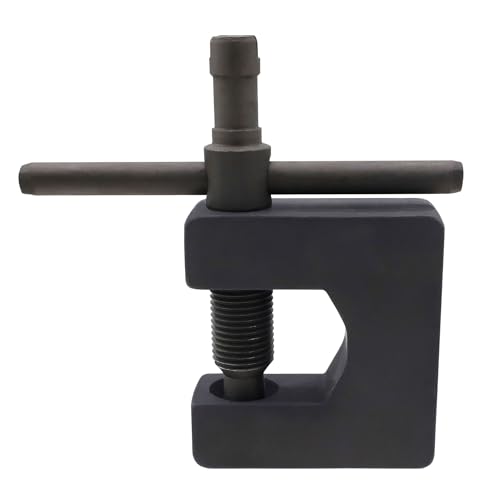
The front sight post threads into a round steel cylinder called the sight drum. Sliding this drum left or right corrects your windage (left-to-right bullet shift). Never strike this cylinder with a hammer or punch. A slipping punch can dent the barrel, crush the curved protective hood ears, or jam the cylinder crooked. A dedicated C-clamp tool applies smooth, controlled mechanical force.
- Position the clamp on the sight tower: Slip the C-frame over the front sight base. Ensure the pushing screw lines up with one side of the drum, while the open clearance window faces the opposite side so the cylinder can slide outward.
- Align the pushing screw: Turn the screw by hand until the flat tip sits flush against the face of the cylinder. Verify that the frame does not pinch the hood ears.
- Push toward your misses: If your shots hit left, place the screw against the right side of the drum and tighten it clockwise to push the drum left. If your shots hit right, place the screw against the left side of the drum and tighten it clockwise to push the drum right.
- Turn in minor increments: Turn the screw handle a half-turn at a time. The cylinder fits tightly and moving it less than a millimeter shifts your impact several inches at 100 yards.
- Check the witness marks: Remove the tool and inspect the reference line on the drum against the tick marks on the sight base to track your movement.
Freeing a Stubborn or Frozen Sight Cylinder Safely
Surplus military rifles often spent decades packed in thick, waxy cosmoline grease. Over time, that grease dries into a hard resin that cements the steel sight drum in place. Tight factory press-fits or light surface rust can also lock the cylinder.
If your clamp tool binds, do not force it with a cheater bar, which can bend the tool or strip the threads. Use this checklist to free the metal safely:
- Soak with penetrating oil: Apply several drops of quality penetrating oil to both sides of the drum. Lay the rifle flat for at least an hour so the fluid can creep around the cylinder.
- Apply gentle warmth: Warm the front sight block using a hair dryer or a heat gun on low for two to three minutes. Heating expands the steel slightly and liquefies old dried grease. Avoid open flames or propane torches, which ruin the metal temper and scorch the finish.
- Tighten the clamp while warm: Attach your screw tool while the metal is still warm. Smooth hand pressure will usually pop the drum free with a light click.
- Wipe clean and add oil: Move the drum back and forth slightly to distribute the oil, wipe away melted grease, and add a single drop of light gun oil to prevent future binding.
- Call a gunsmith if it stays locked: If the cylinder will not budge after soaking and heating, stop. A local gunsmith has heavy bench presses to drift stubborn parts without cracking the sight base.
Confirming Your Zero at the Range
Proper sight adjustment requires a stable shooting position, uniform ammunition, and a structured zeroing process. Zeroing means adjusting your sights so bullets land exactly where you aim at a chosen distance, like 50 or 100 yards.
Follow this checklist at the range:
- Check your rear sight slider: Ensure the rear sight slider sits at the 100-meter mark (labeled "1") or the battle setting at the very rear. Do not zero the front sight while the rear slider is raised to distant settings like 300 or 500 meters.
- Use a sturdy bench rest: Support the front stock on sandbags or a shooting rest. Keep the bare metal barrel off hard surfaces to prevent recoil bounce from scattering your shots.
- Shoot identical ammunition: Stick to one brand and bullet weight while zeroing. In 7.62x39mm rifles, surplus steel-case rounds often shoot to a different point of impact than modern brass loads.
- Fire three to five-shot groups: Shoot a calm group of three to five rounds before touching your sight. Never adjust based on one pulled shot; always find the center of the cluster.
- Maintain clean sight alignment: Focus your eye sharply on the top edge of the front sight post, letting the rear notch and target blur slightly. If you use optical setups on modern rifles, you may know about iron sights for cowitness where you align backup sights through optic glass. With standard rifle irons, simply keep the post centered in the notch with equal light on each side.
- Shoot a confirmation group: After turning the post or pushing the drum, fire one final five-shot group to verify your zero.
What to Look For in an SKS Sight Adjustment Tool
Adjusting both bullet impact height and left-to-right shift requires a dedicated clamp tool built specifically for military surplus front sights. Standard household tools will only slip and mar the rifle. When choosing an adjustment tool, keep these factors in mind:
Look for heavy-duty, all-metal construction made from hardened steel. A durable frame resists bending when you apply torque against a tight military drum. A black oxide finish helps protect the steel tool against sweat and outdoor moisture at the shooting bench.
Verify that the elevation wrench end has deeply cut, cleanly machined prongs. Shallow prongs slip off the collar notches easily, rounding off the edges of your front aiming pin. Also make sure the C-clamp has ample clearance to slide over the curved sight hood without scraping the finish, along with an open side port deep enough to let the drum slide freely outward.
- ARS Mark10.0
ARS Mark is a ranking system developed by bestairriflescopes.com. ARS Mark has no relationship or impact from any manufacturers or sales agent websites. Learn more
- BrandZOEKIM

- ARS Mark10.0
ARS Mark is a ranking system developed by bestairriflescopes.com. ARS Mark has no relationship or impact from any manufacturers or sales agent websites. Learn more
- BrandBVGD

- ARS Mark9.6
ARS Mark is a ranking system developed by bestairriflescopes.com. ARS Mark has no relationship or impact from any manufacturers or sales agent websites. Learn more
- BrandEastern Tactical Supply

- ARS Mark9.0
ARS Mark is a ranking system developed by bestairriflescopes.com. ARS Mark has no relationship or impact from any manufacturers or sales agent websites. Learn more
- BrandAISUNOUTDOOR

- ARS Mark8.8
ARS Mark is a ranking system developed by bestairriflescopes.com. ARS Mark has no relationship or impact from any manufacturers or sales agent websites. Learn more
- BrandTACBRO

- ARS Mark8.8
ARS Mark is a ranking system developed by bestairriflescopes.com. ARS Mark has no relationship or impact from any manufacturers or sales agent websites. Learn more
- BrandZOEKIM

- ARS Mark8.6
ARS Mark is a ranking system developed by bestairriflescopes.com. ARS Mark has no relationship or impact from any manufacturers or sales agent websites. Learn more
- BrandAISUNOUTDOOR

- ARS Mark8.4
ARS Mark is a ranking system developed by bestairriflescopes.com. ARS Mark has no relationship or impact from any manufacturers or sales agent websites. Learn more
- BrandFicero

- ARS Mark8.0
ARS Mark is a ranking system developed by bestairriflescopes.com. ARS Mark has no relationship or impact from any manufacturers or sales agent websites. Learn more
- BrandGeneric
- ARS Mark7.8
ARS Mark is a ranking system developed by bestairriflescopes.com. ARS Mark has no relationship or impact from any manufacturers or sales agent websites. Learn more
- BrandTPO
Last update on 2026-09-30 / Affiliate links / Images, Product Titles, and Product Highlights from Amazon Product Advertising API
FAQs
Which way do I turn the SKS front post if my rifle is shooting low?
Turn the post clockwise to screw it deeper into the base. Screwing the post down makes it shorter, which forces you to lift the rifle barrel to align the sights. Lifting the barrel raises your bullet impact height up toward the center of your target.
Can I adjust the SKS front sight without a special tool?
You should avoid adjusting the sight without a dedicated clamp tool. Pliers easily round off the collar notches on the vertical post, while using a hammer and punch to drift the drum risks bending the protective sight hood. A screw-clamp tool moves the cylinder smoothly without impact damage.
How much does moving the SKS front sight change bullet impact?
Because the distance between the front and rear sights is relatively short, minor adjustments produce noticeable shifts. At 100 yards, one full turn of the elevation post moves bullet impact by about four to five inches. Shifting the windage drum by a fraction of a millimeter moves shots several inches, so make changes in quarter turns or small increments.
What should I do if the front sight drum will not budge?
Do not force the tool handle with extension bars, which can strip the threads. Soak both sides of the drum in penetrating oil, then warm the sight base with a hair dryer to soften old storage grease before trying the clamp again. If it stays frozen, have a qualified gunsmith press it out safely.


12 Best 22 Pcp Air Rifle For Hunting of 2026 With Quiet Power

7 Best 22 Pcp Air Rifle Under 300 of 2026 For Backyard Pest Control

10 Best 22 Break Barrel Air Rifles of 2026 For Backyard Pest Control

10 Best 30 Caliber Pcp Air Rifle of 2026 For Medium Game

Top Best 177 Air Rifle Under 100: Budget-Friendly Picks for 2026

How to Safely Reload Shotgun Shells at Home

11 Best Co2 Air Rifle For Pest Control of 2026 To Ensure Humane Dispatch

12 Best Inexpensive Air Rifles of 2026 For Dependable Backyard Accuracy






