
How to Change a Peep Sight Without Damaging Your Bowstring

Most archers assume replacing a peep sight requires an expensive bow press or a paid trip to the local archery shop. In reality, relaxing the string tension with a simple separator tool lets you swap the sight right at home. The job comes down to slicing away the old thread without grazing the load-bearing bowstring strands, seating the new peep evenly in the split, and tying it down securely with fresh cord.
The exact process depends on the gear on your workbench. Working with a bow press (a clamp tool that flexes the limbs to slacken the string) is easiest, but a smooth plastic string wedge also works if you take your time. Your setup also changes if you use a self-aligning rubber tube or a bare peep that must turn straight on its own at full draw. Here is how to handle the swap safely and keep your bowstring in peak condition.
The Short Version
- Mark your starting spot: Use a soft pencil or silver marker on the bowstring directly above and below your current peep so your new sight sits at the exact same eye level.
- Cut outward, never inward: Slice old serving thread (the protective cord wrapped tightly over bowstring strands) by sliding your razor under the thread and cutting away from the string fibers to prevent accidental cuts.
- Split strands evenly: Divide the bowstring strands into two equal bundles using a smooth string separator (a smooth wedge tool used to gently pry string strands apart) rather than sharp household tools.
- Lock it in place: Wrap fresh serving cord tightly around the peep waist and tie locking knots above and below the housing so the sight cannot slip or launch during release.
Tools You Need Before You Start
You can complete this swap at home with a few simple hand tools. You do not need an expensive bow press (a clamp tool that flexes bow limbs to loosen the string) if you work carefully and use tools designed for bowstrings.
Gather these items on a clean, well-lit workbench before you begin:
- A string separator tool: This is a small, rounded plastic or aluminum wedge that slides between bowstring strands. It pushes the bundles apart safely without cutting the fibers. Never use a flathead screwdriver or metal butter knife, because sharp corners will shred your string under tension.
- Your replacement peep sight: Make sure you have the right hole size and string angle ready to install.
- Bowstring serving thread: Pick up a small spool of braided archery serving cord. Standard sewing thread or fishing line is too slick and weak to hold a peep firmly in place.
- A fresh utility blade or seam ripper: A sharp razor requires very little pressure, which gives you far more control than a dull blade when cutting old knots.
- A silver marker or soft wax pencil: Use this to mark the exact position of the old sight against the string.
- A lighter and an arrow: You will use the flame to melt cord ends, and the arrow to safely draw the bow while checking your sight picture.
Removing the Old Peep Sight Safely
The single biggest mistake archers make during this swap is nicking a bowstring strand while cutting off the old thread. A single severed strand ruins the entire string and creates an immediate safety hazard. Take your time and follow these steps to clear the old sight cleanly.
- Mark your current height: Look closely at where the old peep sits on the string. Take your silver marker or wax pencil and place a tiny dot on the bowstring right at the top edge of the peep, and another dot right at the bottom edge. This gives you a clear target for the new sight so you do not have to guess your anchor point later.
- Locate the tie-off knots: Inspect the wraps holding the old peep. Find the small melted bumps where the previous thread was tied off. Pick at these ends with your fingernail to lift a loose loop away from the main bowstring.
- Slice away from the string: Slip the flat back of your razor blade underneath the raised serving loop. Point the sharp edge of the blade up and away from the bowstring. Push gently outward to slice through the thread loop. Never point the blade toward the bowstring or saw back and forth across the fibers.
- Unwind the thread by hand: Once you slice one loop, put the blade down. Grab the loose thread end with your fingers and manually peel and unwind the serving cord from the string. Work off the wraps above the peep, below the peep, and around the middle channel.
- Slide out the old peep: With the thread removed, insert your string separator tool an inch above the peep. Turn the separator slightly sideways to relieve tension on the sight. Gently lift the old peep out from between the string bundles and set it aside.
Inserting and Centering Your New Peep Sight
Modern compound bowstrings consist of 20 to 24 individual strands twisted together under high tension. To keep your peep centered and your string balanced, the sight must sit directly in the middle of these strands.
- Divide the strands into equal halves: If your bowstring uses two different thread colors, dividing them is easy. Place all strands of one color on the left side and all strands of the second color on the right side. If your string is a single solid color, count the strands roughly or split the bundle visually right down the center. An uneven split (such as 16 strands on one side and 6 on the other) causes the peep to tilt sideways and rotate unpredictably when drawn.
- Insert the string separator: Push the smooth nose of your separator tool between the two separated bundles at your pencil marks. Turn the tool 90 degrees to spread the halves apart just wide enough to accept the sight.
- Seat the peep in the string grooves: Pick up your new peep sight and find the side channels (grooves running down the outer rim). Place one half of the bowstring strands into the left groove and the other half into the right groove. Center the peep directly between your pencil marks.
- Orient the string angle correctly: Peep sights feature angled string slots (often cut at 35 or 40 degrees) to match the slope of a bowstring at full draw. Make sure the slot angles downward toward your eye. If you install it upside down, the aperture will tilt toward the ground when you pull the string back, blocking your view.
- Remove the separator tool: Slowly turn the separator tool flat and slide it out from the string. The tension of the bowstring will snap down into the side grooves, holding the new peep in place.
Checking Your Height and Sight Alignment
Before you lock the new peep down with tight thread wraps, you must confirm that it aligns naturally with your eye at full draw. Adjusting it now takes seconds; adjusting it after tying requires cutting everything off and starting over.
Always practice strict bow safety during this stage. Nock a real arrow and point the bow at a safe target block. Never draw a bow without an arrow loaded, and never release the string without an arrow. That is called a dry fire (releasing a drawn bowstring without an arrow), and the sudden shock can crack the bow limbs, derail the cables, and cause severe personal injury.
Draw the bow smoothly back to your face and settle into your normal anchor point. Close both eyes for two seconds, relax your neck muscles, and let your hands find their natural resting spots against your jaw or cheek. Open your aiming eye without moving your head.
Look directly through the peep hole. You should see your front sight housing centered cleanly inside the peep circle. If you run a multi-pin hunting setup, such as the best bow sight for treestand hunting, the round inner wall of your peep should frame the bright outer ring of your sight guard with an even halo of light around it. To build repeatable form once your sight picture is set, study how to use a bow sight with better accuracy.
If you have to crane your neck down or lift your chin to see through the hole, let down the bow safely. Push the peep slightly up or down the string using your thumbs until it lines up naturally with your eye. If the peep turns sideways at full draw and looks like a narrow oval, you need to address string twist. You can gently swap two or three strands from the front bundle to the back bundle to coax the sight to face your eye squarely.
Tying In the Peep Sight to Lock It Down
A peep sight that is not tied down can slide out of place after a few dozen shots. In worse cases, string vibration can launch a loose metal peep forward like a projectile. Tying a secure three-point wrap around the waist, top, and bottom keeps the sight locked solid for thousands of shots.
- Tie the center waist: Cut a 12-inch piece of bowstring serving thread. Wrap the thread around the circular groove running around the outside middle of the peep sight. Pull it firmly into the groove and tie a tight square knot. Wrap the two tag ends around to the opposite side of the peep, tie a second tight square knot, and trim the ends to roughly 1/8 inch.
- Wrap the top wedge: Cut an 18-inch piece of serving thread. Start about half an inch above the peep, right where the two separated string bundles meet. Lay the thread against the string and begin wrapping downward toward the peep, pulling each turn firmly so the wraps lie flat and tight against each other.
- Bridge across the peep: When your wraps reach the top rim of the peep, continue wrapping tightly over the string strands alongside the peep housing. Secure the wraps by tying a series of alternating half-hitch knots (simple overhand loops pulled snug on alternating sides of the string).
- Wrap the bottom wedge: Repeat this exact process on the bottom side of the peep. Start at the lower rim of the peep and wrap downward for half an inch, closing the gap where the string bundles split. Pull each loop firm to create a solid collar that prevents the peep from migrating down the string.
- Melt the tag ends safely: Trim the leftover tag ends of your serving thread down to about 1/16 of an inch. Light your lighter, but do not touch the flame directly to the bowstring. Hold the blue base of the flame near the fuzzy thread end. Let the radiant heat melt the fibers into a small round bead. Press the warm bead flat against the wraps with your moistened fingertip. Shield the main bowstring strands with a piece of heavy cardboard or your thumb so the flame never touches load-bearing fibers.
When to Step Back and Visit a Bow Shop
While swapping a peep is a straightforward home project, certain string problems require professional equipment. If you run into any of the following situations, stop and take your bow to an archery pro shop equipped with a commercial bow press.
If you see a frayed, fuzzy, or cut strand anywhere near the peep location, do not draw the bow. Bowstrings hold over 100 pounds of tension even at rest. A severed strand weakens the entire structure and can snap catastrophically, damaging the bow limbs and potentially striking your face or arms. A bow technician will inspect the damage and install a fresh string.
Another common hurdle is severe peep rotation that cannot be fixed by moving a couple of strands. If your peep faces 90 degrees away from your eye at full draw, the string needs twists added or removed from the top or bottom loops. Doing this requires relaxing the bow limbs completely in a full-size bow press. Never attempt to press modern compound limbs using makeshift clamps or tie-down straps, as doing so can bend the riser, splinter the fiberglass limbs, or void your manufacturer warranty.
Choosing the Right Replacement Peep Sight
When selecting a new peep sight for your compound bow, matching the design to your specific shooting style makes installation and aiming much simpler. Peep sights generally fall into two categories: self-aligning tubing peeps and tubeless aluminum peeps.
Tubing models feature a small post on the housing that connects to a piece of flexible rubber tubing. The other end of the tube anchors to your bow's buss cable. Every time you draw the bow, the stretching rubber automatically pulls the peep straight toward your eye. These are forgiving for older strings that rotate unpredictably, but the rubber tubing can snap over time and slightly reduces arrow speed.
Tubeless metal peeps are lighter, quieter, and favored by target archers and experienced hunters. When picking a tubeless model, pay close attention to the aperture size. A small 1/8-inch hole provides a sharp, precise sight picture for sunny days and target ranges. A larger 3/16-inch or 1/4-inch aperture lets in substantially more light, making it easier to pick out your sight pins at dawn, dusk, or inside thick timber. Also verify that the side string grooves match your bow's axle-to-axle length, as shorter hunting bows require steeper groove angles to sit flat against the string at full draw.

- ARS Mark10.0
ARS Mark is a ranking system developed by bestairriflescopes.com. ARS Mark has no relationship or impact from any manufacturers or sales agent websites. Learn more
- Brandsafycaby
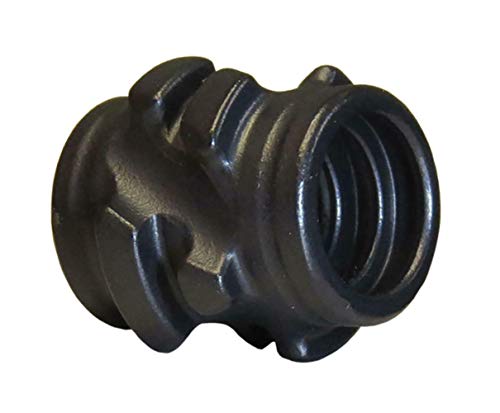
- ARS Mark9.6
ARS Mark is a ranking system developed by bestairriflescopes.com. ARS Mark has no relationship or impact from any manufacturers or sales agent websites. Learn more
- BrandHamskea
- ARS Mark8.8
ARS Mark is a ranking system developed by bestairriflescopes.com. ARS Mark has no relationship or impact from any manufacturers or sales agent websites. Learn more
- BrandVTurboWay

- ARS Mark8.8
ARS Mark is a ranking system developed by bestairriflescopes.com. ARS Mark has no relationship or impact from any manufacturers or sales agent websites. Learn more
- BrandTRUGLO

- ARS Mark8.4
ARS Mark is a ranking system developed by bestairriflescopes.com. ARS Mark has no relationship or impact from any manufacturers or sales agent websites. Learn more
- BrandSPG

- ARS Mark8.4
ARS Mark is a ranking system developed by bestairriflescopes.com. ARS Mark has no relationship or impact from any manufacturers or sales agent websites. Learn more
- BrandSPG

- ARS Mark8.0
ARS Mark is a ranking system developed by bestairriflescopes.com. ARS Mark has no relationship or impact from any manufacturers or sales agent websites. Learn more
- BrandHal Leonard

- ARS Mark7.8
ARS Mark is a ranking system developed by bestairriflescopes.com. ARS Mark has no relationship or impact from any manufacturers or sales agent websites. Learn more
- BrandFENJANER
Last update on 2026-10-01 / Affiliate links / Images, Product Titles, and Product Highlights from Amazon Product Advertising API
Frequently Asked Questions
Can I change my peep sight without a bow press?
Yes, you can swap a peep sight at home using a smooth plastic or aluminum string separator tool. The separator gently spreads the string bundles apart without relaxing the limbs, allowing you to remove the old sight and slip in the new one. Always work slowly to ensure the separator does not snag individual fibers.
Why does my new peep sight twist sideways when I draw back?
Peep twist usually happens when string bundles are split unevenly or when a new bowstring stretches and settles. Check that an equal number of strands sit on both sides of the peep grooves. If the strand count is balanced and the sight still turns, an archery tech can press the bow and add a half-twist to the bowstring loop to correct the rotation.
What should I do if I accidentally cut a bowstring strand?
Stop handling the bow immediately and do not draw it back under any circumstances. A cut strand severely compromises the structural strength of the string, putting the bow at risk of snapping under load. Take the bow to a qualified archery shop to have the string replaced before shooting again.
How tight should the serving thread be wrapped around the peep?
The serving thread should be wrapped firmly enough that you cannot budge the peep by pushing on it with moderate thumb pressure. Pull each wrap snug against the previous loop without pulling so hard that the cord snaps. A firm three-point tie around the waist, top, and bottom ensures the peep never shifts during shooting vibration.


12 Best 22 Pcp Air Rifle For Hunting of 2026 With Quiet Power

7 Best 22 Pcp Air Rifle Under 300 of 2026 For Backyard Pest Control

10 Best 22 Break Barrel Air Rifles of 2026 For Backyard Pest Control

10 Best 30 Caliber Pcp Air Rifle of 2026 For Medium Game

Top Best 177 Air Rifle Under 100: Budget-Friendly Picks for 2026

How to Safely Reload Shotgun Shells at Home

11 Best Co2 Air Rifle For Pest Control of 2026 To Ensure Humane Dispatch

12 Best Inexpensive Air Rifles of 2026 For Dependable Backyard Accuracy






