
How to Fix Peep Sight Rotation on Your Bow

A sideways peep sight is completely normal and easy to fix. Most minor twists can be solved in seconds by nudging the D-loop (the cord loop where the release aid clips on) or sliding a small plastic spacer between string strands. For a sight that turns completely backwards, adding a half-twist to the bowstring settles the fibers so the ring squares up cleanly with your target.
The exact method depends on how far the opening has swung off center and whether the string is brand new. Fresh strings tend to settle and stretch over your first few dozen arrows, while older setups might need a bow press (a clamp that safely removes tension from the bow) to correct deeper rotation at the cam. Here is how to walk through each simple fix step by step.
Why Your Peep Sight Turns Sideways
Few things frustrate an archer quite like coming to full draw and finding the peep sight turned sideways. The peep sight is the small aiming ring set inside the bowstring, and your eye needs to look squarely through its center to line up your front sight pins. When that small circle turns even a quarter turn off center, its angled edges block your view of the target. Trying to peek around the edge forces your neck into awkward angles, changes your anchor point, and ruins your shooting consistency. To understand how to use a bow sight with better accuracy, your peep must align naturally every single time you pull the string back.
Peep sight rotation happens because of how modern bowstrings are built and how they react to physical stress. A bowstring is made of strands, which are individual fibers braided into the bowstring and split into two equal bundles. The peep sight sits directly between those two bundles. When you draw the bow, string tension spikes dramatically. If both bundles do not share that load equally, or if the string fibers twist under pressure, the peep rotates out of square.
String break-in is the most common culprit behind a crooked peep. Brand-new bowstrings experience a settling period during their first couple hundred shots. As the factory wax settles and individual fibers stretch under tension, the string naturally develops a slight twist. This fiber movement shifts the orientation of your peep sight, causing it to turn away from your eye at full draw even if it looked straight when the bow was resting on a rack.
Temperature changes and environmental conditions also cause rotation. Leaving a compound bow in the back of a hot truck or shooting outside under direct summer heat can soften string wax. When the wax softens, the fibers slide against each other more freely, altering the internal balance of the string. A sudden drop in outdoor temperature can have the opposite effect, tightening the string bundles and turning the sight window off center.
Finally, worn or shifting serving can cause your peep to spin. The serving is the protective thread wrapped around string fibers near high-wear contact points. If the serving thread holding your D-loop loosens, the loop shifts under the pressure of your release aid. The D-loop is the cord loop where the release aid clips on, and if it twists out of position, it pulls the string unevenly and turns the peep sideways during your draw cycle.
Simple Adjustments You Can Make Without a Bow Press
You do not always need special shop equipment to straighten a misaligned peep sight. If your peep is only turning slightly off center, say an eighth of a turn to a quarter turn, you can usually correct it in a few minutes using simple adjustments at home or at the range. These methods work by counteracting the small twist in the string without putting extra strain on the bow limbs.
The first and fastest fix is adjusting your D-loop. When you draw a compound bow, your release aid pulls directly on the D-loop, pulling it straight back toward your face. Because the D-loop is clamped tightly to the center serving thread, its angle can actually steer the bowstring. By slightly turning the D-loop around the serving, you can force the string to rotate in the opposite direction when you reach full draw.
- Check the resting peep position: Look at your peep sight while the bow is hanging or resting. Note which direction it needs to spin to face you squarely. If the peep is angled slightly to the right at full draw, the string needs to rotate slightly counterclockwise.
- Inspect the D-loop knots: Identify the top and bottom knots of your D-loop on the center serving. Make sure the serving thread underneath is tight and undamaged before attempting to move the knots.
- Nudge the D-loop around the serving: Using your fingers or a pair of smooth-jaw pliers, grip the base of the D-loop knots. Gently work the knots a tiny fraction of a turn in the direction you want the peep to face. You only need a very small adjustment. Moving the knot just one millimeter can translate to a noticeable shift at your eye.
- Verify the alignment at full draw: Nock an arrow, point the bow safely at a target backstop, and draw the bow. Check through the peep to see if the ring is centered. If it still needs a fraction of a turn, let down smoothly and nudge the D-loop knots again until the circle sits round and open to your eye.
If adjusting the D-loop does not bring the peep fully into line, you can use clip-in peep tuners or small plastic string spacers. These small plastic wedges slip directly between the strands of your bowstring without taking the bow apart. They work by slightly spreading the fibers on one side of the bundle, shifting the internal strand tension and nudging the peep back into square alignment.
- Examine the fiber bundles: Look directly above and below your peep sight to see where the two string bundles separate. Make sure the strand count looks roughly equal on both sides of the peep.
- Insert the plastic tuner spacer: Slide the small plastic wedge between the two string bundles, placing it a couple of inches above or below the peep sight. Always use a dull, smooth plastic tool to avoid fraying or cutting the string fibers.
- Slide the spacer to tune the angle: Moving the spacer closer to the peep sight increases string bundle spread, which rotates the peep sight more. Moving the spacer farther away toward the cam reduces the rotation effect.
- Confirm your sight picture: Draw the bow with an arrow loaded and verify that the peep sight now faces you squarely. If the peep over-rotates past center, slide the spacer further away from the peep or switch to a thinner spacer size.
Adding Half-Twists in a Bow Press for Stubborn Misalignment
When a peep sight is turned completely backward or sitting 90 degrees sideways, minor adjustments to the D-loop or plastic spacers will not be enough. Severe rotation means the entire bowstring has twisted along its length. Correcting heavy rotation requires adding or removing twists from the bowstring itself, which must be done using a bow press. A bow press is a mechanical clamp that takes tension off bowstrings by gently flexing the bow limbs inward.
Working with a bow press requires strict safety practices. Never attempt to press a modern compound bow using ratchet straps, carpenter clamps, or homemade garage tools. Uneven limb pressure can warp the riser or cause the bow limbs to snap violently. If you do not own a certified archery bow press, take your bow to a local archery pro shop where a trained technician can complete these adjustments in a matter of minutes.
- Secure the bow in the press: Place the compound bow into the press fingers according to the press manufacturer guidelines. Slowly turn the press handle until the limbs flex just enough for the bowstring to go slack. Stop immediately once the string loops are loose on the cam posts.
- Remove the string loop from the cam: Carefully slide the top or bottom string loop off the cam post. Keep a firm grip on the loop so the string does not unravel on its own.
- Add or remove a half-twist: Turn the string loop one half-turn (a 180-degree rotation). Adding a half-twist tightens the string and turns the peep sight roughly 90 degrees. Removing a half-twist loosens the string slightly and turns the peep in the opposite direction.
- Reattach the loop to the cam post: Slide the string loop back over the cam post, making sure the bowstring sits flat and squarely inside the cam track grooves.
- Relax the press and verify: Slowly back off the bow press until the limbs take up string tension again. Remove the bow, nock an arrow, and draw back to inspect the peep. If the peep is close but still slightly off, use the D-loop method to make the final micro-adjustment.
Another reliable option for archers who want zero peep rotation issues is installing a tubed peep sight. A tubed peep sight features a small metal or plastic post extending from the side of the sight housing. A piece of flexible silicone tubing connects that post to the bow's downward cable. When you draw the bow, the stretching rubber tubing pulls the peep sight straight back toward your eye every single time, completely bypassing string twist.
Tubed peeps provide absolute peace of mind for hunting setups where gear failure cannot be tolerated, such as picking the best bow sight for treestand hunting. But tubed setups have trade-offs. The rubber tubing absorbs a tiny amount of arrow speed, creates a faint snapping sound on release, and will dry out over time. If you use a tubed peep, check the rubber tubing regularly for dry rot or small cracks, and replace the tubing once a season to keep it from snapping during a shot.
Bowstring Safety and Peep Alignment Checklist
Aligning a peep sight is straightforward once you know how string tension works, but rushing the process can ruin your bowstring or create dangerous shooting conditions. Bowstrings operate under hundreds of pounds of stored energy, so any damage to individual fibers compromises the entire system. Before making changes, keep these essential safety practices and common mistakes in mind.
- Never twist a peep sight with bare hands under tension: Forcing a peep around while the string is tight creates severe friction between the metal sight housing and the synthetic fibers. This friction can sever strands and ruin the string.
- Keep strand counts balanced: The peep sight must sit between equal numbers of string strands on each side. If you have 20 strands on one side and 4 on the other, the bowstring will twist violently on release and may throw the peep out of the string.
- Never use sharp metal tools on bowstrings: Keep pocket knives, metal picks, and sharp screwdrivers away from string fibers. A tiny nick on a single strand weakens the string bundle and can cause complete string failure.
- Ensure serving wraps are locked down: Check the tied serving above and below the peep sight. If the thread wraps slide up and down freely, the peep sight can shift vertically during release, completely altering your vertical point of impact.
- Always load an arrow before drawing to check alignment: Never dry fire a bow by releasing the string without an arrow. Even when you intend to only check peep rotation and let the bow down slowly, fingers can slip. Drawing with an arrow pointed at a target backstop protects you and your bow.
What to Look for in Peep Sight Alignment Tools and Hardware
Having the right tools in your field kit allows you to correct sight rotation quickly without running to a bow shop before an afternoon shoot. If you want to solve peep rotation issues yourself, several types of archery accessories can help you adjust and maintain proper string orientation.
Clip-in peep tuners are small plastic spacers that sit directly between string fibers. When shopping for string spacers, look for sets that include multiple thicknesses. Different thickness levels change the string angle by varying degrees, allowing you to fine-tune the exact amount of rotation your setup needs. High-grade plastic spacers do not stretch over time, weigh very little, and will not slow down arrow flight or change your draw length. They are an outstanding addition to any field repair pouch.
If you plan to install or adjust peep sights at home, pick up a dedicated bowstring separator tool. A string separator is a smooth, rounded plastic or aluminum wedge designed to gently pry open string bundles without cutting into individual fibers. Using a purpose-built separator tool protects delicate string wax and makes inserting peep sights or string tuners fast and safe.
When selecting a replacement peep sight itself, pay attention to the string groove angle. Peep sights designed with dual string angles, such as 35-degree and 40-degree grooves, allow archers to match the sight housing to the natural string angle created by their bow's axle-to-axle length. A matching groove angle prevents string pinching and keeps the sight aperture sitting perfectly perpendicular to your eye at full draw, whether you are dialing in a target rig or outfitting the best bow sight for Mathews bows.
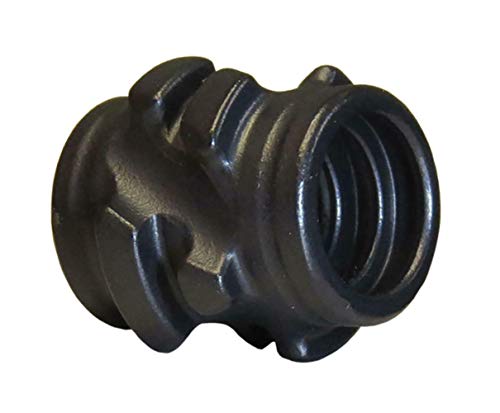
- ARS Mark9.6
ARS Mark is a ranking system developed by bestairriflescopes.com. ARS Mark has no relationship or impact from any manufacturers or sales agent websites. Learn more
- BrandHamskea

- ARS Mark8.8
ARS Mark is a ranking system developed by bestairriflescopes.com. ARS Mark has no relationship or impact from any manufacturers or sales agent websites. Learn more
- BrandBowmar Archery
- ARS Mark8.8
ARS Mark is a ranking system developed by bestairriflescopes.com. ARS Mark has no relationship or impact from any manufacturers or sales agent websites. Learn more
- BrandVTurboWay

- ARS Mark8.4
ARS Mark is a ranking system developed by bestairriflescopes.com. ARS Mark has no relationship or impact from any manufacturers or sales agent websites. Learn more
- BrandSPG

- ARS Mark8.4
ARS Mark is a ranking system developed by bestairriflescopes.com. ARS Mark has no relationship or impact from any manufacturers or sales agent websites. Learn more
- BrandSPG

- ARS Mark8.0
ARS Mark is a ranking system developed by bestairriflescopes.com. ARS Mark has no relationship or impact from any manufacturers or sales agent websites. Learn more
- BrandRPBKE

- ARS Mark8.0
ARS Mark is a ranking system developed by bestairriflescopes.com. ARS Mark has no relationship or impact from any manufacturers or sales agent websites. Learn more
- Brand- QI HUO JU -

- ARS Mark7.8
ARS Mark is a ranking system developed by bestairriflescopes.com. ARS Mark has no relationship or impact from any manufacturers or sales agent websites. Learn more
- BrandFENJANER

- ARS Mark7.4
ARS Mark is a ranking system developed by bestairriflescopes.com. ARS Mark has no relationship or impact from any manufacturers or sales agent websites. Learn more
- BrandHDWGGD
Last update on 2026-10-01 / Affiliate links / Images, Product Titles, and Product Highlights from Amazon Product Advertising API
FAQs
Why does my peep sight look straight at rest but turn sideways at full draw?
When a compound bow rests on a rack, the string is under base holding tension. As you pull the bow into full draw, string tension increases significantly, causing the string bundles to tighten and twist internally. If the individual fiber bundles carry slightly different amounts of tension, that internal twist turns the peep sight sideways right at your anchor point.
Can hot summer weather cause my peep sight to rotate?
Yes, excessive heat softens the protective wax applied to the bowstring fibers. When the wax melts or softens, individual strands slip against each other more easily under shooting tension. This fiber movement alters the twist of the string, causing a peep sight that was once straight to suddenly turn off center.
How many shots does it take for a brand-new bowstring to settle?
Most modern synthetic bowstrings require between 100 and 200 shots to fully stretch, seat the serving thread, and settle the fibers. During this initial break-in period, minor peep rotation is completely normal. Once the string finishes settling, you can make a final adjustment to the D-loop or string twists for permanent alignment.


12 Best 22 Pcp Air Rifle For Hunting of 2026 With Quiet Power

7 Best 22 Pcp Air Rifle Under 300 of 2026 For Backyard Pest Control

10 Best 22 Break Barrel Air Rifles of 2026 For Backyard Pest Control

10 Best 30 Caliber Pcp Air Rifle of 2026 For Medium Game

Top Best 177 Air Rifle Under 100: Budget-Friendly Picks for 2026

How to Safely Reload Shotgun Shells at Home

11 Best Co2 Air Rifle For Pest Control of 2026 To Ensure Humane Dispatch

12 Best Inexpensive Air Rifles of 2026 For Dependable Backyard Accuracy






