
How to Install a Peep Sight on Your Bow Safely

Installing a peep sight means slackening the bowstring tension, dividing the strands evenly down the middle, sliding the sight in, and binding it firmly with wrapping cord. The exact steps change depending on whether a bow press or a handheld separator tool relieves that heavy pressure. Doing this carefully protects the delicate fibers from getting cut and keeps the small aiming window pointing straight ahead.
A model with a rubber alignment tube pulls itself straight every time, while a tubeless style needs balanced string twists to stay square. The final position also has to line up directly with your eye at your natural draw hold spot, so the sight picture never feels forced. Once those details match your specific bow, setting everything up securely takes just a few calm minutes.
The Short Version
- Relax your bowstring tension safely with a string relaxation tool (a bow press) or a smooth handheld string separator tool before touching the fibers.
- Divide the bowstring strands into two equal halves, insert the peep sight at your natural eye level, and ensure the angled grooves match your string angle at full draw.
- Wrap the peep securely using durable wrapping cord (serving thread) above, below, and around the middle channel so the unit cannot move or fly loose when released.
- Draw the bow to your normal draw hold spot (anchor point) to verify that the aiming hole sits straight and centers perfectly over your front pins.
What Tools You Need Before You Start
Working on a modern compound bow requires specific gear designed to protect the synthetic fibers of your string. Trying to cut corners with household items creates uneven pressure that can ruin your equipment or cause serious injuries.
Gather these items on a clean, well-lit workbench before you begin:
- String relaxation tool or smooth string separator: A bench-mounted bow press is the safest tool for taking tension off the string. If you do not own a press, use a rounded plastic or composite handheld string separator tool built specifically for archery strings.
- Your new peep sight: Make sure the sight matches your bow geometry. Shorter bows need steeper groove angles so the aiming hole sits flat to your eye at full draw.
- Archery wrapping cord: Choose dedicated bowstring serving thread (a braided nylon or high-strength polymer cord) to lash the peep in place. Regular sewing thread or household string will snap under bow vibration.
- Marking chalk or soft wax: A piece of tailor chalk, a silver pencil, or a tiny strip of painter tape lets you mark the string without damaging the strands.
- Sharp scissors and a lighter: You need scissors to make clean cuts on your wrapping cord and a standard lighter to melt the cut ends into neat locking balls.
- Your release aid and an arrow: You need your release aid to draw the bow naturally when checking the height. Always use a real arrow pointed at a safe target or backstop whenever you draw your bow.
Never use metal screwdrivers, kitchen knives, nails, or car keys to open the bowstring. Sharp metal edges cut the microscopic fibers inside modern bowstrings. A cut strand weakens the entire system, which can cause the string to snap violently under hundreds of pounds of stored force.
Finding Your Eye Height and Marking the String
A peep sight only works if it sits directly in front of your pupil when you reach your natural draw hold spot (the consistent point on your jaw or cheek where your hand rests at full draw). If you have to scrunch your neck, tip your head forward, or raise your chin to see through the hole, your peep height is wrong.
Put an arrow on the rest, point the bow safely toward a target, and hook your release to the string loop. Close your eyes, draw the bow smoothly back, and settle into your most comfortable, repeatable anchor position. Relax your shoulders, set your jaw, and let your head sit completely natural and upright.
Open your eyes without moving your head or neck even a fraction of an inch. Have a friend look across the string to see exactly where your aiming eye crosses the center of the bowstring. Have your helper place a small mark on the string with tailor chalk right at that eye level. If you are working alone, you can lightly pinch a piece of painter tape around the string at your estimated eye level, draw the bow again, and verify where the tape sits relative to your pupil.
Draw the bow two or three more times with your eyes closed to verify that your hand lands on the exact same draw hold spot each time. Consistency here is the secret to accurate shooting. When you set up your sight picture properly, learning how to use a bow sight becomes much easier because you do not have to fight awkward head positions to see your pins.
Splitting the Bowstring and Inserting the Peep
Once you mark the height on your string, you are ready to insert the housing. The goal is to divide the string strands completely evenly so tension remains balanced on both sides of the peep.
- Relax the string tension: Place the bow in a string relaxation tool (bow press) and compress the limbs just enough to take the tight tension off the main string. If you are using a handheld string separator tool, insert the smooth plastic wedge gently into the bundle and rotate it ninety degrees to open a small pocket. Never force a separator tool into a rock-hard, fully tensioned string.
- Count and divide the strands: Modern compound bowstrings usually consist of two different colored bundles twisted together, often with 20 to 24 strands total. If your string has two colors, split the colors so that one color runs along the left side and the other runs along the right. If the string is a single color, use a blunt plastic separator to divide the bundle into two equal halves. An uneven split (such as 16 strands on one side and 8 on the other) causes the peep to tilt sideways when drawn.
- Align the peep grooves: Look closely at the outer edge of your peep sight. You will see deep channels running down the sides. Peep sights designed for compound bows feature angled grooves (often 35 or 40 degrees) so the body sits parallel to your eye when the bowstring comes back at an angle. Make sure the higher side of the angle faces upward toward the top cam.
- Slide the peep into the opening: Slip the peep sight between the two separated strand bundles at your chalk mark. Seat the left bundle firmly inside the left channel and the right bundle inside the right channel. Center the unit so the strands grip the side grooves securely.
- Release the press slowly: Ease off the bow press or slowly remove the handheld separator tool. Let the bowstring settle back under full tension. Watch the strands as tension returns to ensure they do not jump out of the side grooves.
Step back and draw the bow toward a target to confirm the initial height. Look through the aiming hole to see if it frames your front sight housing naturally. If the peep is slightly too high or too low, do not drag it up and down a fully tensioned string. Dragging the peep under tension burns the fibers. Put the bow back in the press or use your separator tool to relax tension before sliding the unit up or down.
Tying the Peep in Place with Wrapping Cord
A peep sight that is not tied in tightly can slip over time, throwing off your aim. Worse, an unsecured peep can fly out of the string like a bullet during a shot, potentially striking your face or the bow limbs. Tying it down requires three distinct sections: a tight wrap above the peep, a wrap below the peep, and a secure ring around the center waist.
- Tie the lower bundle first: Cut an 18-inch piece of archery wrapping cord (serving thread). Start about one inch below the bottom of the peep sight. Tie a snug overhand knot around the string, leaving a two-inch tag end. Wrap the long end tightly around the string, moving upward toward the base of the peep. Keep each wrap right against the previous one, pulling the cord firmly so the wraps do not overlap or leave gaps.
- Lock the split at the bottom of the peep: As your wraps reach the point where the string splits around the peep, continue wrapping tightly right into the base of the split. This holds the two strand halves firmly together and prevents the peep from creeping downward. Secure the wrap by forming a loop, passing the tag end through four times, pulling it tight against the wraps, and trimming the cord with sharp scissors.
- Wrap the upper bundle: Cut another 18-inch piece of wrapping cord and repeat the exact same process above the peep. Start about one inch above the unit and wrap downward toward the top split. Pull each wrap tight to lock the upper strands together, preventing the peep from sliding upward. Finish the wrap with a locking knot and trim the excess.
- Wrap the center channel: Cut a 12-inch piece of cord. Lay the cord directly into the deep center waist groove that runs around the outside circumference of the peep sight body. Wrap the cord completely around the peep body inside this track two or three times. Then, tie a firm square knot or constrictor knot on the back edge of the peep.
- Melt the cord ends: Trim all remaining cord tag ends down to roughly one-sixteenth of an inch using sharp scissors. Take your lighter and bring the base of the flame slowly toward each tiny tag end. Do not let the flame touch the main bowstring strands. Let the heat melt the tag into a small, rounded plastic ball that sits flat against the knots. This melted ball acts as a physical stopper that keeps the knot from ever slipping loose.
When finished, take hold of the peep with your thumb and forefinger. Try to wiggle it up and down. If the peep moves even slightly, your wrapping cord is too loose. Cut the cord off carefully with a seam ripper or blunt-tipped scissors, making sure not to nick the string, and tie it again with greater tension.
How to Stop the Peep from Twisting Sideways
The most common headache archers face after installing a peep sight is rotation. You draw the bow, but the peep turns sideways, leaving you looking at the solid aluminum edge instead of a clear round hole. This happens because strings twist under tension, strands stretch, or the D-loop on your string rotates out of alignment.
Modern synthetic bowstrings are twisted ropes. When you pull the string back from rest to full draw, the twist tightens or loosens, rotating anything wedged between the strands. If your peep is turned sideways when drawn, check these practical fixes in order:
First, check your strand division. If you accidentally put 14 strands on the left side and 10 strands on the right side, the thicker side pulls with more tension, twisting the peep sideways at full draw. If the count is off, relax the string in a bow press and re-divide the strands so the split is mathematically even.
Second, adjust your D-loop (the small rope loop tied around the string where your release clips on). The D-loop acts as a steering wheel for your peep sight. When you hook your release aid to the loop and pull, the loop pulls the bowstring straight. Use needle-nose pliers or specialized D-loop pliers to grab the loop and twist it slightly around the center serving until drawing the loop forces the peep to face your eye square on.
Third, add or remove twists from the bowstring itself. If adjusting the D-loop does not solve the problem, put the bow in a string relaxation tool and disconnect the top bowstring loop from the cam peg. Adding a half-twist or full twist to the string changes the resting position of the peep sight. If the peep is turned slightly left at full draw, adding a half-twist often brings it back into perfect square alignment.
If you hunt from elevated stands, keeping this alignment rock-solid is especially critical. When setting up a bow sight for treestand hunting, your body bends at the waist, and any peep rotation will obscure your view of the target in dim morning or evening light.
Warning Signs to Take the Bow to a Pro Shop
Installing a peep sight is completely manageable at home, but safety always comes first. Bowstrings hold immense mechanical energy, and a failing string can cause severe facial lacerations or break your bow limbs. Stop immediately and visit an archery pro shop if you notice any of these warning signs:
- Cut or severed string fibers: If you see even one individual strand cut or frayed near the peep location, the structural integrity of the string is compromised. Do not draw the bow. Have a pro shop technician inspect the string or replace it.
- Fuzzy strands under the wrapping cord: If the string fibers look puffed up, fuzzy, or visibly chafed where the peep grooves sit, the peep has rough burrs or was forced along the string under tension.
- Persistent spinning despite adjustments: If the peep spins violently (turning 180 degrees or more during the draw cycle) even after adjusting the D-loop and adding string twists, the string may be poorly built or suffering from internal strand creep. A pro shop technician can balance the twists or install high-grade pre-stretched custom strings.
- Lack of safe equipment: If your bow has high-draw-weight limbs or severe beyond-parallel limb geometry that cannot safely accept a standard portable press, do not improvise with ratchets or clamps. Let a technician with a full-size commercial press handle the job.
Choosing the Right Peep Sight and Tools
When selecting a peep sight and installation gear, you need to match the hardware to your bow setup and how you shoot. Choosing the right design upfront eliminates frustration during the installation process.
Start by considering the aiming hole size. Smaller openings, such as 1/8-inch or 3/32-inch holes, provide sharper pin clarity for outdoor target archers shooting in bright sun. However, hunters generally prefer larger openings, such as 3/16-inch or 1/4-inch apertures. A larger aiming hole lets in significantly more light at dawn and dusk, while allowing you to center your entire front sight guard inside the window for quick target acquisition.
Pay close attention to string groove angles. Modern compact compound bows with short axle-to-axle lengths create a very sharp string angle when pulled to full draw. A standard peep sight with shallow grooves will sit tilted in a short bow, turning the round aiming hole into an unreadable horizontal oval. Look for sights with steeper 35-degree or 40-degree string grooves that compensate for sharp string angles, keeping the hole perfectly circular to your eye.
Consider whether you want a tubeless design or a rubber-tubed peep. Modern archers overwhelmingly prefer tubeless aluminum peep sights because they are quiet, lightweight, and do not slow down the string. But tubeless models require a well-tuned, high-quality bowstring that does not rotate. If your bow has an older factory string that twists unpredictably, a peep sight equipped with a flexible silicone alignment tube guarantees the hole snaps straight every time you pull the string back.
Finally, invest in a dedicated plastic string separator tool if you plan to do your own maintenance without a full press. High-visibility separator tools with smooth, rounded edges make it simple to inspect strand colors and separate fibers cleanly without scratching the protective wax coating on your string.
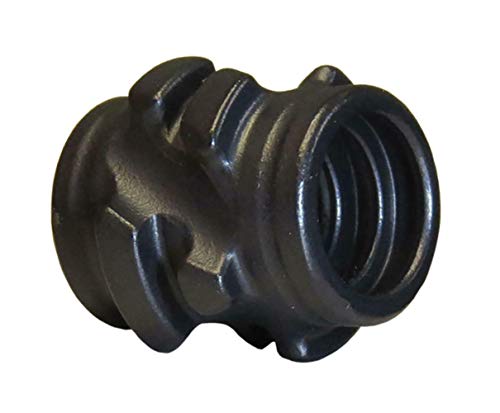
- ARS Mark9.6
ARS Mark is a ranking system developed by bestairriflescopes.com. ARS Mark has no relationship or impact from any manufacturers or sales agent websites. Learn more
- BrandHamskea

- ARS Mark9.4
ARS Mark is a ranking system developed by bestairriflescopes.com. ARS Mark has no relationship or impact from any manufacturers or sales agent websites. Learn more
- BrandG5 Outdoors
- ARS Mark8.8
ARS Mark is a ranking system developed by bestairriflescopes.com. ARS Mark has no relationship or impact from any manufacturers or sales agent websites. Learn more
- BrandVTurboWay

- ARS Mark8.8
ARS Mark is a ranking system developed by bestairriflescopes.com. ARS Mark has no relationship or impact from any manufacturers or sales agent websites. Learn more
- BrandTRUGLO

- ARS Mark8.6
ARS Mark is a ranking system developed by bestairriflescopes.com. ARS Mark has no relationship or impact from any manufacturers or sales agent websites. Learn more
- BrandLinkboy Archery

- ARS Mark8.6
ARS Mark is a ranking system developed by bestairriflescopes.com. ARS Mark has no relationship or impact from any manufacturers or sales agent websites. Learn more
- BrandLOKHEIRA ARCHERY

- ARS Mark8.2
ARS Mark is a ranking system developed by bestairriflescopes.com. ARS Mark has no relationship or impact from any manufacturers or sales agent websites. Learn more
- Brand- QI HUO JU -

- ARS Mark8.0
ARS Mark is a ranking system developed by bestairriflescopes.com. ARS Mark has no relationship or impact from any manufacturers or sales agent websites. Learn more
- Brand- QI HUO JU -
Last update on 2026-10-01 / Affiliate links / Images, Product Titles, and Product Highlights from Amazon Product Advertising API
FAQs
Do I need a bow press to install a peep sight?
You do not always need a full bow press if you use a handheld string separator tool made of smooth plastic. A bow press remains the safest method because it relieves tension completely, preventing any friction against string fibers. If you use a handheld separator tool, insert it gently and work carefully to avoid snagging or snapping individual strands.
How do I know what size aiming hole to use?
Your choice depends on whether you prioritize target accuracy or low-light visibility. Target archers prefer small 1/8-inch or 3/32-inch holes because they create a tighter sight picture and sharpen focus on distant targets. Hunters usually choose 3/16-inch or 1/4-inch holes so they can see clearly during early morning and late evening while framing the entire front sight ring.
Why is my peep sight turning sideways at full draw?
A peep turns sideways because of string stretch, uneven strand division, or a twisted D-loop. If you divided the string with more strands on one side than the other, the tension imbalance twists the unit sideways under draw force. Adjusting your D-loop alignment or adding a half-twist to the bowstring in a bow press will usually square the peep up with your eye.
Can I use a flathead screwdriver to open the bowstring?
No, you should never use a screwdriver, knife, or any metal tool to separate bowstring strands. The sharp, square edges of metal tools easily cut the microscopic synthetic fibers inside the string bundle. Even a single severed strand weakens the bowstring significantly, creating a dangerous hazard that can cause the string to snap under draw tension.


12 Best 22 Pcp Air Rifle For Hunting of 2026 With Quiet Power

7 Best 22 Pcp Air Rifle Under 300 of 2026 For Backyard Pest Control

10 Best 22 Break Barrel Air Rifles of 2026 For Backyard Pest Control

10 Best 30 Caliber Pcp Air Rifle of 2026 For Medium Game

Top Best 177 Air Rifle Under 100: Budget-Friendly Picks for 2026

How to Safely Reload Shotgun Shells at Home

11 Best Co2 Air Rifle For Pest Control of 2026 To Ensure Humane Dispatch

12 Best Inexpensive Air Rifles of 2026 For Dependable Backyard Accuracy






