
How to Make an Accurate Bow Sight Tape

Setting up a new yardage sticker on an adjustable sight dial is far easier than it looks, and there is no need to worry about complex math. The process comes down to shooting two clean marks on blank tape, usually at 20 yards and 50 or 60 yards. Once both pencil lines are set, you simply match the space between those marks to a pre-printed yardage strip or a computer template and stick it onto your dial.
The right strip for your bow depends on arrow weight, bow speed, and the distance between your peep sight (the small aiming hole in the bowstring) and the front pin. Solid shooting form at that longer yardage also matters, because a scattered group will skew your gap. Here is the step-by-step way to set your baseline marks and get on target at every distance.
Gather your supplies and clear your shooting lane before you begin
A sight tape is simply a yardage sticker mounted to an adjustable sight dial (often called a slider sight). It shows where to turn your dial so your aiming pin points right at targets from twenty yards out past sixty or eighty yards. If you switch to heavier broadheads, adjust your draw weight, or move your peep sight, your arrow trajectory changes completely. When that happens, your old yardage numbers will cause you to miss targets or lose arrows.
Setting up a new yardage sticker takes less than an hour at a shooting range, but you need your gear ready first. Get a roll of narrow white painter tape, a sharp fine-point pencil, and a quality laser rangefinder. You will also need an Allen wrench set to loosen and lock your sight elevation bolts. Make sure your bow is tuned and your peep sight matches your natural anchor point. If you want to review aiming fundamentals before you begin, look at how to use a bow sight to confirm your shooting form.
Before shooting, check your target backstop and shooting lane. Stepping back to long distances increases the risk of an errant arrow clearing an undersized target block. Pick a calm day with minimal crosswind so sideways gusts do not hide vertical aiming errors. Never draw your bow if anyone is downrange, and inspect each arrow shaft for cracks before shooting.
Lock in your close-range mark at twenty yards
Your close-range zero provides the starting baseline for the rest of your sight tape. A mistake at twenty yards throws off every single mark on the dial, so take time to shoot tight groups before making any permanent lines.
- Cut a small strip of plain white tape and stick it neatly onto the indicator surface of your adjustable sight dial. Smooth out any bubbles so the tape sits completely flat.
- Range your target with a laser rangefinder to confirm you stand exactly twenty yards from the target face.
- Center your front sight housing in your peep sight circle and shoot a group of three arrows at the center dot.
- Loosen the elevation lock and use the dial to adjust the aiming pin. Move your sight pin toward the arrow impact: if arrows hit high, turn the dial to raise the pin; if they hit low, lower the pin.
- Shoot another group to confirm arrows hit dead center at twenty yards. Once elevation is locked, use your pencil to draw a crisp horizontal tick mark directly opposite your sight indicator needle.
- Write a small "20" beside your pencil line. Keep the pencil lead sharp so the line stays thin, preventing tiny elevation errors from multiplying at longer distances.
Walk back to your long distance to establish your second mark
Arrow flight is curved, dropping steeper the farther it travels. Shooting a second mark at long range reveals the true arc of your arrow so your yardage sticker stays on target at every distance in between.
Sixty yards is the ideal calibration distance for most compound setups because it creates a wide gap between your marks, making your final tape selection accurate. But if your arrows do not group tightly at sixty yards, use fifty yards instead. A tight group at fifty yards produces a much better tape than a scattered group at sixty.
- Step back to thirty yards first rather than walking straight to your long mark. Turn your sight dial down slightly to compensate for drop and shoot one arrow to confirm you are safely on target.
- Move back in ten-yard increments, shooting two arrows at forty and fifty yards. Adjust the dial down each time to prevent arrows from sailing over the target.
- Stand at your chosen long distance (such as fifty or sixty yards) and verify the range with your rangefinder. Focus on a smooth trigger release.
- Shoot a group of three or four arrows. If the group clusters below the bullseye, lower the sight pin. If it hits high, raise the pin until arrows strike dead center.
- Rest for two minutes so your bow arm does not shake from fatigue, then shoot three more arrows to confirm the group stays centered.
- Draw a second crisp pencil line directly across from the indicator needle and label it with your distance, such as "60".
Match your two marks to a pre-printed scale or print your own
With your twenty-yard mark and your long-distance mark penciled onto the blank tape, you have the exact drop rate of your setup. Now you must turn those two marks into a complete yardage sticker with lines for every yard in between.
Pre-printed scale sheets come standard with most slider sights and replacement kits. These sheets include dozens of numbered strips with varying line spacings. To use them:
- Hold the pre-printed scale sheet against the blank tape on your sight dial.
- Slide the strips along your pencil marks until you find the exact scale number where the 20-yard line matches your first mark and the 50- or 60-yard line matches your second mark.
- If your marks fall between two scale numbers, select the scale matching your long mark most closely.
- Peel the matching pre-printed strip and stick it to your sight dial plate, aligning the twenty-yard mark with your indicator needle.
The computer software method calculates arrow drop using ballistics formulas. You enter arrow speed, total arrow weight in grains, peep height, and sight radius (the distance from your peep sight to your front sight pin). The program then generates a printable sheet of custom yardage strips. If you shoot a setup like a bow sight for Mathews bows, software lets you customize tapes for specific arrow weights and cam let-offs.
However, computer tapes require flawless measurements. If your arrow speed reading is off by five feet per second, your printed tape will miss at long range. Pre-printed scale sheets require no chronograph or math; they rely on real arrow impact. For most shooters, matching marks to a pre-printed scale sheet is faster and more reliable.
Check these common form and setup errors if your arrows drift
If your yardage sticker hits dead center at thirty yards but strikes high or low at seventy yards, check these common issues:
- Anchor point movement: A tiny shift in how your hand contacts your jaw changes your eye alignment. If your anchor creeps up, your arrows strike low. If it creeps down, arrows fly high.
- Peep sight alignment: Failing to center the front sight housing inside your peep circle pushes arrows several inches off target at long range.
- Shifting sight radius: The sight radius is the distance from your peep sight to your sight pin. If you slide your sight bar in or out, the spacing between your yardage marks changes immediately. Keep the bar set at the same detent position.
- Arrow rest tuning: If an arrow leaves the bow crooked, the fletchings cause aerodynamic drag. This bleeds arrow speed quickly past forty yards, causing shots to strike lower than your tape predicts.
- Shooter fatigue: If you shot your sixty-yard mark when your bow arm was tired, dropped form may have created an inaccurate mark. Re-verify your marks on a fresh day.
- Third-axis leveling: If your sight third axis is tilted, shooting uphill or downhill throws arrows off vertically. When using a best bow sight for treestand hunting, leveling your sight axes ensures yardage marks remain dependable from tree perches.
Pick a ready-made tape kit to save time at the range
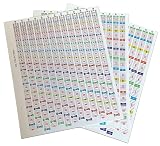
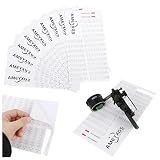
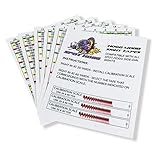
If you want to avoid drawing lines by hand or calculating ballistics on a computer, replacement sight tape kits offer an easy shortcut. These packs supply pre-printed yardage stickers made from thick, weatherproof vinyl that withstands rain, morning dew, and bright sun.
When selecting a replacement tape kit for your adjustable sight dial, verify whether your sight uses a flat indicator plate or an enclosed rotating drum that requires a curved wrap. Look for kits with clear high-contrast numbers, distinct color-coded markers, and single-yard graduation marks. A quality pack includes scales spanning from twenty yards out past one hundred yards, giving you ample adjustment room for practice and long-range shooting.

- ARS Mark8.8
ARS Mark is a ranking system developed by bestairriflescopes.com. ARS Mark has no relationship or impact from any manufacturers or sales agent websites. Learn more
- BrandN/A

- ARS Mark-
ARS Mark is a ranking system developed by bestairriflescopes.com. ARS Mark has no relationship or impact from any manufacturers or sales agent websites. Learn more
- BrandSkylety

- ARS Mark-
ARS Mark is a ranking system developed by bestairriflescopes.com. ARS Mark has no relationship or impact from any manufacturers or sales agent websites. Learn more
- BrandSkylety

- ARS Mark-
ARS Mark is a ranking system developed by bestairriflescopes.com. ARS Mark has no relationship or impact from any manufacturers or sales agent websites. Learn more
- BrandHHA

- ARS Mark-
ARS Mark is a ranking system developed by bestairriflescopes.com. ARS Mark has no relationship or impact from any manufacturers or sales agent websites. Learn more
- BrandPapa G's
- ARS Mark-
ARS Mark is a ranking system developed by bestairriflescopes.com. ARS Mark has no relationship or impact from any manufacturers or sales agent websites. Learn more
- BrandHHA

- ARS Mark-
ARS Mark is a ranking system developed by bestairriflescopes.com. ARS Mark has no relationship or impact from any manufacturers or sales agent websites. Learn more
- BrandAxcel Archery Sights
- ARS Mark-
ARS Mark is a ranking system developed by bestairriflescopes.com. ARS Mark has no relationship or impact from any manufacturers or sales agent websites. Learn more
- BrandFQH

- ARS Mark-
ARS Mark is a ranking system developed by bestairriflescopes.com. ARS Mark has no relationship or impact from any manufacturers or sales agent websites. Learn more
- BrandTrophy Ridge

- ARS Mark-
ARS Mark is a ranking system developed by bestairriflescopes.com. ARS Mark has no relationship or impact from any manufacturers or sales agent websites. Learn more
- BrandHHA

- ARS Mark-
ARS Mark is a ranking system developed by bestairriflescopes.com. ARS Mark has no relationship or impact from any manufacturers or sales agent websites. Learn more
- BrandAolamegs

- ARS Mark-
ARS Mark is a ranking system developed by bestairriflescopes.com. ARS Mark has no relationship or impact from any manufacturers or sales agent websites. Learn more
- BrandSpot Hogg

- ARS Mark-
ARS Mark is a ranking system developed by bestairriflescopes.com. ARS Mark has no relationship or impact from any manufacturers or sales agent websites. Learn more
- BrandSpot Hogg
- ARS Mark-
ARS Mark is a ranking system developed by bestairriflescopes.com. ARS Mark has no relationship or impact from any manufacturers or sales agent websites. Learn more
- BrandSpot Hogg

- ARS Mark-
ARS Mark is a ranking system developed by bestairriflescopes.com. ARS Mark has no relationship or impact from any manufacturers or sales agent websites. Learn more
- BrandAxcel Archery Sights
Last update on 2026-10-01 / Affiliate links / Images, Product Titles, and Product Highlights from Amazon Product Advertising API
FAQs
What distance should I use for my long calibration mark?
Sixty yards is the best choice for most archers because it creates a wide physical separation between your marks, making scale matching easy. If your bow shoots low poundage or your groups scatter at sixty yards, use fifty yards instead. Always calibrate at a distance where you can hold a consistent group.
What happens to my sight tape if I change broadheads or arrow weight?
Changing arrow weight, point weight, or vane style directly alters arrow speed and drop. Even a small difference in arrow weight causes arrows to hit lower at long range. Whenever you switch arrow components, apply fresh blank tape and mark new calibration lines.
Can I make an accurate sight tape without shooting past thirty yards?
Calibrating only at twenty and thirty yards leaves too small a gap between marks to pick the correct scale accurately. A slight pencil width error can match several different tapes, leading to misses at fifty yards. If your home range is limited to thirty yards, visit an outdoor range to establish a true long-distance mark.
Why do my sight tape marks hit low in cold winter weather?
Cold air is denser than warm summer air, which creates greater aerodynamic drag against arrows in flight. Bow limbs and strings can also lose a small amount of speed in freezing temperatures. These factors cause long-range arrows to strike slightly lower in winter than during warm summer practice.


12 Best 22 Pcp Air Rifle For Hunting of 2026 With Quiet Power

7 Best 22 Pcp Air Rifle Under 300 of 2026 For Backyard Pest Control

10 Best 22 Break Barrel Air Rifles of 2026 For Backyard Pest Control

10 Best 30 Caliber Pcp Air Rifle of 2026 For Medium Game

Top Best 177 Air Rifle Under 100: Budget-Friendly Picks for 2026

How to Safely Reload Shotgun Shells at Home

11 Best Co2 Air Rifle For Pest Control of 2026 To Ensure Humane Dispatch

12 Best Inexpensive Air Rifles of 2026 For Dependable Backyard Accuracy






