
How to Replace a Peep Sight on a Compound Bow at Home

Mark the exact position of the existing peep sight on the bowstring with chalk or tape before cutting any thread. This quick mark preserves your natural anchor point so the new opening lines up cleanly with your eye. Next, ease the string tension using a press or a smooth separator wedge, slip the new sight between balanced strands, and tie it in securely with serving thread (thin, protective cord).
The project changes slightly based on your setup. A bow press creates total slack, while a handheld separator tool lets you work directly at a bench without pressing the limbs. Choosing a tubed peep means a small rubber hose pulls the opening straight every time, while a tubeless peep requires balancing string fibers evenly so the hole does not turn sideways at full draw (pulling the bowstring back to your cheek). Here is how to complete the swap cleanly without damaging delicate string strands.
Essential Tools and Marking Your Peep Height
A peep sight is the small aiming ring set directly into the strands of your compound bowstring. It works like the rear sight on a rifle. When you pull the bow back to full draw, which means pulling the string back to your cheek or jaw anchor point, you look through this ring to center your front sight pins on the target. If your peep gets damaged, turns crooked, or feels too small in low light, swapping it at home is straightforward once you know how to protect your bowstring.
Before touching your bow, mark where your current peep sits. If the new peep sits even an eighth of an inch too high or low, your head position changes when you anchor. That shift throws off your form and makes your arrows hit high or low downrange. Learning how to use a bow sight with steady accuracy depends on having the exact same head angle on every shot.
Measure from the top of your nock point (or D-loop) straight up to the center of your current peep sight with a ruler or bow square. Note that number down. You can also mark the bowstring fibers right next to the peep with a wax pencil, or wrap a small strip of painter tape around the string just below the peep.
Gather your gear before you start so you never have to walk away from a partially disassembled bow:
- A smooth bowstring separator tool made of aluminum or coated plastic.
- A spool of archery bowstring serving thread (a thin, tightly wrapped protective cord).
- Blunt craft scissors for cutting thread cleanly without slicing string fibers.
- A standard ruler or bow square for measuring height.
- A strip of painter tape or a wax pencil for marking reference points.
- A mini lighter for melting thread tag ends so knots stay locked.
- Archery bow wax to smooth down fuzzy fibers after installation.
Removing the Old Sight and Inserting the New Peep
The biggest risk during this repair is accidentally cutting your bowstring fibers. A compound bowstring holds hundreds of pounds of stored energy even at rest. Slicing even one or two strands weakens the entire string and makes the bow unsafe to shoot. Work under bright light and keep sharp edges turned away from string fibers at all times.
Follow these steps to safely remove the old peep sight:
- Examine the old serving thread wrapped around the peep. Locate the knots at the top and bottom of the sight, as well as the wrap around the center groove of the peep body.
- Cut only the knots resting directly on top of the peep body. Never slide a bare blade down the side of the bowstring fibers. Slide a thin piece of cardboard between the knot and the string if you need a cutting shield.
- Snip the top knot carefully with blunt scissors. Peel and unwind the serving thread with your fingers until the upper portion of the peep is free.
- Repeat the process on the bottom knot and unwind the remaining thread so the old peep sits loosely inside the string split.
Now you can remove the old peep and slide the new one into place. If you have a portable bow press, compress the limbs slightly to relieve tension. If you do not have a press, use a handheld string separator tool (a smooth wedge tool used to spread string strands).
Follow these steps to split the strands and insert your new peep sight:
- Inspect the two fiber bundles in your bowstring. Most strings feature two contrasting colors. If your string is a single color, count the strands to divide the string evenly down the middle. Splitting 10 strands on each side keeps the peep balanced. An uneven split will make the peep twist when you draw.
- Slide the tapered tip of your string separator gently between the two bundles directly above the old peep. Never force the tool. Never use a screwdriver or knife blade, because sharp metal corners will nick and shred the fibers.
- Turn the separator sideways to widen the gap between the bundles. Slide the old peep out.
- Check the string groove angles on your new peep. Many peeps feature angled side tracks (often 37 to 45 degrees) to match the string angle at full draw. Make sure the angle tilts back toward your eye, not forward toward the target.
- Press the new peep into the gap. Seat one bundle into the left track and the other into the right track.
- Rotate the separator tool flat and slide it out. Bowstring tension will close around the peep and hold it in place.
- Verify the height with your ruler against your original measurement. Gently nudge the peep up or down until it matches your mark.
Aligning Rotation at Full Draw and Tying It Down
Just because the peep sits at the correct height does not mean it will face your eye when you aim. Bowstrings twist under tension as the cams roll over. If your peep sight turns sideways at full draw, you will see a flat piece of metal instead of a clear round hole. You must check and correct peep rotation before tying any permanent knots.
Nock an arrow on your bowstring and point your bow at an arrow backstop. Using your release aid, pull the bow smoothly back to full draw. Always use an arrow during this check. If your fingers slip or your release misfires without an arrow, the bow will dry-fire, which can shatter the limbs and cause serious injury.
Look through the peep sight while holding your normal anchor point against your cheek or jaw:
- If the peep opening looks like a perfect circle centered around your front sight housing, your alignment is correct. Let the bow down smoothly and prepare to tie the serving thread.
- If the peep looks like a narrow oval or sits sideways, the string bundles are pulling unevenly. Let the bow down safely. Insert your separator tool and move one or two strands from the heavy bundle to the light bundle to balance rotation.
- If the peep is only off by a few degrees, adjust your D-loop (the small cord loop where your release aid clips onto the string). Loosen the D-loop knots slightly and twist the loop toward the direction needed to pull the peep straight. On precision setups like those featured in our guide to the best bow sight for Mathews, fine D-loop adjustments or adding a half-twist to the main string will dial in straight alignment cleanly.
Once the peep points straight at your eye, tie it securely into the bowstring. Never shoot an untied peep. The shock and vibration of a released string can throw an untied peep directly at your face.
Follow these steps to tie your peep sight tightly using serving thread:
- Cut a piece of bowstring serving thread roughly 12 to 14 inches long. Wax the thread with bow wax so it grips the string without slipping.
- Tie a tight constrictor knot or square knot about half an inch above the peep, squeezing the two string bundles together.
- Wrap the serving thread tightly around the string, moving downward toward the peep for 6 to 8 tight coils.
- Guide the thread into the circular track around the outer waist of the peep body. Wrap the thread around this center groove two full times to prevent the peep from sliding up or down.
- Continue wrapping the thread around the bowstring below the peep, creating another 6 to 8 tight coils.
- Finish the wrap with 3 to 4 alternating half-hitch knots. Pull each knot tight with pliers or your fingers.
- Trim the excess thread, leaving a small tag end about an eighth of an inch long. Light a mini lighter and bring the base of the flame near the tag. Melt the thread down until it forms a small round ball flush against the knot. Never let direct flame touch your main bowstring fibers.
While working on your bowstring, always check fiber condition. Light surface fuzz is normal and smooths down with a dab of bow wax rubbed in with your fingers. But if you spot any strand cut completely through, or if fibers appear frayed and separated into loose fluff near the peep, stop immediately. Do not draw the bow. A severed strand means the string has lost its structural integrity. Take the bow to an archery pro shop to have a new string installed before shooting again.
Choosing the Right Peep Sight and Maintenance Gear
When shopping for a replacement peep sight and the tools to install it, focus on your shooting style, your hunting environment, and how your bowstring behaves. Peep sights come in various hole sizes (called apertures), different materials, and distinct string connection styles.
The aperture size determines how much light reaches your eye and how precisely you can center your target. Smaller aperture sizes, such as 3/32 inch or 1/8 inch, act like a pinhole camera. They sharpen your vision and help you center your front sight pins with exceptional precision on target ranges under bright sunlight. But in heavy timber, during overcast afternoons, or at legal shooting light at dawn and dusk, a tiny aperture blocks out valuable ambient light. For low-light conditions, such as those discussed in our breakdown of the best bow sight for treestand hunting, archers typically prefer larger 3/16 inch or 1/4 inch apertures that let in maximum light and frame the entire front sight ring effortlessly.
You also need to choose between a tubeless peep and a rubber-tubed peep. Tubeless peep sights are lightweight rings machined from aluminum or molded from durable plastic. They produce virtually no noise and do not rob your bow of arrow speed. However, they rely on a settled bowstring that does not twist. Tubed peep sights feature a small post connected to a flexible rubber tube that attaches to your bow cable. When you draw the bow, the rubber tube stretches tight and forces the peep to face your eye, even if your string has a natural twist. Tubed designs are great for older bows with worn strings, but the rubber tube can dry out, crack, or snap over time.
Pay close attention to groove angles and separator tools as well. Compound bows with short axle-to-axle measurements create a steeper string triangle at full draw than long target bows. Look for peep sights that offer dual 35 to 45 degree string grooves so the peep sits flat against your eye line. Finally, make sure any string separator tool you purchase has rounded edges and a smooth protective coating. A cheap separator with sharp metal edges can cut strands during installation and turn a simple peep swap into an expensive string replacement.
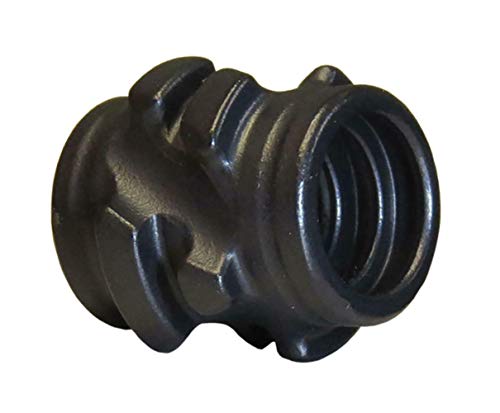
- ARS Mark9.6
ARS Mark is a ranking system developed by bestairriflescopes.com. ARS Mark has no relationship or impact from any manufacturers or sales agent websites. Learn more
- BrandHamskea

- ARS Mark9.2
ARS Mark is a ranking system developed by bestairriflescopes.com. ARS Mark has no relationship or impact from any manufacturers or sales agent websites. Learn more
- Brand- QI HUO JU -

- ARS Mark9.2
ARS Mark is a ranking system developed by bestairriflescopes.com. ARS Mark has no relationship or impact from any manufacturers or sales agent websites. Learn more
- BrandLuoyer
- ARS Mark8.8
ARS Mark is a ranking system developed by bestairriflescopes.com. ARS Mark has no relationship or impact from any manufacturers or sales agent websites. Learn more
- BrandVTurboWay

- ARS Mark8.8
ARS Mark is a ranking system developed by bestairriflescopes.com. ARS Mark has no relationship or impact from any manufacturers or sales agent websites. Learn more
- BrandTRUGLO

- ARS Mark8.6
ARS Mark is a ranking system developed by bestairriflescopes.com. ARS Mark has no relationship or impact from any manufacturers or sales agent websites. Learn more
- BrandSOPOGER

- ARS Mark8.4
ARS Mark is a ranking system developed by bestairriflescopes.com. ARS Mark has no relationship or impact from any manufacturers or sales agent websites. Learn more
- BrandSPG

- ARS Mark8.4
ARS Mark is a ranking system developed by bestairriflescopes.com. ARS Mark has no relationship or impact from any manufacturers or sales agent websites. Learn more
- BrandSPG

- ARS Mark8.0
ARS Mark is a ranking system developed by bestairriflescopes.com. ARS Mark has no relationship or impact from any manufacturers or sales agent websites. Learn more
- BrandPOEARCUS
Last update on 2026-10-02 / Affiliate links / Images, Product Titles, and Product Highlights from Amazon Product Advertising API
FAQs
Can I change a peep sight without owning a bow press?
Yes, you can swap a peep sight at home without a bow press by using a handheld bowstring separator tool. The separator gently wedges the two string bundles apart so you can remove the old peep and slide the new one in. You must still be cautious not to push the tool too far or twist it aggressively, which could stretch or fray the string fibers.
Why does my new peep sight twist sideways when I draw my bow?
A peep sight turns sideways when the string bundles have an uneven number of strands or when the string stretches under draw weight. You can fix this by swapping one or two strands from the heavier side to the lighter side, or by twisting your D-loop so your release aid pulls the string straight at full draw. If the peep is severely rotated, a bow press may be needed to add or remove a half-twist from the entire bowstring.
How do I know what size peep sight aperture to choose?
Your choice depends on whether you prioritize pinpoint target accuracy or visibility in dim light. Target archers prefer smaller apertures around 1/8 inch or 3/32 inch because they create a sharper sight picture in full sunlight. Hunters generally choose 3/16 inch or 1/4 inch openings because they let in more ambient light during dawn and dusk and make it easy to center the entire front sight housing.


12 Best 22 Pcp Air Rifle For Hunting of 2026 With Quiet Power

7 Best 22 Pcp Air Rifle Under 300 of 2026 For Backyard Pest Control

10 Best 22 Break Barrel Air Rifles of 2026 For Backyard Pest Control

10 Best 30 Caliber Pcp Air Rifle of 2026 For Medium Game

Top Best 177 Air Rifle Under 100: Budget-Friendly Picks for 2026

How to Safely Reload Shotgun Shells at Home

11 Best Co2 Air Rifle For Pest Control of 2026 To Ensure Humane Dispatch

12 Best Inexpensive Air Rifles of 2026 For Dependable Backyard Accuracy






