
How to Set Peep Sight Height on a Compound Bow

Most archers assume they should tilt their head or crane their neck until the peep sight (the small aiming ring set in the bowstring) lines up with their target. That habit ruins clean shooting, because the proper method is to draw with your eyes closed to your natural anchor and adjust the peep to match your relaxed posture. Opening your eye should reveal a straight view that lets you center the front sight ring without moving your chin at all.
Your ideal position depends on your anchor point (the spot on your jaw where your draw hand rests) and having your bow draw length set properly. Bow size also plays a part, since shorter bows create a sharper string angle that shifts where the peep touches your line of sight. Relieving string tension before sliding the part is just as vital to protect the strands from damage. Getting this height dialed in takes only a few careful steps.
Finding Natural Eye Level with the Closed-Eye Draw Method
Setting your peep sight height correctly starts with your body, not the bowstring. A peep sight is a small aiming ring set inside the bowstring that acts like the rear sight on a rifle. If you move your head or bend your neck to look through that ring, your shooting form breaks down. Your arrows will scatter across the target because your posture changes on every shot. To find where your eye naturally rests, follow these steps with an arrow loaded and pointed at a safe target or backstop.
- Stand in your natural shooting stance facing a safe target.
Reason: Your body settles differently when you stand relaxed than when you try to pose, and having your feet set prevents balance shifts during the draw. - Nock an arrow and point the bow downrange.
Reason: Drawing a compound bow without an arrow is dangerous because an accidental slip can dry-fire the bow, which can crack the limbs or snap the string. - Close both eyes before you begin to draw the string.
Reason: Closing your eyes stops your brain from searching for the sight ring and prevents your neck muscles from tilting your head toward the bowstring. - Draw the bow back smoothly until your hand reaches your anchor point.
Reason: Your anchor point is the exact spot on your jaw or the corner of your mouth where your draw hand rests, and establishing this contact point first creates consistent alignment. - Settle your head and neck into an upright, relaxed position.
Reason: Your head must stay level, exactly as if you were looking straight across the room, so your neck stays free of tension. - Open your aiming eye while keeping your head completely still.
Reason: This reveals where your line of sight naturally passes through the bowstring rather than forcing your eye to chase an improperly positioned peep. - Notice whether your line of sight is above or below the peep sight.
Reason: Seeing the peep sitting too high or too low tells you exactly which direction the ring needs to move along the string strands. - Let down the bow slowly and mark the string.
Reason: Making a tiny pencil mark or placing a small piece of tape next to where your eye crossed the string gives you a clear target when moving the peep.
Repeat this closed-eye draw at least three times before you move anything. If the pencil marks land in the same place every time, you have found your true anchor. If the marks move up and down by an inch, your draw hand is drifting on your jawline. Spend a few minutes repeating your draw until your hand hits the exact same spot on your jaw every time. Mastering your draw and anchor is essential when learning how to use a bow sight with better accuracy.
Moving the Peep Sight Safely on the Bowstring
Compound bowstrings are held under immense tension, often hundreds of pounds of force even when the bow is resting on a rack. You must never grab a peep sight and shove it up or down a tight bowstring. Sliding a plastic or metal ring along tight string strands will create intense friction that burns or slices the thin fibers. Slicing just a couple of strands weakens the string and can cause it to snap violently while you are holding it near your face.
The safest way to move a peep sight is to use a bow press. A bow press is a mechanical bench tool that squeezes the bow limbs inward, which removes all tension from the bowstring. Once the string is completely limp, the peep sight slides up or down freely between the strands without any friction or fiber damage. Most local archery pro shops will press your bow and adjust your peep in just a few minutes.
If you do not have a bow press, you can make minor height adjustments using a string separator. A string separator is a small wedge tool, usually made of smooth plastic or aluminum, designed to spread the two halves of the bowstring apart. You insert the separator between the strands an inch away from the peep, then gently twist it to open a pocket in the string. This takes the pinching pressure off the peep so you can reposition it safely.
Take small steps when moving the peep. A quarter-inch shift on the string moves your sight picture significantly downrange. Slide the peep a tiny fraction of an inch toward your pencil mark, remove the separator tool, and verify your line of sight with another closed-eye draw.
Checking Sight Housing Alignment at Full Draw
Once the peep sits at your natural eye level, you need to check how it frames your front sight. Your front sight has a sight housing, which is the round outer ring holding the aiming pins. When you look through your peep sight, you should not just look at the individual aiming pin. You should see the round front sight housing centered perfectly inside the round peep hole, creating two concentric circles like a bullseye inside a ring.
Use this short checklist at full draw to confirm that your peep height matches your front sight:
- Even light ring: You should see an even gap of daylight all the way around the outside of your front sight housing when looking through the peep.
- Zero head dipping: Your chin must remain level with the ground, with no tipping forward to see low pins or leaning backward to see high pins.
- Consistent nose touch: On many modern bows, the string should lightly touch the tip of your nose when you hit full draw without you having to press your face into the serving thread.
- Full pin visibility: You should see all your aiming pins clearly without shifting your cheek pressure against the bowstring.
If the peep is too high, you will see extra space above the sight housing, and you will naturally tip your chin up to center it. This causes your shots to hit high. If the peep is too low, you will bury your nose hard into the string and tilt your chin down toward your chest, which causes neck pain and pushes your shots low. When your peep height is dialed in, centering the two round housings feels effortless the moment your hand hits your jaw.
Tying in the Peep Sight with Serving Thread
A loose peep sight can fly out of the bowstring during release, creating a dangerous flying projectile and ruining your shot. Once your height is confirmed, you must lock the peep firmly in place using serving thread. Serving is a tight protective thread wrapped around bowstrings to resist wear. A properly tied peep sight will not budge, even after thousands of shots or rough trips through thick brush when carrying the best bow sight for treestand hunting.
- Cut two 12-inch pieces of bowstring serving thread.
Reason: Working with a dedicated foot of thread gives you enough material to wrap tight loops and tie clean knots without struggling for grip. - Wrap a tight collar directly above the peep sight.
Reason: Starting five or six tight wraps where the separated string strands rejoin above the peep pinches the strands together so the peep cannot slide upward. - Tie off the top collar with secure square knots.
Reason: A series of alternating half-hitches or a firm square knot prevents the wraps from loosening under the heavy vibration of the shot. - Repeat the collar wrap directly below the peep sight.
Reason: Tying an identical five-wrap collar below the peep stops it from sliding downward when the bow limbs snap forward on release. - Lash around the center groove of the peep sight itself.
Reason: Most peep sights feature a recessed channel around their outer edge; wrapping thread through this groove and around both string bundles locks the peep so it cannot pop out sideways. - Trim the extra thread leaving a short eighth-inch tail.
Reason: Leaving a small stub gives you material to melt into a flat bead that prevents the knot from pulling through. - Melt the thread tails carefully with a lighter.
Reason: Tapping the flame close to the thread melts the fibers into a smooth ball. Keep the open flame away from your actual bowstring fibers, as high heat will melt and ruin the main string.
Fixing Peep Rotation and Alignment Errors
A common frustration archers face after setting their peep height is peep rotation. You draw the bow back, settle into your anchor, and find that the peep sight is turned sideways or sitting at an odd angle. If the opening is tilted, you cannot see through the hole clearly, and your sight picture will look like an oval instead of a clean circle.
Peep rotation is caused by twist changes in the bowstring. Modern bowstrings are made of braided synthetic fibers twisted together under tension. New bowstrings stretch during their first hundred shots, which causes the string to rotate slightly as it settles. Temperature changes, humidity, and wear on the center serving can also cause slight twists over time.
You can solve peep twist in three main ways:
First, check your D-loop. The D-loop is the small nylon cord tied to your string where your mechanical release aid clips on. When you draw the bow, your release pulls the D-loop backward. If the D-loop is tied straight in line with the peep, drawing the string will pull the peep flat toward your eye. Sometimes simply nudging the D-loop knots around the string with your fingers will straighten the peep out at full draw.
Second, add or remove twists from the bowstring using a bow press. Putting the bow in a press relaxes the string so you can remove the bottom string loop from the bow cam. Adding a half-twist or full twist to the string will rotate the peep sight roughly 45 to 90 degrees. This is the cleanest, most permanent way to achieve perfect peep alignment on a high-performance compound bow.
Third, use a tubed peep sight. Tubed peep sights have a small barb on the side that connects to a length of flexible rubber tubing. The other end of the rubber tube anchors to your bow's upper buss cable. When you draw the string, the rubber tubing stretches tight and physically pulls the peep sight straight every single time. Tubed peeps are heavier and slightly reduce arrow speed, but they offer a simple, dependable fix for bows with older strings that will not stop twisting.
Choosing the Right Tools and Peep Sight Accessories
Setting your peep height at home is much easier when you have the right basic tools at your workbench. You do not need an entire archery workshop, but a few specific accessories prevent string damage and help you get a crystal-clear sight picture.
A string separator tool is the most important accessory if you do not own a mechanical bow press. Look for separators made from slick aluminum or dense plastic with smooth, rounded edges. Avoid using flathead screwdrivers, butter knives, or metal keys to pry your string strands apart. Sharp metal corners will nick the tiny strands of the string, causing hidden structural damage that can lead to catastrophic string failure.
When selecting a replacement peep sight, pay attention to the groove angle. Bowstrings leave the cams at different angles depending on the bow's axle-to-axle length and your draw length. Shorter hunting bows create a steep, sharp string angle at full draw, while longer target bows create a much wider angle. Peep sights designed with 37-degree or 45-degree string grooves allow the peep to sit completely vertical at full draw rather than cocking at an angle.
You should also consider the inner hole diameter, known as the aperture size. A small 1/8-inch opening provides great precision for bright target shooting, but it can make your target look dim during early morning or late evening hunting. A larger 3/16-inch or 1/4-inch opening lets in significantly more light and makes it easy to center your entire front sight housing in low light. Some modern peep kits include interchangeable threaded inserts, allowing you to swap aperture sizes without untying the peep from your string.
Finally, always keep a spool of dedicated bowstring serving thread in your tackle box. Standard sewing thread or fishing line is too slick, too thin, or too weak to secure a peep sight properly. High-strength braided nylon or polyester serving thread bites into the bowstring fibers, holds square knots securely, and withstands thousands of arrow releases without slipping.

- ARS Mark10.0
ARS Mark is a ranking system developed by bestairriflescopes.com. ARS Mark has no relationship or impact from any manufacturers or sales agent websites. Learn more
- Brandsafycaby
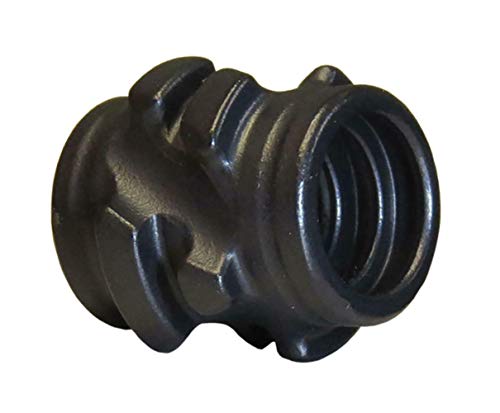
- ARS Mark9.6
ARS Mark is a ranking system developed by bestairriflescopes.com. ARS Mark has no relationship or impact from any manufacturers or sales agent websites. Learn more
- BrandHamskea
- ARS Mark8.8
ARS Mark is a ranking system developed by bestairriflescopes.com. ARS Mark has no relationship or impact from any manufacturers or sales agent websites. Learn more
- BrandVTurboWay

- ARS Mark8.6
ARS Mark is a ranking system developed by bestairriflescopes.com. ARS Mark has no relationship or impact from any manufacturers or sales agent websites. Learn more
- BrandSOPOGER

- ARS Mark8.6
ARS Mark is a ranking system developed by bestairriflescopes.com. ARS Mark has no relationship or impact from any manufacturers or sales agent websites. Learn more
- BrandLOKHEIRA ARCHERY

- ARS Mark8.4
ARS Mark is a ranking system developed by bestairriflescopes.com. ARS Mark has no relationship or impact from any manufacturers or sales agent websites. Learn more
- BrandSPG

- ARS Mark8.0
ARS Mark is a ranking system developed by bestairriflescopes.com. ARS Mark has no relationship or impact from any manufacturers or sales agent websites. Learn more
- Brand- QI HUO JU -

- ARS Mark7.8
ARS Mark is a ranking system developed by bestairriflescopes.com. ARS Mark has no relationship or impact from any manufacturers or sales agent websites. Learn more
- BrandFENJANER
Last update on 2026-10-01 / Affiliate links / Images, Product Titles, and Product Highlights from Amazon Product Advertising API
FAQs
Can I slide my peep sight without using a bow press?
You can slide your peep sight without a press only if you use a string separator tool to spread the strands and remove tension from the peep. Never drag or push a peep sight along a bare, tight bowstring. Sliding a peep along a tight string creates friction that frays or cuts the individual fibers, which can ruin your string and cause it to snap under draw.
How do I know if my peep sight is set too low?
Your peep sight is too low if you have to tilt your head forward, drop your chin toward your chest, or hunch your neck down to see through the hole. You should be able to stand completely upright with a relaxed, level neck and look straight through the center of the peep. A low peep will also cause your arrows to impact low on the target face.
Why does my peep sight turn sideways when I draw back?
A peep sight turns sideways because the synthetic strands of your bowstring have twisted slightly. This often happens on brand-new strings as they stretch and settle, or when the D-loop on the string shifts out of square. You can fix it by adjusting the D-loop, adding a half-twist to the bowstring inside a bow press, or using a tubed peep sight.
What size peep sight opening should I choose for hunting?
A 3/16-inch or 1/4-inch opening is ideal for bowhunting because it lets in plenty of ambient light during dawn and dusk when game animals are most active. A large opening also makes it easy to see and center your entire round sight housing quickly without narrowing your peripheral vision. Smaller 1/8-inch apertures are better suited for bright daylight target archery where pinpoint accuracy matters more than light transmission.


12 Best 22 Pcp Air Rifle For Hunting of 2026 With Quiet Power

7 Best 22 Pcp Air Rifle Under 300 of 2026 For Backyard Pest Control

10 Best 22 Break Barrel Air Rifles of 2026 For Backyard Pest Control

10 Best 30 Caliber Pcp Air Rifle of 2026 For Medium Game

Top Best 177 Air Rifle Under 100: Budget-Friendly Picks for 2026

How to Safely Reload Shotgun Shells at Home

11 Best Co2 Air Rifle For Pest Control of 2026 To Ensure Humane Dispatch

12 Best Inexpensive Air Rifles of 2026 For Dependable Backyard Accuracy






