
How to Sight In a Crossbow Quickly and Safely

Set up a target backstop at twenty yards and settle the crossbow onto a firm bench rest. Starting close keeps every shot safely on the target so stray arrows do not get lost in the grass. Shoot three matched arrows at the bullseye, check the group, and turn the adjustment dials toward the arrow cluster to walk your crosshairs onto the center. Once that twenty-yard baseline is locked in, dialing in your longer aiming marks becomes straightforward.
A few details shape the process. Scopes with multiple aiming lines require tuning marks out to forty or fifty yards, whereas a single dot holds one set distance. Hunting broadheads can also steer differently than smooth practice tips, so always confirm your zero with your hunting setup. Resting the stock on a solid support eliminates body shake so you adjust only the optic. Here is how to get every arrow hitting dead center without wasting shots or breaking gear.
What do you need before shooting your first arrow?
Setting up properly before cocking your bow prevents damaged arrows, missed targets, and unnecessary frustration. Before you pull the string back, walk through this preparation checklist:
- A rock-solid shooting rest: Sighting in requires steady support. Use a sturdy table, a portable shooting bench, or shooting bags. Resting your elbows on your knees or shooting offhand wobbles too much to tell if an error came from your optic or your body.
- A heavy-duty crossbow target: Crossbow arrows fly with tremendous energy. Standard foam blocks designed for light vertical bows cannot stop high-speed bolts and will let them pass clean through, damaging fletchings and losing arrows. Choose a target backstop rated for your bow's speed.
- Identical arrows with matching tips: Every arrow you shoot during this process must be identical in shaft length, spine stiffness, and tip weight. If one practice tip (field point) weighs 100 grains and another weighs 125 grains, the heavier point drops faster and ruins your group.
- Rail lubricant and bow inspection: Examine the limbs for hairline cracks and verify that your bowstring serving shows no fraying. Apply a thin layer of manufacturer-approved rail lubricant along the track so the string glides smoothly and evenly.
- Safe cocking habits: Keep your hands and fingers below the rail flight deck at all times. Never release the bowstring without an arrow loaded (a dry fire). A dry fire releases violent shock directly into the bow limbs, which can shatter the limbs and cause serious injury.
How do you shoot your first group at 20 yards?
Twenty yards is the universal starting line for almost every crossbow optic. At this distance, arrows fly with a flat trajectory, making it easy to establish your baseline center point without launching arrows over the backstop.
- Measure the distance precisely. Use a tape measure or laser rangefinder rather than pacing it out. An error of three or four yards alters your arrow drop and confuses your dial adjustments. Set your target block flat and stable.
- Cock the bow squarely. Use a cocking rope or mechanical crank rather than your bare hands. Pulling by hand often draws the string unevenly, setting it crooked in the trigger latch and throwing shots sideways. Confirm that cocking hooks seat firmly against the rail.
- Seat the arrow completely. Place an arrow in the flight groove with the odd-colored vane pointing down into the track. Slide the shaft back until the nock sits flush against the bowstring. Leaving a gap between the nock and string can crack the shaft or cause a dry fire.
- Aim at separate target dots. Crossbows shoot tight groups. Firing three arrows at the exact same bullseye often results in one arrow smashing into the back of another. Pick three distinct dots on your target block so each arrow lands in its own spot.
- Shoot your three-arrow cluster. Settle the crossbow onto your bench rest. Align the top crosshair or top aiming dot directly over your target dot. Squeeze the trigger smoothly without jerking the stock. Repeat this for your other two target spots, then check where the cluster sits.
Which way do you turn the scope dials?
Understanding how your adjustment dials work prevents the mistake of chasing arrows in the wrong direction. Crossbow scopes use two dials hidden under screw-off protective caps: an up-and-down dial on top (the elevation dial) and a left-and-right dial on the side (the windage dial).
The dials move the arrow's point of impact toward your aiming point. If your arrows hit low, turn the top dial toward "UP" to lift the strike point. If your arrows hit to the left, turn the side dial toward "R" to push the strike point to the right.
Most dials move in small mechanical clicks. At close range like 20 yards, each click makes a very small move. For instance, a dial marked for 1/4 MOA (minute of angle) moves the impact point about a quarter of an inch at 100 yards, but only a twentieth of an inch at 20 yards. Moving your impact point one full inch at 20 yards requires around twenty clicks. Always adjust based on the center of your three-arrow cluster rather than a single stray shot. Turn your dials, shoot another two arrows to verify the change, and repeat until your shots land dead center.
How do you set your marks for longer distances?
Once your top crosshair or top aiming dot hits dead center at 20 yards, your base zero is locked. Now you can set up your lower aiming marks for 30, 40, and 50 yards. Crossbow scopes handle distance drop either with a fixed reticle featuring pre-spaced lines or with a speed-dial ring that adjusts line spacing to match arrow speed.
- Move your bench back to 30 yards. Measure the distance carefully with a rangefinder. Keep your shooting rest supported and level.
- Aim with your second mark. Place the second aiming line or second dot down from the top directly onto a fresh bullseye. Squeeze the trigger without turning your 20-yard base dials.
- Adjust your speed ring if equipped. If your scope features a speed-calibrated ring, check the velocity marked on the dial. If your 30-yard arrow hits lower than your aiming point, turn the speed dial to a lower setting, which widens the space between reticle marks. If your arrow hits high, turn the dial to a higher speed setting.
- Step back to 40 and 50 yards. Repeat this process using the third mark down for 40 yards and the fourth mark for 50 yards. Because arrows drop sharply past 30 yards, tiny aiming mistakes show up quickly. Learning how to use a bow sight with better accuracy helps you build the muscle memory and consistent head position needed to keep your view centered through the glass at extended ranges.
Why are your arrows scattering or missing the mark?
When arrows scatter in random directions instead of forming tight clusters, the issue is almost always mechanical rather than your optics. Work through this troubleshooting checklist to pinpoint the problem:
- Loose mounting screws: Crossbows produce sharp recoil that can rattle optic mounts loose. Check the screws that clamp the scope rings to the accessory rail and the screws holding the scope tube inside the rings. Snug them down with an inch-pound torque tool and apply blue thread-locking compound so screws do not vibrate loose under fire.
- Uneven string cocking: If your cocking rope pulls one side of the bowstring higher than the other, the string releases uneven energy into the arrow shaft. This causes arrows to drift erratically left or right. Mark the center of your bowstring with a marker so you can confirm that the string sits centered in the trigger box every time.
- Broadhead flight drift: Many hunters get frustrated when practice tips hit bullseyes, but broadheads fly wide. Fixed-blade hunting broadheads act like miniature wings in flight, catching oncoming air and steering the arrow off course. Make sure broadheads match the exact weight of your field points, check that blades align with your arrow vanes, or consider aerodynamic mechanical broadheads.
- Cracked or damaged arrows: A hairline crack in a carbon arrow shaft flexes under string pressure and throws the arrow off target. Flex each arrow gently before shooting and listen for cracking sounds. Check the plastic nock at the back for chips or cracks that disrupt string contact.
- Canting the crossbow: Canting means tilting the limbs to the left or right while aiming. Even a slight five-degree tilt will pull your arrow downward and sideways at 30 or 40 yards. Keep the limbs perfectly level with the ground before squeezing the trigger.
What should you look for in a replacement sight?
Many factory crossbow packages include budget scopes with dim glass, mushy adjustment dials, or narrow fields of view that make zeroing difficult. Upgrading to a quality enclosed tube sight or a dedicated multi-reticle scope makes sighting in faster and holds zero reliably season after season.
When choosing an optic, make sure it is rated specifically for crossbow recoil. Crossbow limbs deliver forward and backward shock that can break the internal lenses of standard rifle scopes. A dedicated model with etched glass reticles will withstand this vibration without shifting your zero.
Look for illuminated aiming points with adjustable brightness settings. A red or green illuminated dot helps you quickly identify your crosshairs against the dark hide of game during early morning or late evening hunts. A scope equipped with a calibrated speed ring is also worth the investment, as it lets you tune the drop lines to your specific arrow velocity without counting inches of drop in the field. If you hunt from elevated positions, mastering your sight picture and picking the best bow sight for treestand hunting allows you to manage steep downward angles cleanly.
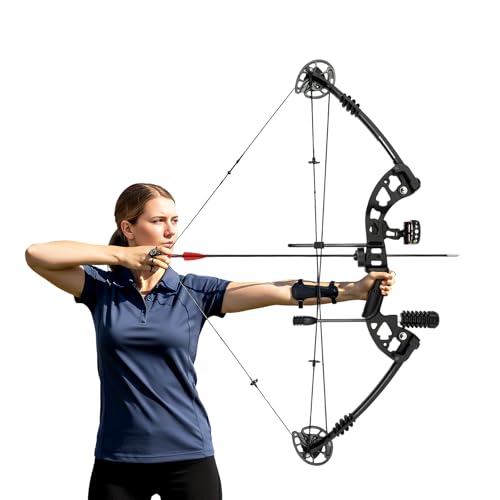
- ARS Mark10.0
ARS Mark is a ranking system developed by bestairriflescopes.com. ARS Mark has no relationship or impact from any manufacturers or sales agent websites. Learn more
- BrandLumicasaler

- ARS Mark9.0
ARS Mark is a ranking system developed by bestairriflescopes.com. ARS Mark has no relationship or impact from any manufacturers or sales agent websites. Learn more
- BrandTOPARCHERY
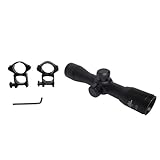
- ARS Mark8.6
ARS Mark is a ranking system developed by bestairriflescopes.com. ARS Mark has no relationship or impact from any manufacturers or sales agent websites. Learn more
- BrandSAS

- ARS Mark8.4
ARS Mark is a ranking system developed by bestairriflescopes.com. ARS Mark has no relationship or impact from any manufacturers or sales agent websites. Learn more
- BrandMidTen

- ARS Mark6.8
ARS Mark is a ranking system developed by bestairriflescopes.com. ARS Mark has no relationship or impact from any manufacturers or sales agent websites. Learn more
- BrandSAS
Last update on 2026-10-02 / Affiliate links / Images, Product Titles, and Product Highlights from Amazon Product Advertising API
FAQs
Can you sight in a crossbow at 10 yards first?
Yes, starting at 10 yards is a great way to confirm your arrows hit the target safely before stepping back to 20 yards. Fire one arrow using your top aiming mark to see where it lands on the backstop. If the shot is several inches off center, make a rough dial adjustment to get on paper, then immediately move back to 20 yards to set your true baseline zero.
Why do practice tips and hunting broadheads hit different spots?
Broadheads hit different spots because their cutting blades catch the air like wings, while smooth practice tips let air flow cleanly around the shaft. This aerodynamic steering pushes the arrow off line, especially at speeds above 300 feet per second. To fix this, confirm your broadheads match the weight of your practice tips, check arrow straightness, or switch to low-profile mechanical blades that stay closed in flight.
How many arrows should you shoot at one bullseye?
You should only shoot one arrow per bullseye dot when zeroing an accurate crossbow. Crossbows place arrows so close together that shooting multiple times at the exact same spot will split your shafts or tear off vanes. Use a multi-dot target face and aim each shot at its own independent circle to protect your equipment.
Do you need to sight in your crossbow every season?
Yes, you should always verify your zero before every hunting season and after long storage periods. Temperature swings can stretch synthetic bowstrings, and normal handling during transport can bump scope rings out of alignment. Shooting a quick confirmation group at 20 and 30 yards ensures your arrows still land exactly where you expect.


12 Best 22 Pcp Air Rifle For Hunting of 2026 With Quiet Power

7 Best 22 Pcp Air Rifle Under 300 of 2026 For Backyard Pest Control

10 Best 22 Break Barrel Air Rifles of 2026 For Backyard Pest Control

10 Best 30 Caliber Pcp Air Rifle of 2026 For Medium Game

Top Best 177 Air Rifle Under 100: Budget-Friendly Picks for 2026

How to Safely Reload Shotgun Shells at Home

11 Best Co2 Air Rifle For Pest Control of 2026 To Ensure Humane Dispatch

12 Best Inexpensive Air Rifles of 2026 For Dependable Backyard Accuracy






