
How to Sight in a Night Vision Scope in Just a Few Shots

A shooter sits at the bench staring at a glowing screen, wondering how to spot a bullet hole in the dark without wasting ammunition. Sighting in a night optic works fastest by zeroing during daylight with a pinhole cap, or marking a target at dusk with reflective tape. Instead of turning click dials, modern units let you move the digital crosshairs straight over your bullet impact inside the settings menu.
The exact routine depends on your optic type. Digital scopes handle broad daylight safely in color mode, while older analog tubes will burn out in bright sun unless you keep a pinhole cover over the lens. Target setup also changes with the hour, since plain paper works at noon, but nighttime shooting requires reflective tape to bounce back your infrared light. Here is how to dial in your rifle safely.
How do you prepare your rifle and optic safely?
Start by clearing your firearm chamber. Remove the magazine, open the bolt, and visually check the chamber to confirm the rifle is completely unloaded. Safe handling always comes first.
Next, inspect the mount. Digital night vision optics are heavier than traditional scopes, often weighing between one and three pounds due to internal displays, cameras, and batteries. That extra weight creates heavy momentum under recoil. If your mounting screws are slightly loose, the scope will slide forward or tilt, ruining your zero.
Attach the optic onto standard Picatinny or 20mm slotted accessory rails. If you have ever mounted a red dot sight for Ruger Mark pistols or hunting rifles, you know that loose base screws ruin accuracy immediately. Unlike lightweight setups where you might mount iron sights for cowitness with red dot sights, a night optic is a heavy unit that absorbs significant recoil energy. Push the scope base forward toward the muzzle before tightening cross-bolts to prevent it from slipping during recoil.
Use an inch-pound torque tool rather than an ordinary wrench to tighten screws. Ring screws usually require 15 to 20 inch-pounds, while base cross-bolts need 30 to 45 inch-pounds, depending on manufacturer specifications. Apply a drop of removable blue thread-locking fluid to each screw thread so shooting vibrations cannot back them out.
Check your sensor protection before powering on the optic in daylight. Traditional night optics use analog image tubes that burn out permanently in bright sunlight. Digital night vision scopes use camera sensors that will not burn out, but bright sunlight will overexpose the image and wash out your screen.
Keep your pinhole cap closed during daylight zeroing. A pinhole cap is a lens cover with a tiny hole that limits bright light entering the objective glass. That pinhole restricts incoming light like a narrow camera aperture, giving you a sharp display image in sunny conditions.
Finally, bore sight your rifle at 25 yards. Rest the rifle on sandbags, remove the bolt, look through the barrel bore at a target 25 yards away, and adjust your digital reticle until it roughly centers on that same mark. This takes two minutes and guarantees your first shot lands on paper.
What distance should you place your target first?
Always place your initial target at 25 yards. Starting at 100 yards with a newly mounted optic often causes bullets to miss the paper backer completely, wasting expensive cartridges. At 25 yards, your shots will land on the target board, giving you immediate feedback.
Your target choice depends on whether you sight in during the day or at night:
For daytime zeroing:
- Set up a sturdy cardboard backer with a high-contrast paper target at 25 yards.
- Use a bold black circle or bright orange bullseye that stands out clearly on a monochrome digital screen.
- Keep the pinhole lens cap closed over the front objective lens to prevent sun glare from washing out target details.
- Turn the diopter ring by the rubber eyecup until the digital crosshair lines look crisp to your eye.
- Turn the front objective focus ring until the target 25 yards away appears sharp on the screen.
For nighttime zeroing:
Standard paper targets reflect infrared light uniformly, turning your display into a bright white square where small bullet holes disappear into the glare. You need artificial contrast to spot your hits:
- Apply reflective tape to the bullseye. Cut strips of reflective safety tape into a small cross in the center of your cardboard. When your infrared illuminator hits the tape, it glows brightly on screen, giving you a clear aiming point.
- Use chemical hand warmers if you run thermal or hybrid setups. Activate a small hand warmer and staple it behind the target bullseye. The heat signature glows brightly, and cold air holes from bullet punctures show up clearly.
- Verify your backstop in the dark. Confirm a solid dirt berm rests directly behind your target board before chambering a round.
How do you move the reticle to your bullet hole?
Traditional glass scopes use physical windage and elevation click dials to move internal lenses. Digital night vision optics adjust electronically through reticle coordinates, which are menu numbers moving crosshairs up, down, left, and right across the display pixels.
Most modern scopes include a one-shot zero feature. A one-shot zero is a menu tool that freezes the screen image of the target so you can drag the crosshairs directly over your bullet impact without moving the rifle.
Follow these steps to adjust your point of aim:
- Settle your rifle on a stable shooting rest or sandbags to eliminate wobble.
- Aim dead center at your 25-yard target and fire three shots using steady, consistent trigger pulls. A 3-shot group reveals your true center of impact, whereas adjusting after a single shot risks chasing a pulled round.
- Locate the center of your 3-shot bullet cluster.
- Open the scope main menu and select the zeroing submenu.
- Align your primary crosshairs on the original bullseye and press the freeze button. The screen locks the image in place.
- Use the directional menu buttons to adjust the X-axis (horizontal) and Y-axis (vertical) coordinates. Steer the digital reticle across the frozen screen until it sits directly on the center of your bullet hole group.
- Press the save button. Many shooters forget to confirm changes, causing the scope to revert to factory coordinates when powered off. Always confirm and save the new profile settings.
How do you confirm your zero at longer hunting distances?
After centering your group at 25 yards, move your target out to your actual hunting distance. Most hunters zero centerfire rifles at 100 yards, while rimfire and airgun hunters often stop at 50 yards.
A 25-yard zero will rarely match your 100-yard impact point because bullets travel in a curved arc rather than a flat line. Depending on your caliber, scope height, and muzzle velocity, a rifle zeroed at 25 yards often strikes two to three inches high at 100 yards.
Follow these steps to finish your long-range zero:
- Place your target at 100 yards with fresh reflective tape or a clean paper target.
- Refocus your optic. Rotate the front objective focus ring until the 100-yard target edges look sharp.
- Fire a 3-shot group at the center of the target from your bench rest.
- Check your impact point. If your cluster sits two inches high and one inch left, open the zeroing menu.
- Adjust your X and Y reticle coordinates to compensate. At 100 yards, each coordinate step moves your point of impact in finer increments on the target board, allowing for precise adjustments.
- Fire two final confirmation shots to verify that your crosshairs align with your point of impact.
- Save your settings under your active rifle profile in the menu so your coordinates remain locked.
Why is your scope losing its zero after firing?
If your shots begin wandering across the target after several rounds, the optic sensor is rarely broken. Wandering zeros almost always stem from loose mounting hardware, mechanical shifts, or user error in the software.
Check these common trouble spots:
- Loose base screws: Heavy recoil acts like a tiny hammer against the scope mount. Check the base and ring screws with your torque tool. If any screw backed out, clean the threads, apply blue thread locker, and re-torque to proper specifications.
- Wrong profile selected: Modern digital scopes store multiple rifle profiles. If you accidentally hit a button in the dark, you might switch from Profile A to Profile B. Verify on the display screen that your saved zero profile is active.
- Parallax and focus blur: If the target looks fuzzy or the reticle seems to shift when you move your head behind the eyecup, your objective focus is misaligned. Adjust the front focus wheel until the target stays completely motionless behind the reticle.
- Battery spring rebound: Heavy recoil can cause internal battery contact springs to compress momentarily, causing the scope to reboot or flicker. Ensure your battery cap is tight to keep firm pressure on the power cells.
- Loose barrel attachments: Check your muzzle brake or suppressor. A loose muzzle accessory can wobble during firing and deflect outgoing gas, pushing your shots off target.
What should you look for in a night vision scope?
Choosing a digital night vision scope with straightforward zeroing tools and reliable hardware saves both time and ammunition at the range. These digital optics replace traditional glass with digital camera sensors and high-resolution internal display screens, making night hunting practical and accessible.
Before buying a digital night optic, verify these key features:
- Freeze-frame zeroing software: Look for optics featuring an internal one-shot zero function. This menu tool lets you capture a still image of your target and drag crosshairs directly to your bullet hole, saving you from guessing adjustment distances.
- Multiple zero profiles: Opt for a model that stores several weapon profiles. This feature lets you move the optic between different rifles or switch between various ammunition weights without re-sighting the scope from scratch every time.
- Recoil rating for your caliber: Ensure the optic is rated to handle the recoil impulse of your specific rifle caliber. Heavy recoil can damage delicate digital sensors and solder joints on scopes not rated for centerfire hunting rifles.
- Tactile housing buttons: Choose an optic with raised, easy-to-feel buttons on the chassis. You will often need to navigate zeroing menus and brightness settings in the dark while wearing gloves.
- Robust rail mounts: Look for scopes that include sturdy mounting brackets built for standard Picatinny or 20mm slotted accessory rails. A solid single-piece mount prevents the optic from shifting under repeated recoil.

- ARS Mark10.0
ARS Mark is a ranking system developed by bestairriflescopes.com. ARS Mark has no relationship or impact from any manufacturers or sales agent websites. Learn more
- BrandNightCrystal

- ARS Mark8.4
ARS Mark is a ranking system developed by bestairriflescopes.com. ARS Mark has no relationship or impact from any manufacturers or sales agent websites. Learn more
- BrandRZJSKJZM

- ARS Mark8.2
ARS Mark is a ranking system developed by bestairriflescopes.com. ARS Mark has no relationship or impact from any manufacturers or sales agent websites. Learn more
- BrandTriton

- ARS Mark8.0
ARS Mark is a ranking system developed by bestairriflescopes.com. ARS Mark has no relationship or impact from any manufacturers or sales agent websites. Learn more
- BrandTRV

- ARS Mark8.0
ARS Mark is a ranking system developed by bestairriflescopes.com. ARS Mark has no relationship or impact from any manufacturers or sales agent websites. Learn more
- BrandTriton
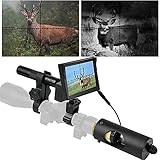
BESTSIGHT Night Vision Scope,DIY Night Vision(Day and Night),Quick Installation Barrle,5"
View on Amazon- ARS Mark7.6
ARS Mark is a ranking system developed by bestairriflescopes.com. ARS Mark has no relationship or impact from any manufacturers or sales agent websites. Learn more
- BrandBESTSIGHT

- ARS Mark7.6
ARS Mark is a ranking system developed by bestairriflescopes.com. ARS Mark has no relationship or impact from any manufacturers or sales agent websites. Learn more
- BrandGOYOJO

- ARS Mark7.4
ARS Mark is a ranking system developed by bestairriflescopes.com. ARS Mark has no relationship or impact from any manufacturers or sales agent websites. Learn more
- BrandBESTSIGHT

- ARS Mark7.0
ARS Mark is a ranking system developed by bestairriflescopes.com. ARS Mark has no relationship or impact from any manufacturers or sales agent websites. Learn more
- BrandKOLINLOV

- ARS Mark7.0
ARS Mark is a ranking system developed by bestairriflescopes.com. ARS Mark has no relationship or impact from any manufacturers or sales agent websites. Learn more
- BrandKOLINLOV
Last update on 2026-10-02 / Affiliate links / Images, Product Titles, and Product Highlights from Amazon Product Advertising API
FAQs
Can you sight in a night vision scope in broad daylight?
Yes, you can sight in a digital night vision scope in daylight as long as you keep the protective pinhole lens cap closed. The tiny pinhole limits incoming sunlight so the digital camera sensor does not get overwhelmed by glare. Digital scopes do not suffer permanent burn-in from daylight, but analog tube night vision must never be exposed to bright sun without dedicated daylight filters.
What target works best to see your hits at night?
Reflective safety tape works best because it bounces infrared light back into your scope, glowing brightly on the screen. Regular paper targets reflect infrared illumination evenly, causing small bullet holes to blend into the glare. If you use a thermal or hybrid scope, stick an activated chemical hand warmer behind the target bullseye to create a sharp heat source that reveals bullet punctures.
How does the one-shot zero feature actually work?
The one-shot zero feature takes a frozen digital picture of your target board while you aim at the bullseye. With the screen frozen, you navigate the menu to move a secondary crosshair over your actual bullet hole. Once you save the new coordinate numbers, the scope shifts your reticle electronically so your crosshairs match your point of impact.
Do digital scopes keep their zero when changing batteries?
Yes, digital scopes store reticle coordinates in permanent internal memory chips that do not require continuous power. Swapping batteries or letting the unit run completely dry will not wipe your zero data. Your zero only changes if you physically loosen the mount, change ammunition loads, or switch rifle profiles in the menu.


12 Best 22 Pcp Air Rifle For Hunting of 2026 With Quiet Power

7 Best 22 Pcp Air Rifle Under 300 of 2026 For Backyard Pest Control

10 Best 22 Break Barrel Air Rifles of 2026 For Backyard Pest Control

10 Best 30 Caliber Pcp Air Rifle of 2026 For Medium Game

Top Best 177 Air Rifle Under 100: Budget-Friendly Picks for 2026

How to Safely Reload Shotgun Shells at Home

11 Best Co2 Air Rifle For Pest Control of 2026 To Ensure Humane Dispatch

12 Best Inexpensive Air Rifles of 2026 For Dependable Backyard Accuracy





