
How to Sight In a Scope With a Laser to Hit Paper

Sighting in a scope with a laser means putting a beam tool into the barrel, aiming at a mark 25 yards away, and dialing the crosshairs onto the red dot. That quick step guarantees your first shot hits the paper, but it will never replace firing live rounds at the range. Bullets drop in a curve from gravity, while light travels in a dead-straight line.
A few details shape the exact setup. Chamber lasers slip directly into the gun like an empty cartridge, while muzzle adapters slide into the front tip of the barrel. The distance across your room and the height of your scope above the barrel also change where that red dot needs to sit. Follow these clear steps to align your view safely at home before burning through costly boxes of ammunition.
The Short Version
- Secure your unloaded rifle: Set your firearm in a firm gun vise or steady sandbags so it cannot move while you make adjustments.
- Insert the laser tool: Slide the barrel laser tool snugly into the muzzle tip or chamber, aiming the beam at a target 25 yards away.
- Match crosshairs to the dot: Remove scope caps and turn your elevation and windage dials until the crosshairs sit directly over the laser dot.
- Finish with live ammo at the range: Remove the laser, head to the shooting range, and fire three-shot groups to adjust for bullet drop and wind.
What a Laser Bore Sight Actually Does
A barrel laser tool shines a straight beam of light down the center of your rifle bore. Laser light travels in a dead-straight line without bending or slowing down. A real bullet behaves very differently. The instant a bullet leaves the muzzle, gravity pulls it downward and air resistance bleeds off its speed. That means a bullet flies along a curved arc, rising toward your sight line before dropping through it.
Because a straight beam of light cannot copy bullet drop, a laser bore tool will never produce a finished zero. Its true purpose is getting your initial shots onto paper on your first trigger pull. When you mount a new optic, the scope tube and the barrel can easily point in different directions. Heading to a 100-yard range without aligning them often means your shots miss the entire target backer, wasting expensive ammunition. The laser projects the center line of the barrel onto a target, giving you a clear guide to align your crosshairs before firing real ammo.
Safety Check and Rifle Bench Setup
Before bringing any alignment tool near your barrel, safe handling comes first. Drop the magazine, pull the bolt back, and look inside the action. Physically place your finger into the chamber to confirm no round is present. Move all live ammunition into another room. Never keep live cartridges near your workspace while working with barrel tools.
Once the firearm is clear, lock it into a steady rest. A gun vise, bench rest, or packed sandbags will keep the rifle still. If your rifle wobbles even slightly, your laser dot wanders across the target wall. That movement tricks you into turning your scope dials to chase a moving beam rather than aligning with the bore.
Take this moment to check your optic mounting screws before turning on any beams. Scope rings that slip under recoil will ruin your work during live firing. Use an inch-pound torque tool (a wrench that tightens bolts to exact pressure limits) to confirm that your base and ring screws meet manufacturer numbers. A drop of thread-locking fluid on screw threads keeps screws from loosening under recoil. If your setup includes backup iron sights, our guide on the best iron sights to cowitness with red dot sights explains how to align both sighting systems cleanly through your glass.
Step-by-Step Scope Alignment With a Laser
Once your rifle is safe and resting firmly, follow these steps to line up your crosshairs with the laser.
- Set up a target at 25 yards: Place a paper target 25 yards from your bench. This distance keeps the laser dot small and crisp. If working indoors, a long hallway works well. Outdoors, work at dusk or on an overcast day so sunlight does not wash out the beam.
- Mount the barrel laser tool: If your kit uses muzzle adapters, select the arbor that matches your caliber. Slide the adapter into the barrel opening until it sits flush against the muzzle crown. The fit should feel snug without forcing or scratching the steel. If using a chamber laser, slip the brass cartridge directly into the chamber and close the bolt gently.
- Aim the laser at the target: Switch the laser on and point the rifle so the beam rests on the paper target center. Lock your bench rest clamps so the firearm stays completely still.
- Look through the scope glass: Settle behind the rifle with your eye in your natural shooting position. Look through the scope and locate the center crosshairs. On a freshly mounted optic, your crosshairs will likely sit several inches away from the laser beam.
- Dial the crosshairs to the dot: Remove the caps covering the adjustment dial knobs (also called turrets). The top knob controls elevation (up-and-down), while the side knob controls windage (left-to-right). Turn the knobs until the crosshairs move directly over the laser dot. Turret labels indicate which way a bullet moves on paper during live fire. For instance, turning a dial toward "Up" moves the internal crosshairs downward inside the tube. Turn the dials until the crosshair intersection covers the laser dot.
- Remove the laser tool immediately: Switch the unit off and remove it from your firearm right away. Slide muzzle adapters straight out without prying against the crown. For chamber units, open the action and remove the brass cartridge. Never leave an alignment tool in your barrel, as firing a round with an obstructed bore causes severe damage and injury.
Muzzle Insert Adapters vs. Cartridge Chamber Lasers
Barrel laser tools generally fall into two categories: muzzle insert kits and brass chamber cartridges. Both styles get your crosshairs on paper, but they attach differently.
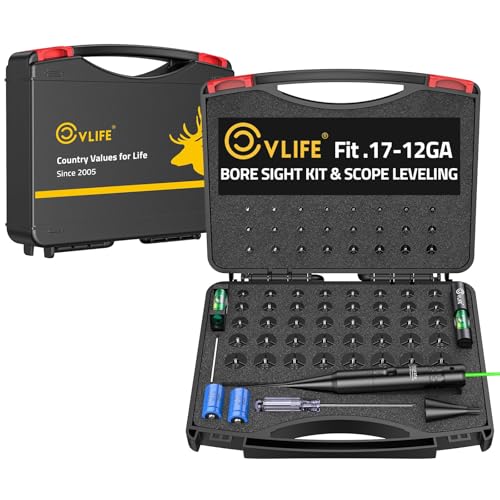
Muzzle insert kits slide into the front opening of your barrel using interchangeable expansion adapters. These kits include flexible arbors or rubber sleeves sized to fit barrels from .17 caliber up to 12 gauge shotguns. Their biggest strength is versatility. One kit can align a pocket pistol, a rimfire plinker, a hunting rifle, and a shotgun. However, you must seat the arbor carefully. If the adapter is loose, gravity causes the laser body to droop, throwing off your alignment. You must also slide arbors gently into the barrel tip to avoid scratching the crown. If you shoot handguns alongside long guns, our review of the best red dot sight for Ruger Mark pistols shows how compact optics benefit from universal alignment tools.
Cartridge chamber lasers are machined from solid brass to match the exact dimensions of regular ammunition. You drop the unit into the chamber, and the closed bolt holds it snugly in place. Because chambers are cut to precise factory tolerances, chamber lasers naturally sit straight along the bore line without guesswork. The downside is caliber limitation. A .223 chamber laser only fits rifles chambered in that cartridge. If you own several rifles in different calibers, buying separate brass lasers for each firearm gets expensive quickly.
Taking Your Rifle to the Range for the Final Live-Fire Zero
Aligning your crosshairs with a laser prepares your rifle for the range, but you still need live ammunition for a real zero. Zeroing means adjusting your scope dials so bullets land exactly where your crosshairs point at a set distance.
Start shooting at 25 yards instead of heading straight to 100 yards. The height of your scope above the barrel creates an angle between your vision line and the bore. Shooting at 25 yards ensures your bullet hits paper, giving you an immediate starting point.
Fire a group of three shots at the bullseye using your chosen hunting or target ammunition. Keep your rifle rested steady and focus on a smooth trigger press. Never adjust your scope dials based on a single shot, because a slight flinch can pull one round off center. A three-shot cluster shows your actual center of impact. Measure the distance between your group and the bullseye, then turn your windage and elevation click dials to move the group to center. Most rifle scopes adjust in 1/4 MOA clicks, which means each click moves bullet impact roughly 1/16 inch at 25 yards.
Once your shots punch the center ring at 25 yards, move your target out to your final zero distance, such as 50 yards or 100 yards. Fire another three-shot group to confirm where your bullets land. Because bullets drop over longer distances, you will typically need to turn your elevation dial a few clicks upward to bring the group dead center. Once your shots hit the bullseye, replace your turret caps.
What to Look for in a Laser Bore Sighting Kit
When picking a barrel laser tool to align your optics, focus on features that make setup quick and reliable across your firearm collection.
A multi-caliber kit with a generous supply of labeled adapters gives you the freedom to mount scopes on rifles, handguns, and shotguns without buying extra parts. Look for kits that clearly mark adapter sizes so you can match the sleeve to your bore diameter without guesswork. A snug fit inside the barrel ensures the beam points true along the bore axis.
Beam color also makes a practical difference. Red lasers work well indoors or at dusk, but bright daylight quickly washes out red light against paper targets. Green lasers project a brighter dot that the human eye detects easily, allowing you to see your alignment point outside at 25 yards. Models with built-in rechargeable batteries also save you from buying tiny button-cell watch batteries. Some kits even include a scope bubble level, which helps you square your crosshairs with the rifle receiver before dialing in your adjustments.

- ARS Mark9.2
ARS Mark is a ranking system developed by bestairriflescopes.com. ARS Mark has no relationship or impact from any manufacturers or sales agent websites. Learn more
- BrandVisiofire
- ARS Mark9.2
ARS Mark is a ranking system developed by bestairriflescopes.com. ARS Mark has no relationship or impact from any manufacturers or sales agent websites. Learn more
- BrandCVLIFE

- ARS Mark9.0
ARS Mark is a ranking system developed by bestairriflescopes.com. ARS Mark has no relationship or impact from any manufacturers or sales agent websites. Learn more
- BrandDespwolf

- ARS Mark9.0
ARS Mark is a ranking system developed by bestairriflescopes.com. ARS Mark has no relationship or impact from any manufacturers or sales agent websites. Learn more
- Brandmoloxo

- ARS Mark9.0
ARS Mark is a ranking system developed by bestairriflescopes.com. ARS Mark has no relationship or impact from any manufacturers or sales agent websites. Learn more
- BrandUUQ

- ARS Mark8.8
ARS Mark is a ranking system developed by bestairriflescopes.com. ARS Mark has no relationship or impact from any manufacturers or sales agent websites. Learn more
- BrandCVLIFE
- ARS Mark8.8
ARS Mark is a ranking system developed by bestairriflescopes.com. ARS Mark has no relationship or impact from any manufacturers or sales agent websites. Learn more
- BrandCVLIFE

- ARS Mark8.8
ARS Mark is a ranking system developed by bestairriflescopes.com. ARS Mark has no relationship or impact from any manufacturers or sales agent websites. Learn more
- BrandCVLIFE

- ARS Mark8.6
ARS Mark is a ranking system developed by bestairriflescopes.com. ARS Mark has no relationship or impact from any manufacturers or sales agent websites. Learn more
- BrandEZshoot

- ARS Mark8.6
ARS Mark is a ranking system developed by bestairriflescopes.com. ARS Mark has no relationship or impact from any manufacturers or sales agent websites. Learn more
- BrandOWLSHOOT
Last update on 2026-10-02 / Affiliate links / Images, Product Titles, and Product Highlights from Amazon Product Advertising API
FAQs
Why does my bullet hit a different spot than the laser dot?
A laser beam travels perfectly straight, while a real bullet drops through the air from gravity. Your scope also sits an inch or two above the barrel, creating an angled line of sight that intersects the bullet path. Wind, bullet weight, and barrel vibration also pull your shots away from the laser beam.
How far away should my target be when using a laser bore sight?
The best distance for laser bore alignment is 25 yards. At 25 yards, the laser dot stays small and sharp so you can center your crosshairs directly over it. Setting up farther away makes the dot fuzzy and harder to see while magnifying any slight adapter alignment errors.
Which way do I turn the scope dials to move the crosshairs to the laser dot?
Turn the adjustment dials in the direction that moves your crosshairs toward the laser dot on the paper. Turret markings indicate where live bullets move on the target. If your crosshair sits above the laser dot, turning your dial toward "Up" moves the crosshairs downward to meet the beam.
What should I do if the laser dot moves when I spin the tool in the barrel?
If the laser dot traces a circle when you twist the tool in your barrel, the adapter is seated unevenly. Pull the tool out, inspect the rubber sleeve for grit, and select a slightly tighter fitting adapter. When properly centered, rotating the tool should keep the dot stationary on your target.


12 Best 22 Pcp Air Rifle For Hunting of 2026 With Quiet Power

7 Best 22 Pcp Air Rifle Under 300 of 2026 For Backyard Pest Control

10 Best 22 Break Barrel Air Rifles of 2026 For Backyard Pest Control

10 Best 30 Caliber Pcp Air Rifle of 2026 For Medium Game
Top Best 177 Air Rifle Under 100: Budget-Friendly Picks for 2026

How to Safely Reload Shotgun Shells at Home

11 Best Co2 Air Rifle For Pest Control of 2026 To Ensure Humane Dispatch

12 Best Inexpensive Air Rifles of 2026 For Dependable Backyard Accuracy






