
How to Sight in a Scope Without Shooting at Home

The kitchen table smells of gun oil and fresh steel as the last mount screw tightens down over a new optic. Bore sighting at home lines up the scope crosshairs with the barrel opening so the very first shot lands cleanly on paper. It gets the firearm close enough to hit cardboard immediately, saving boxes of expensive ammunition before heading out for a final zero.
The exact method depends on the rifle design and the tools at hand. Bolt-action rifles allow someone to peer straight down the empty barrel from behind using just their naked eye, whereas closed designs usually call for a simple laser tool. A solid rest or sandbag is also necessary to keep the gun from wobbling while turning the adjustment dials. Here is how to complete the alignment safely from your own living room.
Can You Really Zero a Scope Without Shooting?
Bore sighting aligns the scope crosshairs or aiming dot with the physical center of the barrel bore. Setting a true zero means adjusting the optic dials so bullets land exactly where you aim at a chosen distance, such as 25, 50, or 100 yards. Aligning a scope at home provides mechanical alignment between the glass and the barrel, but it cannot deliver a finished zero on its own.
Bullets do not travel in a flat, straight line like a laser beam. Gravity pulls the bullet toward the ground the moment it leaves the muzzle. Air resistance slows it down, and the firing explosion causes the metal barrel to flex with tiny vibrations known as barrel harmonics. These natural factors create a curved flight path. Because no visual tool accounts for how your specific ammunition behaves in flight, live rounds are necessary to confirm your true point of impact.
Even though bore sighting cannot complete your zero, it solves the biggest headache of mounting a new scope. Arriving at the range with an unaligned optic often leads to rounds flying off the target backer completely. Sighting in at home ensures your very first shot hits paper, saving expensive ammunition and eliminating guesswork.
How Do You Bore Sight Using Just Your Eyes?
Visual bore sighting requires no special tools and costs nothing. This naked-eye method works on bolt-action rifles, break-action shotguns, and AR-style rifles where you can remove the bolt carrier group. It will not work on lever-action or pump-action firearms because the solid steel receiver blocks your view down the bore.
- Clear the firearm: Remove the magazine, pull the bolt back, and look inside the chamber. Confirm no cartridge is loaded and move all ammunition out of the room.
- Secure the rifle: Place the rifle into a solid gun vise or tight sandbags on a flat table. The firearm must rest firmly without shifting when you take your hands away.
- Remove the bolt: Take the bolt out of the receiver so you can look straight through the barrel opening from the rear.
- Pick a round target: Look through the barrel at a small target placed 25 yards away. A high-contrast circular target, like a black bullseye or an orange paper plate, works best.
- Center the target in the bore: Position your eye a few inches behind the receiver. Look down the barrel opening until the dark circle of the bore forms an even ring around the target.
- Look through the scope: Move your head up to the optic without nudging the rifle. Notice where the reticle sits compared to your target.
- Turn the adjustment dials: Remove the scope caps and turn the windage and elevation turrets until the crosshairs rest dead center on the bullseye.
- Re-check the view: Look back down through the bare barrel to ensure the gun did not move, then verify the scope crosshairs remain on target.
How Does a Laser Bore Sight Work at Home?
A laser bore sight projects a straight beam of light out of the barrel onto a target. This tool is especially helpful for semi-automatic handguns, lever-action rifles, and pump guns where you cannot see through the barrel. Laser units come either as cartridge-shaped tools that sit inside the chamber or as arbor tools that slide into the muzzle.
- Verify the chamber is empty: Unload the firearm completely and verify that the chamber and magazine well contain no live ammunition.
- Install the laser tool: Turn on the laser unit. Gently insert a cartridge-style unit into the chamber and close the action, or slide an arbor-style tool securely into the front muzzle opening.
- Set your target: Place a paper target roughly 25 yards away against a safe backstop. In bright conditions, a green laser dot is often easier to spot than a red beam.
- Stabilize the gun: Set the firearm on a bench rest or sandbag so the laser dot stays still against the target center.
- Adjust the reticle: Look through your scope or red dot window. Turn the adjustment click dials until the crosshairs or aiming dot rest directly over the projected laser beam.
- Remove the laser tool: Take the laser out of the chamber or pull the arbor from the muzzle before putting the gun away. Leaving an arbor in the barrel creates an extreme hazard if a live round is ever chambered.
What Do You Need to Set Up at Home?
Proper preparation makes the difference between an accurate alignment and wasted effort. If your setup wobbles or screws are loose, your scope will lose its alignment before you ever reach the range.
- A rock-solid rest: Use a padded vise, shooting bags, or heavy household items wrapped in towels. The firearm must stay completely still while you turn the adjustment dials.
- An unloaded chamber check: Always confirm the chamber is empty and store all ammunition in another room before starting any setup work.
- Torqued mounting screws: Check that your optic rings and mounts are tightened securely with an inch-pound torque tool. Use thread-locking fluid on screw threads so firearm recoil does not shake the optic loose.
- The right target distance: Setting up at 25 yards is ideal. If working in a hallway or basement, use the longest clear line available, keeping in mind that scopes sit slightly higher than the barrel bore.
- High-contrast paper targets: Use bright paper with a bold dark bullseye so you can easily see it through the barrel opening or spot the laser dot.
How Do You Finish Zeroing at the Range?
Bore sighting prepares your rifle for the range, but live ammunition completes the zero. Because bullet drop, velocity, and recoil affect where rounds strike, live firing is necessary to lock in your final point of impact.
Begin shooting at 25 yards, even if your ultimate goal is a 100-yard zero. Firing at 25 yards first confirms your shots land on paper, avoiding lost rounds in the dirt berm. Rest the firearm on a bench, aim at the bullseye, and fire a three-shot group. A three-shot group reveals your true group center rather than an isolated flinch.
Measure the distance between the group center and the bullseye. Scope turrets adjust in minutes of angle, or MOA. A 1 MOA adjustment shifts bullet impact roughly one inch at 100 yards, or one-quarter inch at 25 yards. If your dials adjust in 1/4 MOA clicks, sixteen clicks move your impact one inch at 25 yards. Adjust your dials toward the bullseye and fire another group.
If you shoot an optic paired with iron sights, lining up backup iron sights through the optic glass offers a helpful secondary check. Reviewing the best iron sights for cowitness with red dot sights can help you verify your iron sight alignment relative to the aiming dot. Once centered at 25 yards, move out to your target distance, fire three more rounds, make final fine adjustments, and tighten down your turret caps.
What Tools Make Bore Sighting Easier at Home?
When a rifle action blocks a clear view through the barrel, a dedicated bore sighting tool becomes essential. Cartridge-style laser tools fit directly into the chamber like a brass casing. They are simple to use and fit snugly against the chamber walls, making them ideal for gun owners who focus on one primary caliber.
Universal muzzle-mounted bore sighters use expanding arbors that slide into the muzzle. These tools work across multiple calibers, from small rimfire barrels up to 12-gauge shotguns. Look for sturdy metal housings and bright diodes that show up clearly on paper.
Before using any tool, confirm that your optic is mounted securely to a standard Picatinny or 20mm slotted accessory rail. A properly mounted scope paired with a dependable bore alignment tool keeps ammunition costs low and saves valuable time during your range trip.

- ARS Mark7.6
ARS Mark is a ranking system developed by bestairriflescopes.com. ARS Mark has no relationship or impact from any manufacturers or sales agent websites. Learn more
- BrandCREATESPACE

- ARS Mark-
ARS Mark is a ranking system developed by bestairriflescopes.com. ARS Mark has no relationship or impact from any manufacturers or sales agent websites. Learn more
- BrandCVLIFE
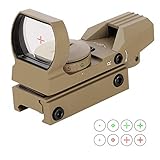
- ARS Mark-
ARS Mark is a ranking system developed by bestairriflescopes.com. ARS Mark has no relationship or impact from any manufacturers or sales agent websites. Learn more
- BrandESSLNB

- ARS Mark-
ARS Mark is a ranking system developed by bestairriflescopes.com. ARS Mark has no relationship or impact from any manufacturers or sales agent websites. Learn more
- BrandPinty

- ARS Mark-
ARS Mark is a ranking system developed by bestairriflescopes.com. ARS Mark has no relationship or impact from any manufacturers or sales agent websites. Learn more
- BrandFeyachi
Last update on 2026-10-02 / Affiliate links / Images, Product Titles, and Product Highlights from Amazon Product Advertising API
FAQs
What Distance Is Best for Bore Sighting Indoors?
A distance of 15 to 25 yards is best for bore sighting inside a home or garage. If your longest hallway only allows 10 yards, you can still align the optic, but the crosshairs will sit slightly higher than the bore. This small height offset happens because optics sit mounted about 1.5 to 2.5 inches above the barrel center line.
Can You Bore Sight a Red Dot Sight Too?
Yes, bore sighting works on open-window sights and enclosed tube sights just like it does on magnified scopes. You adjust the aiming dot using the same left-to-right and up-and-down adjustment click dials. Simply move the illuminated dot until it covers the bullseye or aligns with your laser beam on the target.
Why Does the Bullet Still Miss After Bore Sighting?
Bore sighting creates a straight mechanical line between the barrel and your optic glass. Bullets, however, travel along a curved arc influenced by gravity, bullet weight, powder velocity, and barrel vibration. Bore sighting guarantees your shots hit paper, but live shooting is required to dial the reticle to that curved bullet arc.
Will Bore Sighting Work on Lever Action Rifles?
Visual bore sighting does not work on lever-action rifles because the closed receiver prevents looking straight through the bore. To align an optic on a lever gun at home, use an arbor-style laser tool that mounts in the muzzle. The projected beam reveals the barrel path so you can adjust your optic crosshairs to match.


12 Best 22 Pcp Air Rifle For Hunting of 2026 With Quiet Power

7 Best 22 Pcp Air Rifle Under 300 of 2026 For Backyard Pest Control

10 Best 22 Break Barrel Air Rifles of 2026 For Backyard Pest Control

10 Best 30 Caliber Pcp Air Rifle of 2026 For Medium Game
Top Best 177 Air Rifle Under 100: Budget-Friendly Picks for 2026

How to Safely Reload Shotgun Shells at Home

11 Best Co2 Air Rifle For Pest Control of 2026 To Ensure Humane Dispatch

12 Best Inexpensive Air Rifles of 2026 For Dependable Backyard Accuracy






