
How to Sight In a Thermal Scope in Under Ten Rounds

Stick a square of aluminum foil tape or an activated hand warmer onto a cardboard backer before loading a single round. Thermal sensors detect heat differences rather than printed ink, so standard paper bullseyes look completely blank on the digital screen. Dialing in your rifle takes only a few minutes once you create visible heat contrast, shoot a tight group at close range, and move the digital crosshairs directly over the bullet holes.
The exact routine depends on whether the scope uses coordinate numbers or a screen snapshot feature (a menu tool that freezes the display image so you can align the crosshairs). Outdoor air temperature and sunlight also change how sharp the target glows against the backer board. Starting at 25 yards keeps your initial shots on paper, so you can dial in a precise zero without burning through expensive cartridges.
Why Does a Paper Target Look Blank Through Thermal?
Digital thermal sensors do not see colors, shadows, or printer ink. Instead, the sensor detects subtle variations in heat difference (thermal contrast) between an object and its surroundings. When you place a standard paper bullseye downrange, the black ink, white background, and cardboard backing sit at the exact same outdoor temperature. Because there is no temperature variance across the paper, the thermal sensor sees one uniform, flat sheet.
Looking through the eyepiece, your printed bullseye disappears into a smooth gray blur. You cannot aim at a spot you cannot see. Even when a bullet punches through paper, the tiny burst of friction heat lasts only seconds before cooling down. Unlike daytime setups where you might align iron sights for cowitness with red dot sights to verify mechanical alignment, thermal optics rely entirely on a digital screen with no visual line through the glass.
Safety comes first. Clear the firearm chamber, remove the magazine, and verify the bore is empty. Make sure your range has a safe backstop in all lighting conditions. Sighting in a thermal scope does not require daylight, but it requires strict muzzle awareness and a target that glows clearly on screen.
What Makes the Best Homemade Thermal Target?
You do not need expensive commercial heat targets to dial in your rifle. You can build an effective, reusable zeroing board using standard cardboard and simple household items that produce strong heat contrast.
Here are the most reliable DIY thermal targets you can build:
- Aluminum foil tape: Cut a 1-inch square of aluminum duct tape and stick it to your cardboard. Aluminum foil reflects the cold upper sky rather than holding heat. When you tilt your cardboard back 5 to 10 degrees, the foil bounces cold radiant energy into your scope lens, creating a crisp dark square against warm cardboard.
- Air-activated hand warmers: Open a chemical hand warmer, shake it to activate, and staple it directly to your target board. Hand warmers produce steady warmth that stands out brightly on white-hot and black-hot modes. Cover the packet with cardboard featuring a small center hole for a precise aiming point.
- Ice cubes in plastic bags: On hot afternoons, ice cubes provide an instant cold marker. Place an ice cube in a sealed bag and staple it to the board. The cold water creates a sharp heat difference against sun-baked cardboard.
- Heated steel washers: A steel fender washer taped over an activated hand warmer creates a distinct thermal ring. Warmth shines through the washer hole, providing a tight aiming point without blurring your display.
Set up your target during cooler morning or evening hours. Intense direct sunlight heats backer boards unevenly, washing out your aiming point.
How Do You Zero in Under Ten Shots?
Burning through expensive ammunition trying to find paper is frustrating. Starting close lets you lock in an exact zero using fewer than ten rounds.
Follow these steps to sight in your thermal scope quickly:
- Clear your rifle and perform a barrel alignment check (bore sight): Set your target at 25 yards. Place your unloaded rifle on sandbags. Remove the bolt and look down the barrel bore from behind the receiver. Center the target marker inside the bore. Without moving the rifle, look through your scope and adjust the crosshairs directly over the target.
- Fire a two-round initial group at 25 yards: Settle behind the rifle, align your aiming dot on the heat marker, and fire two shots without adjusting the scope between them.
- Locate your bullet holes: Inspect the cardboard to confirm your shooting rest is stable and locate your true point of impact (where the bullet hits).
- Adjust digital reticle coordinates: Open your scope zeroing menu. Shift the reticle coordinates (X axis for left-to-right, Y axis for up-and-down) until the crosshairs sit over the center of your bullet holes. Save these settings.
- Fire round three to confirm: Aim at the center heat marker and fire one shot. The bullet should strike dead center on your marker, completing your close-range zero.
- Move to your final distance: Move your target board to 50 or 100 yards, depending on your caliber trajectory and hunting terrain.
- Fire a three-round confirmation group: Fire rounds four, five, and six at your final distance to reveal your true grouping capability.
- Make your final coordinate adjustment: Adjust your reticle coordinates onto the center of the three-round cluster, save settings, and fire round seven to verify your zero.
How Does the Digital Reticle Freeze Feature Work?
Traditional daylight scopes rely on mechanical turrets. You turn left-to-right and up-and-down adjustment click dials to move internal glass lenses. Thermal scopes have no moving internal lenses. Instead, crosshairs are digital overlays drawn onto a micro-display screen by an internal processor.
Most modern thermal optics feature a digital freeze function (a screen snapshot feature). This tool takes the guesswork out of measuring inches on paper and zeroes the scope in very few shots.
To use the screen snapshot feature properly, follow this process:
- Aim at your heat marker from a stable bench rest and fire your shot.
- Keep the rifle pointed downrange and open the zeroing submenu.
- Select the freeze option. The scope takes a still snapshot of the target, freezing the image on your display.
- Relax your hold on the rifle. Even if the gun shifts on sandbags, the image stays locked on screen.
- You will see two reticles on screen. One stays fixed on your original point of aim. A second reticle moves for adjustment.
- Use the menu buttons to move the second reticle over the hole where the bullet landed.
- Confirm and save. The scope processor recalculates the pixel grid and shifts your crosshairs to your true point of impact.
Always fire one confirmation round after unfreezing to verify that the software saved the offset correctly.
Why Did Your Zero Wander or Shift Overnight?
Few things cause more frustration than zeroing your thermal scope on Friday, only to miss a shot on Saturday night. When your point of impact wanders, the issue is almost always mechanical, software-related, or environmental.
Check these common zeroing issues in order:
- Loose base mounting hardware: Recoil puts heavy stress on mounts. If your mount shifts on standard Picatinny or 20mm slotted accessory rails, bullets land inches off target. Use an inch-pound torque tool to tighten screws to manufacturer ratings, usually 25 to 35 inch-pounds for rail clamps and 15 to 18 inch-pounds for rings. Apply blue thread-locking fluid to keep screws secure.
- Forgetting to save before powering down: Thermal scopes run on internal software. If you adjust reticle coordinates but turn off power without pressing confirm, the menu discards your changes. Your scope reverts to the old zero. Always exit the zeroing menu with the designated save button.
- Selecting the wrong rifle profile: Multi-gun scopes store several weapon profiles (Profile A, B, C). Accidental profile switches cause your crosshairs to use incorrect coordinates. Confirm that your active profile matches the firearm in your hands.
- Dramatic temperature shifts: Major temperature drops cause subtle metal contraction in mounts, while air density shifts alter bullet drop. If you zero in warm afternoon sun and hunt in freezing air, your trajectory shifts slightly downrange. Run your scope non-uniformity correction calibration when outdoor temperatures swing.
- Unstable shooting positions: Zeroing off shooting sticks, truck hoods, or elbows introduces human error. Small wobbles mask your true mechanical grouping. Always use solid sandbags on a sturdy shooting bench.
What Scope Features Make Sighting In Much Easier?
When selecting a thermal optic or upgrading your night hunting setup, specific software tools and mounting designs make zeroing much simpler.
Look for scopes that feature a dedicated one-shot freeze mode. A digital freeze function eliminates the need to hold a rifle motionless while pressing menu buttons. This feature saves time and prevents wasted ammunition at the range.
Multiple zero profiles are equally valuable. A scope that stores several coordinate tables lets you save profiles for different hunting cartridges, varying distances, or separate rifles without re-zeroing each time.
Pay attention to the mounting hardware. A solid quick-detach mount designed for standard Picatinny or 20mm slotted accessory rails ensures your optic returns to zero after removal for storage. Clear menu layouts and tactile rotary knobs also make navigating dark menus fast and intuitive.

- ARS Mark9.4
ARS Mark is a ranking system developed by bestairriflescopes.com. ARS Mark has no relationship or impact from any manufacturers or sales agent websites. Learn more
- BrandDNT Optics

- ARS Mark9.2
ARS Mark is a ranking system developed by bestairriflescopes.com. ARS Mark has no relationship or impact from any manufacturers or sales agent websites. Learn more
- BrandRIX

- ARS Mark9.2
ARS Mark is a ranking system developed by bestairriflescopes.com. ARS Mark has no relationship or impact from any manufacturers or sales agent websites. Learn more
- BrandAGM Global Vision

- ARS Mark9.2
ARS Mark is a ranking system developed by bestairriflescopes.com. ARS Mark has no relationship or impact from any manufacturers or sales agent websites. Learn more
- BrandGOYOJO

- ARS Mark9.2
ARS Mark is a ranking system developed by bestairriflescopes.com. ARS Mark has no relationship or impact from any manufacturers or sales agent websites. Learn more
- BrandRIX

- ARS Mark9.0
ARS Mark is a ranking system developed by bestairriflescopes.com. ARS Mark has no relationship or impact from any manufacturers or sales agent websites. Learn more
- BrandDNT Optics
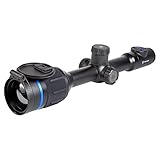
- ARS Mark8.6
ARS Mark is a ranking system developed by bestairriflescopes.com. ARS Mark has no relationship or impact from any manufacturers or sales agent websites. Learn more
- BrandPulsar
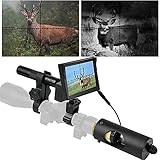
BESTSIGHT Night Vision Scope,DIY Night Vision(Day and Night),Quick Installation Barrle,5"
View on Amazon- ARS Mark7.6
ARS Mark is a ranking system developed by bestairriflescopes.com. ARS Mark has no relationship or impact from any manufacturers or sales agent websites. Learn more
- BrandBESTSIGHT
Last update on 2026-10-02 / Affiliate links / Images, Product Titles, and Product Highlights from Amazon Product Advertising API
FAQs
Can you sight in a thermal scope during daylight?
Yes, thermal scopes work just as well in daylight as they do at night. Sunlight will not damage thermal sensors because they detect heat rather than visible light. You only need a high-contrast target, like reflective foil tape or an ice pack, so your aiming marker stands out against the sun-warmed board.
What distance should you use for your final zero?
A 50-yard or 100-yard zero works best for most hunting rifles. A 50-yard zero keeps standard medium-caliber hunting bullets within two inches of your point of aim from 25 out to 150 yards. If you hunt open fields or shoot high-velocity cartridges, a 100-yard zero provides tighter long-range precision.
Do you need a special bore sight for thermal optics?
Standard visible laser bore sights do not show up on a thermal display screen because the sensor detects heat differences instead of visible light beams. While shooters using a rail mount pistol laser sight can align dots against a wall indoors, a thermal scope requires a mechanical bore check looking down the barrel or a specialized heated bore-sighting emitter.
Why did the scope menu lose your zero coordinates?
The most common cause is powering down the scope without confirming the save command in the zeroing menu. Most thermal scopes require holding a rotary dial or pressing a specific button to write new reticle coordinates into flash memory. If the unit powers off or the battery dies before saving, previous settings remain active.


12 Best 22 Pcp Air Rifle For Hunting of 2026 With Quiet Power

7 Best 22 Pcp Air Rifle Under 300 of 2026 For Backyard Pest Control

10 Best 22 Break Barrel Air Rifles of 2026 For Backyard Pest Control

10 Best 30 Caliber Pcp Air Rifle of 2026 For Medium Game

Top Best 177 Air Rifle Under 100: Budget-Friendly Picks for 2026

How to Safely Reload Shotgun Shells at Home

11 Best Co2 Air Rifle For Pest Control of 2026 To Ensure Humane Dispatch

12 Best Inexpensive Air Rifles of 2026 For Dependable Backyard Accuracy






