
Is Archery Good for Kids and How Safe Is It?

A child spots an archery target at a local park and immediately asks for their own bow. Archery is a fantastic activity for kids, offering a calm, rewarding way to build patience, body control, and sharp focus. When paired with basic adult supervision, it is also one of the safest sports a young person can try, turning active energy into quiet confidence without the hard collisions of team athletics.
The right fit comes down to a few practical details. Children need enough maturity to follow strict safety rules every single time they step up to shoot. The bow must also match their size and strength, keeping the pull resistance light enough to prevent sore muscles and bruised forearms. Having a clear, contained shooting space with a sturdy backstop behind the target is just as vital. Here is how to evaluate your child's readiness and choose the right path forward.
Look past the target to build your child's patience and body control
Archery looks quiet from the outside, but it engages a child's mind and body in unique ways. On the shooting line, children are not reacting to an opponent kicking a ball. They must control their breathing, align their posture, and quiet their thoughts. That stillness helps kids who find fast-paced team sports overwhelming.
The physical benefits center on upper-body balance and core stability. Drawing a bowstring works the large muscle groups across the upper back and shoulders evenly. A young archer learns to hold their torso steady while balancing their weight across both feet. This repeated movement builds healthy posture habits that carry over to the classroom.
Mental patience is where archery truly shines. In a world of screens and instant gratification, archery teaches children how to slow down. If an arrow flies wide, rushing only makes the next shot worse. Young shooters learn that hitting the center requires taking a deep breath, resetting their stance, and focusing on one shot at a time.
Self-confidence grows naturally with every round of arrows. Because archery is an individual pursuit, a child never worries about letting down teammates. When they place an arrow inside the yellow center ring, they know they earned that score entirely through personal effort. That clear accomplishment turns hesitant beginners into proud, capable young people.
Match the bow style to your child's developmental stage
Children develop motor skills and physical strength at different rates, so age guidelines serve as general milestones. Never rush a child into heavy equipment before their hands and attention span are ready. If the gear feels clumsy, your child will likely quit before discovering the fun.
For children ages 3 to 6, stick entirely to toy sets with rubber suction-cup arrows. At this stage, kids lack the finger strength to pull real bowstrings and the patience for formal range rules. Suction-cup toys let them mimic older archers and build coordination indoors without safety risks. You can also teach the first rule of archery: never aim at people or pets.
Ages 7 to 9 mark the ideal time for a real beginner recurve bow (a bow with limb tips curving away from the archer for extra speed). Kids in this bracket can follow safety commands and hold a steady line. Look for a youth bow with a draw weight under 15 pounds (lbs). Draw weight means how hard the string is to pull back, and keeping it light prevents muscle strain.
Around ages 10 to 13, kids can handle bows with adjustable draw length (how far back you pull the string to reach your anchor point, measured in inches). They also have the focus to practice aiming, such as learning to shoot archery with both eyes open so their depth perception stays sharp. Once in their teens, their strength lets them move into entry-level adult gear.
Enforce strict range discipline before anyone touches an arrow
Archery has an outstanding safety record, rivaling or beating sports like soccer or baseball for low injury rates. Archery has no collisions, sliding tackles, or wild pitches. That stellar safety record exists because ranges follow strict rules. As a parent, your job is establishing those habits in the backyard on day one.
Keep your home practice completely safe by teaching your child three mandatory rules before opening a bow case:
- Downrange stays empty while shooting: Nobody walks in front of the shooting line while anyone holds a bow. Arrows stay in the quiver (the arrow holder) until the range is clear and an adult gives the command to load.
- Never dry fire a bow: A dry fire means releasing a drawn bowstring without an arrow loaded. Without an arrow to absorb the stored energy, the bow limbs (the flexible arms that bend to store energy) can splinter, snapping the string into the archer's face or hands.
- Freeze on the cease-fire command: Agree on a single word, like "Stop" or "Hold," that anyone can shout if a pet or neighbor enters the yard. When your child hears that word, they must lower the bow immediately, remove the arrow from the string, and step back.
Never leave children unattended with archery equipment, regardless of maturity. Responsible kids can easily get excited after a good shot and turn around with an arrow still on the string. Stand right behind them, watch their hands, and keep sessions short so fatigue never leads to careless mistakes.
Choose between suction cups and real beginner limbs based on space and maturity
Choosing starter gear comes down to where you shoot and your child's maturity level. Parents often feel torn between plastic toy sets and real youth recurve bows. Both options serve a clear purpose, but choosing the wrong style for your home leads to broken equipment or frustration.
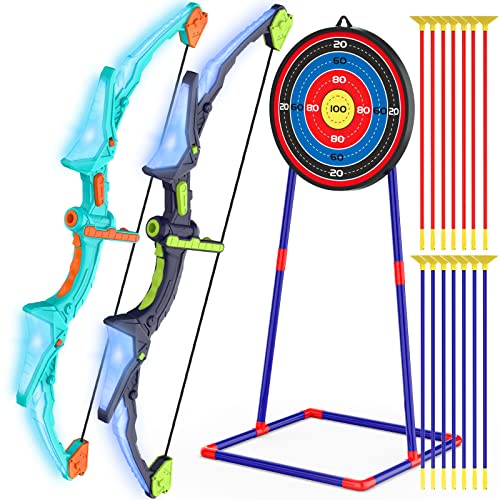
Suction-cup sets are fantastic for younger kids and indoor play. These sets use lightweight plastic limbs and rubber-tipped arrows that stick to smooth surfaces, windows, or standing targets. Many toy sets include built-in LED lights or flashing targets that turn practice into an active game. They work perfectly in basements or living rooms on rainy afternoons.
Real beginner youth bows are actual sporting gear built with fiberglass limbs and a durable riser (the central bow handle). These bows shoot arrows with rounded target points that punch through cardboard easily. If you pick a real youth bow, your child needs a dedicated outdoor shooting space, close adult supervision, and protective gear.
The biggest hurdle with real starter bows is string slap, which happens when the bowstring snaps against the inner forearm upon release. This stinging pinch leaves bruises and makes young beginners want to quit. You can prevent this by teaching your child to rotate their elbow slightly outward. Always strap an arm guard (a protective padded sleeve for the forearm) in place before shooting.
Build a safe backyard shooting zone with an arrow-proof backstop
You do not need an official archery range to shoot safely at home, but a cardboard box against a wooden fence is dangerous. Stray arrows can punch through thin cedar pickets or skip over the top. Setting up a controlled backyard shooting lane takes twenty minutes and keeps everyone safe.
Follow these steps to set up a safe backyard shooting range:
- Pick a flat lane with zero foot traffic: Choose a straight stretch of lawn directing shots toward a solid backstop, an earth hill, or a windowless shed wall. Never aim toward a walking path, a shared driveway, or a neighbor's yard.
- Hang a heavy-duty secondary backstop: Place your target in front of a wide, arrow-resistant barrier. An archery netting, a heavy rubber stall mat hung from a frame, or tightly stacked straw bales will catch arrows that miss the target.
- Mark a visible shooting line on the grass: Lay down a bright jump rope or spray a chalk line on the turf. Your child's toes must stay behind this marker until every arrow has been shot and you give permission to collect them.
- Inspect arrows for damage before every session: Gently flex each arrow shaft (the main tube of the arrow) between your fingers to check for hairline cracks. If a shaft is cracked or splintered, discard it immediately so it does not break under tension.
- Walk to the target to retrieve arrows safely: Teach kids to walk slowly toward the target rather than running across the lawn. When pulling arrows from foam, place one hand flat against the target face and pull straight back with the other hand.
Once your backstop and lines are set, stand behind your child and watch a few practice draws. Make sure the lane is clear of pets, hoses, and low tree branches. A predictable shooting lane allows your child to concentrate on form instead of worrying about wild bounces.
Check pull weight and forearm protection before buying starter gear
When shopping for youth archery equipment, resist the temptation to buy a heavy bow for your child to grow into. An oversized bow forces a child to strain, collapse their shoulders, and build bad habits that are tough to unlearn. Pick a bow they can pull back ten times in a row without shaking.
Look for an ambidextrous riser or verify your child's dominant hand before ordering. A right-handed shooter holds the bow handle in their left hand and pulls the string with their right hand, while a left-handed shooter does the reverse. Ensure the bow limbs offer a gentle draw weight between 10 and 15 pounds. A light pull lets beginners focus on smooth releases and posture.
Check that the starter kit includes protective accessories, or buy them separately before shooting begins. Every young shooter needs an arm guard to shield their forearm from the snapping string. You should also provide a finger tab or shooting glove (a protective leather pad shielding soft fingers from string pressure). These simple items keep shooting painless and fun.

- ARS Mark10.0
ARS Mark is a ranking system developed by bestairriflescopes.com. ARS Mark has no relationship or impact from any manufacturers or sales agent websites. Learn more
- BrandLife is Good

- ARS Mark10.0
ARS Mark is a ranking system developed by bestairriflescopes.com. ARS Mark has no relationship or impact from any manufacturers or sales agent websites. Learn more
- BrandHOLIBIBE

- ARS Mark9.4
ARS Mark is a ranking system developed by bestairriflescopes.com. ARS Mark has no relationship or impact from any manufacturers or sales agent websites. Learn more
- BrandPolkoliye

- ARS Mark8.8
ARS Mark is a ranking system developed by bestairriflescopes.com. ARS Mark has no relationship or impact from any manufacturers or sales agent websites. Learn more
- Brandprocener

- ARS Mark8.8
ARS Mark is a ranking system developed by bestairriflescopes.com. ARS Mark has no relationship or impact from any manufacturers or sales agent websites. Learn more
- BrandOcditikl

- ARS Mark8.8
ARS Mark is a ranking system developed by bestairriflescopes.com. ARS Mark has no relationship or impact from any manufacturers or sales agent websites. Learn more
- BrandKIDDITOY ㅤ

- ARS Mark8.8
ARS Mark is a ranking system developed by bestairriflescopes.com. ARS Mark has no relationship or impact from any manufacturers or sales agent websites. Learn more
- BrandHYES
- ARS Mark8.6
ARS Mark is a ranking system developed by bestairriflescopes.com. ARS Mark has no relationship or impact from any manufacturers or sales agent websites. Learn more
- BrandKmuxilal

- ARS Mark8.6
ARS Mark is a ranking system developed by bestairriflescopes.com. ARS Mark has no relationship or impact from any manufacturers or sales agent websites. Learn more
- BrandAdventure Awaits!

- ARS Mark8.6
ARS Mark is a ranking system developed by bestairriflescopes.com. ARS Mark has no relationship or impact from any manufacturers or sales agent websites. Learn more
- BrandOcditikl
Last update on 2026-09-29 / Affiliate links / Images, Product Titles, and Product Highlights from Amazon Product Advertising API
FAQs
What age is best to start archery?
Most children are ready for toy suction-cup sets by age 4 or 5, which helps them build basic hand coordination. Children can typically transition to real beginner recurve bows around age 8, provided they can listen carefully and follow safety directions. If your child can follow basic rules and hold a lightweight bow steady, they are ready to learn.
How do I stop my child's arm from getting bruised?
Bruising on the inner forearm is caused by string slap, which happens when the string clips the arm upon release. Have your child rotate their bow arm slightly so the crook of their elbow points away from the bowstring. Always strap an arm guard over their forearm before shooting so accidental contact does not hurt.
Is archery an expensive sport for kids to try?
Starter archery is one of the most affordable individual sports available. Basic suction-cup sets or beginner youth recurve packages cost very little and provide months of outdoor activity. You do not need expensive club memberships or complex gear until your child decides to pursue competitive tournament shooting.
Can my child practice archery indoors safely?
Indoor practice is completely safe if you use suction-cup arrow sets with soft rubber tips. These toy sets stick harmlessly to smooth doors, sliding glass windows, or lightweight plastic targets without denting drywall. You should never shoot real youth bows with pointed arrows inside a residential home.


12 Best 22 Pcp Air Rifle For Hunting of 2026 With Quiet Power

7 Best 22 Pcp Air Rifle Under 300 of 2026 For Backyard Pest Control

10 Best 22 Break Barrel Air Rifles of 2026 For Backyard Pest Control

10 Best 30 Caliber Pcp Air Rifle of 2026 For Medium Game

Top Best 177 Air Rifle Under 100: Budget-Friendly Picks for 2026

How to Safely Reload Shotgun Shells at Home

11 Best Co2 Air Rifle For Pest Control of 2026 To Ensure Humane Dispatch

12 Best Inexpensive Air Rifles of 2026 For Dependable Backyard Accuracy






