
Is a Ravin Crossbow Worth the Money in 2026?

Spending top dollar on a premium bow is worth the money if you hunt from tight quarters or struggle to cock standard hunting gear. That value disappears fast for anyone who simply takes short-range shots from an open tree stand a few weekends each fall. The ultra-narrow design and effortless cocking crank make a real difference in deep cover, but standard bows still harvest deer just as reliably.
The right choice comes down to your hunting style, your physical comfort, and your patience for ongoing upkeep. Hunters with bad shoulders or joint pain get immediate relief from a built-in crank that takes almost no muscle to draw back. At the same time, you have to accept higher maintenance costs, including specialized arrow nocks and dealer visits for every string replacement. Here is how the practical benefits stack up against the hidden trade-offs so you can decide before spending your hard-earned cash.
Who actually gets good value from a Ravin?
Hunters who struggle with shoulder pain, back stiffness, or reduced arm strength find immense relief in this style of setup. Traditional rope cockers require pulling heavy weights directly up to your chest while balancing on a narrow tree stand platform. A built-in crank reduces that pull weight (the muscular effort needed to pull the bowstring back) to just a few pounds of hand effort, letting older hunters or anyone with past injuries stay active in the woods.
Hunters who spend long mornings tucked inside tight ground blinds also gain a distinct advantage. Standard crossbows have wide limbs that stick out, making it easy to bump fabric walls or snag branches when an animal walks into view. A design with an exceptionally narrow wheel-to-wheel length (the total width from wheel to wheel across the limbs) lets you turn slowly and aim out of small shooting windows without giving away your position.
Western hunters pursuing game across open country or wide fields also gain real performance value. Crossbows built this way launch arrows with flat trajectories, which minimizes guesswork on longer distances. When a target is forty or fifty yards away across a windy draw, flatter arrow flight leaves less room for elevation errors.
On the other hand, many whitetail hunters will see very little practical return on such a large investment. If you hunt from an open tree stand where shooting lanes are cleared and your typical shot is under thirty yards, a basic hunting bow does the exact same job. A deer shot through both lungs at twenty-five yards cannot tell what kind of bow launched the arrow. Casual hunters who sit in the woods only two or three weekends each season rarely get enough field time to justify paying that kind of money.
What does the high price tag actually give you?
When you spend top-tier money on this brand, you are paying for three main engineering choices: extreme compactness, a frictionless flight track, and an integrated cocking mechanism.
First is the narrow wheel-to-wheel length. When cocked, these bows measure only a few inches wide, roughly half the width of standard hunting setups. To see how other premium compact models solve this problem, you can look at compact bows built for tight blinds. This narrow profile shifts the balance closer to your body, making the bow feel more like a short rifle than a wide piece of archery gear. You can rest it on a shooting rail without feeling front-heavy limbs pulling you forward.
Second, the arrow rests on an elevated rest at the front and clips directly to the moving trigger housing at the back. Traditional crossbows force the arrow shaft to slide along a long rail coated in wax. In this system, the shaft floats entirely in the air without touching a barrel. Because nothing rubs against the shaft as it launches, you get clean arrow flight and significantly less wear on the center serving of the string.
Third, the built-in crank system is permanently attached to the stock. You do not need to fumble with loose ropes, plastic handles, or hooks in the dark. The crank slides the trigger unit down the center track to grab the string, then lets you wind it back smoothly with minimal effort. It also allows safe de-cocking by pressing a release button and winding the handle backward, which eliminates the chore of carrying a separate discharge target into the woods.
What extra ownership costs should you expect later?
The initial purchase price is not the end of your spending. Ongoing maintenance and replacement supplies cost substantially more than they do for conventional models.
Arrows represent the first steady expense. You cannot buy generic arrows from a discount store. These bows require a proprietary nock, which is a custom clip-on arrow plug that snaps securely onto the bowstring. If the nock does not snap fully in place, the safety mechanism will not disengage. Firing without an arrow securely seated creates a dry fire (firing the bow without an arrow nocked), which can shatter limbs, break cams, and fling sharp shrapnel. Because of the extreme energy involved, you must buy approved heavy-duty shafts with these special nocks. You must also practice flexing carbon arrows by hand while listening for cracking sounds, because damaged carbon can splinter under high power.
Strings and cables also demand regular dealer care. Because the cams rotate multiple times under intense tension, string wear happens faster than on wider bows. You cannot change these strings on a workbench with standard garage tools. Servicing the bow requires an archery pro shop bow press, because compound bow strings and cables are held under hundreds of pounds of pressure and must never be clamped with workshop tools. Most shops charge extra for this labor because the specialized press brackets take extra time to set up. Factor new strings and professional tuning into your annual hunting budget every season or two.
How does the compact frame behave in the woods?
In actual hunting conditions, physical bulk matters just as much as shooting speed. A wide bow feels clumsy when you climb into a hang-on stand, step around tree limbs, or pivot toward a deer approaching from behind you.
Because the limbs stay tightly tucked against the stock even when cocked, carrying the bow through dense brush is much simpler. It hangs close against your chest on a sling without catching on briars. Inside a pop-up ground blind, the difference is immediate. When an animal appears off to the side, you can reposition without striking fabric walls or roof poles. Exploring options like purpose-built bows for tight cover shows how modern designs keep limb width down so you can aim freely in small spaces.
Balance is another factor that becomes noticeable during long sits. Long, wide crossbows are front-heavy, which forces your supporting arm to tire quickly when holding steady for a shot. A narrow, short design brings the bulk of the mass back toward your shoulder. While this makes aiming off-hand steadier, it also means the bow produces a snappy jump when fired. The bow stays steady on the rail, but you need a firm cheek weld and solid grip to keep your aim smooth through the shot.
Which questions should you answer before buying one?
Before spending a large portion of your hunting budget, walk through these four checks to decide if this platform actually fits your style of hunting.
- What is your typical shot distance? If almost all your shot opportunities happen inside thirty yards from an open stand, a standard mid-range bow delivers clean, lethal passes through game every time. Extreme downrange speed and flat flight paths only pay off if you hunt open fields, power lines, or western terrain where shots stretch past forty yards.
- Do you experience physical shoulder or back strain? If pulling a standard rope cocker causes pain or instability on a stand platform, the effortless crank system provides genuine hunting independence. Being able to cock and de-cock the bow with minimal hand effort keeps many hunters in the woods who would otherwise have to quit.
- Where do you spend most of your hunting hours? Hunters who spend late seasons inside small ground blinds, box blinds, or thick brush will appreciate the narrow profile every day. If you hunt wide-open timber from ladder stands, extra width rarely gets in the way.
- Are you comfortable with higher maintenance costs? Check whether you have an authorized archery shop nearby that handles this specific brand. If you dislike paying top dollar for specialized arrows and professional string replacements, a simpler conventional crossbow will save you both money and frustration over the years.
What should you look for in a compact hunting bow?
When evaluating compact hunting bows in this category, start by checking the cocking mechanism and how it handles uncocking at the end of the day. A reliable crank system should lock in place if your hand slips, preventing the handle from spinning freely and causing injury. Look for models with safe de-cocking so you do not need to shoot into a portable target bag in the dark after your hunt.
Next, look closely at how the bow distributes its weight. A bow that feels lightweight on a store hanger might feel clumsy once you mount a quiver full of arrows and a heavy glass optic. Shoulder the bow to see if your support hand naturally rests in a safe position behind the finger guards, well clear of the string path.
Finally, verify how accessible service and replacement parts are in your local area. Confirm what kind of arrows the manufacturer requires and whether your nearby pro shop has the proper tools to change strings without shipping the unit back to the factory. A compact bow is only valuable if you can keep it running safely season after season.

- ARS Mark9.5
ARS Mark is a ranking system developed by bestairriflescopes.com. ARS Mark has no relationship or impact from any manufacturers or sales agent websites. Learn more
- BrandRAVIN

- ARS Mark8.9
ARS Mark is a ranking system developed by bestairriflescopes.com. ARS Mark has no relationship or impact from any manufacturers or sales agent websites. Learn more
- BrandRAVIN
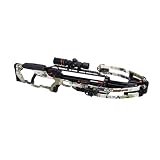
- ARS Mark7.5
ARS Mark is a ranking system developed by bestairriflescopes.com. ARS Mark has no relationship or impact from any manufacturers or sales agent websites. Learn more
- BrandRAVIN
Last update on 2026-10-19 / Affiliate links / Images, Product Titles, and Product Highlights from Amazon Product Advertising API
FAQs
Do you have to use special Ravin arrows?
Yes, you must use arrows equipped with the manufacturer's proprietary clip-on nocks. Standard flat nocks or half-moon nocks from big-box sporting goods stores will not engage the trigger clasp properly and can cause a dry fire. Using non-approved arrows can also void the warranty and risk structural damage to the bow limbs.
Can you change Ravin strings and cables at home?
No, you should never attempt to change the strings and cables using DIY tools or a standard workshop press. The limbs operate under extreme mechanical tension that requires a dedicated archery pro shop bow press with brand-specific mounting brackets. Taking your bow to a trained technician prevents cam distortion and protects you from dangerous accidental releases.
Is the built-in crank quiet enough for hunting?
The integrated crank operates very quietly compared to older external ratchets, but it still makes a soft mechanical clicking sound as it locks each cycle. In a quiet woods environment, an alert deer within close range might hear that clicking if you try to reload while the animal is nearby. For best results, cock the bow before climbing into your stand or wind the crank slowly while holding the release catch if your manual allows it.
How does de-cocking work when you leave the stand?
You can safely uncock the bow without firing an arrow into the ground or a target block. You attach the crank handle, take up the mechanical tension, depress the clutch release button, and slowly wind the handle backward. This lets you lower the string tension smoothly and pack up your gear in complete safety.


12 Best 22 Pcp Air Rifle For Hunting of 2026 With Quiet Power

7 Best 22 Pcp Air Rifle Under 300 of 2026 For Backyard Pest Control

10 Best 22 Break Barrel Air Rifles of 2026 For Backyard Pest Control

10 Best 30 Caliber Pcp Air Rifle of 2026 For Medium Game
Top Best 177 Air Rifle Under 100: Budget-Friendly Picks for 2026

How to Safely Reload Shotgun Shells at Home

11 Best Co2 Air Rifle For Pest Control of 2026 To Ensure Humane Dispatch

12 Best Inexpensive Air Rifles of 2026 For Dependable Backyard Accuracy






