
What Are the Most Accurate Crossbow Arrows?

Uniform shafts produce the tightest groups. The most reliable arrows share near-identical weights and true straightness from tip to tail. When each shaft flexes and weighs the same, your bow sends every shot along the exact same path. Accuracy comes down to strict build consistency rather than flashy marketing.
Finding that consistency depends on a few specific details. You need a correctly shaped nock (the grooved cap that sits against the bowstring) so the string pushes straight without slipping. The total weight must match your bow maker's guidelines to keep the arrow stable in flight and protect the limbs from damage. Tighter straightness ratings also matter more as you stretch past thirty yards. Here is what to check on every arrow before you head to the range.
The Short Version
- Manufacturing consistency matters most: Tight straightness ratings (how straight the shaft is from end to end) and matching total weights across every arrow in the box produce consistent groups.
- Nock style controls flight and bow safety: Using the exact grooved rear cap that sits against the bowstring specified by your manufacturer prevents the string from jumping over the arrow.
- Front-heavy balance cuts down wind drift: Arrows with adequate weight up front fly true like a dart, holding tight groups at 30 to 50 yards instead of wobbling in the air.
- Numbering your shafts eliminates mystery flyers: Numbering each arrow with a marker and shooting them one by one identifies slight manufacturing variations so you know which shafts hit dead center.
What Actually Drives Crossbow Arrow Accuracy
When you release a crossbow string, hundreds of pounds of stored energy transfer into the arrow in a split second. That violent push causes the arrow to flex and vibrate as it clears the flight rail. If an arrow is built with loose tolerances, those vibrations change on every shot. The result is erratic flight, scattered target groups, and missed aiming points.
Arrow accuracy rests on three mechanical pillars: straightness, weight consistency, and shaft stiffness. Shaft stiffness, often called spine, refers to how much the shaft bends under load. When an arrow launches, it bends like a diving board. If one shaft flexes easily while the next in your pack is rigid, they leave the rail at slightly different angles and hit separate spots downrange.
Weight consistency is just as critical. In archery, weight is measured in grains, a tiny unit where one pound equals 7,000 grains. If you grab six arrows from a budget pack, one might weigh 395 grains while another weighs 412 grains. That 17-grain gap feels unnoticeable by hand, but gravity treats them differently. At 20 yards the difference is tiny, but at 40 or 50 yards that heavier arrow drops two to three inches lower than its lighter twin.
Straightness determines how cleanly the shaft spins in the air. As the vanes rotate the arrow, any slight curve makes the point wobble. A straighter shaft minimizes that wobble, keeping your groups tight and predictable.
Matching Nocks to Your Bow: The Flight and Safety Checklist
The nock is the plastic or aluminum grooved rear cap that sits against the bowstring. Many shooters assume nocks are universal, but using the wrong nock is the fastest way to damage your gear. If the string fails to seat firmly, it can slip over or under the shaft when you squeeze the trigger. This causes a dry fire, where the bow fires without absorbing arrow resistance. A dry fire can shatter limbs, snap cables, and fling sharp fragments toward the shooter.
Check your bow manual and confirm your arrows use the exact style required by your trigger latch:
- Flat nocks: These caps have a smooth, flat rear face without a string groove. They belong only on older bows with wide string tracks. Never load flat nocks into a bow designed for grooved nocks, as the string will jump the shaft.
- Half-moon nocks: These feature a single horizontal groove that centers the bowstring. You must load them with the groove perpendicular to the cock feather (the odd-colored vane pointing down into the rail channel). Loading a half-moon nock sideways places the string on plastic ridges instead of the slot, risking severe bow damage.
- Capture or omni nocks: These have multiple cross-grooves radiating across the rear. They seat the string safely regardless of which vane rests in the rail slot.
- Deep-groove specialty nocks: Modern ultra-compact bows produce extreme string angles at full draw. These setups require deep-channel designs, like the Alpha-Nock HP, that wrap around the center serving. Shooters choosing compact bows, such as those featured in guides on reliable hunting crossbow designs, must use these dedicated nocks to prevent string jump.
Arrow Weight and Balance: Grains and Front-Heavy Flight
Every crossbow maker sets a strict minimum arrow weight, typically between 370 and 420 grains with the point attached. Firing an arrow lighter than that limit voids your warranty and harms the limbs just like a dry fire. Beyond basic safety, total weight and weight balance dictate how stable your arrow remains against wind drift.
Balance is measured as front-heavy balance, or front of center (often called FOC). Consider a standard bar dart. A dart has a heavy brass tip and light plastic flights at the back. When thrown, the heavy nose pulls forward while the light fins trail smoothly behind. If the dart were tail-heavy, it would tumble wildly across the room.
Crossbow arrows fly under the same law. If a shaft lacks weight near the tip, it will fishtail (wobble side to side) or porpoise (bob up and down) in flight. Installing a heavy brass insert inside the front of the carbon tube pulls the balance forward. That extra front weight stabilizes flight past 30 yards where wind push becomes noticeable.
Heavier, front-balanced arrows leave the rail slightly slower than featherweight shafts, but they hold momentum downrange, quiet the snap of the bowstring, and penetrate deeply into targets.
Straightness Ratings Explained: Standard vs Match-Grade Shafts
Arrow packaging lists straightness tolerances as decimals, such as .003 inch or .001 inch. This number marks the maximum bend along the full length of the shaft. Knowing how these measurements work in practice helps you decide if match-grade shafts fit your shooting style.
Standard carbon shafts generally carry a .003-inch rating. Three-thousandths of an inch equals the thickness of a single sheet of notebook paper. For hunting inside 30 yards from a ground blind or tree stand, a .003-inch arrow delivers dependable accuracy. At close range, the arrow hits the bullseye before minor runout can steer it off line.
Match-grade shafts carry a .001-inch rating, cutting that variation down to one-thousandth of an inch. That is thinner than household plastic wrap. When shooting targets at 40 or 50 yards, that tighter tolerance prevents erratic flight as the arrow spins downrange, shrinking your groups from the size of a saucer down to a golf ball.
If you primarily hunt close timber, standard shafts work reliably. If you shoot 3D target courses or hunt wide-open farm fields, match-grade arrows eliminate shaft-to-shaft guesswork.
How to Inspect and Sort a New Arrow Pack
Even premium arrow packs have slight variations from shaft to shaft. Taking twenty minutes to sort your arrows before hitting the range turns a factory box into a matched quiver. Follow these five steps to find your truest flyers:
- Flex-check each shaft: Hold the arrow at both ends and bend it gently into a slight curve while rotating it near your ear. Listen for any cracking or squeaking. If you hear a crack or feel soft spots, the carbon fibers are broken. Discard that arrow immediately to prevent it from shattering during a shot.
- Check nock and insert fit: Look at where the rear nock and front threaded insert meet the carbon tube. Both components must sit flush against the cut edges. A crooked insert angles the point, forcing the shaft into an uneven spiral downrange.
- Spin the arrow: Place the point on a smooth table or arrow spinner and spin the shaft with your palm. Watch the field point and the nock. If either end wobbles, that arrow will stray at distance.
- Number each shaft: Use a paint pen to write numbers (1 through 6) on the vanes. Numbering lets you track individual performance on target.
- Verify flight on separate bullseyes: Shoot each numbered arrow at its own individual spot from 30 yards. Never shoot multiple arrows into the same bullseye, or you will slice vanes and ruin shafts. If arrow number 4 consistently impacts two inches right, rotate its nock to the next vane position and shoot again. If it still strays, keep it for practice and place the matched shafts in your primary quiver. When combined with a crossbow package with an aligned optic, knowing your numbered arrows gives absolute confidence on every release.
What to Look for When Choosing Carbon Arrows
When selecting arrows in the archery and crossbow category, always follow your bow manufacturer guidelines as strict rules. Choosing arrows that match your bow ensures safety, protects your limbs from shock damage, and delivers the tightest possible groups downrange.
Check the required arrow length first. Crossbow arrows typically range from short mini-bolts up to 20-inch or 22-inch shafts. Using a shaft that is too short can cause broadheads to strike the front stirrup or snag on the rail. Next, verify the exact nock style required by your trigger housing to guarantee smooth string engagement. Finally, confirm that the total weight of the shaft, insert, nock, and point meets your bow minimum grain specification before heading to the field.

- ARS Mark8.7
ARS Mark is a ranking system developed by bestairriflescopes.com. ARS Mark has no relationship or impact from any manufacturers or sales agent websites. Learn more
- BrandBARNETT
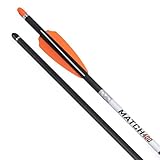
- ARS Mark8.6
ARS Mark is a ranking system developed by bestairriflescopes.com. ARS Mark has no relationship or impact from any manufacturers or sales agent websites. Learn more
- BrandWicked Ridge

- ARS Mark8.0
ARS Mark is a ranking system developed by bestairriflescopes.com. ARS Mark has no relationship or impact from any manufacturers or sales agent websites. Learn more
- BrandKavard

- ARS Mark7.2
ARS Mark is a ranking system developed by bestairriflescopes.com. ARS Mark has no relationship or impact from any manufacturers or sales agent websites. Learn more
- BrandTenPoint
Last update on 2026-10-19 / Affiliate links / Images, Product Titles, and Product Highlights from Amazon Product Advertising API
FAQs
Why do two identical arrows from the same pack hit different spots?
Small variations in total grain weight, slight spine stiffness differences, or a barely crooked insert cause arrows to steer differently. Carbon shafts also have a natural stiff side from manufacturing. Numbering your arrows and rotating the nock by one vane often brings stray shafts right back into your main shooting group.
Can I shoot flat nocks in a crossbow made for half-moon nocks?
No, you should never shoot flat nocks in a bow designed for half-moon or capture nocks. A flat nock lacks the channel needed to capture the string securely. Under high pressure, the bowstring can jump over the shaft, causing a dry fire that destroys bow limbs and poses a severe injury risk.
Does arrow length affect crossbow accuracy?
Arrow length affects accuracy through total weight and rail clearance. You must always use the minimum length recommended by your bow maker so the broadhead clears the front riser safely. As long as the arrow meets factory length and weight rules, shaft straightness and weight balance matter far more for accuracy than an extra inch of carbon.
How often should I check my crossbow arrows for damage?
Inspect and flex-check your arrows before every shooting session and after every impact with a target. Stopping abruptly in high-density foam causes massive internal stress. Bending the shaft gently by hand and listening for fiber cracks ensures you never shoot a damaged arrow that could splinter on release.


12 Best 22 Pcp Air Rifle For Hunting of 2026 With Quiet Power

7 Best 22 Pcp Air Rifle Under 300 of 2026 For Backyard Pest Control

10 Best 22 Break Barrel Air Rifles of 2026 For Backyard Pest Control

10 Best 30 Caliber Pcp Air Rifle of 2026 For Medium Game

Top Best 177 Air Rifle Under 100: Budget-Friendly Picks for 2026

How to Safely Reload Shotgun Shells at Home

11 Best Co2 Air Rifle For Pest Control of 2026 To Ensure Humane Dispatch

12 Best Inexpensive Air Rifles of 2026 For Dependable Backyard Accuracy






