
Ravin vs Axe Crossbow: Which Fits Your Hunt Best?

Measure the tightest corner of your hunting blind before settling on a frame style. This single check tells you whether you need an ultra-narrow body with built-in uncocking, or a center-balanced frame that stops forward wobble on freehand shots. The narrower build slides effortlessly through cramped brush and tree limbs, while the balanced center-grip platform keeps your aim rock-steady without a shooting rail.
Making the right call comes down to your hunting setup and field habits. Think about how you prefer to unload at dusk, since cranking down safely beats firing an arrow into the mud after dark. Consider your shooting perch as well, because open ladder stands give you room that cramped pop-up blinds simply do not allow. Ongoing gear upkeep matters too, including the special arrows and nocks each mechanism demands. Here is how these two bow concepts compare when it matters most.
Match the Bow Design to Your Hunting Style
Choosing between these two high-performance hunting bows comes down to how you move in the field and how you support your shot. Both brands push arrow speeds that deliver clean, ethical pass-throughs on big game, but they solve hunting problems from completely different angles. One design focuses on shaving down overall width to slip through brush and tight spaces, while the other redesigns bow geometry to keep the balance point resting squarely in your hands.
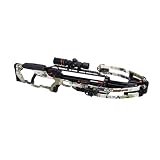
Ravin builds its lineup around a cable winding system, known as HeliCoil technology, which coils the cables in helical grooves away from the cams. This layout keeps the cams completely flat and parallel during the draw cycle, allowing the bow to reach an exceptionally narrow profile when cocked. It also features a frictionless flight rail, meaning the arrow rests on an adjustable roller rest at the front and clips directly to the trigger latch at the back, floating above the grooved track without rubbing along an aluminum rail. If your hunting involves crawling into cramped ground blinds, hiking deep into public timber, or sitting in narrow ladder stands, that slim profile gives you incredible clearance.
Axe approaches hunting geometry from a balance-first perspective by using a shoot-through riser, which is the main center frame of the bow. Instead of mounting the limbs behind a solid front frame, Axe routes the arrow right through an opening in the center frame. This shifts the grip forward beneath the true balance point of the bow, eliminating the front-heavy dip that plagues traditional crossbow setups. If you frequently find yourself shooting off-hand without a shooting stick, bench, or tree stand shooting rail, that centered grip helps you hold your aiming pins steady without your shoulder muscles shaking.
Your choice depends on whether you value packable narrowness or off-hand shooting balance more. Hunters who hunt from fixed rests and tight spaces lean toward the compact profile of Ravin. Shooters who stalk timber, shoot while standing, or struggle with bow weight pulling their crosshairs downward often find the balanced center frame of Axe much more forgiving on long holds.
Measure Your Blind Clearance Before Choosing Bow Width
Blind clearance is often the difference between filling a tag and suffering a heartbreaking equipment collision. When a mature buck steps into an unexpected shooting lane, you must swing your bow quickly without bumping the fabric walls or framework of your blind. A wider crossbow requires careful choreography inside a pop-up shelter, while an ultra-narrow bow turns freely without catching on window flaps.
The critical measurement here is wheel-to-wheel length, which is the axle-to-axle width between the limb wheels. When uncocked, wide traditional bows can measure over twenty inches across, turning any movement inside a two-person ground blind into a clumsy struggle. Even after cocking, many standard bows stay broad enough that an expanding limb tip can strike a window pole during the shot. When an energetic limb strikes a blind wall upon release, the arrow will violently veer off target, and the limb or wheel can crack from the uneven impact.
Ravin dominates this category by shrinking its cocked wheel-to-wheel width down into single-digit territory on modern setups. The cable winding system pulls the limbs tight against the stock, creating a package so slim you can maneuver it inside tight corner windows with almost no elbow room. Hunters who frequently set up in thick brush or use compact bows designed for tight blinds appreciate how easily this narrow footprint navigates dense cedar thickets and brush piles without snagging branches.
Axe models are also relatively compact compared to older standard crossbow designs, but their shoot-through riser structure creates a slightly different forward profile. While still nimble enough for standard ground blinds, you must pay closer attention to your side-to-side limb clearance. Before opening morning, set up your blind in the backyard, sit on your hunting stool, and swing your bow between every window to verify that your limb tips have plenty of open air on both sides.
Plan Your End-of-Day Uncocking Routine Before Climbing Down
Nothing ruins a successful evening hunt faster than dreading the walk back to your truck because you have to uncock a high-powered bow in the dark. Years ago, hunters had to carry a heavy foam discharge target in their vehicle or pack a cheap throwaway arrow with a blunt tip to shoot into the dirt. Firing an arrow into the ground after legal shooting light makes noise, spooks game holding nearby, and risks damaging expensive carbon shafts on buried stones.
Safe field decocking, which means uncocking the bow without shooting an arrow, has become a deciding factor for modern hunters. Both Ravin and Axe provide crank systems, but the operation and user experience differ when your fingers are cold and the woods are pitch black. Ravin uses its integrated Versa-Draw crank system, which pairs with a mobile trigger box that travels up and down the rail. You slide the trigger mechanism forward along the grooved track until it clicks onto the bowstring, then crank it back to full draw.
Uncocking a Ravin is remarkably simple and safe. You slip the crank handle onto the drive shaft, engage the release mechanism, and slowly wind the handle backward. An internal braking system ensures that even if your hand slips off the crank handle midway through the process, the handle will not spin out of control. The internal brake catches the load instantly, preventing bruised knuckles and avoiding catastrophic dry fires. You can safely step down from your stand with an uncocked bow in total silence without firing a shot.
Axe features a dedicated cocking sled and crank assembly designed to provide smooth, mechanical pulling power. The system allows you to let the string down slowly by following a methodical sequence, but it requires you to maintain deliberate hand control and verify latch positioning. If you prefer mechanical simplicity and want an effortless uncocking motion at dusk, finding a crossbow with safe decocking features gives you complete control and peace of mind during late-season hunts.
Check How the Bow Settles When Aiming Without a Rest
Crossbows are naturally front-heavy tools because the heaviest metal parts, including the limbs, riser frame, and rotating wheels, sit all the way out on the nose. When you lift a conventional bow to your shoulder, your lead forearm acts as a fulcrum holding up several pounds of aluminum and fiberglass. Within ten to fifteen seconds, muscle fatigue sets in, causing your sight pins to weave up and down across the vitals of the animal.
Axe tackled this problem directly by engineering its shoot-through riser. By positioning the forward limb frame around the flight path of the arrow, the designers moved the pistol grip and your forward support hand closer to the middle of the overall length. When you shoulder an Axe bow, the center of gravity rests between your hands rather than six inches in front of your lead palm. This balanced weight distribution allows you to hold your glowing fiber dots on a target for extended periods without leaning backward to counter the weight.
Ravin balances differently because its frame follows a traditional layout, albeit in an ultra-compact package. Because the overall weight is light and the bow is remarkably short from buttstock to stirrup, many hunters find it easy to handle. However, the nose still holds the bulk of the mass relative to the stock. If you rest the forearm on a shooting rail, window ledge, or bipod, this front-weight bias actually helps anchor the bow firmly against the rest for rifle-like stability.
To determine what fits your shooting style, try an everyday balance check with any bow you consider. Mount the stock against your shoulder, align your dominant eye through the scope, and time yourself holding steady on a wall target for twenty seconds without resting your elbows. If your forward arm burns and the scope reticle dips downward, an Axe-style center-balanced design will instantly improve your shooting confidence. If you always hunt from stands equipped with shooting rails, Ravin offers all the steady precision you will ever need.
Follow Manufacturer Guidelines for Arrows, Nocks, and Strings
Both of these advanced systems generate immense kinetic energy, which puts high mechanical stress on arrows, nocks, and string servings. Because both brands rely on specialized engineering rather than generic crossbow tracks, you cannot buy off-the-shelf discount accessories at a big-box store. Using the wrong arrow or an incompatible nock style can lead to a dry fire, which happens when the bowstring slips over the arrow and absorbs zero energy, shattering limbs and throwing sharp debris.
- Verify dedicated nock designs: Ravin requires proprietary clip-on nocks that physically snap securely onto the bowstring. Because the arrow floats above the flight rail on a roller rest, this positive snap is the only thing holding the arrow against the string. Standard flat or half-moon nocks will cause an instant dry fire. Axe also relies on specific nocks matched to its shoot-through frame and retention springs.
- Flex-testing carbon arrows before every hunt: Hold both ends of the carbon shaft and bend the arrow gently into a slight arc while rotating it near your ear. Listen closely for faint cracking sounds and feel for splintering along the carbon weave. If an arrow flexes unevenly or makes a clicking noise, discard it immediately to prevent the shaft from exploding upon release.
- Inspect nock collars and plastic ears: Check the plastic ears of clip-on nocks after every target shot or field discharge. Look for white stress marks, micro-cracks, or bent prongs. High-energy launch cycles can weaken plastic nocks, and a cracked nock ear will fail during the next shot.
- Keep strings lubricated without gumming the trigger: Apply string wax regularly along exposed string fibers and cables to prevent fraying caused by weather and dry air. However, keep wax completely away from the center serving that engages the trigger box. Excess wax inside a precision trigger housing collects dust and grit, which can cause internal latches to stick in freezing temperatures.
- Rely on an archery pro shop bow press for maintenance: Never attempt to change cables or strings using workbench clamps, tie-down straps, or portable hand presses. Modern compact hunting bows hold hundreds of pounds of pressure under full preload. Take your bow to an experienced technician at a local archery pro shop who owns an approved press designed specifically for extreme-reflex limbs.
Look for Built-In Silent Cranks and Ultra-Narrow Limbs
When shopping for a compact hunting bow to tackle tight cover and long treks, focus on features that remove daily frustration in the woods. Modern designs should help you slip through thick brush without hanging up on limbs, and they should allow you to cock and uncock the bow safely without drawing unwanted attention from nearby game.
First, verify the decocking procedure. Look for a bow that integrates a silent crank directly into the stock or frame, equipped with an automatic clutch or internal brake. A system that lets you wind down the string smoothly eliminates the hassle of packing a separate discharge target in your truck and keeps your hands completely safe during late-evening pack-downs.
Second, examine the cocked width and overall length. If you plan to spend days inside narrow ground blinds or brush blinds, prioritize an ultra-narrow wheel-to-wheel profile. Bows that pull their cams in tight give you the maneuverability needed to track walking animals without striking blind walls or tree trunks.
Finally, consider your physical shooting setup. If you plan to hike timber and shoot without a steady rest, choose a design that places the grip near the center of gravity to avoid front-heavy strain. If you plan to shoot primarily from fixed rests, opt for a streamlined, lightweight chassis that packs flat and secures easily to your hunting backpack.

- ARS Mark9.5
ARS Mark is a ranking system developed by bestairriflescopes.com. ARS Mark has no relationship or impact from any manufacturers or sales agent websites. Learn more
- BrandRAVIN

- ARS Mark8.9
ARS Mark is a ranking system developed by bestairriflescopes.com. ARS Mark has no relationship or impact from any manufacturers or sales agent websites. Learn more
- BrandRAVIN

- ARS Mark8.6
ARS Mark is a ranking system developed by bestairriflescopes.com. ARS Mark has no relationship or impact from any manufacturers or sales agent websites. Learn more
- BrandRAVIN
- ARS Mark7.5
ARS Mark is a ranking system developed by bestairriflescopes.com. ARS Mark has no relationship or impact from any manufacturers or sales agent websites. Learn more
- BrandRAVIN
Last update on 2026-10-19 / Affiliate links / Images, Product Titles, and Product Highlights from Amazon Product Advertising API
FAQs
Can you shoot generic arrows or half-moon nocks from these bows?
No, you should never shoot generic arrows or standard half-moon nocks from either bow. Both brands require specific arrows and proprietary clip-on nocks designed to seat securely onto the bowstring under extreme energy. Using a standard flat or half-moon nock can cause the bowstring to slip over the arrow shaft, causing a dry fire that can shatter the limbs and void your warranty.
How does a rail-less or roller-rest system affect string life?
A rail-less system significantly reduces friction because the arrow and string do not press hard against a continuous aluminum track during the shot cycle. This reduction in sliding friction lowers heat buildup and keeps center string servings from fraying as quickly as they might on traditional flat rails. However, you must still inspect your strings regularly for wear and apply string lubricant as recommended by the manufacturer.
Do you have to carry a foam discharge target when hunting with these bows?
You do not need to pack a heavy foam discharge target into the woods if your bow features a controlled mechanical decocking system. Both setups offer methods to let the bowstring down safely using their dedicated crank assemblies, allowing you to uncock the bow at your stand in complete silence. You only need to remove the arrow, point the bow at safe ground, and wind down the mechanism following the proper manual sequence.
Why does center balance matter so much for off-hand hunting shots?
Center balance prevents front-heavy dipping, which is the main reason hunters pull shots low when aiming without a bench or rest. When the grip sits directly under the bow's natural balance point, your shoulder and forearm muscles do not have to fight the heavy forward weight of the limbs and cams. This allows you to hold your scope reticle rock-steady on the vitals while waiting for an animal to clear brush.


12 Best 22 Pcp Air Rifle For Hunting of 2026 With Quiet Power

7 Best 22 Pcp Air Rifle Under 300 of 2026 For Backyard Pest Control

10 Best 22 Break Barrel Air Rifles of 2026 For Backyard Pest Control

10 Best 30 Caliber Pcp Air Rifle of 2026 For Medium Game
Top Best 177 Air Rifle Under 100: Budget-Friendly Picks for 2026

How to Safely Reload Shotgun Shells at Home

11 Best Co2 Air Rifle For Pest Control of 2026 To Ensure Humane Dispatch

12 Best Inexpensive Air Rifles of 2026 For Dependable Backyard Accuracy






