
7 Trijicon Lpvo of 2026 For Speed and Distance

Focal plane selection causes far more buyer regret than almost any other glass specification. Selecting a first focal plane reticle for rapid close-quarters snaps often leaves a tiny, faint crosshair that slows target acquisition to a crawl at true 1x magnification. On the flip side, grabbing a second focal plane setup means calibrated holdovers only work at peak zoom, stripping away accurate drops across mid-range distances. Coupling the wrong glass layout with an illumination system that chews through batteries or washes out in direct sunlight turns a major gear upgrade into a sluggish, frustrating optic that fails both close-range drills and distant steel targets.
A properly configured Trijicon LPVO eliminates that compromise, running like an intuitive daylight dot at unity and instantly dialing out for crisp target identification downrange. Getting that seamless transition simply requires pairing the build to your typical shooting tempo. Second focal plane designs keep the central reticle bold and unmistakable for fast defensive shooting, whereas first focal plane options reward those who need consistent ballistic holdovers across varying ranges. Deciding between self-luminous fiber optics for constant readiness or multi-intensity LED dials settles your lighting needs, while checking tube diameter ensures proper mount clearance. The side-by-side details below will help you lock in the ideal setup for your rifle.

- ARS Mark9.6
ARS Mark is a ranking system developed by bestairriflescopes.com. ARS Mark has no relationship or impact from any manufacturers or sales agent websites. Learn more
- BrandTrijicon

- ARS Mark9.5
ARS Mark is a ranking system developed by bestairriflescopes.com. ARS Mark has no relationship or impact from any manufacturers or sales agent websites. Learn more
- BrandTrijicon

- ARS Mark9.2
ARS Mark is a ranking system developed by bestairriflescopes.com. ARS Mark has no relationship or impact from any manufacturers or sales agent websites. Learn more
- BrandTrijicon
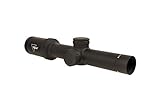
- ARS Mark8.4
ARS Mark is a ranking system developed by bestairriflescopes.com. ARS Mark has no relationship or impact from any manufacturers or sales agent websites. Learn more
- BrandTrijicon

- ARS Mark8.3
ARS Mark is a ranking system developed by bestairriflescopes.com. ARS Mark has no relationship or impact from any manufacturers or sales agent websites. Learn more
- BrandTrijicon

- ARS Mark7.7
ARS Mark is a ranking system developed by bestairriflescopes.com. ARS Mark has no relationship or impact from any manufacturers or sales agent websites. Learn more
- BrandTrijicon
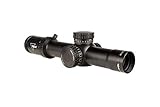
- ARS Mark7.5
ARS Mark is a ranking system developed by bestairriflescopes.com. ARS Mark has no relationship or impact from any manufacturers or sales agent websites. Learn more
- BrandTrijicon
Last update on 2026-09-22 / Affiliate links / Images, Product Titles, and Product Highlights from Amazon Product Advertising API
Is a battery-free AccuPoint better than an electronic Credo?
Your choice depends on whether you value passive reliability or high-contrast electronic brightness. Trijicon AccuPoint models, such as the AccuPoint 1-6x24 with a BAC Green Triangle Post or Green Dot reticle, use tritium and fiber optics to illuminate the aiming point without batteries. Trijicon Credo models rely on powered LED illumination, giving you selectable red or green settings on optics like the Credo 1-10x28 FFP MRAD R/G or the Credo 1-4x24 SFP with a Green BDC Segmented Circle reticle. If you never want to manage spare batteries in the field, the AccuPoint eliminates that failure point entirely. But if you need sharp, user-selected reticle brightness against dark or backlit cover, an electronic Credo gives you direct dial control.
Should you choose a first focal plane (FFP) or second focal plane (SFP) reticle?
Choose a second focal plane reticle if your priority is fast close-quarters snapshot shooting at 1x, or pick a first focal plane reticle if you need precise holdovers across changing magnification levels. On an SFP optic like the Credo 1-4x24, the reticle remains the exact same size regardless of zoom, keeping your sight picture clean and immediately visible up close. This setup works exceptionally well for rapid target transitions, much like balancing a build around the best gun for quick scope handling. In contrast, FFP models like the Credo HX 1-8x24 FFP MOA R/G and Credo 1-10x28 FFP grow the reticle as magnification increases, which keeps your MOA or MRAD subtensions accurate for wind and elevation holds at any magnification setting.
Is a 1-10x or 1-8x optic worth choosing over a lighter 1-4x or 1-6x model?
Stepping up to a 1-8x or 1-10x magnification optic gives you superior target identification and precise holdovers at distance, but it demands careful attention to objective lens size and rifle balance. The Credo 1-10x28 FFP features a 28mm objective lens, while compact options like the Ascent 1-4x24 BDC Target and AccuPoint 1-6x24 utilize 24mm objective lenses. If your shots stay inside carbine distances, a 1-4x or 1-6x scope provides quick target pickup with minimal bulk. For scanning and engaging targets farther out where you might otherwise confirm details using the best spotting scope for backpack hunting, the Credo HX 1-8x24 or 1-10x28 options provide the extended reach needed for accurate placement.
What is the difference between Trijicon Credo and Credo HX riflescopes?
Trijicon Credo HX optics are built around hunting configurations, while standard Credo models focus on tactical, duty, and precision target applications. For example, the Credo HX 1-10x28 FFP and Credo HX 1-8x24 FFP come equipped with MOA-based reticle layouts tailored for hunting holds. Standard Credo models expand your options into tactical MRAD systems, such as the Credo 1-10x28 FFP MRAD with dual red and green illumination. Both lines share rugged housings, but you should confirm whether you prefer MOA or MRAD adjustments before finalizing your model.
What scope mount diameter do Trijicon LPVO models require?
Mounting tube diameters vary across the Trijicon variable line, making it essential to verify the tube measurement before purchasing rings or a cantilever mount. The AccuPoint 1-6x24 Riflescope and the Credo 1-4x24 SFP both use a 30mm tube diameter. Higher magnification optics, such as the 1-8x24 and 1-10x28 platforms, have model-specific tube requirements that you should confirm directly on the manufacturer specification sheet. Always verify that your ring height clears your rifle receiver and provides an aligned cheek position behind the ocular lens.
How does the Ascent 1-4x24 compare to Credo and AccuPoint scopes?
The Trijicon Ascent 1-4x24 BDC Target functions as a streamlined, non-illuminated variable optic designed around simple mechanical adjustments. Unlike the AccuPoint with its fiber-optic and tritium reticles, or the Credo line with user-adjustable green or red LED settings, the Ascent relies on an etched BDC target reticle without electronics. This layout eliminates the need to replace batteries or adjust brightness controls, giving you a straightforward aiming system built for daylight shooting and direct elevation adjustments.
10 Top Picks: Best Youth Air Rifles for 13-Year-Olds

12 Best Rifle Scopes For 5.56 Under 150 Dollars - (2026 Top Picks)

Top 10 Rifle Scopes for Coyote Hunting in 2026

12 Best Benchrest Rifle Scopes of 2026 For Tight Groups

Top 5 Airsoft Rifles: Unleash the Action in 2026

Unveil the Best Straight Wall Deer Rifles: Top Picks for 2026

Top Ammo Choices for Air-Powered Rifles: Boost Your Performance in 2026

Best Quick Detach Scope Rings for Accurate and Convenient Shooting







