
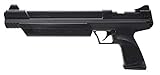
Umarex Strike Point 22 2026: Best Pump Pistol?

The umarex strike point 22 takes a refreshingly simple approach to backyard plinking and paper-target practice. Its multi-pump pneumatic system doesn't need disposable CO2 cartridges, so there’s no half-used cylinder losing pressure between shooting sessions. A few pumps provide lower power for short-range practice, while additional pumps raise the output for longer target distances within the manufacturer’s stated limits. That flexibility makes each shot deliberate rather than hurried.
The .22-caliber version is rated at up to 520 feet per second with lightweight alloy pellets, though actual velocity varies with pellet weight, pump count, temperature, and mechanical condition. Heavier lead pellets generally travel more slowly, but their larger diameter can leave clearer holes in paper targets. The pistol uses a single-shot bolt action, which means every pellet must be loaded by hand. That process isn’t fast, yet it encourages careful loading and gives each shot a steady rhythm.
A three-chamber noise-dampening system helps tame the sharp report commonly associated with pneumatic air pistols. It won't make the pistol silent, and nearby walls or enclosed spaces can make any shot sound louder than expected. Still, the restrained sound profile suits controlled practice where excessive noise would quickly become a headache. A secure pellet trap, suitable backstop, eye protection, and compliance with local rules remain essential every time it’s used.
The long synthetic frame gives the Umarex Strike Point a modern appearance, but the shape serves practical purposes too. Its extended sight radius can make small alignment errors easier to notice before the trigger breaks. Fiber-optic sights improve visibility against many target backgrounds, while the adjustable rear sight allows basic windage and elevation corrections. Bright fibers can look less crisp under intense sunlight, so a shaded firing line may produce a cleaner sight picture.
Pumping is the main tradeoff. Building pressure requires repeated movement of the forearm, and higher pump counts can become tiring during a long afternoon. The motion also breaks the shooting position after every shot, so maintaining a perfectly consistent stance takes patience. On the flip side, there’s no gas supply to monitor, no battery to charge, and no external tank to carry. For occasional target sessions, that self-contained design keeps the routine pleasantly uncomplicated.
The trigger and mostly synthetic construction reflect the pistol’s practical price category rather than a match-grade brief. Shooters expecting a glass-smooth trigger, metal-heavy balance, or rapid follow-up shots may feel boxed in by the design. Pellet selection matters as well, since different head shapes and weights can produce noticeably different groups. Trying a few reputable .22 pellets on paper is more useful than assuming the fastest advertised pellet will also be the most accurate.
Real satisfaction comes from the pistol’s hands-on pace. Load one pellet, close the bolt, pump carefully, settle the sights, and press the trigger without rushing. That routine exposes inconsistent grip pressure and sloppy trigger control pretty quickly. The variable-power pneumatic action also lets practice begin at modest power before moving farther from the target. Used responsibly, the Strike Point 22 offers an engaging mechanical experience without tying every session to a box of CO2 cartridges.
- ARS Mark8.8
ARS Mark is a ranking system developed by bestairriflescopes.com. ARS Mark has no relationship or impact from any manufacturers or sales agent websites. Learn more
- BrandUmarex
- ARS Mark8.8
ARS Mark is a ranking system developed by bestairriflescopes.com. ARS Mark has no relationship or impact from any manufacturers or sales agent websites. Learn more
- BrandUmarex
- ARS Mark8.6
ARS Mark is a ranking system developed by bestairriflescopes.com. ARS Mark has no relationship or impact from any manufacturers or sales agent websites. Learn more
- BrandUmarex

- ARS Mark9.0
ARS Mark is a ranking system developed by bestairriflescopes.com. ARS Mark has no relationship or impact from any manufacturers or sales agent websites. Learn more
- BrandUmarex
- ARS Mark8.6
ARS Mark is a ranking system developed by bestairriflescopes.com. ARS Mark has no relationship or impact from any manufacturers or sales agent websites. Learn more
- BrandUmarex
- ARS Mark8.4
ARS Mark is a ranking system developed by bestairriflescopes.com. ARS Mark has no relationship or impact from any manufacturers or sales agent websites. Learn more
- BrandUmarex

- ARS Mark7.6
ARS Mark is a ranking system developed by bestairriflescopes.com. ARS Mark has no relationship or impact from any manufacturers or sales agent websites. Learn more
- BrandUmarex
- ARS Mark8.2
ARS Mark is a ranking system developed by bestairriflescopes.com. ARS Mark has no relationship or impact from any manufacturers or sales agent websites. Learn more
- BrandUmarex
Last update on 2026-07-24 / Affiliate links / Images, Product Titles, and Product Highlights from Amazon Product Advertising API
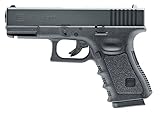
Glock 19 Gen3 .177 Caliber BB Gun Air Pistol
Stopping after every shot can make relaxed target practice feel like a chore. Repeated pumping and single-projectile loading suit a patient routine, but they interrupt the flow once faster follow-up shots become the priority. The Glock 19 Gen3 takes a different route from the umarex strike point 22, using a 15-shot .177 caliber BB magazine and a 12-gram CO2 cartridge to keep the firing sequence moving. Its compact Glock-inspired profile, fixed sights, and accessory rail create a straightforward recreational setup without pretending to be a match pistol.
Glock 19 Gen3 CO2 BB Pistol
The operating system is simple enough to understand without a long learning curve. A standard 12-gram CO2 cartridge powers the pistol, while the magazine holds 15 steel BBs for consecutive shots. CO2 isn’t included, so the first shooting session requires cartridges as well as suitable .177 caliber ammunition. Once prepared, though, the pistol avoids the pump-load-aim cycle that defines the umarex strike point 22.
The manufacturer states a maximum velocity of up to 410 FPS. That number describes the upper specification rather than a speed every shot will reproduce, since temperature, firing pace, cartridge pressure, and BB condition can affect output. Rapid strings may cool the CO2 cartridge and make later shots behave differently from earlier ones. A measured pace usually fits this system better than emptying the magazine as quickly as possible.
Fifteen shots provide enough capacity for a useful practice string without creating an endless firing session. Reloading breaks offer a natural chance to inspect the target, check the trap, and make sure the surrounding area remains secure. The repeat-shot format feels less laborious than a single-shot pellet pistol, yet it still rewards control rather than speed alone. That balance is one of the Glock 19 Gen3’s clearest practical strengths.
Compact Handling Without Extra Fuss
The compact frame gives this air pistol a tidy, recognizable shape. Officially licensed Glock markings support the familiar appearance, while the shorter proportions are easier to manage than a long-barreled pneumatic pistol. The Glock-inspired profile may also feel more natural around a shooting bench or compact target lane. Still, the realistic styling demands responsible storage because the pistol can easily be mistaken for a firearm.
Handling remains focused on recreational airgun use rather than complete firearm simulation. The supplied details don’t claim blowback operation, so buyers shouldn’t expect the slide to cycle with each shot. Recoil, trigger behavior, and balance will also differ from a live-fire Glock 19. The value lies in familiar exterior cues and convenient CO2 operation, not in reproducing every mechanical detail.
The grip houses the power source, keeping the system self-contained without hoses or external tanks. That arrangement is clean and portable, but cartridge installation still needs care. Overtightening, improper lubrication, or leaving a cartridge installed longer than recommended may place unnecessary stress on the seals. Following the manufacturer’s instructions helps preserve the CO2 system and prevents avoidable maintenance headaches.
Fixed Sights And Realistic Accuracy
Fixed Glock-style sights remove adjustment knobs and complicated setup. The sight picture stays familiar and uncluttered, making it easy to begin shooting once the target area is ready. That simplicity has a downside, though, because windage and elevation can’t be tuned through the supplied sights. The fixed sight design works best when the pistol’s point of impact already matches the preferred distance and ammunition reasonably well.
Steel BBs and fixed sights set sensible limits on precision. This pistol is better suited to informal grouping, plinking, and controlled target practice than chasing tiny pellet-sized clusters at ambitious distances. Consistent grip pressure and a smooth trigger press still matter, especially with a compact frame that can shift during the shot. The .177 caliber BB format emphasizes quick loading and repeat shots more than fine accuracy.
The advertised maximum velocity shouldn’t overshadow the rest of the experience. Faster isn’t automatically more accurate, and a headline number says little about sight regulation or trigger feel. Shorter target distances usually provide clearer feedback on alignment and hand movement. Keeping expectations grounded allows the 410 FPS rating to remain a useful specification rather than an inflated promise.
Weaver Rail And Accessory Flexibility
An integrated Weaver rail sits beneath the barrel for compatible accessories. A compact light or laser can be mounted without drilling into the frame or relying on adhesive brackets. The built-in accessory rail adds useful flexibility, particularly where another aiming reference or extra illumination suits the practice area. Large accessories may feel awkward on the short frame, so physical fit matters as much as rail compatibility.
A laser can make unwanted muzzle movement easier to notice during dry handling or controlled target practice. It won’t repair poor trigger control by itself, but the visible movement may reveal habits that fixed sights hide. A light can help illuminate a properly secured target area, though it doesn’t replace safe target identification or a dependable backstop. The mechanical sights remain the simplest and least complicated aiming system.
Different Umarex air pistols can share CO2 convenience while delivering noticeably different controls and handling. A useful point of reference appears in the Umarex Beretta air pistol, another platform that places familiar styling around repeat-shot airgun operation. That comparison highlights how frame shape, sight design, and loading rhythm can matter as much as raw velocity. The Glock 19 Gen3 keeps its own identity through a compact footprint and Glock-style exterior details.
CO2 Convenience And Its Tradeoffs
CO2 power eliminates the repeated physical effort required by the umarex strike point 22. There’s no pumping arm to open, no pump count to remember, and no need to rebuild pressure manually before every shot. That difference keeps the shooting stance from being interrupted as often. For a relaxed string of paper-target shots, the continuous firing rhythm is easier on the arms and less distracting.
Convenience brings an ongoing expense. Cartridges must be replaced, spare CO2 needs to be available, and an unfinished cartridge can complicate storage after a short session. Cooler temperatures may also reduce pressure and make the pistol feel less energetic. The cartridge-powered design is easier between shots, but it isn’t as independent as a multi-pump pneumatic system.
Fast firing adds another wrinkle. CO2 cools as it expands, and rapid shots can reduce consistency before the system has time to recover. Slowing down between trigger pulls may help maintain a steadier feel across the magazine. That pace still remains much quicker than pumping and loading a pellet after every shot. The result is repeat-shot convenience without the need to rush.
Safety And Everyday Maintenance
Steel BBs can rebound from hard targets, metal surfaces, masonry, or unsuitable traps. A purpose-built BB trap, reliable backstop, and eye protection should be treated as basic equipment rather than optional extras. Cardboard boxes and household walls aren’t dependable containment systems. The pistol’s modest size doesn’t reduce the importance of ricochet control.
Ammunition condition also deserves attention. Clean, undamaged .177 caliber steel BBs are less likely to create feeding problems than dirty or deformed projectiles. BBs recovered from a trap may be flattened, scratched, or contaminated with debris, so reusing them can be a false economy. Fresh ammunition supports more predictable feeding and protects the 15-shot mechanism from needless wear.
Realistic markings raise the standard for storage and transport. The Glock 19 Gen3 shouldn’t be displayed casually, carried openly, or left where unauthorized hands can reach it. Its licensed appearance can cause immediate confusion even though it’s powered by CO2. Secure storage protects both the equipment and the people around it, making responsible handling part of the ownership experience.
Strengths, Weaknesses, And Best Fit
The strongest feature is the low-interruption shooting routine. A 15-shot magazine, compact body, and CO2 power system let the pistol move through a target string without repeated pumping. The fixed sights also avoid setup clutter, while the Weaver rail leaves room for modest customization. Together, those practical strengths make the Glock 19 Gen3 approachable for recreational use.
The weaknesses are just as specific. CO2 creates recurring costs, fixed sights prevent mechanical correction, and steel BBs require careful ricochet management. Cold conditions and rapid firing can also affect how the cartridge performs. Anyone seeking adjustable power, .22 caliber pellets, or complete independence from consumables may prefer the umarex strike point 22 instead.
This Glock model makes the most sense where compact handling and consecutive shots matter more than pellet flexibility or adjustable sights. It isn’t built to imitate every live-fire behavior, and it shouldn’t be judged as a precision competition pistol. Its real appeal comes from simple preparation, familiar styling, and a firing rhythm that doesn’t stop after every shot. Those qualities give it a clear role, provided the limits of CO2 and steel BB ammunition fit the intended practice routine.
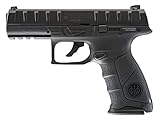
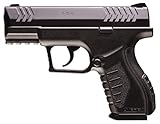
Umarex Beretta APX .177 BB Air Pistol
A target session loses its rhythm quickly when every shot demands another round of pumping and careful hand loading. Faster follow-up shots solve that irritation, though they introduce fresh tradeoffs involving gas use, temperature, and ammunition choice. The Beretta APX takes a livelier route than the umarex strike point 22, using a 20-shot BB magazine, CO2 power, and realistic slide movement to keep the action flowing. Its appeal rests on mechanical feedback and repeat-shot convenience rather than adjustable power or slow, pellet-by-pellet precision.
Beretta APX CO2 Air Pistol
The Beretta APX runs on a standard 12-gram CO2 cartridge, which isn’t included with the pistol. That power source eliminates the need to rebuild pressure manually before each shot, so the firing stance stays more settled between trigger pulls. Load the magazine, install the cartridge correctly, and the basic routine is ready to go. Simple, yes, but spare cartridges become part of the ongoing setup.
A 20-shot capacity gives the pistol enough ammunition for a useful string before another loading break. That extra breathing room helps during informal paper-target drills where stopping every few shots would feel clumsy. It also makes inconsistent grip pressure easier to notice across a longer sequence. Once the novelty of rapid firing settles down, the capacity supports a steady and more thoughtful pace.
The manufacturer lists a maximum velocity of up to 395 FPS with .177 caliber steel BBs. Actual behavior may shift with air temperature, firing speed, cartridge pressure, and ammunition condition, so the maximum shouldn’t be treated as a fixed result. The pistol belongs in a sensible short-range setup rather than being pushed toward distances it wasn’t designed to handle. Practical accuracy matters more here than chasing the highest number printed in the specifications.
Blowback Action Adds Real Movement
The realistic blowback action gives the APX more personality than a fixed-slide BB pistol. Each shot cycles the metal slide, adding visible movement and a mild physical response that makes the trigger pull feel less flat. It won’t duplicate live-fire recoil, and it shouldn’t be judged by that standard. Still, the moving slide makes casual practice feel more involved without requiring complicated controls.
Slide movement introduces a useful challenge as well. The sights must settle again after each shot, encouraging a deliberate reset rather than careless trigger tapping. That rhythm can expose a loose grip or uneven wrist pressure pretty quickly. The mechanical feedback becomes part of the experience, not merely a visual effect.
Blowback also consumes some of the gas that would otherwise drive the BB alone. That means the feature carries a clear cost in CO2 efficiency, especially during fast shooting or colder conditions. A fixed-slide pistol may stretch a cartridge further, while the APX spends part of its gas budget on movement. That’s the bargain: more character and feedback in exchange for less frugal operation.
Metal Slide And Polymer Frame Balance
A metal slide gives the upper section a firmer, more substantial feel than an all-polymer shell. The lower frame remains durable polymer, helping prevent the pistol from becoming unnecessarily heavy. Together, those materials create a balance that feels purposeful rather than bulky. The result suits longer recreational sessions where excessive weight can become tiring.
The shifting slide changes how the pistol behaves in the hand. A grip that’s too loose may allow unnecessary movement, while a death grip can make the trigger press stiff and uneven. The better approach sits somewhere in the middle, firm enough to control the frame but relaxed enough to repeat. That balance brings out the handling strengths of the mixed-material construction.
Realistic styling raises a separate concern that shouldn’t be brushed aside. The black finish, recognizable Beretta profile, and moving metal slide can make the pistol difficult to distinguish from a firearm at a glance. Secure storage and careful transport are therefore part of responsible ownership. The replica-style appearance adds visual appeal, but it also adds responsibility.
Low-Profile Sights Keep Things Simple
The APX uses low-profile 3-dot sights that keep the top of the slide clean and uncluttered. Three visible reference points can help the eye center the front sight without an elaborate aiming process. That simplicity works nicely during casual target shooting where quick alignment matters more than precision sight tuning. The sight picture is familiar, direct, and easy to read.
The supplied information doesn’t identify adjustable windage or elevation. That means a consistent point-of-impact offset may need to be managed through hold rather than mechanical correction. Paper targets make this easier to diagnose because repeated groups reveal whether the issue is technique or sight regulation. The fixed sight arrangement cuts down on setup fuss but offers less flexibility.
Blowback movement makes sight recovery a little more demanding than it would be on a motionless slide. That’s not necessarily a flaw; it simply changes the skill being practiced. The front sight must return to the same place before the next trigger press, which rewards patience. A steady cadence lets the 3-dot sight system do its job without turning the session into a blur.
Picatinny Rail Adds Useful Flexibility
An integrated Picatinny rail sits beneath the barrel for compatible accessories. A compact light or laser can be mounted without drilling, adhesives, or permanent alteration. The rail gives the pistol room to adapt to different controlled practice setups. Oversized accessories, though, may upset the balance and make the short frame feel front-heavy.
A laser can reveal how much the muzzle moves during the trigger press. That visual feedback may help identify a flinch, uneven finger placement, or poor follow-through, but it won’t fix those habits on its own. A small light may also improve target visibility in a secured area. Both accessories add batteries, screws, and alignment checks to a pistol that otherwise stays pleasantly straightforward.
Mounting terminology can sound deceptively similar across pistols and rifles, though the actual hardware serves very different purposes. A separate rifle-focused example appears in Howa 1500 scope mounts, where mounting stability and optic support involve a different scale of equipment. The APX rail is better understood as a compact accessory point rather than a platform for heavy optics. That distinction keeps expectations around rail compatibility realistic.
CO2 Performance Has A Natural Rhythm
CO2 power makes the APX easier to shoot repeatedly than the umarex strike point 22. There’s no pumping arm to open, no pressure count to remember, and no need to rebuild the shooting position after every round. That uninterrupted stance can make practice feel smoother and less tiring. The tradeoff is dependence on disposable cartridges.
Rapid firing cools the cartridge as the gas expands. The pistol may feel lively at first, then lose some consistency if the trigger is worked without pause. A slower cadence allows the system to recover between shots and often produces a steadier experience. The temperature-sensitive power source rewards restraint even though the magazine encourages speed.
Cold weather may reduce pressure before the first BB is fired. A setup that feels responsive on a warm afternoon can seem less energetic in a chilly garage or outdoor lane. That behavior belongs to CO2 systems generally, not just this pistol. Keeping the temperature factor in mind prevents normal CO2 pressure changes from being mistaken for a mechanical problem.
Steel BBs Bring Speed And Limits
The pistol fires .177 caliber steel BBs, which support easy loading and quick repeat shots. Round steel ammunition suits plinking and short-range paper targets, but it doesn’t offer the same precision potential as a carefully matched lead pellet. The APX favors pace and mechanical engagement over tiny groups. That role should be accepted rather than stretched beyond reason.
Clean ammunition helps the 20-shot system feed more reliably. BBs recovered from a trap may be dirty, scratched, or flattened, and those defects can interfere with internal parts. Reusing battered ammunition saves very little while adding needless risk. Fresh, properly sized BBs protect the feeding mechanism and reduce avoidable frustration.
Ricochet is the larger concern. Steel BBs can rebound from hard metal, concrete, stone, and other unforgiving surfaces at unpredictable angles. A purpose-built BB trap, dependable backstop, and eye protection belong in every session. The rebound risk makes casual improvisation around household objects a poor idea.
Where The APX Feels Strongest
The pistol’s biggest strength is its lively shooting rhythm. Twenty shots, blowback movement, and CO2 power keep the sequence moving without repeated pumping or single-round loading. That combination makes short practice sessions feel active rather than procedural. The repeat-shot convenience is easy to appreciate after using a slower pneumatic design.
The mixed construction also makes sense. A metal slide adds weight and movement where those qualities matter, while the polymer frame prevents the whole package from feeling clumsy. Low-profile sights keep aiming simple, and the rail leaves room for modest customization. Each feature supports a practical role instead of piling on decorative complexity.
Familiar styling adds another layer of appeal. The APX shape and black finish give the air pistol a distinct identity without relying on exaggerated claims. That visual realism won’t improve accuracy or gas economy, but it does make the handling experience feel more engaging. The licensed-style profile helps separate it from generic BB pistols.
Weaknesses Worth Accepting Or Avoiding
The moving slide is both a strength and a weakness. It adds feedback and realism, yet it also uses gas and introduces movement that may widen groups. Anyone focused mainly on economy or precision may prefer a simpler fixed-slide design. The blowback tradeoff only makes sense when the added motion genuinely matters.
CO2 dependency can become inconvenient during frequent shooting. Cartridges cost money, spares need to be kept nearby, and performance can shift as pressure drops. The pistol also shouldn’t be stored carelessly with a cartridge installed if the manufacturer advises removal. Those ongoing operating demands make it less self-sufficient than a multi-pump model.
Fixed sights and steel BBs set another boundary. Sight correction options appear limited, while round ammunition isn’t built for match-style accuracy. The APX still offers satisfying short-range practice, but realistic expectations are essential. Its practical limits are easy to live with only when repeat shots and blowback matter more than fine tuning.
APX And Strike Point 22 Serve Different Habits
The umarex strike point 22 builds each shot through manual pumping and individual pellet loading. The Beretta APX replaces that deliberate cycle with CO2 power and a 20-shot BB magazine. One approach favors independence from cartridges, while the other favors continuity. Neither is automatically better because the inconvenience simply moves to a different part of the routine.
Ammunition separates them just as clearly. The Strike Point uses .22 caliber pellets, while the APX fires smaller .177 caliber steel BBs. Pellets may suit a slower precision-minded rhythm, whereas BBs support faster loading and repeated shots. The caliber and projectile difference shapes the experience more than the shared manufacturer name.
Physical feedback creates the final divide. The APX cycles a metal slide after each shot, giving the firing sequence movement that the pump pistol doesn’t prioritize. That motion costs gas and slightly disrupts the sights, but it also makes the pistol feel more animated. The Beretta APX fits a faster, more interactive routine, while the Strike Point rewards patience and manual control.
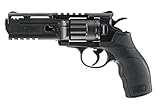
Umarex Brodax .177 BB Air Pistol
A shooting session can lose its easy rhythm once every round requires another pump, another loading step, and another reset of the hands. The Umarex Brodax takes a quicker route, using a 10-shot rotary magazine and a 12-gram CO2 cartridge to keep the action moving with less interruption. Compared with the umarex strike point 22, this revolver-style BB pistol favors repeat shots, accessory flexibility, and lighter handling over manual power control and single-pellet precision. That difference gives it a clear role for short-range recreational shooting without pretending it can cover every air-pistol need.
Umarex Brodax Air Pistol
The Brodax centers its shooting routine around a 10-shot rotary magazine. Ten rounds provide enough room to settle into a consistent pace without reloading after every trigger pull. The capacity also creates natural pauses, which help with checking the backstop, inspecting the target, and letting the CO2 system recover. It’s a practical middle ground rather than a race toward maximum capacity.
A standard 12-gram CO2 cartridge powers the pistol, and the cartridge isn’t included. CO2 removes the physical work of pumping before each shot, so grip placement and stance stay more consistent across the magazine. The downside is recurring cartridge cost and the need to keep spares nearby. Running out of gas ends the session just as surely as running out of BBs.
The manufacturer rates the pistol at up to 375 FPS with .177 caliber steel BBs. That figure is useful as a ceiling, not a promise that every shot will leave the barrel at the same speed. Temperature, firing pace, cartridge pressure, and ammunition condition can all change the result. Short-range paper targets fit the Brodax far better than ambitious distance work.
Bold Revolver Styling With A Lighter Build
The Brodax has a broad, futuristic revolver profile that stands apart from slim semi-automatic replicas. Its durable polymer frame keeps the large shape from becoming overly heavy during longer sessions. Metal internal parts handle the working duties inside the pistol, giving the design a practical split between manageable weight and mechanical support. The frame feels purpose-built for recreational handling rather than traditional revolver heft.
That lighter shell is both a strength and a compromise. Less weight can reduce wrist fatigue, especially after several magazines, but it won’t satisfy anyone expecting the dense feel of an all-metal handgun replica. The material difference becomes obvious the moment the pistol is picked up. Big looks don’t automatically mean heavy construction.
The black finish and oversized revolver shape also demand careful handling. From a distance, the pistol may be mistaken for a firearm despite its polymer exterior. Secure storage, discreet transport, and strict muzzle discipline belong in the routine every time. The realistic silhouette adds visual appeal while raising the responsibility attached to ownership.
Picatinny Mounts Add Setup Freedom
Integrated Picatinny accessory mounts give the Brodax more flexibility than many basic revolver-style BB pistols. Compact optics, lasers, or lights can be attached without drilling into the frame or using improvised brackets. That makes the pistol easier to tailor around a specific target setup. Large accessories, though, can upset the balance and make the front end feel clumsy.
A small laser can reveal unwanted muzzle movement during the trigger press. That visual feedback may expose inconsistent finger placement or a grip that tightens at the last second. A compact light can help illuminate a properly secured target area, but it doesn’t replace safe identification or a dependable backstop. The accessory rail adds options, not shortcuts.
Rifle optics involve a completely different scale of distance, mounting strength, and magnification, and that contrast is clear in neutral references such as one-mile rifle scopes. The Brodax is better matched with small accessories that preserve its balance and short-range role. Heavy glass would add bulk without improving the pistol’s basic purpose. Sensible sizing keeps the mounting system useful instead of awkward.
CO2 Power Changes The Shooting Rhythm
The largest practical difference from the umarex strike point 22 appears between shots. There’s no pumping arm to move, no pressure count to remember, and no individual pellet to seat after every trigger pull. That smoother sequence helps the hands remain in roughly the same position throughout the magazine. Less interruption often means more attention stays on sight alignment and trigger control.
CO2 power has its own quirks, naturally. Rapid firing cools the cartridge as gas expands, which can affect consistency before all ten shots are finished. A calmer pace gives the system time to recover and usually produces a steadier feel. The gas-powered action encourages speed, but restraint often gets better results.
Cold conditions can reduce performance before the first shot is taken. A cartridge that feels lively on a warm afternoon may seem softer in a chilly garage or shaded outdoor lane. That behavior is common with CO2 and shouldn’t automatically be treated as a mechanical fault. Realistic expectations make the temperature tradeoff easier to live with.
Steel BBs Favor Convenience Over Precision
The Brodax fires .177 caliber steel BBs, which are easy to load and well suited to informal plinking. Round steel ammunition supports repeat shots, but it doesn’t offer the same precision potential as a carefully selected pellet. Groups may widen quickly as distance increases. The pistol feels most honest at modest ranges where target feedback stays clear.
Fresh ammunition matters more than it seems. BBs recovered from a trap may be dirty, scratched, or flattened, and those imperfections can interfere with the rotary magazine. Reusing damaged ammunition saves very little while risking unnecessary feeding trouble. Clean BBs protect the 10-shot mechanism and keep the routine smoother.
Ricochet control deserves blunt attention. Steel BBs can rebound from concrete, stone, hard metal, and other unforgiving surfaces at unpredictable angles. A proper BB trap, protective eyewear, and a dependable secondary backstop should be treated as basic equipment. The rebound risk is one of the pistol’s clearest practical limitations.
Strengths That Make The Brodax Easy To Live With
The Brodax’s strongest quality is its low-interruption firing cycle. Ten shots are ready before reloading, and CO2 power removes the repeated physical effort of pumping. That combination makes casual target practice feel less mechanical and more fluid. The repeat-shot convenience becomes especially noticeable during longer sessions.
Accessory compatibility adds another real advantage. Many revolver-shaped BB pistols leave little room for customization, while the Brodax offers mounting points for compact equipment. A laser, light, or small optic can change the way the pistol fits a controlled practice area. The integrated rails give the platform room to adapt without permanent changes.
The polymer exterior also serves a useful purpose. A large frame built entirely from metal could become tiring, while the lighter shell keeps the pistol easier to hold over repeated strings. Metal internal components provide working support where it counts. The balanced construction values comfort over old-school weight.
Weaknesses That Deserve A Straight Answer
CO2 dependence is the most obvious drawback. Cartridges cost money, pressure changes with temperature, and forgetting spares can stop the session before it starts. The ongoing gas requirement stands in sharp contrast to the self-powered nature of the umarex strike point 22. Convenience shifts the work from pumping to supply management.
The polymer body may also feel disappointing to someone expecting traditional revolver weight. It keeps the pistol manageable, but the tactile experience won’t match a metal-heavy replica. The bold shape can create expectations the material doesn’t fully meet. That weight tradeoff is worth accepting only when lighter handling matters more than realism.
Accuracy has a practical ceiling as well. Steel BBs, recreational velocity, and the pistol’s repeat-shot focus don’t point toward match-style grouping or long-range use. The Brodax belongs around controlled plinking, paper targets, and short-range practice. The precision limit isn’t a flaw if the pistol is judged within that lane.
Brodax And Strike Point 22 Take Opposite Paths
The umarex strike point 22 uses a multi-pump pneumatic system and fires one .22 caliber pellet at a time. The Brodax uses CO2 and a 10-shot .177 BB magazine to create a faster, less interrupted sequence. One approach favors manual control and cartridge independence. The other favors convenience and repeat shots.
Ammunition behavior separates them just as clearly. The Strike Point’s larger pellets fit a slower, more deliberate rhythm, while the Brodax’s steel BBs load quickly and support repeated firing. Steel ammunition brings a greater ricochet concern, though, and it usually gives up some precision potential. The projectile difference shapes the experience more than the shared brand name.
Physical effort and operating cost form the final divide. The Strike Point demands repeated pumping but avoids disposable gas, while the Brodax preserves the shooting stance and consumes CO2 cartridges. The Brodax also brings broader accessory mounting through its Picatinny rails. Its best-fit role centers on short-range plinking, lighter handling, and a quicker recreational pace.
Umarex Prymex .22 Caliber Break Barrel Air Rifle
Power means little if every shot feels harsh, awkward, or hard to repeat. The Umarex Prymex approaches that problem with a one-stroke NTP power system, a lightweight stock, and an adjustable trigger that gives the shooter more control over the firing routine. Compared with the umarex strike point 22, this rifle trades compact pistol handling and multi-pump flexibility for higher velocity, shoulder-fired stability, and break-barrel simplicity. Its appeal comes from a practical blend of speed, sighting options, and a familiar loading cycle rather than flashy extras.
Umarex Prymex .22 Air Rifle
The Prymex is built around a single-stroke break-barrel action, so each shot begins by opening the barrel, cocking the powerplant, and loading one pellet. That sequence is slower than a magazine-fed airgun, but it keeps the rifle self-contained without CO2 cartridges or external air tanks. There’s a certain satisfaction in the routine, too, because every shot starts from the same deliberate mechanical reset. The format suits careful target work far better than rapid firing.
The manufacturer lists velocities up to 1,000 FPS with alloy pellets and up to 900 FPS with standard pellets. Those numbers show the rifle’s performance ceiling, though pellet weight, fit, temperature, maintenance, and shooting technique can affect actual results. Lighter alloy pellets usually reach higher speeds, while standard lead pellets often bring a different balance of energy and stability. Raw velocity is only one piece of the puzzle, not the whole story.
The .22 caliber chambering gives the Prymex a noticeably different character from smaller-bore rifles. Larger pellets generally carry more mass, leave clearer holes in paper, and can feel less twitchy in moderate outdoor conditions. The .22 caliber format also makes pellet selection worth taking seriously because shape and weight can change grouping behavior. A little testing on paper is more useful than assuming the fastest pellet will automatically shoot the tightest group.
NTP Power Makes The Shot Cycle Smoother
The Prymex uses NTP technology rather than a conventional spring-powered setup. This system is designed to create a smoother shooting cycle while preserving the dependable one-stroke break-barrel operation many shooters already understand. A calmer shot cycle can make the rifle easier to manage from a bench or supported field position. It also reduces the abrupt mechanical feel that sometimes makes powerful break barrels tiring to shoot.
Smoother doesn’t mean recoil-free, though. A break-barrel rifle still moves differently from a firearm or a precharged pneumatic gun, and that movement can influence accuracy if the hold changes from shot to shot. The powerplant behavior rewards a repeatable grip rather than a crushing hold. Holding the stock too tightly may actually make groups less consistent.
The one-stroke system also removes several recurring expenses. There are no CO2 cartridges to replace, no rechargeable battery to monitor, and no separate air cylinder to fill. That independence is a clear advantage over many gas-powered designs, including options someone might consider alongside the umarex strike point 22. The cost shifts toward pellets, maintenance supplies, and occasional scope adjustment rather than power consumables.
Sights And Scope Cover Different Shooting Styles
The rifle includes a fiber optic front sight and an adjustable rear sight, giving it a usable open-sight setup straight away. Fiber optics can make the front reference easier to pick up against many outdoor backgrounds, especially where dark sights disappear into shade. The rear sight provides correction options for basic windage and elevation. That arrangement keeps the rifle useful even if the scope is removed or temporarily unavailable.
A supplied 4x32 scope with rings expands the setup for targets that look too small through open sights. Four-power magnification is straightforward rather than excessive, which fits a break-barrel rifle that benefits from a generous field of view and uncomplicated aiming. The 32 mm objective keeps the optic reasonably compact on the lightweight stock. It won’t replace a specialized long-range scope, but that isn’t the job here.
Break-barrel recoil can be tough on mounting hardware, so ring tension and scope position deserve regular attention. A scope that slowly shifts may produce wandering groups that look like pellet or technique problems. The included rings make initial setup easier, yet they still need to be installed and checked correctly. Careful mounting is less exciting than shooting, but skipping it can waste an afternoon.
Air-rifle optics need a sensible match between magnification, recoil tolerance, and intended range. A related small-bore reference appears in .177 air rifles, where caliber and setup priorities differ from the Prymex’s heavier .22 pellet format. That distinction matters because optic needs often follow the rifle’s power, projectile, and realistic shooting distance. The Prymex benefits more from a stable, modest scope setup than from oversized glass.
Polymer Stock Keeps The Rifle Manageable
The lightweight polymer stock helps counter the weight that often comes with a powerful barrel and scope. A lighter rifle is easier to carry between a bench, target line, and storage area without turning the session into an arm workout. The stock also provides a durable exterior that won’t demand the same cosmetic care as finished wood. Scratches may still happen, but they’re less likely to feel catastrophic.
Grip shape matters during cocking as much as it does during aiming. The Prymex stock is designed to be easy to hold, which helps while controlling the barrel through the cocking stroke and returning it to the locked position. The stock ergonomics also support a more repeatable cheek position once the rifle is shouldered. Consistency there can matter just as much as scope magnification.
Polymer brings tradeoffs, naturally. It won’t provide the warm feel, visual grain, or dense balance of a traditional wood stock. Some shooters may also perceive a lighter stock as less substantial, even though reduced weight improves portability. The material choice favors practical handling over classic styling.
Two-Stage Trigger Adds Useful Control
A two-stage adjustable trigger gives the Prymex more tuning potential than a basic fixed trigger. The first stage allows the shooter to take up initial movement before reaching the point where the shot breaks. That separation can make trigger timing feel more predictable once the setting and technique become familiar. Better predictability often helps reduce the tendency to snatch at the shot.
Adjustment should be approached carefully and only within the manufacturer’s instructions. A trigger isn’t the place for guesswork, over-adjustment, or improvised modifications. The personalized trigger feel is useful because hand strength and preference vary, but safe engagement must remain the priority. Smooth and predictable beats excessively light.
The trigger also works together with the rifle’s broader shooting rhythm. A deliberate cocking stroke, careful pellet seating, stable shoulder position, and clean trigger press create a repeatable sequence. The adjustable two-stage design supports that routine rather than replacing it. Poor follow-through will still open groups, no matter how carefully the trigger is tuned.
Strengths That Stand Out In Regular Use
The Prymex’s most obvious strength is the combination of high listed velocity and a self-contained break-barrel system. It produces its power without cartridges, pumps, hoses, or charging equipment. That keeps preparation simple and makes the rifle easy to take from storage to a safe shooting area. One cocking stroke, one pellet, one shot.
The included sighting package adds real value to the setup. Open sights preserve a simple mechanical option, while the 4x32 scope supports more precise aiming at modest distances. The dual sighting choices let the rifle adapt to different target sizes and shooting preferences. That flexibility is more useful than forcing every session through a single optic.
The stock and trigger round out the practical strengths. Lightweight polymer reduces handling fatigue, while the two-stage adjustable trigger gives the firing process more refinement. The manageable stock design helps during carrying and cocking, especially across longer sessions. Together, these features make the rifle easier to live with than a heavy, stiffly triggered break barrel.
Weaknesses And Tradeoffs Worth Knowing
Break-barrel loading interrupts the shooting position after every shot. The barrel must be opened, cocked, loaded, and returned before the rifle can be shouldered again. That process is slower than magazine-fed systems and more physically involved than the umarex strike point 22 at lower pump counts. The deliberate pace is useful for concentration, but it won’t suit anyone chasing rapid follow-up shots.
The listed velocity can also create unrealistic expectations if it becomes the only buying metric. Alloy pellets may reach the highest numbers, yet they may not deliver the best accuracy in a specific barrel. The 900 FPS standard-pellet rating may be more relevant for everyday pellet testing, though actual performance still depends on ammunition and conditions. Accuracy should be judged through grouping, not speed alone.
The supplied scope is convenient, but it may require careful setup and periodic checks. Powerful break-barrel movement can loosen mounts or reveal small alignment issues over time. The scope package adds usefulness while introducing another component that needs attention. Open sights remain a helpful fallback if the optic shifts or needs adjustment.
Prymex And Strike Point 22 Serve Different Routines
The umarex strike point 22 is a compact multi-pump pistol, while the Prymex is a full shoulder-fired break-barrel rifle. One allows power to be influenced through pump count, and the other delivers its shot through a single cocking stroke. The pistol favors portability and compact handling. The rifle favors stability, velocity, and a longer sighting platform.
Both fire .22 caliber pellets, but the shooting experience is far from identical. The Prymex offers a stock, scope, adjustable rear sight, and a listed velocity that reaches much higher than typical pump-pistol territory. The shoulder-fired format also makes it easier to build a stable cheek weld and support the rifle from a rest. That can help at distances where a handgun-style hold becomes less forgiving.
The final choice comes down to which inconvenience feels more manageable. The Strike Point asks for repeated pumping and a compact pistol hold, while the Prymex asks for a full barrel-cocking cycle and more storage space. The Prymex advantage lies in power, sighting options, and rifle stability, while the Strike Point remains easier to carry and simpler to use in tighter spaces. Neither design replaces the other because they solve different frustrations.
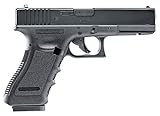
Umarex GLOCK 17 Gen3 Blowback BB Air Pistol
A flat shooting cycle can make a replica-style air pistol feel lifeless after the first few magazines. Slide movement, familiar controls, and a magazine that drops free add more mechanical involvement, though those details also bring extra gas use and maintenance considerations. The Umarex GLOCK 17 Gen3 takes a faster, more animated route than the umarex strike point 22, combining an 18-shot .177 caliber BB system with realistic blowback action and officially licensed Glock markings. It’s built around repeat-shot handling and replica character rather than adjustable pump power or single-pellet precision.
GLOCK 17 Gen3 Air Pistol
The heart of the design is an 18-shot drop-out metal magazine that holds the BBs and supports a familiar loading routine. Removing the magazine feels more natural than working with a hidden rotary clip, especially during structured paper-target practice. Eighteen rounds also provide enough time to settle into a consistent grip before another loading break arrives. That capacity keeps the pace moving without turning the session into nonstop trigger tapping.
A standard 12-gram CO2 cartridge powers the pistol, and the cartridge isn’t included. CO2 removes the repeated pumping required by the umarex strike point 22, so the hands can stay closer to the same position from shot to shot. The tradeoff shows up in recurring cartridge cost, temperature sensitivity, and the need to keep spare gas nearby. Convenience between rounds doesn’t mean the power source is maintenance-free.
The manufacturer lists a maximum velocity of up to 365 FPS with .177 caliber steel BBs. That specification fits short-range recreational shooting rather than ambitious distance work. Cartridge pressure, air temperature, firing speed, and ammunition condition can all affect actual behavior. A steady cadence usually makes more sense than chasing the fastest possible magazine dump.
Blowback Action Changes The Whole Feel
The realistic blowback action gives this pistol its most distinctive trait. Each shot cycles the full metal slide, creating visible movement and a mild impulse that a fixed-slide BB gun can’t reproduce. It won’t mimic live-fire recoil, and pretending otherwise would oversell it. Still, the movement makes the shooting cycle feel more connected and less like operating a basic gas-powered launcher.
Slide movement also adds a useful bit of honesty. A loose grip, uneven wrist pressure, or rushed trigger press becomes easier to notice once the sights have to settle after every shot. The sight recovery rhythm encourages patience even though the magazine supports quick follow-up shots. That tension between speed and control is part of what makes the pistol engaging.
Blowback isn’t free, of course. Some of the CO2 goes toward cycling the slide instead of pushing the BB, which can reduce gas efficiency compared with a non-blowback model. Rapid firing cools the cartridge faster as well. The mechanical realism earns its place only if slide movement matters more than stretching every cartridge as far as possible.
Full Metal Slide And Drop-Out Magazine
A full metal slide gives the upper half of the pistol a firm, substantial feel. The extra weight helps the blowback action feel more convincing than a lightweight plastic assembly would. It also changes the balance during handling, with more mass moving above the grip. That motion adds character, but it may widen groups until the grip becomes repeatable.
The drop-out metal magazine is another practical strength. It brings the loading process closer to the familiar layout of a duty-style pistol and gives the frame a more grounded feel in the hand. Metal construction should handle regular insertion and removal better than a flimsy plastic part, provided it isn’t slammed or dropped onto hard surfaces. Spare magazines could make range sessions smoother, though none are included in the supplied details.
Metal parts also ask for sensible care. Dirt around the magazine channel, damaged BBs, or careless handling can turn a smooth loading process into unnecessary frustration. Light cleaning and manufacturer-approved maintenance keep the mechanism from feeling gritty. The realistic hardware improves the experience, but it rewards a little discipline.
Controls And Sights Stay Familiar
The pistol includes realistic controls and fixed Glock-style sights. That layout keeps the top of the slide clean and uncluttered while preserving the recognizable visual language of the Gen3 platform. The sights are straightforward, which helps during close paper-target work. Their simplicity also means there’s little room for mechanical correction if the point of impact doesn’t match the sight picture.
Fixed sights can be either refreshing or limiting. There are no adjustment screws to lose or accidentally shift, but windage and elevation tuning aren’t part of the supplied setup. A consistent hold may need to compensate for any repeatable offset. The fixed sight design suits uncomplicated practice better than fine target calibration.
Officially licensed Glock markings complete the familiar appearance. Those details don’t improve velocity, trigger feel, or accuracy, yet they give the pistol a cleaner replica identity than a generic frame with similar proportions. The licensed exterior also increases the need for careful storage and discreet transport. At a glance, the pistol may be mistaken for a firearm.
Holster Compatibility Adds Practical Value
The Gen3 profile is designed to fit most aftermarket duty holsters, which gives the pistol a useful training-oriented advantage. A compatible holster can support draw practice in a controlled, unloaded setting where local rules and safe procedures are followed. Fit still needs to be checked carefully because aftermarket holsters vary in retention, molding, and clearance. The phrase “most holsters” shouldn’t be read as a guarantee for every model.
Holster compatibility matters most when consistency is the goal. Drawing from the same style of carrier can help make grip placement more repeatable before the pistol reaches eye level. The familiar frame geometry supports that routine without claiming to duplicate every live-fire behavior. Trigger feel, recoil, slide force, and weight distribution still remain different.
Safety becomes even more important during any handling drill. The pistol should be unloaded, the CO2 system managed according to the manufacturer’s guidance, and the practice area cleared of people and unsuitable targets. A holster doesn’t turn casual handling into safe training by itself. The realistic form factor increases both the usefulness and the responsibility of the setup.
CO2 Behavior Rewards A Measured Pace
CO2 gives the GLOCK 17 Gen3 a smooth repeat-shot routine, but it has a natural working rhythm. Fast strings cool the cartridge as gas expands, and that cooling can make later shots feel less consistent. Brief pauses help the system recover and keep the slide movement more uniform. The gas-powered action performs better when it isn’t treated like an unlimited power source.
Temperature matters before the first shot, too. Warm conditions generally support better CO2 pressure, while colder air can make the pistol feel softer and less responsive. That behavior belongs to the power system rather than this model alone. The temperature-sensitive performance is easier to accept once it’s expected instead of mistaken for a defect.
Cartridge care is part of the routine. Installation, lubrication, removal, and storage should follow the manufacturer’s instructions rather than guesswork. Household oils and random solvents may harm seals or other internal parts. The CO2 system stays convenient only when small maintenance habits aren’t ignored.
Steel BBs Bring Convenience And Limits
The pistol fires .177 caliber steel BBs, which suit quick loading and recreational target work. Round steel ammunition feeds easily through a repeat-shot system, but it doesn’t offer the same precision potential as a carefully matched pellet. Groups may open up as distance increases or the firing pace becomes rushed. Shorter ranges reveal more about grip and trigger control than long shots do.
Clean BBs matter. Ammunition recovered from a trap may carry dents, flat spots, or grit that can interfere with the magazine and internal mechanism. Reusing battered BBs saves very little while increasing the chance of feeding trouble. Fresh ammunition supports the 18-shot magazine and keeps the loading cycle predictable.
Ricochet risk deserves plain language because steel BBs can rebound from concrete, hard metal, stone, and other unforgiving surfaces. A purpose-built BB trap, eye protection, and a dependable secondary backstop belong in every shooting area. Household objects aren’t reliable containment systems. The rebound hazard is one of the clearest limitations of steel ammunition.
Strengths That Stand Out In Regular Use
The strongest feature is the combination of blowback movement and an 18-shot magazine. That pairing keeps the session lively while reducing constant reloading. The metal slide adds weight and feedback, and the drop-out magazine keeps the handling process familiar. Together, those details make the pistol feel more involved than a simple fixed-slide BB gun.
Licensed styling and holster compatibility add another layer of usefulness. The pistol can support controlled handling practice while still serving as a recreational target gun. Its realistic controls help the frame feel coherent rather than decorative. That’s a meaningful distinction for someone who values mechanical familiarity as much as shooting speed.
CO2 power also solves the fatigue created by manual pumping. The umarex strike point 22 asks for repeated physical effort and individual pellet loading, while the GLOCK 17 Gen3 preserves a steadier stance across the magazine. The difference becomes obvious during longer sessions. Less mechanical interruption leaves more room to focus on sight recovery and grip pressure.
Weaknesses That Shouldn’t Be Ignored
Gas consumption is the most obvious weakness. Blowback uses part of the CO2 supply, rapid firing cools the cartridge, and spare cartridges become a recurring expense. The operating cost is higher than a self-powered pneumatic pistol. Anyone who dislikes consumables may find that convenience loses some of its charm.
Fixed sights impose another limit. The simple Glock-style setup looks right and stays uncluttered, but it doesn’t offer the adjustment range of a target-oriented pistol. A repeatable point-of-impact offset may require changing the hold. The sight limitation won’t bother casual plinking, yet it can frustrate anyone who enjoys fine tuning.
Replica realism can also create expectations the pistol can’t meet. Blowback movement, metal parts, and familiar controls make the experience more engaging, but live-fire recoil and trigger behavior remain entirely different. The realistic appearance should be appreciated without confusing the platform’s role. It’s still a CO2-powered BB pistol built for controlled recreational use.
GLOCK 17 Gen3 Versus Strike Point 22
The umarex strike point 22 and GLOCK 17 Gen3 solve opposite frustrations. The Strike Point avoids cartridges and allows manual power building, while the GLOCK removes pumping and supports eighteen repeat shots. One rewards a slower, self-contained routine. The other favors motion, speed, and familiar magazine handling.
Projectile choice creates another major split. The Strike Point uses .22 caliber pellets, while the GLOCK fires .177 caliber steel BBs. Pellets better support a deliberate single-shot rhythm, whereas BBs favor quick loading and consecutive firing. The ammunition difference also changes ricochet behavior, target marking, and realistic accuracy expectations.
Optics and long-range rifle work occupy a separate lane from either pistol, and that separation is reflected in references such as air rifles for silhouette shooting. The GLOCK 17 Gen3 is better judged by handling flow, slide response, magazine convenience, and short-range control. Its best-fit role centers on realistic recreational practice rather than precision rifle tasks or pump-pistol independence.


12 Best 22 Pcp Air Rifle For Hunting of 2026 With Quiet Power

7 Best 22 Pcp Air Rifle Under 300 of 2026 For Backyard Pest Control

10 Best 22 Break Barrel Air Rifles of 2026 For Backyard Pest Control

10 Best 30 Caliber Pcp Air Rifle of 2026 For Medium Game

Top Best 177 Air Rifle Under 100: Budget-Friendly Picks for 2026

How to Safely Reload Shotgun Shells at Home

11 Best Co2 Air Rifle For Pest Control of 2026 To Ensure Humane Dispatch

12 Best Inexpensive Air Rifles of 2026 For Dependable Backyard Accuracy






