
What Else Can You Use a Crossbow For?

Finding new jobs for your archery gear is completely fine, provided you respect what the equipment can handle. Outside of the woods and target ranges, people regularly rely on crossbows for launching guide lines into tall trees, bowfishing for invasive species, and collecting scientific wildlife samples. With the right setup, that stored mechanical energy turns a standard hunting tool into a handy utility launcher for tough outdoor tasks.
What works safely depends on three crucial details. Projectile weight comes first, because firing anything too light will shatter the bow limbs just like a dry fire (pulling the trigger without an arrow). Local laws also matter, since many towns treat crossbows the same as firearms inside city limits. Finally, bow size dictates the job, where small handheld models manage garden pests while heavy rigs handle line throwing. Here is how to tackle each utility project safely without damaging your bow.
A Crossbow Can Launch Lines Over Tall Tree Branches
Arborists, tree trimmers, and amateur radio hobbyists often need to get a rope over a high tree branch that sits 50 or 60 feet off the ground. Throwing a weighted bag by hand rarely works once branches reach past two stories, and commercial throw-line guns can cost hundreds of dollars. A standard crossbow fitted with a basic line-pulling setup solves this problem quickly and cleanly.
The system uses a modified bolt (a short crossbow arrow) attached to lightweight, slick fishing line. You mount a small, open-face spinning reel or a specialized line bottle to the bow's front accessory rail. The line ties directly to the bolt through a sliding attachment ring. When you aim through a clear gap in the tree canopy and pull the trigger, the bolt carries the thin line up and over the target limb. Once the arrow falls back down to the ground on the other side, you untie it, knot a heavy work rope to the line, and haul the thick rope up into the tree.
Line drag is the main challenge during this task. If the line snags or catches on the spool during the shot, that sudden jerk stops the bolt in mid-air. That sudden stop can whip the arrow backward or cause it to tumble off course. Using slick, heavy braided line that flows freely off the spool prevents snags. Always clear the entire drop zone beneath the tree of people, pets, and property before firing upward.
Bowfishing Kits Turn Crossbows Into Water Rigs
Bowfishing is an effective way to harvest rough fish and control invasive species like carp, gar, and snakehead in shallow waterways. While most shooters use upright compound bows, a crossbow works remarkably well when fitted with dedicated water gear.
Crossbow bowfishing differs from standard shooting in three key ways: the arrow, the line reel, and how you aim. You shoot solid fiberglass bolts rather than hollow carbon shafts. Solid fiberglass provides the heavy mass needed to punch through water without veering off course. These specialized bolts do not have plastic vanes or feathers, because hitting the water surface would rip soft fletchings clean off. Instead, they feature sharp, barbed steel points that hold the fish securely until you reel it in.
Aiming into the water takes practice because water bends light. A fish swimming two feet below the surface appears to sit several inches higher and closer than its actual position. You must aim noticeably beneath the visible target to connect. Crossbows also take longer to cock and reload than vertical bows, so you need patience and careful boat positioning to make your single shot count.
Safety is critical when shooting tethered arrows. Never tie a fishing line directly to the back end of the bolt. If the bowstring catches the line during release, the arrow can snap backward violently toward your face. Always install a commercial safety slide. This small ring sits forward of the arrow rest when the bow is loaded and slides back along the shaft during flight, keeping the retrieval cord safely in front of the bowstring at all times.
Pistol Crossbows Manage Small Garden Pests Up Close
Full-size hunting setups push arrows at blistering speeds, which makes them far too powerful for backyard utility tasks. Firing a full-power bolt at a rodent inside a barn or near a garden shed will destroy the arrow against hard surfaces and create dangerous ricochets. Powerful rigs, such as a compact hunting crossbow setup, are built for big game at distance rather than close-quarters pest control. Handheld pistol crossbows offer a far safer, quieter alternative for nuisance pests like rats, mice, or squirrels around outbuildings.
These compact units feature a low pull weight (the muscular effort required to cock the bowstring back). Most pistol models pull between 50 and 80 pounds. They fire short aluminum or plastic bolts that carry enough energy to dispatch small garden rodents cleanly inside 10 to 12 yards without punching holes through shed walls or outdoor equipment.
Follow these safety guidelines whenever using a compact crossbow for garden pests:
- Keep all shots inside 12 yards, because light pistol bolts shed energy quickly and lose accuracy past short distances.
- Set up a dense backstop behind your target, such as stacked firewood or a thick bale of straw, to catch every bolt.
- Check state and county wildlife regulations to confirm which nuisance rodent species you are legally permitted to take.
- Wear eye protection whenever cocking and shooting, as small limbs hold high tension close to your face.
- Avoid shooting upward toward fence lines, barn roofs, or sheds where an errant shot could travel into a neighboring yard.
Biologists Use Crossbows To Collect Animal Tissue Samples
Crossbows serve a major role in wildlife conservation and marine biology. Field researchers studying large mammals like grizzly bears, elk, and whales need genetic material to monitor population health, breeding patterns, and toxin exposure. Capturing and tranquilizing an 800-pound animal carries serious physical risks for both the animal and the research team. A crossbow allows scientists to take a quick biopsy from a safe distance without capturing the animal.
The research bolt uses a biopsy dart (a hollow needle tip used to collect skin samples). This small stainless-steel cylinder cuts a tiny plug of skin and blubber, roughly the diameter of a pencil eraser, without penetrating into deep muscle tissue. Behind the cutting edge sits a dense foam collar or an internal metal stop. This stop ring prevents deep penetration and forces the bolt to bounce off the animal immediately upon contact.
In whale research, the biopsy bolt includes a buoyant foam sleeve. When scientists fire the bolt at a surfacing whale from a boat, the arrow strikes the blubber, pops off into the water, and floats upright like a fishing cork. The boat crew simply motors over with a net to scoop up the dart and retrieve the tissue sample. The animal experiences a momentary pinch similar to an insect bite and swims away without lingering stress.
Shooting Light Improvised Arrows Destroys Your Bow Limbs
When owners start using their gear for household utility jobs, they are often tempted to load homemade projectiles like wooden dowels, metal rods, or fireworks. Shooting improvised items from a crossbow is exceptionally dangerous to both the user and the equipment.
A crossbow releases massive mechanical energy when you squeeze the trigger. A heavy arrow absorbs that energy as it accelerates down the flight track. If you load an object that weighs too little, the bowstring slams forward without sufficient resistance. This causes a dry fire (firing without a proper arrow, which breaks the limbs and flings sharp shrapnel). Even if a homemade projectile flies out of the bow, an arrow that is too light acts almost like an empty shot. The limbs absorb the violent shock wave instead of transferring it downrange, resulting in cracked limbs, snapped strings, and shattered cams.
Protect your bow and yourself by following these projectile safety rules:
- Never load wooden dowels or craft sticks that can snap lengthwise along the flight rail under extreme string force.
- Follow the arrow weight minimums listed in your manual, which usually require 350 to 450 total grains on standard bows.
- Perform flex-testing carbon arrows by bending the arrow gently by hand to listen for cracking sounds before shooting.
- Check the arrow nock before every shot to confirm the plastic is intact and sits flush against your bowstring.
- Stop using the bow immediately and take it to a qualified pro shop if you notice hairline cracks or splinters on the limbs.
City Laws Often Treat Crossbows Exactly Like Firearms
Before using a crossbow to launch lines, shoot fish, or practice outside, check your local weapon discharge laws. Many homeowners assume that because a crossbow uses strings rather than gunpowder, city ordinances do not restrict it. In many American towns and suburban areas, municipal codes classify crossbows as projectile weapons and treat their discharge identically to firing a firearm within city limits.
Shooting a crossbow in a suburban backyard can bring steep fines, police citations, or confiscation of your equipment if neighbors report it. These restrictions often apply even if you shoot safely toward a dirt pile on your own deeded lot. Always check your town's municipal code online or call the non-emergency police dispatch line to confirm whether discharging an archery weapon is lawful in your neighborhood.
If you live outside city limits where shooting is legal, setting up a proper backstop is still your legal and moral responsibility. Plywood boards, thin garden sheds, and standard wooden privacy fences do not stop crossbow bolts. Modern, high-output equipment, including crossbows designed for hunting big game, will drive arrows completely through common wooden fencing. You must build an earthen berm or stack commercial archery targets wide enough to catch stray shots. Never point or shoot toward roads, property lines, or open pastures where people or livestock could appear.
Choose Compact Utility Crossbows For Non-Hunting Work
If you want a crossbow primarily for utility tasks like line launching, light pest deterrence, or yard practice, high-powered hunting models are not ideal. Heavy hunting rigs cost significantly more, feel bulky to handle around outbuildings, and generate far more downrange power than small jobs demand. A compact, purpose-built utility model makes odd jobs simpler, safer, and far more manageable.
Look for a model with a moderate pull weight. Pistol-style crossbows with pull weights between 50 and 80 pounds provide plenty of power for close-range utility without making the cocking process exhausting. Models equipped with an integrated rear cocking lever let you reset the string quickly using simple leverage, which saves your hands and back from strain during repeated shots. For bowfishing or line launching, verify that the bow includes standard mounting rails along the bottom of the barrel. These rails let you clamp on fishing reels, line spools, or small flashlights without drilling into the frame.
Check the frame construction before choosing a utility bow. An aluminum barrel and a tough composite stock hold up to dirt, damp grass, and outdoor moisture far better than lightweight hollow plastics. Confirm that the bow features an automatic safety catch that engages the moment you pull the cocking mechanism back. A dependable dry-fire inhibitor is equally important, ensuring the bow cannot release the string unless an arrow is firmly seated against the trigger latch.
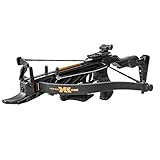
- ARS Mark8.5
ARS Mark is a ranking system developed by bestairriflescopes.com. ARS Mark has no relationship or impact from any manufacturers or sales agent websites. Learn more
- BrandBear X

- ARS Mark7.5
ARS Mark is a ranking system developed by bestairriflescopes.com. ARS Mark has no relationship or impact from any manufacturers or sales agent websites. Learn more
- BrandKrause Publications
Last update on 2026-10-18 / Affiliate links / Images, Product Titles, and Product Highlights from Amazon Product Advertising API


12 Best 22 Pcp Air Rifle For Hunting of 2026 With Quiet Power

7 Best 22 Pcp Air Rifle Under 300 of 2026 For Backyard Pest Control

10 Best 22 Break Barrel Air Rifles of 2026 For Backyard Pest Control

10 Best 30 Caliber Pcp Air Rifle of 2026 For Medium Game

Top Best 177 Air Rifle Under 100: Budget-Friendly Picks for 2026

How to Safely Reload Shotgun Shells at Home

11 Best Co2 Air Rifle For Pest Control of 2026 To Ensure Humane Dispatch

12 Best Inexpensive Air Rifles of 2026 For Dependable Backyard Accuracy






