
What BB or Pellet Gun Can Kill a Raccoon Humanely?

No BB gun can kill a raccoon. Steel BBs simply bounce off thick bone or lodge under the hide, leaving a wounded, suffering animal behind. Taking down a tough pest humanely requires a high-power .22 or .25 caliber pellet rifle with serious striking punch. Lightweight target pellets and standard plinkers just cannot break through heavy bone.
The outcome depends on pellet energy, perfect aim, and local laws. Body shots almost always fail because thick muscle and fat protect vital organs, which makes an exact brain shot the only ethical option. Backyard safety and city limits also matter, especially since missed shots can ricochet into nearby yards. Here is how to know if your setup packs enough force, where to aim, and when to try safer alternatives.
Why BB Guns and Lightweight Pellets Fail Against Raccoons
A standard steel BB gun cannot kill a raccoon. Raccoons are remarkably tough animals with thick hide, dense muscle tissue, heavy layers of winter fat, and thick, rounded skulls. Smooth round steel BBs are designed for backyard plinking at paper targets and tin cans. They have very little mass, carry minimal punch downrange, and do not expand or cut cleanly through tissue. When a steel BB strikes a mature raccoon, it simply bounces off the skull or embeds itself shallowly beneath the skin, causing severe pain without stopping the animal.
Shooting an animal with an underpowered plinking gun creates an immediate safety hazard in your yard. An injured raccoon will not quietly leave. Pain makes wild animals terrified, aggressive, and unpredictable. A wounded raccoon is far more likely to attack family pets, corner itself beneath your deck, or snap at anyone who gets close. Raccoons are also primary carriers of rabies in many parts of the country, meaning a frantic, biting animal poses a serious medical risk to your household. Grabbing an airgun built for backyard plinking to deal with a nuisance raccoon only turns a minor pest problem into a dangerous animal welfare emergency.
Standard .177 caliber pellet rifles also fall short in most backyard situations. While .177 shaped lead pellets carry more punch than steel BBs, standard entry-level rifles do not deliver enough striking force to crack a raccoon's heavy skull. Lightweight pellets tend to flatten out on the surface of the bone or skip off the sloped forehead. Body shots with a .177 pellet are even worse, as the small projectile cannot punch deeply enough through heavy fur and fat to destroy vital organs quickly. The animal almost always escapes into nearby brush or crawls into an attic space, where it suffers for days before dying slowly.
Real Energy Requirements: Caliber, Pellet Weight, and Striking Punch
To drop a raccoon quickly and cleanly, you must look at striking punch rather than simple pellet speed. Muzzle velocity, measured in feet per second (FPS), only tells you how fast a pellet leaves the muzzle. Striking punch, measured in foot-pounds of energy (FPE), measures the actual physical impact delivered to the target. Advertisements often boast extreme exit speeds above 1,200 feet per second, but manufacturers usually achieve those numbers by firing featherweight alloy pellets. In real-world conditions, those light pellets lose their speed almost immediately, drift in the wind, and lack the forward momentum required to punch through bone.
A clean, ethical dispatch on a raccoon demands at least 25 to 30 foot-pounds of striking punch at the exact distance where the animal stands. You cannot reach that level of punch with lightweight ammunition or weak power plants. You need a heavier projectile, which means stepping up to at least .22 caliber or .25 caliber lead pellets. A solid .22 caliber lead pellet carries significantly more physical mass than a .177 pellet. That extra weight holds its forward drive through the air, resists wind drift, and punches cleanly through dense bone on impact.
The power source behind the pellet matters just as much as the caliber. Multi-pump pneumatic rifles, which require three to ten hand pumps between shots, cannot generate the sustained punch needed for medium-sized pests. Disposable CO2 cartridges also fail in pest-control scenarios because gas pressure drops sharply as the cartridge cools down, especially during chilly spring or autumn nights when raccoons are most active. You need a magnum break-barrel rifle cocked by pivoting the barrel down to compress an internal spring or gas piston, or a pre-charged pneumatic (PCP) rifle filled with high-pressure air from a dedicated pump or scuba tank.
Before considering any backyard pest control shot, check your setup against this minimum power standard:
- Caliber choice: Use a minimum of .22 caliber, though .25 caliber provides even greater stopping power. Never use steel BBs or light .177 pellets.
- Terminal energy: Deliver at least 25 to 30 foot-pounds of energy directly at the target distance, not just at the muzzle.
- Pellet profile: Load heavy, solid domed lead pellets. Avoid hollow-point pellets designed to mushroom in soft flesh, as they often burst on the skull bone before penetrating.
- Shooting range: Keep your distance inside 20 yards. Past 20 yards, pellet drop accelerates and striking energy falls off quickly.
- Rifle power system: Stick strictly to magnum break-barrel gas piston rifles or high-pressure PCP systems capable of launching heavy pellets with deep driving force.
Skull Thickness and Why Body Shots Never Work
Powder-burning firearms kill game animals largely through massive hydraulic shock, creating an expansive wound cavity that shuts down organs even if a bullet passes slightly off-center. Air rifles do not produce that massive hydrostatic shock wave. Airguns dispatch animals through direct puncture, cutting tissue and disrupting vital systems along the exact track of the pellet. Because an airgun pellet produces a narrow wound channel, shot placement must be surgically exact. On a raccoon, taking a body shot with an air rifle is a critical mistake.
Raccoons possess dense shoulder plates, tightly spaced ribs, and thick layers of subcutaneous fat. When you aim for the chest or behind the front shoulder, a lead pellet will usually be slowed or completely stopped by muscle and bone before it reaches the heart or lungs. Even if a heavy .22 pellet punctures a lung, an airgun rarely drops the animal in place. A lung-shot raccoon retains enough oxygen to sprint several hundred yards, climb high into a tree, or squeeze deep inside a crawlspace. You will not find the animal immediately, and it will endure a slow, agonizing death.
The only ethical target on a raccoon when using an air rifle is the brain. Disconnecting the central nervous system drops the animal instantly, preventing any pain, movement, or frantic thrashing. However, the brain of an adult raccoon is surprisingly small, roughly the size of a golf ball. It sits protected under thick, curved bone. Hitting this small target requires extreme marksmanship, a perfectly steady rest, and a deep understanding of animal anatomy from different shooting angles.
If you view the raccoon from the side, imagine a straight line connecting the center of the eye to the base of the ear. Aim directly along that line, slightly forward of the ear opening. This angle directs the pellet straight into the braincase where the bone is relatively thin. If you face the raccoon head-on, do not aim between the eyes. Aim about one inch above the eye line, directly dead-center between the ears. When a raccoon lowers its head to feed, its forehead slopes sharply toward you. Firing at an upward-angled or steeply downward-sloping forehead will cause the pellet to glance off the curved bone. Wait patiently until the animal lifts its head and presents a flat, perpendicular angle before squeezing the trigger.
Backyard Hazards, Town Discharge Laws, and Live Trapping
High-powered air rifles carry serious safety obligations in residential neighborhoods. A heavy lead pellet fired from a magnum break-barrel or PCP rifle travels with enough velocity to penetrate thin wood, vinyl siding, and glass windows. If you miss your target or the pellet passes completely through the animal, that projectile can travel several hundred yards down your street. Never fire toward an open lawn, a wooden privacy fence, or your neighbor's property line. Standard wooden fence boards will not stop a magnum .22 pellet. Always position yourself so every shot travels downward into the ground or directly against a solid, natural earthen embankment.
When sighting in your rifle or checking pellet groups, never shoot at hard surfaces like cinder blocks, brick walls, or patio stones. Lead pellets flatten and fragment violently on hard stone, sending sharp ricochets whistling across the yard. Always practice against a rated steel pellet trap, dense rubber mulch box, or thick backstop berm that completely absorbs pellets without ricochets. Eye protection is mandatory for anyone in the immediate area whenever an airgun is cocked and loaded.
Discharge laws represent another major hurdle that property owners often overlook. Most suburban towns and cities have strict municipal discharge ordinances. In many jurisdictions, local law defines any projectile weapon, including high-powered air rifles and BB guns, under the same discharge restrictions as traditional firearms. Firing a pellet rifle inside city limits can result in criminal citations, heavy fines, or the confiscation of your gear. Wildlife regulations also vary widely by state. In many regions, raccoons are classified as protected furbearers or game animals, meaning dispatching them outside of established hunting or trapping seasons requires a dedicated nuisance wildlife permit.
Because powerful air rifles pose genuine risks to children and visitors, safe home storage is essential. Never leave an air rifle leaning in a garage corner or propped behind a mudroom door. Store your equipment unloaded in a locked cabinet or secure safe fitted with a reliable electronic safe lock, keeping pellets stored in a separate container. This keeps curious family members safe and ensures your gear remains secure when not in use.
If discharge laws, close neighbors, or poor shooting angles make firing an airgun unsafe, live cage trapping is the smarter, more reliable choice. Heavy-duty wire box traps allow you to solve the raccoon problem without firing a single shot. Place the cage along the animal's regular travel path, such as along a fence line, near a compost pile, or beside your deck foundation. Bait the back of the trap behind the trigger pan using sweet treats that raccoons love but neighborhood cats ignore, such as marshmallows, sweet corn, or bread coated in grape jelly. Once the door drops, contact your local municipal animal control officer or a licensed wildlife removal operator to handle relocation or legal dispatch according to state wildlife rules.
What to Look for in a Capable Pest-Control Air Rifle
Choosing an air rifle capable of handling medium pests requires focusing on mechanical reliability, structural strength, and consistent striking punch. You want an air rifle built on a proven high-pressure platform rather than a lightweight backyard toy. Break-barrel rifles powered by an internal gas piston offer the simplest setup for homeowners. They require no extra air tanks, hand pumps, or charging hoses. You simply break open the action, seat a single heavy pellet into the rifled steel barrel, and swing the barrel back up until it locks solidly into place.
Keep in mind that high-power break-barrel rifles demand noticeable physical effort to operate. Cocking a magnum break-barrel spring or gas-piston rifle often requires 30 to 45 pounds of muscle force to open the action fully. If cocking effort is a physical barrier for you, a pre-charged pneumatic rifle is the ideal alternative. These rifles store high-pressure air inside an onboard reservoir, allowing you to cycle pellets using a light, smooth side lever with practically zero cocking strain between shots.
Sound dampening is another critical feature to evaluate for neighborhood pest control. Firing a heavy pellet at high velocity can produce a loud crack that alarms nearby residents. Look for models featuring built-in noise baffles or muffled barrels, which absorb expanding air behind the pellet and keep the firing report down to a dull thud. This allows you to handle pest control discreetly without disturbing the peace.
Finally, inspect the sighting system and scope rail. Spring and gas-piston air rifles generate a sharp forward-and-backward recoil pulse that will quickly shake standard firearm scopes apart and ruin your zero. Look for a rifle equipped with a spring-airgun-rated scope mounted securely to sturdy dovetail grooves or notched tactical rails. A dependable scope with clear glass and a solid mount ensures you can place every pellet into that small vital zone with absolute confidence.

- ARS Mark9.7
ARS Mark is a ranking system developed by bestairriflescopes.com. ARS Mark has no relationship or impact from any manufacturers or sales agent websites. Learn more
- BrandGamo

- ARS Mark8.9
ARS Mark is a ranking system developed by bestairriflescopes.com. ARS Mark has no relationship or impact from any manufacturers or sales agent websites. Learn more
- BrandUmarex

- ARS Mark8.5
ARS Mark is a ranking system developed by bestairriflescopes.com. ARS Mark has no relationship or impact from any manufacturers or sales agent websites. Learn more
- BrandDPMS
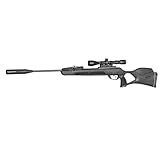
- ARS Mark8.4
ARS Mark is a ranking system developed by bestairriflescopes.com. ARS Mark has no relationship or impact from any manufacturers or sales agent websites. Learn more
- BrandGamo

- ARS Mark7.5
ARS Mark is a ranking system developed by bestairriflescopes.com. ARS Mark has no relationship or impact from any manufacturers or sales agent websites. Learn more
- BrandGamo
Last update on 2026-10-16 / Affiliate links / Images, Product Titles, and Product Highlights from Amazon Product Advertising API
FAQs
Can shooting a raccoon with a BB gun scare it away permanently?
No, shooting a raccoon with a steel BB gun will not frighten it away for good. The light metal ball causes a painful puncture wound that angers or panics the animal, making it aggressive toward pets and family members. Once the immediate pain subsides, the raccoon will return to whatever food or shelter brought it to your yard in the first place.
Will a high-power .177 caliber pellet rifle kill a raccoon humanely?
A .177 caliber pellet rifle rarely produces a humane kill on a mature raccoon. Even at high exit speeds, a small .177 lead pellet lacks the mass and forward punch required to penetrate the thick, rounded bone of a raccoon skull reliably. You risk causing a severe head wound that leaves the animal suffering for days rather than providing an instant, ethical stop.
What should you do if an injured raccoon runs under your porch?
Do not attempt to reach under the porch, crawl after the animal, or poke it with a stick. A cornered, injured raccoon will fight viciously to defend itself and may bite or scratch, creating a serious risk of rabies exposure. Keep pets and children indoors, block off the area from a safe distance, and call your local animal control department or a licensed nuisance wildlife trapper immediately.


12 Best 22 Pcp Air Rifle For Hunting of 2026 With Quiet Power

7 Best 22 Pcp Air Rifle Under 300 of 2026 For Backyard Pest Control

10 Best 22 Break Barrel Air Rifles of 2026 For Backyard Pest Control

10 Best 30 Caliber Pcp Air Rifle of 2026 For Medium Game

Top Best 177 Air Rifle Under 100: Budget-Friendly Picks for 2026

How to Safely Reload Shotgun Shells at Home

11 Best Co2 Air Rifle For Pest Control of 2026 To Ensure Humane Dispatch

12 Best Inexpensive Air Rifles of 2026 For Dependable Backyard Accuracy






