
What Is a .22 Rifle Used For?

A .22 rifle is built mainly for target practice and small pest control. What it can actually accomplish on your property depends on whether it fires quiet lead pellets or standard gunpowder rounds. With almost no kick and very low noise, this caliber offers the gentlest way to learn basic shooting skills, knock down tin cans, or clear out nuisance garden rodents.
Animal size and your available yard space change the picture fast. A .22 works cleanly on garden pests under ten pounds like squirrels or rats, but it never has enough energy for big game or home defense. City ordinances and lot sizes also dictate whether you can squeeze a trigger outdoors, since even small rounds need a solid backstop to stay safe. Here is a realistic look at where this rifle shines and what jobs fall completely outside its reach.
A .22 rifle builds shooting skills and clears pests
A .22 rifle is the classic tool for learning marksmanship. Because the gun produces almost zero shoulder recoil and a relatively quiet report, a new shooter can focus entirely on breathing, trigger control, and sight picture. You can spend an entire afternoon practicing at the bench without developing a painful flinch. Many competitive shooters and hunters began with this caliber for that very reason.
Target plinking (shooting paper targets or soda cans for fun and practice) is by far the most popular use. The ammunition is inexpensive compared to larger rifle rounds, allowing you to shoot dozens of rounds without straining your wallet. Those who want low-stress target practice often compare these rifles to realistic training replicas that build basic handling habits on a smaller budget.
Pest management is the other primary job for this caliber. Homeowners and farmers regularly turn to a .22 to remove nuisance varmints (small nuisance pests like rats, mice, and squirrels) around gardens, chicken coops, and outbuildings. It delivers enough punch to handle everyday problem animals quickly without causing massive property damage.
Shooters also use .22 rifles to improve field skills between major hunting seasons. Practicing off-hand shooting, kneeling shots, and breath timing with a light rifle keeps muscle memory sharp. It gives you the full experience of steady marksmanship at a fraction of the cost and physical fatigue of larger rifles.
The caliber cleanly takes small game under ten pounds
When you hunt with a .22 caliber rifle, your game choices are strictly limited to small animals. The projectile carries enough foot-pounds of energy (the real punch or humane knockdown power delivered to the target) to cleanly dispatch small creatures. But it does not have the mass or velocity needed to break heavy shoulder bones or penetrate deep chest cavities on medium or large game.
Taking game humanely requires strict adherence to size limits. You should only point a .22 rifle at animals that fall well within its effective energy range:
- Tree squirrels and chipmunks: Excellent match. A standard hit delivers instant dispatch without ruining meat or hides.
- Rabbits and hares: Perfect match. Cottontails and jackrabbits drop reliably within normal field ranges of twenty to forty yards.
- Rats, mice, and garden rodents: Ideal for farm pest control. It stops burrowing pests that tear up lawns and damage feed sacks.
- Starlings and crows: Effective for clearing invasive or nuisance birds from barns, provided your shot angle has a safe backdrop behind it.
- Animals that are too large: Deer, feral hogs, coyotes, and medium predators. Never use a .22 on these animals because it lacks the stopping power to ensure a fast, ethical harvest.
Shot distance plays a major role in your success. Most .22 rifles shoot with extreme precision out to fifty yards, but bullet drop and wind drift increase rapidly past that distance. For small pests, keeping your shots inside thirty to forty yards ensures clean hits right on the vital zone.
A .22 cannot stop big game or protect your home
A common myth claims that a small .22 bullet will bounce around inside a target and cause catastrophic damage. Ballistics do not work that way. A .22 bullet or pellet produces a narrow wound channel and transfers relatively low energy on impact. While it can certainly be lethal, it rarely creates the rapid physical shutdown needed to stop a dangerous threat immediately.
Relying on a .22 rifle for personal protection is a risky mistake. In a defensive encounter, an attacker driven by adrenaline will not stop quickly from a low-energy projectile unless it hits the central nervous system. Defending a hallway or room calls for purpose-built platforms rather than a light pest plinker, which is why people rely on dedicated equipment designed for home defense instead of target rimfires.
Mechanical reliability creates another serious concern with powder firearms in this caliber. Most .22 powder ammunition uses rimfire technology (a small powder cartridge with primer packed into the hollow rim). Because priming compound can occasionally leave tiny empty gaps along the rim during manufacturing, rimfire rounds experience far more misfires and failure-to-fire jams than centerfire rounds. In an emergency, a failure to fire leaves you completely defenseless.
Hunting laws reflect these physical limitations. Almost every state game agency prohibits taking deer, bear, or elk with a .22 rimfire or pellet rifle. Attempting to take large game with this caliber risks wounding the animal, causing prolonged suffering, and violating wildlife conservation laws.
Air rifles and powder firearms suit very different spaces
Shooters often ask whether they should pick a .22 pellet air rifle or a traditional .22 powder firearm. The answer comes down to where you live, the size of your property, and local discharge ordinances. Both shoot a .22 caliber projectile, but how they generate power and how far that projectile flies are completely different.
A powder firearm uses gunpowder to propel a lead bullet out of the muzzle at high speeds. That bullet can travel over a mile and a half if fired upward at an angle. It also creates a loud crack that will alarm nearby neighbors. Discharging a powder firearm is illegal inside suburban city limits and within hundreds of feet of neighboring homes across most municipalities.
A .22 air rifle relies on air pressure rather than exploding gunpowder. Common designs include break-barrel models (rifles cocked by pivoting the barrel down to compress an internal spring or gas piston) and PCP air rifles (rifles filled with high-pressure air from a special hand pump, compressor, or scuba tank). These guns fire shaped lead or alloy pellets (shaped, aerodynamic projectiles for rifled barrels). They have a far shorter danger distance and generate very little noise, making them legal and practical in many suburban backyards where firearms are strictly forbidden.
For casual target plinking on personal property, air rifles offer tremendous freedom. Setting up air gun setups built for backyard plinking allows you to shoot behind your house on a sunny afternoon without alarming neighbors or violating firearm noise ordinances. You get real marksmanship practice right out the back door.
Safe shooting requires a solid backstop and clear boundaries
Because a .22 feels light and makes minimal noise, beginners sometimes treat it like an innocent toy. That mindset is dangerous. Any .22 projectile, whether fired from a powder rifle or a high-velocity air gun, easily pierces skin, shatters glass, and penetrates wood siding. Safe shooting begins with knowing your boundary lines and controlling where every projectile lands.
Every single shot requires a verified backstop (a barrier behind targets to stop stray shots). Never shoot toward an open field, a property boundary, or a public road. Use an effective barrier that completely absorbs the projectile without bouncing:
- Commercial steel pellet traps: Heavy steel boxes designed to swallow pellets and drop them safely into a tray.
- Rubber mulch boxes: A simple wooden box packed tight with shredded rubber mulch that captures projectiles silently without dust.
- Natural earthen berms: A tall dirt mound free of rocks, roots, and debris that completely halts any pellet or bullet.
- Hazards to avoid: Never shoot directly against flat concrete walls, large rocks, or water surfaces. Hard surfaces cause dangerous ricochets that can fly back toward the shooter or into nearby properties.
Always verify local discharge rules before cocking your rifle. Many suburban towns classify high-power airguns under firearm discharge ordinances, while other towns welcome them for nuisance control. Call your local police department or township office to confirm property restrictions before setting up your backyard target lane.
Be careful when taking shots up into trees at squirrels or starlings. If you miss the pest, the pellet arcs across your property line and drops into neighboring yards. Only take elevated shots when a thick tree trunk or dense branch sits directly behind the animal to absorb the impact.
Choose a quiet air rifle for backyard pest control
If your main goal is eliminating garden pests or plinking on your own property, a .22 caliber air rifle is the ideal tool for the job. You get the knockdown power needed for clean pest removal without the excessive noise or severe travel distance of a powder cartridge. Knowing what features to inspect before making a purchase ensures you get a rifle that fits your physical build and neighborhood setting.
Check the cocking effort (the muscle effort in pounds needed to break open the barrel or pull the side lever) before selecting a spring or gas-piston break-barrel model. Some powerful break-barrel rifles require thirty or forty pounds of force to cock for every single shot. If you plan to shoot fifty shots in a single afternoon, or if you share the rifle with smaller shooters, a rifle with high cocking effort quickly causes shoulder and arm fatigue. In that situation, a multi-pump pneumatic rifle or a pre-charged pneumatic rifle with a smooth side lever might prove much more comfortable.
Sound reduction should be near the top of your checklist. Look for air rifles featuring built-in noise baffles or muffled barrels. These integrated suppressors strip away the sharp muzzle blast, leaving only a soft mechanical click and the dull thud of the pellet striking your backstop. Your neighbors on the other side of the fence will rarely hear you taking shots.
Pay close attention to optics and magazines. Break-barrel rifles feature a sharp forward-and-backward recoil pulse that shatters standard firearm scopes, so make sure the rifle includes a spring-airgun-rated scope. Multi-shot revolving pellet wheels or clips also make a noticeable difference in the field. Having ten pellets ready to cycle automatically saves you from fumbling with loose pellets in cold weather when a garden pest appears.
Finally, always feed your rifle lead or alloy pellets rather than round steel BBs. Feeding hard steel BBs into a rifled pellet barrel strips the delicate internal rifling grooves, permanently ruining the accuracy of your gun. Match the right pellet weight to your rifle, confirm your backstop, and you have a reliable, humane tool for decades of quiet shooting.

- ARS Mark9.7
ARS Mark is a ranking system developed by bestairriflescopes.com. ARS Mark has no relationship or impact from any manufacturers or sales agent websites. Learn more
- BrandGamo

- ARS Mark8.9
ARS Mark is a ranking system developed by bestairriflescopes.com. ARS Mark has no relationship or impact from any manufacturers or sales agent websites. Learn more
- BrandUmarex

- ARS Mark8.5
ARS Mark is a ranking system developed by bestairriflescopes.com. ARS Mark has no relationship or impact from any manufacturers or sales agent websites. Learn more
- BrandDPMS
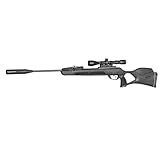
- ARS Mark8.4
ARS Mark is a ranking system developed by bestairriflescopes.com. ARS Mark has no relationship or impact from any manufacturers or sales agent websites. Learn more
- BrandGamo

- ARS Mark7.5
ARS Mark is a ranking system developed by bestairriflescopes.com. ARS Mark has no relationship or impact from any manufacturers or sales agent websites. Learn more
- BrandGamo
Last update on 2026-10-15 / Affiliate links / Images, Product Titles, and Product Highlights from Amazon Product Advertising API


12 Best 22 Pcp Air Rifle For Hunting of 2026 With Quiet Power

7 Best 22 Pcp Air Rifle Under 300 of 2026 For Backyard Pest Control

10 Best 22 Break Barrel Air Rifles of 2026 For Backyard Pest Control

10 Best 30 Caliber Pcp Air Rifle of 2026 For Medium Game

Top Best 177 Air Rifle Under 100: Budget-Friendly Picks for 2026

How to Safely Reload Shotgun Shells at Home

11 Best Co2 Air Rifle For Pest Control of 2026 To Ensure Humane Dispatch

12 Best Inexpensive Air Rifles of 2026 For Dependable Backyard Accuracy






