
What Is a Back Up Sight and Do You Need One?

Inspect the battery compartment on that red dot optic to see what happens when the power dies or the lens fogs over. That practical check explains why many gun owners install a back up sight, which is a secondary manual aiming post that works completely without batteries or electronics. It gives shooters a reliable physical fallback whenever the primary electronic dot stops working.
Choosing the right setup depends on your specific firearm and optic style. Rifles often use small folding sights clamped onto the rail, while handguns require taller metal posts that sit high enough to see over the optic frame. Some designs line up directly through the glass window, while others sit tilted at an angle on the side. Here is a simple look at how these manual sights work and how to decide if your setup needs them.
What exactly is a back up sight?
A back up sight is a physical aiming tool mounted to your firearm as a failsafe. Most shooters install them right alongside an electronic red dot or magnified scope. In the shooting community, gun owners often call them back up iron sights, or BUIS for short. Unlike an electronic optic, a back up sight does not require battery power, lenses, or wiring. It relies on the simple, time-tested system of two physical aiming posts aligned with your eye and the target.
Before handling your firearm or mounting any accessories, safety comes first. Drop the magazine, clear the firearm chamber, and visually verify that the firearm is completely unloaded. Always point the muzzle in a safe direction while working at your bench.
A standard set includes a rear sight and a front sight. The rear sight sits closer to your eye and features a small aperture ring or notch. The front sight sits near the muzzle and features a vertical post. When you look through the rear opening and center the front post inside it, your barrel points right on target. These sights clamp securely to standard Picatinny or 20mm slotted accessory rails along the top of your receiver.
Why would your electronic red dot fail?
Electronic dot sights offer speed and precision, but any battery-powered device can quit working. The most common cause is a depleted battery. Even with motion-sensing auto-on features that switch the reticle on when moved and sleep to preserve battery life, coin cells eventually drain. Extreme winter temperatures can also sap battery voltage rapidly, causing the aiming dot to vanish without warning.
Physical impacts can also knock an optic out of commission. Dropping a rifle on gravel, bumping it hard against a barricade, or enduring violent recoil can jar internal connections. Open-window sights feature an exposed glass lens that can crack under direct impact. If an electronic failure occurs, your window becomes an empty pane of glass with no aiming reference.
Environmental conditions create further challenges. Heavy rain, snow, or mud can splash across the emitter lens, scattering the light into an unusable blur. Cold humidity can cause external glass to fog up instantly. When your electronic reticle fails, physical iron posts give you an immediate fallback so you can keep shooting safely.
How do folding and offset sights differ?
Back up sights come in two main configurations: inline folding sights and offset sights. Inline folding sights attach directly along the top rail, sitting in line with your red dot. When folded flat, their low profile stays out of the way of your main sight picture. If your optic fails, you flip them up using your thumb or a spring-loaded release button.
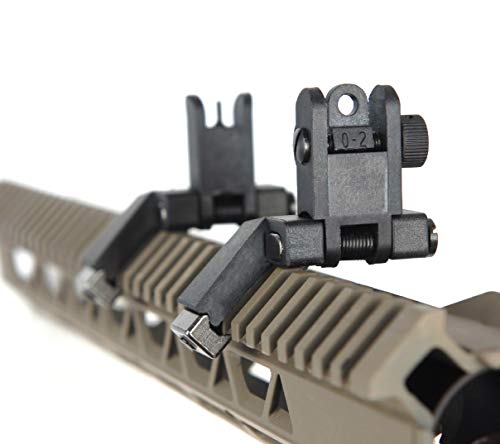
Offset sights mount at a 45-degree tilt along the side of the rail. Instead of looking straight down the top rail, you rotate the firearm slightly inward with your wrists. This instantly aligns the angled posts with your eye without requiring you to touch the primary optic or fold down any levers.
Here is how to choose between the two styles:
- Folding inline sights: Best for non-magnified red dot sights. You can look straight through the clear glass of an unpowered dot sight to aim using your upright iron posts.
- Offset angled sights: Best for magnified scopes or enclosed tube sights. You cannot easily see through a variable magnification scope that has fogged, cracked, or lost eye relief. Offset sights let you bypass the main optic completely.
- Snag resistance: Folding sights stay tucked close to the receiver, reducing the chance of catching on gear bags, slings, or brush.
- Speed: Offset sights offer instant transitions because your iron posts are always deployed and ready with a simple twist of your wrists.
Can you aim through a glass optic window?
Yes, you can look straight through an unmagnified optic window to use your iron sights. Shooters refer to this alignment as co-witnessing. Co-witness means lining up your backup iron sights directly through the optic glass so that both the mechanical posts and the electronic aiming dot match the same point of aim. If you are matching sight heights to your optic mount, reviewing the best iron sights for cowitness with red dot sights in 2026 will help you find the right combination.
There are two common heights for co-witnessing on a rail:
- Absolute co-witness: Your iron sights align dead center in your red dot window. When looking through the rear aperture, the front sight post sits directly on top of the aiming dot. This provides an identical cheek weld whether the optic is turned on or powered off.
- Lower one-third co-witness: The optic sits on a slightly taller mount, placing your iron sights in the bottom third of the lens. This leaves the center of your glass completely open for an unobstructed view, with the backup posts ready at the bottom if you need them.
If your optic glass suffers a minor surface crack or collects light dust, you can still aim through the window without trouble. However, if the glass shatters completely into opaque fragments or gets packed with thick mud, inline sights cannot see through it. In that rare case, having a quick-detach optic mount allows you to remove the damaged red dot in seconds, leaving your folding sights open and usable.
Do you actually need one on your firearm?
Whether you need a back up sight comes down to how you use your firearm and what happens if your optic suddenly goes dark. A target shooter at a relaxed range has different requirements than someone setting up a defensive firearm.
Review these common situations to decide what fits your setup:
- Casual range plinking: You do not strictly need back up sights. If your battery runs out while shooting paper targets, you simply pack up, swap batteries at home, or switch to another firearm.
- Home defense: Back up sights are essential. In an emergency at night, you cannot stop to replace a dead battery or adjust a loose optic mount. Having physical posts ready provides instant redundancy when it matters most.
- Hunting trips: Rough weather, steep terrain, and long hikes can bump your rifle or drain batteries in freezing air. A set of iron sights prevents a ruined trip if your optic takes a hard fall miles from camp.
- Action shooting matches: A failing optic during a timed stage will destroy your match score. Angled offset sights allow you to tilt the gun and finish shooting without stopping to diagnose an electronic problem.
What should you check before picking a set?
If you decide to mount back up sights, selecting durable hardware ensures your setup holds zero under repeated recoil. You do not need complicated accessories, but your sights must mount firmly and stay locked in place.
Start by confirming rail compatibility. Make sure the sight bases fit standard Picatinny or 20mm slotted accessory rails. When installing your sights, use an inch-pound torque tool to tighten mounting cross-bolts to the manufacturer recommendation. Adding a small drop of thread-locking fluid keeps screws from backing out under heavy firearm vibration.
Next, consider construction materials. Sights made from aluminum alloy provide rigid protection against hard knocks. Lightweight polymer models offer excellent impact resistance and resist rust. Whichever material you choose, ensure the hinge mechanisms lock firmly with positive detents so they do not wobble when deployed.
Finally, look at adjustment controls and sight visibility. Many rear sights offer finger-adjustable windage click dials for left-to-right alignment, while front posts often feature tool-free elevation dials for up-and-down adjustments. If you anticipate shooting in low-light conditions, front posts with integrated green or red fiber-optic dots help you align your sights much faster against dark targets.

- ARS Mark9.6
ARS Mark is a ranking system developed by bestairriflescopes.com. ARS Mark has no relationship or impact from any manufacturers or sales agent websites. Learn more
- BrandMagpul

- ARS Mark9.0
ARS Mark is a ranking system developed by bestairriflescopes.com. ARS Mark has no relationship or impact from any manufacturers or sales agent websites. Learn more
- BrandBear Armz Tactical

- ARS Mark9.0
ARS Mark is a ranking system developed by bestairriflescopes.com. ARS Mark has no relationship or impact from any manufacturers or sales agent websites. Learn more
- BrandStinger
- ARS Mark8.8
ARS Mark is a ranking system developed by bestairriflescopes.com. ARS Mark has no relationship or impact from any manufacturers or sales agent websites. Learn more
- BrandIORMAN

- ARS Mark8.6
ARS Mark is a ranking system developed by bestairriflescopes.com. ARS Mark has no relationship or impact from any manufacturers or sales agent websites. Learn more
- BrandFieldSport

- ARS Mark8.4
ARS Mark is a ranking system developed by bestairriflescopes.com. ARS Mark has no relationship or impact from any manufacturers or sales agent websites. Learn more
- BrandAecktech
- ARS Mark8.4
ARS Mark is a ranking system developed by bestairriflescopes.com. ARS Mark has no relationship or impact from any manufacturers or sales agent websites. Learn more
- BrandCHAOS READY OUTDOOR GEAR

- ARS Mark8.2
ARS Mark is a ranking system developed by bestairriflescopes.com. ARS Mark has no relationship or impact from any manufacturers or sales agent websites. Learn more
- BrandZBULAR

- ARS Mark8.2
ARS Mark is a ranking system developed by bestairriflescopes.com. ARS Mark has no relationship or impact from any manufacturers or sales agent websites. Learn more
- BrandZBULAR
Last update on 2026-10-01 / Affiliate links / Images, Product Titles, and Product Highlights from Amazon Product Advertising API
FAQs
Do back up sights need their own zeroing?
Yes. Zeroing means adjusting your click dials so your shots land exactly where your sights point at a set distance, such as 50 yards for a rifle. Your back up sights and your electronic red dot must be zeroed separately. Even if your red dot is dead-on, your iron sights will not hit accurately until you shoot a group and adjust their windage and elevation screws.
Do pistols use the same back up sights?
No, handguns use a completely different mounting design. While rifles use clamp-on sights attached to standard Picatinny rails, pistols use dovetail cuts machined into the slide. To see over the base of a slide-mounted micro red dot, handguns use taller iron sights, often called suppressor-height sights, which sit tall enough to cowitness through the bottom of the optic window.
Can back up iron sights work if glass breaks?
It depends on the severity of the damage. A hairline crack or chipped corner still allows you to look through the glass and align your front and rear posts. However, if the lens shatters into an opaque web or gets covered in thick mud, inline sights cannot see through. In that situation, using 45-degree offset sights or removing the optic with a quick-release lever is necessary.
Will back up sights crowd your sight picture?
Not when set up properly. Folding sights remain tucked flat against the top rail, keeping your optic window completely clear until you flip them up. If you choose fixed upright sights, using a lower one-third co-witness mount keeps the iron posts confined to the bottom third of the glass, leaving the upper two-thirds open for tracking targets.


12 Best 22 Pcp Air Rifle For Hunting of 2026 With Quiet Power

7 Best 22 Pcp Air Rifle Under 300 of 2026 For Backyard Pest Control

10 Best 22 Break Barrel Air Rifles of 2026 For Backyard Pest Control

10 Best 30 Caliber Pcp Air Rifle of 2026 For Medium Game

Top Best 177 Air Rifle Under 100: Budget-Friendly Picks for 2026

How to Safely Reload Shotgun Shells at Home

11 Best Co2 Air Rifle For Pest Control of 2026 To Ensure Humane Dispatch

12 Best Inexpensive Air Rifles of 2026 For Dependable Backyard Accuracy






