
What Is a Canted Sight and Do You Need One?

Seeing a rifle sight mounted sideways might look like a mistake or broken gear, but there is nothing wrong with it. A canted sight is simply a secondary aiming tool attached at an angle alongside a magnified scope. Tilting the rifle slightly sideways brings this extra sight into view, providing a fast way to aim up close without touching the main scope.
Not every setup calls for an angled mount. A standard unmagnified red dot already handles close distances with ease, so a canted sight only becomes helpful when the main glass stays zoomed in on far targets. The distances you shoot and whether the mount tilts toward your dominant eye will quickly show if the extra piece earns its spot. Here is a clear look at how angled sights work and whether one makes sense on your rifle.
Understand Why the Sight Sits at an Angle Instead of on Top
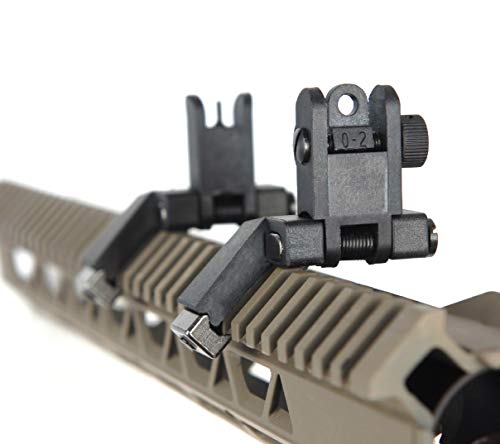
A canted sight is simply an auxiliary aiming device attached to a rifle at an angle, usually tilted 45 degrees off the top rail. When you look at an AR-15 or hunting rifle equipped with one, the main scope sits directly over the center of the barrel, while a smaller sight hangs off the right or left side. To someone seeing it for the first time, it looks crooked or out of place. But that slanted position serves a very clear physical purpose.
Most rifle shooters run a magnified scope on top of their firearm to reach out to distant targets. If a target suddenly appears close by, looking through that high-magnification glass makes finding the target almost impossible. You need a second, unmagnified sight for close quarters. The obvious thought might be to attach that secondary sight right on top of the scope tube. While some shooters do that, mounting an optic on top of a tall scope creates ergonomic problems.
When an optic sits high on top of a scope, you have to lift your head off the rifle stock to see through the glass. This breaks your cheek weld, which is the steady, repeatable resting place where your cheekbone presses against the stock. Losing your cheek weld makes it harder to control rifle recoil and slows down your follow-up shots. Your head hovers in the air, leaving your neck unsupported.
An angled mount solves this issue by using rifle rotation instead of head movement. The sight sits on a small angled bracket clamped to your Picatinny rail, which is the grooved metal accessory track running along the top of the rifle receiver. Instead of lifting your chin, you keep your cheek firmly pressed against the stock and roll the rifle inward about 45 degrees. The secondary sight swings directly in front of your dominant eye, keeping your shoulder pocket tight and your shooting stance steady.
Use a Canted Sight to Switch Instantly Between Long and Short Distances
The main reason shooters install canted sights is speed when switching between extreme distance differences. Picture scanning a hillside or across an open field with a scope set to 6x or 8x magnification. At that zoom level, distant rocks or steel plates appear large and clear. However, your field of view, which is the total width of the landscape you can see through the lens, becomes very narrow.
If a target suddenly appears 15 yards away, finding it through that zoomed-in lens is like looking through a narrow straw. You might spend several seconds hunting around just to get the target inside your sight picture. By the time you find it, your chance to take a clean shot has passed.
Modern variable-power scopes have zoom rings that let you dial down to 1x magnification, but adjusting that ring takes time and requires you to take your support hand off the front of the rifle. In practical shooting competitions, defensive training, or fast hunting encounters in dense woods, taking your hand away to twist a dial is too slow.
A canted sight lets you skip adjusting the scope entirely. Your primary magnified scope stays locked onto its long-range zoom setting. If something appears right in front of you, you simply roll your wrists, pick up the angled sight, and press the trigger. Rolling the rifle back upright returns you immediately to your high-magnification view without moving a single adjustment dial.
Choose Between an Offset Red Dot and Angled Iron Sights
Once you decide to add an offset aiming point, you need to pick between an electronic red dot sight or a set of mechanical backup iron sights. Both options attach to standard Picatinny or 20mm slotted accessory rails, but they behave differently in the field.
An offset red dot uses a small glass window that projects a illuminated aiming dot onto your target. For fast shooting at close range, an open-window reflex sight is exceptionally quick because you do not have to align two separate metal points. You keep both eyes open, place the glowing dot over your target, and break the shot. Many modern micro sights include motion-sensing auto-on features that wake the dot the moment you lift the rifle and put it to sleep when stationary to preserve battery life. For offset use, a medium aiming dot size, such as 3 MOA to 6 MOA, works well because it catches your eye immediately. An MOA, or minute of angle, measures how much space the dot covers on your target. A 3 MOA dot covers roughly three inches at 100 yards, which is sharp enough for close work while remaining easy to locate during rapid rifle transitions.
Angled backup iron sights, often referred to as BUIS, rely on durable metal posts rather than batteries or electronic circuits. They feature a front sight post and a rear aperture hole machined to sit permanently at a 45-degree angle. Some models come as spring-loaded flip-up sights that lay flat against your rail until you press a release button, while others stay fixed in the upright position. Iron sights never run out of battery power, cannot suffer from electronic failure, and remain usable even if rain, snow, or mud coats your glass optic. However, they take slightly more visual focus to align than a bright illuminated dot, and they can be hard to see against dark targets in low light.
If your primary rifle optic is already a non-magnified red dot, you do not need an angled setup at all. In that scenario, shooters usually mount standard iron sights for cowitness with red dot sights, which line up directly through the lower portion of the optic glass in a straight line. Canted sights are built specifically for firearms where a bulky, magnified scope blocks that straight line of sight.
Practice Your Cheek Weld and Zero the Tilted Sight Correctly
Before installing any accessories or adjusting sights, always drop the magazine from your rifle, pull the charging handle back, and inspect the chamber visually and with your finger to verify the firearm is completely unloaded. Point the muzzle in a safe direction throughout the entire installation process.
A common concern among new shooters is whether tilting the rifle changes where the bullet hits the target. The short answer is yes, but only at longer distances. When you hold a rifle completely upright, the barrel points straight and the bullet travels in an upward arc before falling straight down under the pull of gravity. When you tilt the rifle 45 degrees, the barrel and the sight are canted together. Gravity still pulls the bullet straight down toward the earth, but the sights are now sitting diagonally relative to that drop.
Because canted sights are used at close ranges, usually between 10 and 50 yards, bullet drop is so small that this angled effect barely impacts your point of aim. However, you must zero the sight properly while holding the rifle in its tilted position to ensure accurate hits. Zeroing simply means adjusting your left-to-right and up-and-down adjustment click dials, known as windage and elevation, so the point of aim matches the exact spot where your bullets strike paper.
- Secure the mount to the rail: Attach your angled mount or offset sights to your receiver rail. Use an inch-pound torque tool to tighten the mounting screws to the manufacturer's listed specification, and place a tiny drop of thread-locking fluid on the screw threads so the rifle's recoil does not shake the mount loose over time.
- Establish your natural cant: Shoulder the unloaded rifle with your eyes closed. Roll the rifle inward until your cheek rests naturally against the comb of the stock. Open your eye. The canted optic should sit directly in your line of sight without requiring you to crane your neck or lift your head.
- Fire an initial group: Set up a target at a close distance, such as 25 yards. Keep the rifle rotated at that exact 45-degree angle, place the aiming dot or iron post on the bullseye, and fire a steady three-shot group.
- Adjust the click dials: Look at where your bullet holes landed relative to the bullseye. Use the adjustment dials on the sight to walk the group toward the center. Remember that on a tilted optic, turning the elevation screw moves the point of impact diagonally relative to the ground, but straight relative to the sight body.
- Confirm your final zero: Fire another three-shot group from your canted stance. Once your shots punch directly through the center of your aiming mark, your offset setup is locked in and ready for the range.
Evaluate Your Rifle Setup Before Adding Extra Hardware
Canted sights look sleek on modern rifles, but that does not mean every shooter needs one. Adding extra brackets and glass increases the weight of your rifle and creates potential snag hazards. Walk through these points to decide if an offset sight solves an actual problem for your shooting style:
- Check your primary optic type: If your rifle carries a dedicated magnified scope, such as a 3-9x hunting scope or a fixed 4x prism scope, a canted sight gives you a practical close-range option. If your rifle only has an unmagnified red dot, holographic sight, or standard iron sights, adding a canted sight provides zero functional benefit because your main optic already excels at close quarters.
- Examine your shooting distances: If you only shoot from a steady bench at fixed 100-yard targets, you will rarely find an occasion to rotate your rifle. On the other hand, if you participate in dynamic practical shooting sports, run tactical carbine drills, or hunt in brush where game can appear at point-blank range, the quick transition becomes genuinely helpful.
- Account for extra bulk and snag points: An angled sight protrudes past the side profile of the rifle receiver. That extra width can catch on clothing, brush, sling webbing, or the zipper opening of a soft rifle case. Make sure your rifle bag has enough room to close comfortably over the wider profile.
- Match your dominant eye and hand: Canted mounts are directional. Right-handed shooters need a mount that angles off the right side of the rifle, so rolling the gun inward brings the sight directly under the right eye. Left-handed shooters need an offset that positions the sight on the left side. Verify that the mount you choose supports your shooting side before tightening it down.
Look for Low-Profile Mounts and Sturdy Construction Before Buying
When selecting hardware for an angled sight setup, the physical build of the mount is just as important as the sight you place on top of it. Offset hardware sits exposed on the side of the firearm receiver, meaning it absorbs bumps when you set the rifle down on a shooting bench or move through tight spaces. Look for mounts machined from solid aluminum alloy or heavy-duty polymer that can withstand direct impacts without shifting your zero.
Pay close attention to how closely the mount hugs the rifle receiver. A low-profile mount keeps the secondary sight tucked tightly against the scope body, creating a streamlined package that is far less likely to snag on gear. Tall, bulky offset brackets push the sight out too far, which puts extra twisting stress on your top rail and forces your head into an awkward position to see the dot.
If you plan to run an electronic micro sight, check the footprint on the mounting plate. Red dot sights use specific screw-hole spacings and recoil-lug patterns cut into their bases. The offset plate must match the exact footprint of your micro sight so the optic locks down completely flat without any wobble.
For shooters who prefer mechanical sights, verify that the front and rear offset sights come as a matched pair designed to work together at the same height. Features like fiber-optic front posts or contrasting dot colors make picking up the front sight much faster during rapid rifle transitions. Solid mounting clamps with robust hexagonal screws ensure the sight stays anchored through heavy shooting sessions.

- ARS Mark9.6
ARS Mark is a ranking system developed by bestairriflescopes.com. ARS Mark has no relationship or impact from any manufacturers or sales agent websites. Learn more
- BrandMagpul

- ARS Mark9.0
ARS Mark is a ranking system developed by bestairriflescopes.com. ARS Mark has no relationship or impact from any manufacturers or sales agent websites. Learn more
- BrandBear Armz Tactical

- ARS Mark9.0
ARS Mark is a ranking system developed by bestairriflescopes.com. ARS Mark has no relationship or impact from any manufacturers or sales agent websites. Learn more
- BrandStinger

- ARS Mark9.0
ARS Mark is a ranking system developed by bestairriflescopes.com. ARS Mark has no relationship or impact from any manufacturers or sales agent websites. Learn more
- BrandStinger

- ARS Mark9.0
ARS Mark is a ranking system developed by bestairriflescopes.com. ARS Mark has no relationship or impact from any manufacturers or sales agent websites. Learn more
- BrandStinger
- ARS Mark8.8
ARS Mark is a ranking system developed by bestairriflescopes.com. ARS Mark has no relationship or impact from any manufacturers or sales agent websites. Learn more
- BrandIORMAN

- ARS Mark8.8
ARS Mark is a ranking system developed by bestairriflescopes.com. ARS Mark has no relationship or impact from any manufacturers or sales agent websites. Learn more
- BrandDD DAGGER DEFENSE

- ARS Mark8.8
ARS Mark is a ranking system developed by bestairriflescopes.com. ARS Mark has no relationship or impact from any manufacturers or sales agent websites. Learn more
- BrandTACFUN

- ARS Mark8.8
ARS Mark is a ranking system developed by bestairriflescopes.com. ARS Mark has no relationship or impact from any manufacturers or sales agent websites. Learn more
- BrandCyelee

- ARS Mark8.6
ARS Mark is a ranking system developed by bestairriflescopes.com. ARS Mark has no relationship or impact from any manufacturers or sales agent websites. Learn more
- BrandMAGORUI
Last update on 2026-10-01 / Affiliate links / Images, Product Titles, and Product Highlights from Amazon Product Advertising API
FAQs
Does tilting your rifle with a canted sight hurt your accuracy?
At close distances under 50 yards, tilting the rifle has almost no negative impact on accuracy. As long as you zero the sight while holding the rifle in its tilted shooting position, your shots will land right where the sight points. However, at long distances past 100 yards, the angled barrel causes bullet drop to pull the shot low and to the side, which is why canted sights are reserved strictly for close-range targets.
Can a left-handed shooter use a canted sight?
Yes, left-handed shooters can use canted sights, but the mount must be installed on the left side of the rifle receiver. When a left-handed shooter shoulders the gun, rolling the rifle inward rotates the left side upward directly in line with their left eye. Many offset mounts are reversible, but you should confirm the mount fits the left side of your rail before buying.
Should you pick an angled red dot or angled iron sights?
An angled red dot is faster to pick up and works significantly better in low-light environments, making it the top choice for competition and fast defensive drills. Angled iron sights are slightly slower to align, but they never run out of battery power and cannot suffer from electrical failure. Your choice comes down to whether you prioritize raw speed or mechanical simplicity.
Is a canted sight better than mounting a red dot on top of a scope?
A canted sight provides a better cheek weld because you rotate the rifle instead of lifting your head off the stock. Mounting a red dot directly on top of a scope forces you into a loose chin weld, which can slow down recoil recovery. However, top-mounted dots are completely ambidextrous and easier to use around barricades where tilting the rifle might bump into cover.


12 Best 22 Pcp Air Rifle For Hunting of 2026 With Quiet Power

7 Best 22 Pcp Air Rifle Under 300 of 2026 For Backyard Pest Control

10 Best 22 Break Barrel Air Rifles of 2026 For Backyard Pest Control

10 Best 30 Caliber Pcp Air Rifle of 2026 For Medium Game

Top Best 177 Air Rifle Under 100: Budget-Friendly Picks for 2026

How to Safely Reload Shotgun Shells at Home

11 Best Co2 Air Rifle For Pest Control of 2026 To Ensure Humane Dispatch

12 Best Inexpensive Air Rifles of 2026 For Dependable Backyard Accuracy






