
What Is a Collimator Sight and How Does It Work?

Take a close look at any standard red dot sight before hunting down rare shooting gear. That familiar optic is actually a collimator sight, which means it uses a curved lens to line up light into parallel beams that project a floating aiming dot. Because the light rays travel straight back to the eye, the glowing mark stays firmly on target even if the shooter's head drifts slightly off center.
How this setup looks on a firearm depends on the design. Some models use an exposed glass window, while others protect the lenses inside an enclosed metal tube. The term can also cause mix-ups because gunsmiths use barrel collimators as alignment tools rather than shooting sights. Here is a straightforward look at how these aiming systems work, what makes them so quick on target, and how to spot them on the shelf.
How a Collimator Sight Uses Light to Create an Aiming Point
A collimator sight creates an illuminated aiming point using a simple optical principle: collimated light. Collimated light refers to light beams lined up parallel so they do not spread out as they travel. When light rays travel in perfectly parallel paths, your eyes perceive the source of that light as if it sits infinitely far away, even when the actual light source is only inches from your face.
Inside the sight housing sits a small light source, typically a battery-powered light-emitting diode (LED). This LED points backward toward a curved piece of glass called an objective lens. The glass has a special semi-reflective metallic coating applied to its surface. This coating acts like a selective mirror. It reflects the specific color of the LED light, such as red or green, while allowing all other light wavelengths from the outside world to pass through unobstructed.
Because the lens has a precise spherical curve, it catches the spreading light rays coming from the LED and bounces them back toward your eye in straight, parallel lines. The glowing point you see reflected on the glass is called the reticle, which is the illuminated aiming dot or crosshair on the glass. When you look through the optic, your brain perceives this dot as a floating marker resting directly on your target downrange.
You can picture this effect by thinking about driving a car at night. If you look at the windshield while your dashboard display is lit, you often see a faint reflection of the speedometer numbers floating out over the hood of your car. A collimator sight uses that exact same reflective concept, but the curved glass straightens the light so the dot aligns precisely with the bore of your firearm.
This optical design also minimizes parallax, which is the aiming dot appearing to drift when your head moves. In older sights, shifting your head changes the angle between your eye, the sight, and the target, which throws off your aim. Because a collimated reticle enters your eye as parallel light beams, the dot appears locked onto the target even if your eye shifts slightly up, down, or to the side of the window.
Collimator Sights Compared to Red Dots and Rifle Scopes
Shooters often get confused when they see the word collimator in an instruction manual, military text, or technical forum. Many assume a collimator sight is an exotic, specialized optic that costs thousands of dollars or requires special mounting gear. In truth, almost every modern red dot sight sold today is a collimator sight. The two terms refer to the exact same fundamental technology.
The difference comes down to industry vocabulary versus consumer marketing. Engineers, optical physicists, and military procurement sheets use the technical term collimator sight to describe the way the internal lens lines up parallel light rays. Optic brands and retail stores use the consumer-friendly term red dot sight because it directly describes what the shooter sees through the glass. When you shop for a red dot or reflex sight, you are shopping for a collimator sight.
These sights generally come in two physical body styles:
- Open reflex sights: An open reflex sight uses an exposed glass lens held up by a metal hood, with the LED emitter sitting open on the base. Shooters often call these open-window sights. They are exceptionally lightweight and provide an open, unobstructed view of the surrounding area, making them popular on defensive handguns and competition firearms.
- Enclosed tube sights: An enclosed tube sight houses the emitter and mirrors inside a sealed metal cylinder with protective glass lenses at both ends. The sealed design protects the internal light emitter from rain, snow, mud, and dust. While slightly heavier than open designs, enclosed tube sights offer superior durability in harsh outdoor environments.
A collimator sight functions very differently from a traditional magnified rifle scope. Magnified scopes use multiple curved lenses positioned throughout a long tube to gather light and enlarge the target image. Because of those magnification lenses, a scope requires a strict eye relief, which is the distance your eye can sit behind the optic window. If your eye is a half-inch too close or too far from a magnified scope, the sight picture collapses into a blurry black ring.
Collimator sights do not magnify the image. They provide 1x magnification, meaning the world looks the exact same size through the glass as it does with your naked eye. Because the optic does not bend the image to magnify it, collimator sights provide virtually unlimited eye relief. You can mount the sight right near your eye on a rifle receiver, or push it far forward on a handgun slide. For instance, shooters who install lightweight optics on rimfire target pistols frequently turn to the best red dot sight for Ruger Mark pistols because the generous eye relief allows fast, natural shooting at full arm extension.
Practical Shooting Benefits and Other Tools Called Collimators
The parallel light beams in a collimator sight offer major practical advantages over traditional mechanical sights. When using standard metal sights, your eye must align three separate objects spread across different distances: the rear sight notch, the front sight post, and the target downrange. The human eye cannot focus on three distinct depths at the same time, which means either your target or your sights will always look blurry.
A collimator sight eliminates that optical strain entirely. You do not have to align front and rear posts, and you do not have to squint. Instead, you look directly at your target with both eyes open, and the illuminated reticle appears to float naturally in your field of view. Keeping both eyes open preserves your full peripheral vision, helping you spot moving targets, transition between steel plates, and maintain total awareness of your surroundings.
Shooters also appreciate how well collimator sights work alongside iron sights. This pairing is called co-witness, which means lining up your backup iron sights through the optic glass. If your optic battery dies in the middle of a range session or match, you can look straight through the clear glass window and aim using your metal sights without removing the optic. An absolute co-witness aligns the red dot directly on top of your front sight post, while a lower 1/3 co-witness positions the iron sights in the bottom third of the glass window to keep your primary sight picture clear. If you plan to set up backup sights on an optic-equipped long gun, checking the best iron sights for cowitness with red dot sights ensures you select the correct mount height for your setup.
- Instant target focus: Keeps both eyes open and focused entirely on the target without forcing your eyes to focus on close-up metal posts.
- Flexible eye placement: Unlimited eye relief lets you mount the optic at any comfortable point along your accessory rail.
- Forgiving head position: Parallel light beams keep the dot true to your point of impact even if you fire from an awkward or unstable shooting position.
- Unrestricted vision: Wide viewing windows eliminate the tunnel-vision feeling common to high-magnification scopes.
The term collimator also appears on equipment that is not an aiming sight at all, which creates additional confusion for gun owners. The two most common non-optic devices are laser bore sighters and astronomy collimators.
A laser bore sighter is an alignment tool shaped like a cartridge or an arbor that fits directly into your firearm chamber or muzzle. It projects a straight laser beam down the center of the barrel onto a wall or paper target. You use this beam to adjust your new sight dials before firing live rounds, saving money and range ammunition. It is purely an alignment tool, not a sight you aim with while shooting.
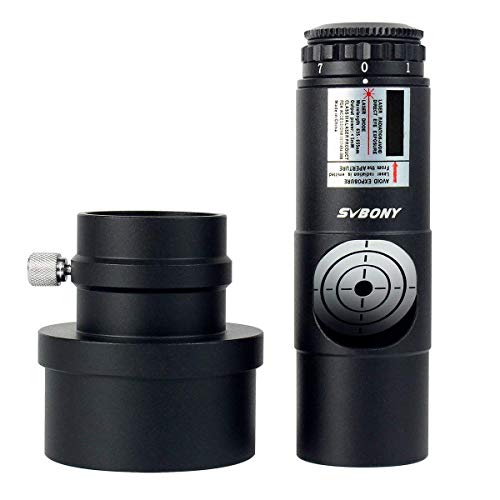
Similarly, telescope collimators are small calibration tools used by amateur astronomers. Newtonian reflector telescopes use curved internal mirrors to gather starlight. Over time, travel vibrations shake those mirrors out of alignment. A telescope laser collimator slides into the telescope focuser tube and bounces a parallel beam off the mirrors, allowing the user to tighten the adjustment screws until the optics line up perfectly. Both tools share the collimator name because they rely on parallel light beams, but they serve calibration purposes rather than live firearm targeting.
What to Look for When Choosing an Aiming Optic
Selecting the right collimator optic comes down to matching the body style, dot characteristics, and mounting hardware to your specific firearm. Because the underlying collimating technology is reliable across most modern brands, your main focus should be durability, battery life, and physical compatibility.
Start by selecting the body style that fits your shooting environment. If you want a sight for an everyday carry pistol or a lightweight range rifle, an open-window reflex sight keeps weight low and speeds up your presentation. If you hunt in wet brush, shoot in dusty deserts, or run tactical drills in heavy rain, choose an enclosed tube sight. The sealed housing prevents water droplets or dirt from covering the LED emitter glass and blurring your dot.
Next, consider the reticle size. Reticle dot size is measured in MOA (minutes of angle), which indicates how much of the target the dot covers at a given distance. A fine 2 MOA dot covers roughly 2 inches of a target at 100 yards, or about half an inch at 25 yards. This fine dot is ideal for rifles because it allows precise shot placement without obscuring small targets. A larger 4 to 6 MOA dot is much easier for your eye to locate rapidly during fast presentations, making it the preferred choice for defensive handguns and close-range shotguns.
Battery management features also make a practical difference. Look for sights equipped with motion-sensing auto-on technology, which turns the reticle on instantly the moment you pick up the firearm and puts the unit to sleep after a few minutes of inactivity. This feature keeps the sight ready for immediate defense while extending battery life across multiple years.
Before buying, confirm your firearm mounting setup. Handguns use specific mounting footprints, which are the precise screw-hole and recoil-lug patterns milled into the slide or adapter plate. Rifles and shotguns generally mount to standard Picatinny or 20mm slotted accessory rails. Make sure your chosen optic includes a compatible base or adapter plate for your firearm platform.
Always practice strict firearm safety during installation. Clear the firearm chamber, drop the magazine, and inspect the chamber visually and physically to verify the firearm is unloaded before handling tools around the receiver. When attaching the optic base, tighten the mounting screws using an inch-pound torque tool to the exact manufacturer specification, and apply a small drop of medium-strength thread-locking fluid. This prevents the sharp recoil of firing from shaking the mounting screws loose and ruining your zero.

- ARS Mark9.4
ARS Mark is a ranking system developed by bestairriflescopes.com. ARS Mark has no relationship or impact from any manufacturers or sales agent websites. Learn more
- BrandCVLIFE

- ARS Mark9.4
ARS Mark is a ranking system developed by bestairriflescopes.com. ARS Mark has no relationship or impact from any manufacturers or sales agent websites. Learn more
- BrandBayattoo
- ARS Mark9.2
ARS Mark is a ranking system developed by bestairriflescopes.com. ARS Mark has no relationship or impact from any manufacturers or sales agent websites. Learn more
- BrandSVBONY

- ARS Mark9.0
ARS Mark is a ranking system developed by bestairriflescopes.com. ARS Mark has no relationship or impact from any manufacturers or sales agent websites. Learn more
- BrandA ALSTAR

- ARS Mark9.0
ARS Mark is a ranking system developed by bestairriflescopes.com. ARS Mark has no relationship or impact from any manufacturers or sales agent websites. Learn more
- BrandPinty

- ARS Mark8.8
ARS Mark is a ranking system developed by bestairriflescopes.com. ARS Mark has no relationship or impact from any manufacturers or sales agent websites. Learn more
- BrandEZshoot

- ARS Mark8.4
ARS Mark is a ranking system developed by bestairriflescopes.com. ARS Mark has no relationship or impact from any manufacturers or sales agent websites. Learn more
- BrandHOLOSUN
Last update on 2026-10-01 / Affiliate links / Images, Product Titles, and Product Highlights from Amazon Product Advertising API
FAQs
Does a collimator sight have magnification?
Most collimator sights operate at 1x power with no magnification. They are designed for fast shooting at close to moderate distances with both eyes open. If you want magnification for identifying distant targets, you can mount a separate flip-to-side 3x magnifier on the accessory rail behind your optic.
Do I need to center the aiming dot in the glass window?
You do not need to center the dot to make an accurate shot. Because the internal curved lens lines up the light rays into parallel paths, the dot stays on target even if your eye shifts toward the edge of the window. As long as you can see the reticle resting on your target, your shot will hit where the dot points.
Can I use a collimator sight if I have astigmatism?
Shooters with astigmatism often see a distorted dot that looks like a comet, starburst, or blurry smear rather than a crisp circle. Lowering the brightness dial usually sharpens the dot image considerably by reducing glare. If the reticle remains blurry even on low settings, an etched-reticle prism sight is often a clearer alternative for irregular eyesight.


12 Best 22 Pcp Air Rifle For Hunting of 2026 With Quiet Power

7 Best 22 Pcp Air Rifle Under 300 of 2026 For Backyard Pest Control

10 Best 22 Break Barrel Air Rifles of 2026 For Backyard Pest Control

10 Best 30 Caliber Pcp Air Rifle of 2026 For Medium Game

Top Best 177 Air Rifle Under 100: Budget-Friendly Picks for 2026

How to Safely Reload Shotgun Shells at Home

11 Best Co2 Air Rifle For Pest Control of 2026 To Ensure Humane Dispatch

12 Best Inexpensive Air Rifles of 2026 For Dependable Backyard Accuracy






