
What Is a Fiber Optic Sight and How Does It Work?

A fiber optic sight is an aiming post that uses a light-gathering colored plastic rod to channel surrounding daylight straight toward your eye. That vivid glow depends entirely on available light, which means the bright dot disappears the moment you step into pitch darkness. It requires zero batteries or wiring, making it a reliable swap for dull metal posts on pistols, shotguns, and hunting bows.
How well it works depends on where you shoot, the thickness of the tube, and the tint of the insert. Bright green rods usually catch the human eye fastest in sunlight, while red inserts stand out sharply against leafy backgrounds. Thicker rods pull in more light, but they also block more of what you are aiming at. Here is a clear look at how these sights function, where they struggle, and how to find the right match for your setup.
The Short Version
- A fiber optic sight uses a light-gathering colored plastic tube that catches surrounding daylight or room lighting along its length and pushes it out the cut end toward your eye.
- It uses zero batteries and contains no wiring, glowing brightly in the sun but going completely dark in pitch-black conditions.
- Unlike battery-powered red dots or self-glowing chemical tritium inserts, a fiber sight depends entirely on ambient light.
- You can easily maintain them at home by cutting and melting new replacement rods into the metal sight channel if a tube snaps or you want a new color.
How Light-Gathering Plastic Rods Produce a Glowing Dot
A fiber optic sight looks like it runs on battery power, but it is purely mechanical. The bright aiming point you see is the cut end of a specialized acrylic filament. These light-gathering colored plastic tubes are clear filaments that catch surrounding daylight or room lighting along their exposed sides.
Instead of letting that light pass straight through, the polished walls of the tube act like tiny internal mirrors. The light bounces repeatedly inside the core, reflecting forward along its length. Because the only open exit point is the cut face pointing back at your eye, all that captured light funnels right to the tip. This creates a vivid aiming dot that catches your attention instantly, even though there is no bulb or wiring inside the housing.
The brightness depends on how much rod surface is exposed to the sky. Sights with long, open rods gather far more ambient light than sights where the rod is buried inside a steel guard. In bright sun, the tip looks as brilliant as an illuminated LED. In overcast weather or under indoor fluorescent lights, the dot softens but still provides a crisp aiming reference that stands out against dark targets much better than plain black steel.
Fiber Optics Compared to Electronic Red Dots and Tritium Night Sights
Shooters often confuse fiber optic sights with other modern aiming options. While they all present a colored aiming point, each system works under completely different principles.
Standard iron sights are simple steel notches. They are tough, but plain black posts easily vanish against dark targets. Fiber optic sights upgrade that setup by placing a bright dot inside the steel housing without adding weight or bulk.
Electronic red dot sights work differently. A red dot uses an open-window sight or an enclosed tube sight containing a battery and a light diode. That diode reflects a reticle, which is your aiming dot or crosshair, off a curved glass lens. An electronic sight lets you focus on your target with both eyes open, but it relies on battery power and can fail electronically. Many shooters keep fiber optic iron sights installed as backup iron sights to cowitness through the optic glass, meaning you can line up the mechanical sights through the window if the electronics fail. If you want to pair both systems, you can check iron sights designed to cowitness with red dots to see how sight heights align through the glass.
Tritium night sights solve a different problem. Tritium is a self-glowing chemical insert that works in the dark without batteries or sunlight. It uses a sealed glass vial filled with glowing gas, shining constantly for over ten years. Tritium shines reliably in a pitch-black room at night, but it looks like a faint, washed-out green dot in direct sun. Fiber optics are the reverse: intensely bright in the sun, yet invisible in total darkness.
Some sight designs combine both technologies into a single housing. These hybrid sights place a glowing tritium vial behind a light-gathering colored plastic tube. The fiber gathers sun during the day, while the tritium illuminates the tube in total darkness, giving you a visible dot at any hour.
Lighting Limits: Where Fiber Optics Excel and Where They Fail
Because fiber sights rely on ambient light, their performance changes whenever your surroundings change. Understanding these limits keeps you from being surprised in the field or on the range.
- Bright outdoor sun: This is where fiber optics excel. The dot glows intensely, making rapid front-sight tracking effortless on moving targets.
- Indoor shooting ranges: Standard overhead bay lights provide plenty of ambient light for the rod to catch. The dot remains sharp against paper targets.
- Deep woods and dusk: As sunset approaches, the dot dims. It will still provide contrast against dark bark as long as open sky is visible above you.
- Aiming from dark cover into light: If you stand inside a dark room or blind aiming into a sunlit yard, the rod will not glow. The light on your target does not reach the plastic tube in your hands, leaving the sight as a dark silhouette.
- Total darkness: Fiber optic rods do not hold a charge like glow-in-the-dark paint. In pitch darkness, a fiber sight goes completely dark.
A common trap is expecting a weapon-mounted flashlight to power the sight. When you activate a weapon light in a dark room, the beam projects forward at the threat. Because that light points away from you, almost no light scatters backward onto the top of your sight housing. Your target will be illuminated, but your fiber optic dot will stay dark unless light bounces off a nearby wall.
Choosing the Right Rod Color and Thickness for Your Eyes
Fiber optic rods are not one size fits all. The color and diameter of the plastic tube determine how fast your eyes catch the dot and how precisely you can aim.
Color choice depends on your eyesight and your shooting backdrop:
- Fluorescent Green: Human eyes detect green wavelengths better than any other color. Green rods appear brightest in low ambient light or overcast conditions. The only downside is that green can blend into thick foliage during summer woods hunting.
- Red and Orange: Red and hunter orange create sharp contrast against green leaves, brown dirt berms, and dark paper targets. Red needs slightly more daylight than green to look vivid, but it offers an unmistakable dot that stops your eye from losing focus.
- Yellow and Blue: Yellow gathers light effectively while being gentle on the eye, making it helpful for shooters who see starburst distortion around red dots. Blue absorbs less ambient light and looks dimmer, but some target archers like it because it does not halo over the center ring.
Rod diameter balances speed against precision. On a defensive handgun or shotgun, a thick rod measuring 0.040 to 0.060 inches (or up to 0.100 inches for shotgun beads) gives you a bold dot that jumps out immediately. Archery pins are much finer, often using 0.010 or 0.019-inch rods so the pin does not cover the vital zone of a target at long range. If you shoot archery, understanding how to use a bow sight for steady aiming helps you balance pin thickness against target distance.
How to Care for Rods and Swap Them When Damaged
The main trade-off with a fiber optic sight is durability. While modern plastic filaments handle shooting vibration well, a hard drop on gravel or a snag on thick brush can snap the exposed rod. Replacing a broken rod takes five minutes at home with a fresh piece of filament, nail clippers, and a lighter.
Always put safety first. Clear the firearm chamber, remove the magazine, and confirm the action is clear. For archery gear, ensure the bow is safely racked before working on the sight.
- Remove the broken rod: Snip the damaged plastic tube in the middle using nail clippers. Slide the broken pieces out of the front and rear brackets on the sight housing. Wipe the steel channel clean.
- Cut a fresh length: Cut a new piece of filament about one-quarter inch longer than the sight housing. A flat cut helps light travel cleanly through the ends.
- Melt the front tip: Bring a lighter flame near one end of the rod. Never let the flame touch the plastic, or it will scorch and turn black. Hold the tip about an eighth of an inch above the heat. Within seconds, the plastic softens into a round mushroom cap.
- Slide the rod into place: Let the melted bead cool. Thread the plain end of the rod through the sight housing from front to back until the mushroom cap rests firmly against the front steel bracket.
- Flair the rear aiming end: Trim the extra plastic at the rear, leaving about one-sixteenth of an inch sticking out. Bring your heat source close until the plastic melts flush against the rear sight face, locking the rod securely between both brackets.
To protect your rods, watch what chemicals touch your firearm. Bore solvents, degreasers, and aerosol cleaners contain harsh ingredients like acetone that melt, fog, or crack acrylic rods on contact. When wiping down your barrel or slide, protect the sight with a rag or clean around it with a cotton swab dampened with mild soapy water.
What to Look for in Fiber Optic Sights and Replacement Parts
When upgrading from dull factory sights or buying spare rods, focus on durability and fit. Look for housings made of machined steel or aluminum rather than cheap plastic. A well-built housing features protective metal side rails that shield the rod from holster wear and impact while leaving the top open to gather sunlight.
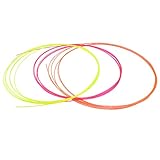
If you are buying replacement filaments, check your sight manual to confirm the exact rod diameter your housing uses. Channel sizes range from fine 0.010-inch archery pins up to 0.060-inch pistol posts or 2.5 mm shotgun beads. Multi-packs with green, red, and orange filaments give you the freedom to compare different colors in varying light and find what works best for your eyes.

- ARS Mark9.2
ARS Mark is a ranking system developed by bestairriflescopes.com. ARS Mark has no relationship or impact from any manufacturers or sales agent websites. Learn more
- BrandTRUGLO

- ARS Mark9.2
ARS Mark is a ranking system developed by bestairriflescopes.com. ARS Mark has no relationship or impact from any manufacturers or sales agent websites. Learn more
- BrandTRUGLO

- ARS Mark9.2
ARS Mark is a ranking system developed by bestairriflescopes.com. ARS Mark has no relationship or impact from any manufacturers or sales agent websites. Learn more
- BrandTRUGLO

- ARS Mark9.2
ARS Mark is a ranking system developed by bestairriflescopes.com. ARS Mark has no relationship or impact from any manufacturers or sales agent websites. Learn more
- BrandMECCANIXITY

- ARS Mark9.0
ARS Mark is a ranking system developed by bestairriflescopes.com. ARS Mark has no relationship or impact from any manufacturers or sales agent websites. Learn more
- BrandMECCANIXITY
- ARS Mark9.0
ARS Mark is a ranking system developed by bestairriflescopes.com. ARS Mark has no relationship or impact from any manufacturers or sales agent websites. Learn more
- BrandAKEPO

- ARS Mark8.8
ARS Mark is a ranking system developed by bestairriflescopes.com. ARS Mark has no relationship or impact from any manufacturers or sales agent websites. Learn more
- BrandNanoptics

- ARS Mark8.4
ARS Mark is a ranking system developed by bestairriflescopes.com. ARS Mark has no relationship or impact from any manufacturers or sales agent websites. Learn more
- BrandAecktech
Last update on 2026-10-01 / Affiliate links / Images, Product Titles, and Product Highlights from Amazon Product Advertising API
FAQs
Does a fiber optic sight need batteries or charging?
No, a fiber optic sight never uses batteries, wiring, or charging cords. It relies strictly on ambient light from the sun or indoor room fixtures. The light-gathering colored plastic tube draws that light into its body and directs it to the cut tip facing your eye.
Can you see a fiber optic sight in total darkness?
No, a fiber optic sight goes completely dark in pitch-black conditions. Because it contains no light-producing elements, it cannot glow without an external light source. In the dark, it looks like a standard black metal post unless paired with a tritium insert.
Can gun cleaning solvents damage a fiber optic rod?
Yes, common bore cleaners, degreasers, and spray solvents can ruin acrylic fiber rods. The chemicals can fog the clear plastic, cause it to crack, or melt it entirely. Shield your sights during deep cleaning and use only mild soap and water to wipe off dust.
Which color fiber optic sight is easiest to see?
Fluorescent green is generally the easiest shade for human eyes to pick up in dim or changing light. However, red and orange rods create much better contrast when shooting against green trees, grass, or brown hunting terrain.


12 Best 22 Pcp Air Rifle For Hunting of 2026 With Quiet Power

7 Best 22 Pcp Air Rifle Under 300 of 2026 For Backyard Pest Control

10 Best 22 Break Barrel Air Rifles of 2026 For Backyard Pest Control

10 Best 30 Caliber Pcp Air Rifle of 2026 For Medium Game

Top Best 177 Air Rifle Under 100: Budget-Friendly Picks for 2026

How to Safely Reload Shotgun Shells at Home

11 Best Co2 Air Rifle For Pest Control of 2026 To Ensure Humane Dispatch

12 Best Inexpensive Air Rifles of 2026 For Dependable Backyard Accuracy






