
What Is a Gas Block Front Sight and Which Height Do You Need?

A gas block front sight is an iron sight built to mount directly onto the metal collar around a rifle barrel. What changes your choice is the height of that collar's rail and the intense heat coming off the barrel. Because this collar redirects scorching gas to cycle each shot, everyday plastic sights will soften or melt within a few magazines. Sticking with heat-safe metal keeps your front post sturdy and secure.
Finding the correct model comes down to your rifle's shape and setup. Many barrel rails sit lower than the receiver rail, which requires a taller gas-block-height post so you can zero the rifle (adjust your sight so bullets hit your aim point). You also need to verify that the front post matches your rear sight and aligns cleanly through any red dot optic. Here is how to check your rail height and pick the right sight for your build.
Where a Gas Block Front Sight Sits and What It Does
Before working on any rifle, always clear the firearm chamber, remove the magazine, and confirm the action is completely unloaded. Safety comes first whenever you inspect or mount firearm accessories.
A gas block is a metal barrel collar that redirects firing gas back into the rifle action to cycle the next round. On rifles with shorter handguards, this collar sits out in the open on the barrel, between the handguard and the muzzle. Many rifle models feature a short section of standard Picatinny or 20mm slotted accessory rails machined onto the top of this collar.
A gas block front sight is an iron sight built specifically to mount on that exposed collar. It holds the front aiming post you align with your rear sight to point your rifle accurately. Because this sight sits directly on the gas block rather than on an extended handguard, it has to handle two unique challenges: intense barrel heat and lower rail heights.
If your rifle features a full-length handguard that covers the gas block, you do not need this specialized sight. You would simply attach a standard sight to the front of your handguard rail. But when your gas block is exposed with rail slots on top, a dedicated gas block sight gives you a sturdy front aiming post right where the factory intended.
Stepped-Down Rails Versus Same-Plane Rails: Why Sight Height Matters
The most common mistake rifle owners make with front sights is choosing the wrong height. Gas block rails come in two distinct styles, and confusing them makes your rifle impossible to aim properly.
The first style is a same-plane gas block. On these rifles, the top of the gas block rail sits level with the upper rifle rail on the receiver. Because both rails share the same flat line, you use a standard-height front sight. Standard flip-up sights made for full-length receiver rails line up correctly on a same-plane block.
The second style is a stepped-down gas block. On this setup, the gas block rail sits noticeably lower than the receiver rail, usually about a quarter of an inch to a third of an inch lower. Manufacturers built them this way so shooters could attach older clamp-on gear or low-profile accessories without blocking other equipment.
If you install a standard-height sight on a stepped-down gas block, the front post sits much too low. Looking through your rear sight forces you to tilt the muzzle upward just to center the front post. This makes the barrel point high, causing bullets to strike several feet above your target.
When this happens, you cannot zero the rifle. Zeroing means adjusting your sights so your shots land exactly where your sights point at a set distance, such as 50 yards for rifles. You will run out of elevation adjustment clicks on the post before your shots line up. A dedicated gas block height front sight solves this because its base is made taller to bridge that dropped rail height.
The Heat Factor: Why Plastic Sights Melt on a Gas Block
Heat is the second reason gas block sights require special care. When you fire a round, superheated burning gas routes through the barrel and directly into the gas block collar. That gas reaches thousands of degrees for an instant, quickly turning the metal gas block scorching hot.
After firing twenty or thirty rounds steadily, an exposed gas block becomes hot enough to burn skin on contact. Standard polymer sights made from molded plastic work fine on cooler handguard rails because they are lightweight and budget-friendly. But if you mount a polymer sight directly onto a gas block, that intense heat transfers straight into the plastic base.
Molded plastic softens, warps, and can even melt under these temperatures. Even before plastic visibly melts, heat weakens the material holding the mounting screw. The clamp loosens, the sight wobbles, and your zero shifts with every shot. In worst-case situations, softened plastic fuses directly into the rail slots.
Because of this, every sight mounted directly to a gas block must be all-metal. Sights machined from aircraft-grade aluminum or steel handle intense heat without warping, bending, or losing tension. If a sight description lists polymer or synthetic construction, never mount it to a gas block.
Five Steps to Check Your Rifle Rail Height Before Buying
-
Clear the firearm chamber and remove the magazine.
Safety comes first before you measure or fit any firearm accessory. Drop the magazine, pull the bolt back, visually check the chamber to ensure it is completely empty, and keep the muzzle pointed in a safe direction.
-
Lay a rigid metal straightedge flat along your upper receiver rail.
A stiff ruler creates an unbroken reference line extending forward from the receiver out over the barrel. This straight line shows you immediately whether your gas block sits flush with the receiver or drops below it.
-
Extend the straightedge directly over the gas block rail slots.
Look closely at the contact point between your straightedge and the gas block rail. If the straightedge rests completely flat across both rails at the same time, your rifle has a same-plane setup.
-
Measure any vertical gap between the straightedge and the gas block rail.
If you see a visible gap beneath the ruler, measure that drop with a small ruler. A gap between a quarter-inch and 0.28 inches confirms a stepped-down rail that requires a taller gas block height sight.
-
Check clearance between your handguard and the gas block rail.
Confirming your clearances prevents mounting headaches later. If you want a folding front sight, confirm there is enough room on the rail for the sight to fold backward toward the receiver without hitting the handguard.
Lining Up Your Front Sight With Rear Sights and Red Dots
Once you match your rifle height, your front sight must line up smoothly with your rear sight and optics. Most gas block front sights use a standard square A2 front post. This post turns up and down, giving you elevation adjustments to control vertical bullet impact.
Your rear sight controls windage, which means your left-to-right adjustment click dials. Looking through the rear aperture, the tip of your front post should center cleanly in the opening. With the proper front sight height, zeroing requires only a few clicks on the post and rear dials.
Many shooters mount a red dot optic on the receiver rail and keep iron sights as backups. In this setup, you aim through the glass window using co-witness, which means viewing iron sights through a red dot window. When setting up your rifle, choosing the best iron sights for cowitness with red dot sights makes sure your backup post aligns cleanly through the glass.
There are two common co-witness heights. Absolute co-witness places the front sight post in the center of the optic window, aligning directly with the red aiming dot. Lower one-third co-witness keeps the iron sights in the bottom third of the viewing window, leaving the center clear for your target. A fine 2 MOA aiming dot covers about 2 inches of a target at 100 yards, resting neatly on or above your front post tip.
When securing any sight to your rail, use an inch-pound torque tool so you do not strip the mounting screw. Apply a drop of medium thread-locking fluid to keep recoil and barrel heat from shaking the sight loose.
What to Look For in a Gas Block Front Sight
Finding the right sight comes down to matching your rifle dimensions and resisting barrel heat. Keep these practical factors in mind when choosing a sight:
- All-metal materials: Choose sights machined from aircraft-grade aluminum or steel with an anodized finish. Metal parts will not melt, warp, or loosen under firing heat.
- Clear height specifications: Check product descriptions to confirm whether a sight is built for "gas block height" or "same-plane / standard rail height." Stepped-down gas blocks need a taller gas block model.
- Standard A2 sight post: A square A2 post allows easy elevation adjustments using a standard front sight tool or a simple cartridge tip at the firing range.
- Fixed or folding design: A fixed front sight tower gives you maximum durability that is always ready. A folding model flips down to provide an unobstructed window through an enclosed tube sight or open-window reflex optic.
- Durable rail cross-bolt: Look for a stout steel cross-bolt that fits standard Picatinny or 20mm slotted accessory rails to maintain zero against repeated rifle recoil.
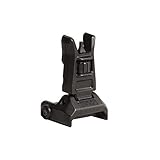
- ARS Mark9.6
ARS Mark is a ranking system developed by bestairriflescopes.com. ARS Mark has no relationship or impact from any manufacturers or sales agent websites. Learn more
- BrandMagpul

- ARS Mark9.4
ARS Mark is a ranking system developed by bestairriflescopes.com. ARS Mark has no relationship or impact from any manufacturers or sales agent websites. Learn more
- BrandUTG

- ARS Mark8.8
ARS Mark is a ranking system developed by bestairriflescopes.com. ARS Mark has no relationship or impact from any manufacturers or sales agent websites. Learn more
- BrandOZARK ARMAMENT

- ARS Mark8.8
ARS Mark is a ranking system developed by bestairriflescopes.com. ARS Mark has no relationship or impact from any manufacturers or sales agent websites. Learn more
- BrandSniper

- ARS Mark8.8
ARS Mark is a ranking system developed by bestairriflescopes.com. ARS Mark has no relationship or impact from any manufacturers or sales agent websites. Learn more
- Brand360 Tactical

- ARS Mark8.8
ARS Mark is a ranking system developed by bestairriflescopes.com. ARS Mark has no relationship or impact from any manufacturers or sales agent websites. Learn more
- BrandHIVIZ

- ARS Mark8.4
ARS Mark is a ranking system developed by bestairriflescopes.com. ARS Mark has no relationship or impact from any manufacturers or sales agent websites. Learn more
- BrandGreen Blob Outdoors

- ARS Mark8.0
ARS Mark is a ranking system developed by bestairriflescopes.com. ARS Mark has no relationship or impact from any manufacturers or sales agent websites. Learn more
- BrandGreen Blob Outdoors
Last update on 2026-10-01 / Affiliate links / Images, Product Titles, and Product Highlights from Amazon Product Advertising API
Frequently Asked Questions
Can I put a regular flip-up sight on a railed gas block?
You can only use a regular flip-up sight if your gas block is a same-plane design level with your receiver, and if the sight is made of solid metal. Never mount a polymer sight to any gas block because firing heat melts molded plastic. If your gas block is stepped down, a standard sight will sit too low to zero.
Why is my rifle shooting too high after installing a gas block sight?
If your shots hit high and your front post cannot adjust high enough to compensate, you probably installed a standard-height sight on a stepped-down gas block. The low front post forces you to tilt the muzzle up to center the post in your rear sight. Installing a taller gas block height sight corrects this alignment.
Do I need a special tool to adjust a gas block front sight post?
A four-prong front sight adjustment tool makes changing elevation simple, but it is not mandatory. You can press down the spring-loaded detent pin with a bullet tip or small punch, then spin the square post by hand. Turning the post clockwise lowers it, which raises your bullet impact on the target.
Will a folding gas block sight interfere with my red dot sight?
A folding metal sight drops flat along the barrel, staying out of your sight picture while you use your optic. When flipped up, it lines up through the center or lower third of your red dot window depending on your mount height. Just make sure your handguard leaves adequate space for the sight to fold down cleanly.


12 Best 22 Pcp Air Rifle For Hunting of 2026 With Quiet Power

7 Best 22 Pcp Air Rifle Under 300 of 2026 For Backyard Pest Control

10 Best 22 Break Barrel Air Rifles of 2026 For Backyard Pest Control

10 Best 30 Caliber Pcp Air Rifle of 2026 For Medium Game

Top Best 177 Air Rifle Under 100: Budget-Friendly Picks for 2026

How to Safely Reload Shotgun Shells at Home

11 Best Co2 Air Rifle For Pest Control of 2026 To Ensure Humane Dispatch

12 Best Inexpensive Air Rifles of 2026 For Dependable Backyard Accuracy






