
What Is a Laser Sight and How Does It Work?

A bright red spot dances across the basement wall as someone clicks a small switch under a pistol barrel. That beam comes from a laser sight, a compact device that projects a visible colored dot directly onto your target. Unlike a glass optic where the dot stays inside a lens, a laser puts the illuminated point right on the object you are aiming at.
How well that dot works depends on lighting and the type of device you pick. Bright midday sun quickly washes out red beams, while green lasers stay visible outdoors. Distance matters too, since dots spread out and fade downrange. Some lasers attach to a firearm rail for live shooting, while barrel bore tools only help align sights on a workbench. Here is how these tools work and what to consider before choosing one.
How a Laser Sight Works on a Firearm
A laser sight is an electronic aiming accessory that mounts directly to the frame, slide, or barrel of a firearm. Inside the housing sits a small light-emitting diode, a focusing lens, and a compact battery power source. When you press the activation switch, the diode fires a narrow, concentrated beam of colored light forward through the lens. That beam travels through the open air and creates a bright, glowing dot on the physical surface of whatever object you point the barrel toward.
The light beam itself travels in a perfectly straight line, but bullets do not. As soon as a bullet leaves the muzzle of your barrel, gravity pulls it downward in a subtle arc. In addition, because the laser module sits slightly below the barrel on an accessory track or clamped to a trigger guard, the beam starts an inch or two away from the actual path of the bullet. This geometric difference means you must align the beam to match where your bullets strike at a specific distance.
Aligning the beam is known as zeroing, which means adjusting the dot so your shots land exactly where the dot points at a set distance, such as 15 to 25 yards for handguns. On the body of the laser housing, you will find tiny adjustment screws for windage and elevation, which are the left-to-right and up-and-down adjustment screws. Turning these screws with a small hex wrench tilts the internal laser diode tiny fractions of an inch until the projected dot lines up with your bullet impacts.
Before installing, adjusting, or handling any laser sight, safe firearm handling comes first. Always remove the magazine, pull the slide or charging handle back, and visually inspect the chamber to ensure no live cartridge is present. Once the firearm is completely clear, you can securely mount the laser housing and tighten the mounting hardware. Using an inch-pound torque tool and a drop of thread-locking fluid ensures that normal firearm recoil does not shake the screws loose over time.
Laser Sights Versus Red Dot Optics: The Main Confusion
Beginners often hear other shooters talk about dot sights and assume that laser sights and red dot optics are the same device. While both tools place a colored dot in front of your eyes, they work in completely opposite ways. The primary difference lies in where the aiming dot actually exists in the real world.
A red dot sight is an enclosed tube sight or open-window sight that mounts to the top of your gun slide or rifle receiver. When you look through the glass window, you see an internal reticle, which is an aiming dot seen inside an optic lens. The light from a red dot never leaves the optic housing. It reflects off a coated glass lens back into your eye, so nobody downrange can see the dot, and nothing is projected onto the target surface.
A laser sight features no glass viewing window to peer through. Instead, it shoots an active light beam outward across the room or down the shooting range, painting a colored dot directly onto the target. Anyone standing downrange or to the side can see the dot on the target wall, paper, or clothing. This makes the laser an external projection tool rather than an internal glass optic.
This fundamental difference changes how you hold and fire the weapon. To aim with iron sights or a red dot optic, you must bring the firearm directly up to eye level, align your head behind the optic glass, and find your sight picture. If your battery fails on a glass optic, you rely on iron sights that cowitness with optics so you can still align your shots through the glass window.
A laser sight decouples your eye position from the firearm frame. Because the aiming dot lives on the target rather than inside a glass lens, you can aim accurately from awkward positions. If you are crouched behind low cover, shooting from waist level, or forced to hold the weapon at an unusual angle during a home defense emergency, you only need to see the laser dot on the threat to know where the barrel is pointing. But at longer shooting distances, natural hand tremors cause an external laser dot to jump around dramatically on distant targets, making precise long-range shooting much harder than looking through a stable optic.
Live Aiming Lasers Versus Bore Sights
Another frequent stumbling block for new owners is confusing live aiming lasers with bore sighting devices. Both tools project a laser beam, but they serve completely different purposes. Mixing them up can lead to buying the wrong accessory or causing a serious safety hazard on the range.
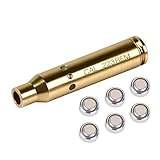
A bore sight is a barrel-alignment tool used only for setup, not firing. These devices help you rough-in new rifle scopes, red dots, or iron sights on a workbench without firing expensive ammunition. Some bore sights are shaped exactly like empty brass cartridge cases, such as 9mm or .223 shells, that you slip directly into the firearm chamber. Other bore sights use expanding rubber arbors that slide into the muzzle opening at the front tip of your barrel.
When activated, a bore sight projects a reference laser straight down the center line of your barrel. You point the firearm at a wall 15 to 25 yards away across your living room or workshop, and then adjust your scope or iron sights until your crosshairs land directly on top of the projected bore dot. This setup process gets your sights on paper before you ever visit the shooting range.
You must never fire live ammunition with a bore sight inside your firearm. Leaving a muzzle-mounted arbor or a chamber-style laser tool inside the gun when pulling the trigger creates a catastrophic barrel obstruction that can rupture the barrel and cause severe personal injury. Once your bench alignment is complete, immediately remove the bore sight and confirm the chamber is empty.
An aiming laser, on the other hand, is a dedicated shooting tool designed to withstand the violent shock and heat of live fire. It mounts permanently or semi-permanently to the outside of the weapon frame. Aiming lasers feature shockproof internal components, rugged aluminum or reinforced polymer bodies, and sealed windage and elevation turrets that maintain their zero through hundreds of live rounds.
Red Versus Green Beams and Everyday Trade-Offs
When selecting a live aiming laser, your first major decision is beam color. Laser sights commonly produce either a deep red beam or a vibrant green beam. While both colors function identically inside the device housing, the human eye reacts to them very differently depending on ambient lighting.
Human eyes are naturally tuned to detect wavelengths in the green spectrum far more easily than wavelengths in the red spectrum. In bright midday sun, a standard red laser dot quickly fades and becomes nearly invisible against light-colored targets past a few paces. A green laser dot cuts through bright ambient light, remaining easily visible across typical defensive distances outdoors.
Green lasers come with distinct mechanical trade-offs. The internal diodes required to generate green light draw considerably more electrical power than red diodes, resulting in shorter overall battery life. Green diodes are also more sensitive to extreme cold temperatures, sometimes dimming until the device warms up. Red lasers, by contrast, offer exceptional battery efficiency, run reliably in freezing temperatures, fit into more compact housings, and generally cost less.
Before adding an aiming laser to your setup, weigh how the device fits your daily routine and equipment:
- Target acquisition speed: Placing a glowing dot directly on a target allows instant aiming in dark hallways without lining up traditional sights.
- Positional freedom: You can place accurate shots while holding the firearm around obstacles, from low retention, or when injured.
- Holster compatibility: Adding a laser under the muzzle changes the outer shape of the gun, requiring a holster molded specifically to clear the accessory housing.
- Tremor feedback: The laser dot magnifies every tiny twitch of your hands, which makes a great training tool for trigger control but can cause visual distraction under stress.
- Battery dependence: If the battery dies or cold weather dims the beam, you must seamlessly transition back to standard iron sights.
Choosing the Right Firearm Laser Setup
If you decide an aiming laser fits your self-defense or target shooting plans, you must verify physical compatibility before buying any hardware. Not every laser fits every firearm, and choosing the wrong mounting pattern will prevent the unit from locking securely into place.
Start by inspecting the frame beneath the barrel of your handgun or along the handguard of your rifle. Most modern defensive handguns feature standard Picatinny or 20mm slotted accessory rails molded into the dust cover. These grooved accessory tracks allow a laser unit to slide into position and anchor with a cross-bolt. Rifle handguards often use either standard Picatinny rails or hollow M-Lok slots that require matching hardware to anchor flush against the rail surface.
If your handgun has a smooth frame with no built-in accessory track, look for laser units designed to clamp directly around the front of the trigger guard. These trigger-guard housings use custom-molded shells that fit the exact contours of specific handgun models, securing with two or three clamping screws. Always check your firearm model carefully, because a trigger-guard laser made for one compact pistol will not seat properly on another.
Consider the activation switch design and how it matches your natural grip. Some models feature ambidextrous push buttons on the side of the housing, allowing your index finger to press the unit on as you draw. Other units incorporate momentary pressure pads built into the grip itself, lighting the beam the exact moment your fingers tighten around the handle. If you carry a defensive handgun, look closely at dedicated rail-mounted laser sights for pistols that maintain a compact profile without extending past the muzzle.

- ARS Mark9.2
ARS Mark is a ranking system developed by bestairriflescopes.com. ARS Mark has no relationship or impact from any manufacturers or sales agent websites. Learn more
- BrandVisiofire

- ARS Mark8.8
ARS Mark is a ranking system developed by bestairriflescopes.com. ARS Mark has no relationship or impact from any manufacturers or sales agent websites. Learn more
- BrandEZshoot

- ARS Mark8.8
ARS Mark is a ranking system developed by bestairriflescopes.com. ARS Mark has no relationship or impact from any manufacturers or sales agent websites. Learn more
- BrandSolofish

- ARS Mark8.8
ARS Mark is a ranking system developed by bestairriflescopes.com. ARS Mark has no relationship or impact from any manufacturers or sales agent websites. Learn more
- BrandSolofish
- ARS Mark8.8
ARS Mark is a ranking system developed by bestairriflescopes.com. ARS Mark has no relationship or impact from any manufacturers or sales agent websites. Learn more
- BrandMidTen

- ARS Mark8.8
ARS Mark is a ranking system developed by bestairriflescopes.com. ARS Mark has no relationship or impact from any manufacturers or sales agent websites. Learn more
- BrandCVLIFE

- ARS Mark8.8
ARS Mark is a ranking system developed by bestairriflescopes.com. ARS Mark has no relationship or impact from any manufacturers or sales agent websites. Learn more
- BrandEZshoot

- ARS Mark8.6
ARS Mark is a ranking system developed by bestairriflescopes.com. ARS Mark has no relationship or impact from any manufacturers or sales agent websites. Learn more
- BrandEZshoot

- ARS Mark8.6
ARS Mark is a ranking system developed by bestairriflescopes.com. ARS Mark has no relationship or impact from any manufacturers or sales agent websites. Learn more
- BrandEZshoot
Last update on 2026-10-01 / Affiliate links / Images, Product Titles, and Product Highlights from Amazon Product Advertising API
FAQs
Do you still need iron sights if your gun has a laser sight?
Yes, you should always keep functional iron sights on any defensive firearm. Laser sights rely on battery power, electronic diodes, and small mounting screws that can fail, lose zero, or run out of charge unexpectedly. Iron sights provide a permanent, non-electronic backup that ensures you can always aim accurately if your laser malfunctions.
Can an intruder see your laser sight beam in the dark?
In clean indoor air, the beam itself is mostly invisible from the side, but the glowing dot on the wall and the emitter lens on your gun are brightly visible. If there is dust, fog, smoke, or steam in the air, the light particles scatter, turning the beam into a solid visible line that traces straight back to your location. Use momentary switches so the laser only turns on when you are actively preparing to press the trigger.
How far away is a laser sight actually useful?
Most live aiming lasers are practical from point-blank range out to roughly 15 to 25 yards. Beyond 25 yards, natural human hand movement makes the dot dance wildly on the target, making precise hits difficult. In daylight conditions, locating a small projected dot past 20 yards also becomes very challenging compared to looking through a traditional optic.


12 Best 22 Pcp Air Rifle For Hunting of 2026 With Quiet Power

7 Best 22 Pcp Air Rifle Under 300 of 2026 For Backyard Pest Control

10 Best 22 Break Barrel Air Rifles of 2026 For Backyard Pest Control

10 Best 30 Caliber Pcp Air Rifle of 2026 For Medium Game

Top Best 177 Air Rifle Under 100: Budget-Friendly Picks for 2026

How to Safely Reload Shotgun Shells at Home

11 Best Co2 Air Rifle For Pest Control of 2026 To Ensure Humane Dispatch

12 Best Inexpensive Air Rifles of 2026 For Dependable Backyard Accuracy






