
What Is a Red Dot Sight and How Does It Work?

A red dot sight is a compact firearm optic that bounces a lit aiming point onto a glass lens so you can aim instantly without lining up front and rear metal sights. How that glowing mark works for you changes depending on your eyesight and the style of shooting you do. Instead of shining a visible laser beam out onto a target, the device keeps the light contained right on the glass, allowing you to keep both eyes wide open and focused on what is in front of you.
Your exact experience also depends on whether you mount an open glass window on a handgun or a rugged enclosed tube on a rifle. Your eyes play an equally big role, since uncorrected astigmatism can turn a crisp dot into a slight blur or starburst. Here is a clear look at how these sights function, why shooters use them, and what to expect before picking one.
The Short Version
- A red dot sight is an unmagnified optic that reflects an internal LED aiming dot off a glass lens directly back to your eye.
- Unlike a handheld pointer or gun laser, a red dot does not project any light downrange onto the target, keeping your position discreet.
- Shooting with a red dot lets you keep both eyes open and look directly at the target rather than trying to align front and rear metal sights.
- These sights run on small button-cell batteries and mount directly to pistols, rifles, and shotguns using specific screw patterns or rail clamps.
How a Red Dot Sight Actually Works
At first glance, a red dot sight looks like a small glass window sitting in a metal frame. When you switch it on, a glowing red dot appears to hover right in the middle of the glass. It looks like magic or high-tech projection, but the mechanical principle behind it is remarkably simple and reliable.
Inside the sight housing, a tiny light-emitting diode (LED) points backward toward a specially curved glass lens. This lens has an ultra-thin chemical coating that acts like a two-way mirror. The coating reflects red light back toward your eye while letting all other natural light pass straight through. When you look through the window, you see the outside world clearly, but the reflected red light bounces into your pupil, creating the illusion of a glowing aiming point resting on your target.
One of the most common misunderstandings among new shooters is confusing a red dot sight with a laser sight. If you have ever watched action movies, you might expect a red dot to throw a visible crimson beam across the room and paint a dot on the wall. That is not how an optical sight operates. If you want a beam that actually shines downrange onto an object, you are thinking of a rail mount pistol laser sight. A red dot optic keeps all of its light contained entirely inside the glass housing. Nobody downrange can see where you are pointing simply by looking at the target.
Another major advantage of this optical design is that it is largely free from parallax errors at practical shooting distances. With traditional optics, shifting your head from side to side changes where the crosshair points. With a red dot sight, as long as you can see the dot inside the glass window and place it on the target, your shot will go where the dot rests. Your eye does not need to sit in the exact center of the window for the sight to work accurately.
Red Dot Sights Compared to Iron Sights and Scopes
To understand why red dot optics have become so standard across modern firearms, it helps to look at how they differ from traditional iron sights and magnified scopes. Each system handles the challenge of aiming differently, and each demands different visual work from your eyes.
Traditional iron sights consist of two separate pieces of metal: a rear notch near your eye and a front post near the muzzle. To aim an iron sight, you must physically line up three distinct visual planes: the rear notch, the front post, and the target downrange. The human eye cannot focus on three different distances at the exact same time. Shooters are taught to let the rear notch blur slightly, let the distant target blur, and concentrate all visual focus on the crisp edge of the front sight post. While this method works well with practice, it feels unnatural, strains tired eyes, and slows down your reaction time when a target is moving.
Magnified rifle scopes solve the problem of distant targets by bringing them visually closer through a series of glass lenses. But traditional scopes bring their own set of drawbacks. Scopes have a strict eye relief (how close your eye needs to be to the optic glass to avoid seeing a dark ring around the edge). If your head is an inch too far forward or backward, the picture disappears. Scopes are also bulkier, heavier, and narrow down your field of vision, making it hard to track targets at close range.
A red dot sight strips away these complications. Because the optic offers 1x magnification (meaning no magnification at all), there is no tight eye relief window. You can hold the firearm close to your face or push it out at arm length on a pistol, and the dot remains usable. Most importantly, a red dot collapses the three visual planes of iron sights into a single focal plane. You do not look at the sight; you look directly at the target, bring the firearm up into your line of sight, and place the dot where you want the bullet to strike.
The Practical Benefits of Using a Red Dot Sight
Switching from factory metal sights to an electronic dot sight provides several immediate practical advantages, whether you shoot at a local range, hunt in thick brush, or keep a firearm for home defense.
The biggest benefit is pure aiming speed. Because you do not need to center a metal post inside a metal notch, you shave valuable fractions of a second off your presentation. You simply identify your target and raise the gun until the dot meets your line of sight. Your eyes stay locked on what matters most rather than pulling their focus back to the front tip of your firearm.
Red dot sights also encourage shooting with both eyes open. When using traditional iron sights or magnified scopes, many beginners instinctively squint or close their non-dominant eye to isolate the sight picture. Closing one eye robs you of your natural depth perception and cuts your field of view in half. With a red dot, shooting with both eyes wide open is natural. Your brain overlays the red dot onto your panoramic view, allowing you to monitor moving targets, track nearby surroundings, and react smoothly.
Shooters with aging eyes or vision challenges often find red dot sights to be an incredible relief. As eyes age, the internal lens loses flexibility, making it difficult to shift focus rapidly between a front sight post twelve inches away and a target twenty-five yards out. Because a red dot projects its aiming point at an optical infinity, your eye focuses naturally on the distant target without straining. If you can see the target clearly, you can place the dot on it.
Finally, dot sights make shooting from awkward positions far more forgiving. In practical shooting or defensive scenarios, you might need to aim from behind a low barrier, around a vehicle corner, or while using your non-dominant hand. Lining up traditional front and rear notches from an unusual angle is awkward and slow. With a red dot, if you can see the dot on your target from whatever head angle you are using, the gun is aligned.
Common Quirks and Drawbacks to Know Before You Shoot
While red dot sights offer major performance upgrades, they are electronic devices with unique characteristics that every owner should understand before heading to the range.
- Battery dependence: Red dots require electrical power. If the battery dies, the dot disappears completely. Quality modern sights feature thousands of hours of runtime and motion-sensing auto-on that turns the reticle on when moved and sleeps to preserve battery life. But checking your battery schedule once a year remains essential.
- Astigmatism blur: If you look through your sight and see a blurry starburst, an irregular cluster of grapes, or a smeared comet rather than a crisp circle, your optic is probably fine. Astigmatism is an uneven curve in your eye cornea that refracts pinpoint LED light unevenly. You can confirm this by taking a photo of the dot with your smartphone camera. If the dot looks like a crisp circle in the picture but looks smeared to your bare eye, your eye is causing the distortion. Lowering the brightness dial usually clears up the worst of the flare.
- Open glass vulnerabilities: Open-window reflex sights leave the back of the glass and the LED emitter exposed to the elements. A stray raindrop, a smudge of mud, or pocket lint sitting directly on the tiny emitter lens can split the projected beam, creating multiple ghostly dots across the glass. Keeping a small microfiber cloth in your range bag or choosing an enclosed design prevents this headache.
- Need for backup iron sights: Because electronic equipment can fail from dead batteries or severe physical impact, serious shooters often prefer having metal backup sights visible through the optic glass window. Learning how to set up your firearm so you have reliable iron sights for cowitness with red dot sights gives you complete peace of mind if your optic ever loses power.
Basic Sight Styles and How They Attach to Firearms
When you start browsing for a red dot, you will quickly notice two distinct body styles: open-window reflex sights and enclosed tube sights.
An open-window sight (often called an open reflex sight) uses a single upright glass lens held in place by a protective metal hood. The LED sits exposed on the base behind the glass. These sights are exceptionally lightweight, compact, and low-profile, making them the leading choice for handguns meant for concealed carry, as well as lightweight sporting pistols. For example, setting up a dedicated rimfire target pistol with the right red dot sight for Ruger Mark pistols often leans toward compact reflex bodies to keep the pistol balanced and easy to handle.
An enclosed tube sight looks like a shortened miniature rifle scope. It houses the LED emitter inside a sealed cylindrical aluminum body capped with protective glass lenses at both the front and back. These internal cavities are typically purged of moisture and filled with nitrogen or argon gas. This sealed environment protects the emitter from rain, snow, dirt, and heavy mud. Enclosed tube optics are slightly bulkier, making them ideal for long guns like AR-15 rifles, home defense shotguns, and hunting carbines.
Mounting a red dot requires paying close attention to attachment standards. On rifles and shotguns, sights typically clamp directly onto standard Picatinny or 20mm slotted accessory rails built into the receiver. Depending on the height of your gun stock, you may need a low mount or a raised riser mount to bring the glass window directly in line with your natural cheek weld.
Handguns use a completely different system based on a footprint (the specific screw-hole and recoil-lug pattern cut into the slide or adapter plate). Common patterns include the RMR footprint, the RMSc micro footprint for slim subcompacts, and the DeltaPoint Pro pattern. A sight with an RMSc base will not bolt onto a slide cut for an RMR without an intermediate adapter plate. Always verify your firearm slide cut before purchasing an optic.
Whenever you mount a sight, safety must come first. Always clear the firearm chamber, drop the magazine, and visually confirm no ammunition is present before working on your setup. Place the optic onto the footprint or rail, apply a tiny drop of medium-strength thread-locking fluid to the clean screw threads, and tighten the fasteners using an inch-pound torque tool to the exact manufacturer specification. Guessing screw tightness with an Allen wrench often leads to snapped screws or an optic that shakes loose after fifty rounds of recoil.
Once mounted, every sight requires zeroing. Zeroing simply means adjusting the dot so your shots land exactly where the dot points at a set distance (such as 25 yards for handguns or 50 yards for rifles). You adjust the dot position using left-to-right (windage) and up-and-down (elevation) adjustment click dials on the sight body until your bullet impacts match your point of aim.
Choosing the Right Red Dot Sight for Your Setup
Finding the right optic comes down to matching the sight style, dot size, and mounting system to your specific shooting activities. Before spending your hard-earned money, keep these core factors in mind:
First, evaluate dot size, which manufacturers measure in Minutes of Angle (MOA). Think of MOA as how much of the distant target the dot covers. A fine 2 MOA dot covers roughly 2 inches of target space at 100 yards, or about half an inch at 25 yards. This small dot size is fantastic for precision rifle shooting or small target plinking because it does not cover up the bullseye. In contrast, a larger 4 to 6 MOA dot is much bolder and faster for your eye to locate, making it the preferred choice for defensive handguns and rapid close-range shots.
Second, consider the environment where you shoot. If you spend your time at an indoor range or carry a concealed handgun under a jacket, an open-window reflex sight keeps bulk to a minimum. If you hunt in wet woods, compete in dusty outdoor matches, or want a heavy-duty home defense carbine, an enclosed tube optic keeps dirt and rain from blocking the emitter beam.
Third, look closely at power controls and battery access. Sights with motion-sensing auto-on technology are incredibly convenient because they wake up instantly when you lift the gun and go to sleep when resting in a safe. In addition, look for top-loading or side-loading battery trays. A side-mounted battery door lets you swap the coin cell in seconds without having to unscrew the optic from the slide, saving you from having to re-zero your sight at the range afterward.

- ARS Mark9.4
ARS Mark is a ranking system developed by bestairriflescopes.com. ARS Mark has no relationship or impact from any manufacturers or sales agent websites. Learn more
- BrandSig Sauer

- ARS Mark9.0
ARS Mark is a ranking system developed by bestairriflescopes.com. ARS Mark has no relationship or impact from any manufacturers or sales agent websites. Learn more
- BrandARORY

- ARS Mark9.0
ARS Mark is a ranking system developed by bestairriflescopes.com. ARS Mark has no relationship or impact from any manufacturers or sales agent websites. Learn more
- BrandCVLIFE

- ARS Mark8.8
ARS Mark is a ranking system developed by bestairriflescopes.com. ARS Mark has no relationship or impact from any manufacturers or sales agent websites. Learn more
- BrandCVLIFE
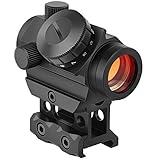
- ARS Mark8.6
ARS Mark is a ranking system developed by bestairriflescopes.com. ARS Mark has no relationship or impact from any manufacturers or sales agent websites. Learn more
- BrandMidTen

- ARS Mark8.6
ARS Mark is a ranking system developed by bestairriflescopes.com. ARS Mark has no relationship or impact from any manufacturers or sales agent websites. Learn more
- BrandFeyachi

- ARS Mark8.4
ARS Mark is a ranking system developed by bestairriflescopes.com. ARS Mark has no relationship or impact from any manufacturers or sales agent websites. Learn more
- BrandCVLIFE

- ARS Mark7.6
ARS Mark is a ranking system developed by bestairriflescopes.com. ARS Mark has no relationship or impact from any manufacturers or sales agent websites. Learn more
- BrandBushnell
Last update on 2026-10-01 / Affiliate links / Images, Product Titles, and Product Highlights from Amazon Product Advertising API
FAQs
Do you keep both eyes open when using a red dot sight?
Yes, keeping both eyes open is the proper technique for red dot shooting. This method lets your brain merge the sight window with your normal eyesight, preserving your natural depth perception and broad peripheral awareness. The glowing red reticle appears to float smoothly right over your intended point of impact.
Does a red dot sight project a visible beam onto the target?
No, a red dot sight never beams any light downrange onto an object. The light comes from an internal diode that reflects exclusively off the rear face of the glass lens back to your pupil. People or objects downrange cannot see any red light projected onto them.
What should you do if the red dot looks blurry or distorted?
A distorted or smeared aiming point is almost always caused by natural astigmatism in your eye rather than a broken optic. You can verify this by snapping a quick picture of the lit dot with your phone camera. If the camera captures a crisp circular dot, your sight is working properly, and dialing down the brightness setting will help sharpen what your eye sees.
What happens if the red dot sight battery runs out of power?
If your battery runs flat, the illuminated dot disappears, leaving you looking through a clear glass window. Shooters prepare for this scenario by keeping backup iron sights mounted on the firearm that remain visible through the lower glass. This arrangement lets you maintain accurate aim using traditional metal sights without needing to remove the optic.


12 Best 22 Pcp Air Rifle For Hunting of 2026 With Quiet Power

7 Best 22 Pcp Air Rifle Under 300 of 2026 For Backyard Pest Control

10 Best 22 Break Barrel Air Rifles of 2026 For Backyard Pest Control

10 Best 30 Caliber Pcp Air Rifle of 2026 For Medium Game

Top Best 177 Air Rifle Under 100: Budget-Friendly Picks for 2026

How to Safely Reload Shotgun Shells at Home

11 Best Co2 Air Rifle For Pest Control of 2026 To Ensure Humane Dispatch

12 Best Inexpensive Air Rifles of 2026 For Dependable Backyard Accuracy






