
What Is a Reflex Sight and How Does It Work?

A reflex sight reflects an aiming dot. A tiny internal light shines forward against a curved glass lens, bouncing a glowing point straight back to your eye without casting any beam downrange. Because the glass does not magnify the view, you can shoot with both eyes open and focus directly on your target instead of aligning metal sights.
How you use one depends on your firearm and your eyes. Small handguns often use open frames with an exposed glass window to stay light and compact, while rifles often use sealed tubes that shield the light from rain and mud. Your vision plays a role too, since an uncorrected astigmatism can make a sharp dot look like a blurry smear. Here is how these optics work, why shooters use them, and how to find the right style for your gear.
A Curved Lens Reflects Light Back to Your Eye
A reflex sight works through a straightforward optical trick using a light source and a specially shaped piece of glass. Inside the housing, a tiny LED light source (often called the emitter) sits on the base deck. This emitter angles upward and forward, pointing directly at a curved front lens. When you switch the unit on, the LED beams light against the inside surface of that glass.
The glass lens has a specialized optical coating applied to its surface. This coating acts like a selective one-way mirror. It reflects the specific color of the LED light (typically bright red or green) straight back toward your eye. At the same time, the coating allows natural outside light to pass through from the front. When you look through the window, you see your target clearly, with a bright illuminated aiming dot floating directly over it.
People often wonder why the illuminated dot does not shine forward and give away their position. The optical coating only reflects light traveling from the rear face of the glass back to the shooter. The front of the glass lets incoming light pass through, so no flashlight beam or laser point projects downrange onto the target. From the front, an observer sees only a piece of clear or slightly tinted glass.
The curved shape of the lens is what makes a reflex sight practical for fast shooting. In basic optics, this curved shape is called a collimating lens. The curve bends the diverging rays of LED light so they travel parallel to each other as they head toward your pupil. Because the light rays travel parallel, the aiming point appears focused at optical infinity.
This optical design virtually eliminates parallax error at normal shooting distances. Parallax occurs when an aiming mark appears to wander off target if you shift your head position. With a reflex sight, the curve of the glass keeps the dot locked on your target even if your head moves slightly off-center. As long as you can see the dot anywhere within the glass window, your shot will strike where the dot rests.
To align the dot with your barrel, reflex sights use windage and elevation adjustment click dials. The windage dial on the side moves your aiming point left to right, while the elevation dial on top moves it up and down. These adjustment screws physically tilt the internal emitter assembly inside the housing. Adjusting these dials so your bullet lands exactly where the dot points at a specific distance (such as 25 yards for handguns or 50 yards for rifles) is known as zeroing the sight.
Reflex Sights Are One Specific Type of Red Dot
Shooters often use the terms reflex sight and red dot sight interchangeably, which creates confusion for new buyers. Red dot sight is an umbrella category that describes any non-magnified optic that uses an illuminated dot as an aiming point. A reflex sight is simply the most common optical method used to create that dot. In short, all reflex sights are red dot sights, but not all red dot sights are reflex sights.
Understanding the difference becomes easier when you compare a reflex sight to the two other main styles of red dot optics: holographic sights and prism sights. Each style creates an illuminated aiming point using entirely different internal technology.
A holographic sight uses a laser diode and a series of internal mirrors to illuminate a flat hologram embedded inside a viewing window. Unlike a reflex sight, which reflects a simple LED off curved glass, a holographic sight reconstructs a three-dimensional reticle image in space. Holographic sights provide zero parallax and work even if the front window gets cracked or covered in mud. But they are physically bulkier, cost significantly more, and drain batteries in hundreds of hours rather than the tens of thousands of hours standard for a reflex sight.
A prism sight uses a glass prism, similar to a compact pair of binoculars, to focus the image. Instead of reflecting light, the manufacturer etches the reticle directly onto the physical glass prism, which an LED then illuminates. If the battery dies in a prism scope, the reticle remains visible as a solid black etched pattern. But prism sights have a fixed eye relief, meaning your eye must sit at an exact distance behind the eyepiece, whereas a reflex sight offers unlimited eye relief.
Reflex sights also offer variety in reticle design and color. While red remains the industry standard, green reticles are widely used because the human eye processes green wavelengths more easily in bright daylight. Reticle size is measured in MOA (Minute of Angle), which indicates how much of the target the dot covers. A fine 2 MOA dot covers roughly 2 inches of a target at 100 yards (or half an inch at 25 yards), which provides great precision for small targets. A larger 4 to 6 MOA dot covers more area, making it faster to pick up during rapid handgun defense.
Open Windows Offer Speed While Sealed Tubes Resist Debris
Reflex sights fall into two physical body styles: open-window sights and enclosed tube sights. Deciding between them depends heavily on whether you prioritize a low profile or maximum weather protection.
An open-window reflex sight features a single pane of glass held upright by a metal frame, leaving the LED emitter completely exposed on the base deck behind it. This design is widely used on handguns, competition firearms, and lightweight hunting setups.
The main advantage of an open-window sight is its minimal frame. The thin metal hood surrounding the glass disappears from your field of view when shooting with both eyes open. Open sights are also remarkably lightweight and compact, which prevents them from weighing down a handgun slide or snagging on clothing during a draw. But the exposed emitter represents their main vulnerability. If rain, snow, pocket lint, or mud falls onto the bare LED emitter lens, the light beam scatters across the glass, causing the crisp dot to blur into an unusable streak of light until you wipe the deck clean.
An enclosed tube sight houses the reflective lens and the LED emitter inside a sealed metal cylinder, capped by a protective front lens. These sights look more like miniature traditional rifle scopes and are common on defensive carbines, shotguns, and duty handguns.
The enclosed tube design protects the internal components from the environment. Because nitrogen or argon gas seals the internal chamber, water, dust, mud, and gun cleaning chemicals cannot reach the emitter. If rain or grit covers the exterior glass during a hunt or outdoor training session, you can wipe the outer lens clean with a thumb or cloth without disrupting the internal light path. The trade-off is bulk. Enclosed sights are heavier, stand taller, and create a slight visual tunneling effect compared to the wide, unobtrusive glass of an open sight.
Some specialty open models also feature folding designs. These optics allow the spring-loaded lens frame to fold down flat against the firearm slide for storage or deep concealment, popping upright instantly at the press of a release button.
Shooting with Both Eyes Open Increases Speed and Awareness
Traditional iron sights present a difficult visual challenge for the human eye. To aim iron sights correctly, your eye must align three separate objects located at three distinct distances: the rear sight notch, the front sight post, and the target downrange. Because human eyes cannot focus on three depths simultaneously, shooters are trained to shift hard focus to the front sight post while letting the target and rear sight blur.
This traditional aiming method often forces shooters to close their non-dominant eye. Squinting or closing one eye eliminates peripheral vision on that side, reduces depth perception, and slows reaction times when tracking moving targets. It also causes eye fatigue during long shooting sessions.
A reflex sight solves this issue by placing the aiming mark on a single optical plane. Instead of shifting focus between metal posts, you keep both eyes open and look directly through the glass at your target. Your brain automatically superimposes the reflected red or green dot onto the target. You do not look at the sight itself; you look past it. Because there is no front and rear post alignment required, you simply place the dot over the spot you want to hit and press the trigger.
Keeping both eyes open preserves your full field of view. You maintain complete situational awareness, which is vital for defensive shooting and competitive action sports where targets appear across wide angles. Transitioning between multiple steel plates or paper targets becomes much faster because you steer your eyes directly to the next target, and the firearm naturally follows.
Many shooters pair their reflex sight with backup iron sights. This configuration is known as co-witnessing, which means you can view your iron sights directly through the lower portion or center of the optic glass. If the optic battery fails or the electronics break, you can aim instantly using the iron sights without taking the optic off the gun. Learning about the best iron sights for cowitness with red dot sights helps you choose the correct sight height to clear your optic base.
Reflex sights also provide huge advantages for target shooting. Mounting red dot sights for a Ruger Mark target pistol allows rimfire shooters to achieve fine accuracy without straining aging eyes. Shooters who struggle to keep a crisp focus on traditional iron sight posts find that a bright reflex dot restores their ability to shoot tight groups comfortably.
Verify Mounts, Battery Access, and Vision Before Buying
Choosing the right style of reflex sight comes down to how you plan to use the firearm, how the sight mounts, and how your own eyes interact with reflected LED light. Matching the optic body to your shooting environment prevents common setup headaches.
If you shoot primarily at indoor ranges, compete in weekend matches, or carry a concealed handgun under clothing, an open-window reflex sight provides the fastest sight picture and the lowest weight. If you hunt in wet brush, use a long gun for home defense, or carry a duty firearm in an open holster exposed to bad weather, an enclosed tube sight provides the environmental seal required to keep the emitter clear.
Before buying any optic, verify the mounting footprint. A footprint refers to the specific screw-hole spacing and recoil-lug pattern machined into the base of the optic. Handgun slides are cut for specific patterns, such as the RMR, RMSc, or DeltaPoint Pro footprints. An optic with one footprint will not screw directly onto a slide cut for another without an adapter plate. For rifles, shotguns, and large target pistols, optics typically attach using standard Picatinny or 20mm slotted accessory rails.
Pay close attention to battery tray placement and power features. Sights with top-loading or side-loading battery trays allow you to replace the coin cell without removing the optic from the firearm. Sights with bottom-mounted battery compartments force you to unbolt the optic from the gun to swap batteries, requiring you to re-zero the dot at the range. Features like motion-sensing auto-on (often called shake-awake) help preserve power by putting the emitter into a sleep mode when stationary, then waking the dot instantly when you touch or draw the firearm.
Check your eyes for uncorrected astigmatism before blaming an optic for a blurry reticle. Astigmatism is an irregular curvature of the eye lens that bends reflected LED light unevenly. To an eye with astigmatism, a perfectly round 2 MOA dot can look like an irregular starburst, a comet tail, or a cluster of grapes. You can easily diagnose this: look at the dot through your smartphone camera screen. If the dot appears perfectly crisp and round on your phone screen but smeared to your naked eye, your eye has astigmatism. Switching to a green reticle or using a circle-dot reticle often helps shooters with astigmatism see a sharper aiming point.
Whenever you mount, clean, or inspect any firearm optic, safe handling comes first. Always remove the magazine, lock the slide or action open, and visually inspect the chamber to ensure the firearm is completely unloaded before handling. When securing the optic base screws, use an inch-pound torque tool set to the manufacturer-recommended torque limit, along with a drop of medium thread-locking fluid. Proper torque prevents recoil from shaking the mounting screws loose while protecting the delicate screw threads from stripping.

- ARS Mark9.0
ARS Mark is a ranking system developed by bestairriflescopes.com. ARS Mark has no relationship or impact from any manufacturers or sales agent websites. Learn more
- BrandCVLIFE

- ARS Mark9.0
ARS Mark is a ranking system developed by bestairriflescopes.com. ARS Mark has no relationship or impact from any manufacturers or sales agent websites. Learn more
- BrandSightmark

- ARS Mark8.8
ARS Mark is a ranking system developed by bestairriflescopes.com. ARS Mark has no relationship or impact from any manufacturers or sales agent websites. Learn more
- BrandCVLIFE
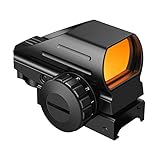
- ARS Mark8.8
ARS Mark is a ranking system developed by bestairriflescopes.com. ARS Mark has no relationship or impact from any manufacturers or sales agent websites. Learn more
- BrandEZshoot
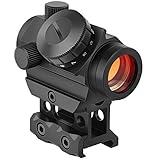
- ARS Mark8.6
ARS Mark is a ranking system developed by bestairriflescopes.com. ARS Mark has no relationship or impact from any manufacturers or sales agent websites. Learn more
- BrandMidTen

- ARS Mark8.6
ARS Mark is a ranking system developed by bestairriflescopes.com. ARS Mark has no relationship or impact from any manufacturers or sales agent websites. Learn more
- BrandFeyachi

- ARS Mark8.4
ARS Mark is a ranking system developed by bestairriflescopes.com. ARS Mark has no relationship or impact from any manufacturers or sales agent websites. Learn more
- BrandCVLIFE

- ARS Mark8.4
ARS Mark is a ranking system developed by bestairriflescopes.com. ARS Mark has no relationship or impact from any manufacturers or sales agent websites. Learn more
- BrandCVLIFE

- ARS Mark7.6
ARS Mark is a ranking system developed by bestairriflescopes.com. ARS Mark has no relationship or impact from any manufacturers or sales agent websites. Learn more
- BrandBushnell

- ARS Mark7.6
ARS Mark is a ranking system developed by bestairriflescopes.com. ARS Mark has no relationship or impact from any manufacturers or sales agent websites. Learn more
- BrandJORMIX
Last update on 2026-10-01 / Affiliate links / Images, Product Titles, and Product Highlights from Amazon Product Advertising API


12 Best 22 Pcp Air Rifle For Hunting of 2026 With Quiet Power

7 Best 22 Pcp Air Rifle Under 300 of 2026 For Backyard Pest Control

10 Best 22 Break Barrel Air Rifles of 2026 For Backyard Pest Control

10 Best 30 Caliber Pcp Air Rifle of 2026 For Medium Game

Top Best 177 Air Rifle Under 100: Budget-Friendly Picks for 2026

How to Safely Reload Shotgun Shells at Home

11 Best Co2 Air Rifle For Pest Control of 2026 To Ensure Humane Dispatch

12 Best Inexpensive Air Rifles of 2026 For Dependable Backyard Accuracy






