
What Is a Tritium Sight and How Does It Glow?

Seeing the word radioactive on a handgun sight sounds alarming, but there is nothing dangerous about carrying one on your belt. A tritium sight is an aiming post fitted with a tiny glass capsule that glows continuously in total darkness without batteries or sunlight. Unlike cheap glow paint that dies after a few minutes, this self-powered gas shines constantly so you can always find your front post in the dark.
How well these sights perform depends on your lighting, their age, and your pistol setup. The soft green glow stands out in a pitch-black room, but bright sunlight washes it out, which is why most designs add a bold white ring around the glass. The gas also dims slowly over time, losing half its glow after about twelve years. Whether you use them alone or as tall backup posts alongside a dot optic, here is how the glow works and how to choose the right set.
Look Inside the Tiny Glass Vials to See How Tritium Glows Without Power
Imagine waking up in the middle of the night to a strange sound downstairs. You reach into your dark bedside drawer, grab your defensive handgun, and bring it up to eye level. If your pistol has standard factory sights with ordinary white paint, you will see nothing but a dark silhouette against a dark room. Standard three-dot sights rely on ambient room light to show up against a target. If there is no light in the room, those dots disappear completely.
Some handgun owners try to solve this problem with photoluminescent paint, which is the traditional glow-in-the-dark material found on children's toys and simple wristwatches. This paint requires a strong blast from a flashlight or the sun to absorb light energy. Once you store the pistol inside a dark safe, holster, or nightstand, that stored energy fades away in ten to twenty minutes. When an emergency happens hours later, the paint is completely dark.
Tritium sights solve this failure by generating their own continuous light source. Inside each sight post sits a tiny, sealed vial made of heavy-duty borosilicate glass. The manufacturer fills this glass tube with tritium, which is a rare, self-glowing gas (a radioactive form of hydrogen). The inside wall of that tiny glass cylinder is coated with a thin layer of phosphor powder, which is the same type of material that illuminated old tube television screens.
The science behind the glow is remarkably simple. As the unstable gas naturally breaks down, it constantly sheds microscopic, low-energy particles called electrons. These particles travel through the sealed vial and hit the phosphor powder lining the glass wall. When those electrons strike the phosphor atoms, the phosphor absorbs the energy and converts it into visible light. This self-contained reaction is known as radioluminescence.
Because the gas releases these particles non-stop, the vial acts like a microscopic, self-powered neon bulb. It requires no battery, no wires, no switches, and zero exposure to external sunlight. The sight glows continuously, twenty-four hours a day, whether your firearm sits in a dark gun vault for six months or rides inside a concealed holster under your shirt.
Keep the Sights Intact to Stay Completely Safe From Radiation
Hearing that a gun accessory contains radioactive material naturally raises concerns for anyone carrying a pistol against their body all day. You might wonder if keeping a radioactive isotope next to your hip or chest carries a risk of cancer or skin damage. The short answer is no, because the type of radiation produced inside a tritium sight cannot penetrate your body.
Tritium releases what health physicists classify as beta radiation. Beta particles are weak, low-energy electrons that have almost zero penetrating power through solid matter. They can only travel a few millimeters through open air. They are easily blocked by a standard sheet of paper, and they cannot penetrate the dead outer layer of human skin cells.
More importantly, the gas is completely contained. The beta particles cannot even pass through the thin wall of the glass vial itself. That glass vial is then cushioned by silicone rubber, wrapped inside a protective metal sleeve, capped with a synthetic sapphire crystal window, and pressed into a solid steel sight body. As long as the sight remains intact, absolutely zero radiation escapes from the firearm slide.
Even if an extreme impact damages your pistol and shatters a sight vial, the real-world hazard is vanishingly small. The volume of gas inside a sight dot is microscopic. Because hydrogen is much lighter than air, the freed gas immediately floats upward, disperses into the atmosphere, and dilutes to undetectable levels within seconds. You should avoid intentionally crushing the vials or breathing directly over a freshly cracked sight, but a broken lamp on the firing line is not a hazardous material emergency.
Safe firearm handling remains your top priority whenever you inspect your sights. Always clear the firearm chamber, drop the magazine, and visually confirm the chamber is empty before checking your sight alignment or cleaning around the posts. When installing or swapping sights, avoid striking the sight directly with a steel punch or hammer. Using a dedicated sight pusher tool or having a qualified gunsmith do the work prevents blunt impacts that could crack the delicate glass capsules inside.
Pair Tritium With Bright Rings or Fiber Optics for Daytime Shooting
A bare tritium vial is designed specifically for low-light environments, which creates a surprising drawback at high noon. In a pitch-black room, your eyes naturally adjust to the darkness, making the green glow appear vivid and sharp. But when you step outside into bright midday sunshine, the overwhelming ambient light completely overpowers that soft, gentle glow. A bare glass vial with nothing around it looks like a dull gray or translucent dot under the sun, which can slow down your target acquisition.
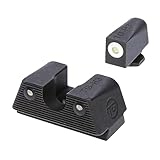
Sight manufacturers solve this challenge by surrounding the glass vial with high-contrast daytime markings. The most common setup features a bright white ring painted directly around the sapphire window of the vial. In bright daylight, your eyes focus on three crisp white dots, exactly like traditional three-dot iron sights. Once the sun sets or you walk into an unlit basement, that white paint fades into the darkness, and the glowing green gas takes over the sight picture.
Modern defensive sights often improve this daytime visibility by surrounding the front tritium dot with a wide ring made of bright photoluminescent paint in neon orange, bright green, or high-visibility yellow. When you are outside in the sun, that wide, colorful ring grabs your eye instantly for rapid front-sight focus. If you suddenly move from bright daylight into a dark building, that neon ring continues to glow brightly for several minutes while your eyes gradually adapt to the deeper tritium glow inside.
You will also encounter fiber-optic sights, which function very differently from tritium. A fiber-optic sight uses a light-gathering colored plastic rod mounted along the top of the sight post. This plastic rod collects ambient overhead light along its entire length and channels it directly to the exposed end facing your eye, making the dot look like an electric light bulb outdoors. But fiber optics cannot create their own light. In total darkness, they have no light to gather, leaving you with completely black iron posts.
Hybrid sights offer the best of both worlds by combining both technologies into a single sight post. In a hybrid setup, a tritium vial sits directly behind a light-gathering colored plastic rod. During the day, the plastic rod gathers sunlight and glows brightly on the target line. In total darkness, the tritium vial lights up the back of the rod, providing a reliable aiming point in any lighting condition.
Track the Twelve-Year Half-Life So You Know When to Replace Them
Unlike a battery-powered red dot optic or weapon light that can shut off without warning when the cell runs dry, tritium fades out on a slow, predictable schedule. The gas decays through natural radioactive breakdown, which means its brightness decreases gradually over many years.
This fading timeline is determined by what scientists call a half-life, which is the time until the glow dims by half. Tritium has a half-life of roughly twelve years. That means twelve years after the factory seals the glass vial, the sight will produce exactly 50 percent of its original brightness. Twelve years after that (at the twenty-four-year mark), the sight retains only 25 percent of its initial glow.
In practical defensive use, you can break down the working lifespan of a tritium sight into three distinct stages:
- Years one through five: The sights are at peak output. The glowing dots appear bright, crisp, and immediately visible the moment you enter a dark room or dim hallway.
- Years six through ten: The lamps remain plenty bright for defensive shooting, though you may notice they are slightly less vivid during twilight or transitional lighting conditions.
- Years eleven and beyond: The glow becomes soft and faint. While you can still pick out the dots in a pitch-black room once your eyes adapt, they lose the rapid visibility needed for split-second defensive shooting.
Most defensive shooters plan to replace their tritium sights every ten to twelve years to maintain quick sight acquisition in low light. You cannot recharge, refill, or service an aged tritium vial. Once the gas decays, the entire sight post or the complete sight set must be replaced.
You can check the age of your sights by looking closely at the steel housing. Many reputable sight makers stamp a small two-digit date code directly into the side, top, or base of the sight post. A stamp reading "21" indicates the sight was manufactured in 2021, while a stamp reading "26" marks production in 2026. Checking this code helps you evaluate how much reliable lifespan remains on an older handgun or a used set of sights.
Choose the Right Sight Style and Height for Your Pistol Setup
Before purchasing replacement sights, consider your specific handgun platform, your preferred sight picture, and whether you plan to run an optic on the slide. Matching your sight dimensions to your shooting style prevents frustrating fitment issues and keeps your defensive gun ready for immediate use.
Start by evaluating the height of the sight posts. If you shoot with traditional iron sights alone, standard-profile night sights keep the pistol compact and ensure the slide fits cleanly into standard holsters without snagging on the draw. But if your handgun slide is cut for an open-window reflex sight or an enclosed red dot optic, standard-height sights sit too low to be seen over the optic base.
To prepare for an unexpected optic failure or a dead battery, you need taller suppressor-height sights. These taller blades provide a co-witness, which means lining up your backup iron sights through the optic glass so you still have an accurate aiming reference if the electronic dot fails. To see how different sight heights align inside an optic window, look through our detailed guide on the iron sights for cowitness with red dot sights.
Next, consider your dot arrangement and color contrast. Traditional three-dot systems place green tritium lamps in both the front post and the rear notch. While this layout is familiar, high-stress defensive shooting in the dark can sometimes cause shooters to confuse the front aiming dot with one of the rear dots. To eliminate this confusion, many shooters select contrasting colors, such as a bright green front lamp paired with softer yellow or orange rear lamps. Other shooters choose a two-dot configuration, which features a single glowing dot in the front post that you stack directly over a single vertical bar or dot in the rear notch.
If you are outfitting a dedicated home defense pistol, you might also consider combining self-luminous iron sights with an active aiming tool. Adding an accessory like a rail mount pistol laser sight gives you an alternate aiming option that allows rapid target alignment from non-traditional shooting positions in dark rooms.
Finally, always confirm the specific dovetail cut on your handgun slide before purchasing. Different handgun manufacturers use distinct dovetail angles, widths, and depths cut into the steel slide. A sight designed for one handgun brand will not seat properly in another. When your new sights arrive, verify the fit, use an inch-pound torque tool on any mounting set screws, and consider having a qualified gunsmith press the sights into place to protect the delicate internal glass vials from impact damage.

- ARS Mark9.6
ARS Mark is a ranking system developed by bestairriflescopes.com. ARS Mark has no relationship or impact from any manufacturers or sales agent websites. Learn more
- BrandTrijicon

- ARS Mark9.4
ARS Mark is a ranking system developed by bestairriflescopes.com. ARS Mark has no relationship or impact from any manufacturers or sales agent websites. Learn more
- BrandTRUGLO
- ARS Mark9.4
ARS Mark is a ranking system developed by bestairriflescopes.com. ARS Mark has no relationship or impact from any manufacturers or sales agent websites. Learn more
- BrandTRUGLO

- ARS Mark9.2
ARS Mark is a ranking system developed by bestairriflescopes.com. ARS Mark has no relationship or impact from any manufacturers or sales agent websites. Learn more
- BrandTRUGLO

- ARS Mark9.2
ARS Mark is a ranking system developed by bestairriflescopes.com. ARS Mark has no relationship or impact from any manufacturers or sales agent websites. Learn more
- BrandTRUGLO

- ARS Mark9.0
ARS Mark is a ranking system developed by bestairriflescopes.com. ARS Mark has no relationship or impact from any manufacturers or sales agent websites. Learn more
- BrandXS Sight Systems

- ARS Mark9.0
ARS Mark is a ranking system developed by bestairriflescopes.com. ARS Mark has no relationship or impact from any manufacturers or sales agent websites. Learn more
- BrandTrijicon

- ARS Mark9.0
ARS Mark is a ranking system developed by bestairriflescopes.com. ARS Mark has no relationship or impact from any manufacturers or sales agent websites. Learn more
- BrandTRUGLO
Last update on 2026-10-01 / Affiliate links / Images, Product Titles, and Product Highlights from Amazon Product Advertising API
FAQs
Can an intruder see the glow from my tritium sights in a dark room?
An intruder across a dark room cannot see the glow from your sights. The tiny glass vials are seated deep inside protective metal channels that direct the light straight back toward the shooter's eyes. From the front of the pistol, the solid steel sight posts completely block the light, leaving no forward beam or visible glow to give away your position.
Do tritium night sights need to be charged with a flashlight?
Tritium sights never need to be charged with a flashlight or sunlight. The self-glowing radioactive gas continuously energizes the phosphor powder inside the sealed glass vial without any external power source. If your firearm sights lose their glow after sitting in a dark drawer for an hour, you have standard photoluminescent paint rather than authentic tritium lamps.
Can I replace just the glowing vial if my sight goes dark?
You cannot replace just the individual glass vial inside a night sight. Manufacturers secure the vials inside the steel housings using specialized shock-absorbing adhesives and sealed sapphire caps to protect against recoil vibration. When the tritium eventually decays after ten to twelve years, you must replace the entire front or rear sight post.
What color tritium sight is easiest to see at night?
Green is the easiest and brightest tritium color for the human eye to see in total darkness. Human vision is naturally most sensitive to light in the green spectrum, especially in low-light environments where your pupils dilate. While some manufacturers offer yellow, orange, or blue lamps for color contrast, green lamps consistently provide the sharpest visibility in pitch-black conditions.


12 Best 22 Pcp Air Rifle For Hunting of 2026 With Quiet Power

7 Best 22 Pcp Air Rifle Under 300 of 2026 For Backyard Pest Control

10 Best 22 Break Barrel Air Rifles of 2026 For Backyard Pest Control

10 Best 30 Caliber Pcp Air Rifle of 2026 For Medium Game
Top Best 177 Air Rifle Under 100: Budget-Friendly Picks for 2026

How to Safely Reload Shotgun Shells at Home

11 Best Co2 Air Rifle For Pest Control of 2026 To Ensure Humane Dispatch

12 Best Inexpensive Air Rifles of 2026 For Dependable Backyard Accuracy






