
Which Broadhead Should You Shoot From a Ravin Crossbow?

The most reliable choice for a high-speed crossbow is a 100-grain rear-deploying mechanical broadhead rated for at least 450 feet per second. That choice changes depending on your actual arrow velocity and whether you hunt heavier game like elk instead of whitetail deer. Extreme launch speeds create violent air drag that can force standard blades open right off the rail, steering the bolt completely off course.
Your setup also depends heavily on blade retention design. Weak rubber bands often fail under intense acceleration, making internal spring clips or reinforced collars necessary to keep blades closed until impact. Body material matters too, since hard bone requires tough steel rather than lighter aluminum. Understanding how these forces interact makes it easy to find a point that flies true every single time.
Account for Extreme Arrow Speed Before Screwing on Any Hunting Tip
Modern Ravin crossbows push bolts at speeds between 400 and 500 FPS (arrow speed in feet per second). When an arrow leaves the flight track at that pace, air resistance slams against the front tip with immense force. Standard hunting points engineered for traditional compound bows simply cannot endure that sudden blast of headwind.
Compound bows typically launch arrows around 280 to 300 FPS. When an arrow flies at 450 FPS or higher, air friction pushes against exposed blades like wind against an open car window. If a broadhead features large, rigid wings, that air pressure steers the arrow off target before it reaches thirty yards. Archery hunters call this planing (arrow steering off course from wind catching fixed blades).
Severe speed also creates massive acceleration the instant you pull the trigger. The bowstring drives forward into the arrow nock, dumping hundreds of foot-pounds of energy into the shaft. If you screw on an everyday mechanical broadhead held together by thin rubber bands, that violent shock wave can snap the bands immediately.
When blades deploy prematurely during flight, the bolt begins to wobble and spin erratically. You will often hear a loud whistling or buzzing noise as the exposed blades fight the air. The arrow drops short or veers multiple feet away from your target, risking a wounded animal or a ruined shot.
Premature blade opening also poses a real safety hazard. An open blade can clip the bow riser or limb bracket as it exits the front rail. That collision can damage your bow limbs or throw sharp metal fragments back toward your face and hands.
Protect yourself and your bow by inspecting your equipment before every shot. Always gently flex your carbon arrows by hand to listen for cracking sounds before shooting. Never pull the trigger without a bolt loaded; a dry fire (firing the bow without an arrow nocked, which absorbs zero energy and can shatter limbs, break cams, and fling sharp shrapnel) will wreck your bow on the spot.
Pick Rear-Deploying Mechanical Blades Over Wide Fixed Broadheads
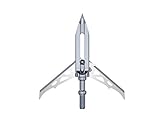
A mechanical broadhead (tip with folding blades that open on impact) provides the most reliable accuracy from a fast crossbow. Because the cutting blades remain tucked flush against the ferrule (the central metal stem of the point) during flight, the point cuts through the air like a smooth practice tip.
Rear-deploying blade mechanisms are especially reliable for arrows traveling over 400 FPS. In a rear-deploying head, the sharp cutting edges slide backward and outward only when the chisel tip strikes animal hide. Headwinds rushing over the nose cannot force the blades open because rushing air pushes them tighter into their closed slots.
Fixed-blade broadheads have razor edges permanently locked in an open position. While fixed designs have earned a great reputation for bone-splitting toughness, large fixed blades act like tiny wings on the nose of your bolt. Any crosswind or minor arrow tilt catches those wings and pulls the bolt away from your crosshairs.
You can shoot fixed broadheads from a high-power bow, but only if they feature very low-profile blades. Even with low-profile blades, you must carefully align each broadhead blade with your arrow vanes. Most hunters find that wide fixed heads hit several inches off target compared to their practice points once they shoot past thirty yards.
Mechanical broadheads eliminate those tuning headaches. With their razor edges locked flat, they slip through the wind cleanly and track straight to your aiming dot. When the point connects with game, the blades slide open to deliver a devastating 2-inch cut that creates heavy blood trails.
Some bowhunters worry that mechanical heads rob too much arrow energy during expansion. High-energy crossbows generate tremendous kinetic energy and momentum. That heavy driving force punches a 2-inch cut right through a deer chest cavity without stalling out.
Match Your Broadhead Weight and Retention System to Your Bow Specs
The first specification to check on any broadhead package is grain weight. A grain is a small unit measuring tip weight, where 7,000 grains equal one pound. The standard factory specification for Ravin crossbow arrows is 100 grains.
Your crossbow scope reticle and speed rings are calibrated specifically around a 100-grain point. If you switch to a 125-grain or 150-grain point, your arrow will drop faster, causing your arrows to hit low on distant targets. Staying with 100-grain broadheads ensures your hunting bolts hit exactly where your practice points group.
Next, inspect the blade retention system. Traditional mechanical points rely on tiny rubber O-rings or dental bands to keep the blades folded. At speeds between 450 and 500 FPS, those soft bands can rip, stretch, or slide off under rapid acceleration.
Look for broadheads built with an internal spring clip system. An internal spring clip uses sturdy metal tension clips inside the ferrule to lock each blade securely in place. The blades stay shut at 500 FPS launch speeds, but they pop open smoothly when they contact game hide.
Select the right ferrule metal for the game you hunt:
- Aluminum ferrules: Lightweight and cost-effective, aluminum points provide great performance on whitetail deer and turkeys.
- Steel ferrules: Solid steel gives you maximum rigidity and structural strength, punching through ribs and shoulder bones without bending.
- Titanium ferrules: Titanium pairs the extreme toughness of hardened steel with a light build. Titanium broadheads rated for 450 FPS or higher deliver outstanding durability for heavy-boned animals like elk or moose.
Always verify the speed rating printed on the broadhead packaging. If your bow shoots 450 FPS, buy broadheads rated for 450 FPS or 500 FPS. Shooting broadheads rated for only 350 FPS invites mid-air flight failures.
Confirm Your Exact Point of Impact Before Heading into the Woods
Never head into hunting season without confirming that your hunting points strike your target accurately. Screwing broadheads onto your arrows alters how air moves around the shaft, even when using streamlined mechanical points.
Do not dull your fresh hunting blades by firing them into practice targets. Razor-sharp blades slice blood vessels cleanly to create fast, ethical harvests; dull blades push tissue aside and shorten blood trails. Instead, use dedicated practice points designed for your broadhead model.
High-grade broadhead packs often include an inert practice point. This practice head matches the exact 100-grain weight and aerodynamic shape of the real head, but features solid, dull mock blades that will not open or break inside your foam target.
Follow these simple steps to verify your arrow flight:
- Set up a dense target: Crossbow arrows traveling over 400 FPS punch through standard backyard foam targets. Shoot into a heavy-duty foam block certified for high-velocity crossbow bolts.
- Confirm your zero at twenty yards: Fire your standard 100-grain target point first to establish your center mark. Shoot your practice broadhead at the same dot to confirm both points share the same impact point.
- Back up to forty and fifty yards: Longer distances expose minor steering errors that remain hidden at close range. If your practice point matches your target point at fifty yards, your bow is ready to hunt.
- Spin-check your hunting bolts: Thread your actual hunting points onto your arrows and spin each bolt on an arrow spinner or flat tabletop. If you notice any wobble at the tip, swap the point to another shaft or realign the arrow insert.
If your arrows drift off target, check your gear before touching your scope dials. Inspect each arrow nock to ensure it sits completely flush against the bowstring. Flex your carbon arrows gently by hand to verify the carbon walls have no hidden hairline cracks.
Hunters who operate from tight ground blinds or box blinds often compare how different compact platforms balance in the field. Reviewing models like the best TenPoint crossbow for hunting shows how varying bow dimensions influence steady shooting in tight quarters.
Shooters exploring high-energy bow options also study compact models like the TenPoint TX Ultra 265 crossbow to see how narrow wheel-to-wheel dimensions handle arrow launch and rest stability. Understanding how different bow designs launch arrows helps you make confident equipment choices.
Choose Purpose-Built High-Speed Archery Points for Heavy Bow Setups
When you shoot a high-powered crossbow, generic archery tips are not enough. You need purpose-built broadheads designed specifically to withstand the brutal launch energy and wind resistance generated by heavy bows.
Before purchasing hunting points for your setup, look over these critical factors:
- Speed certification: Confirm that the broadhead box explicitly states a speed rating that matches or exceeds your bow's advertised velocity.
- Factory grain weight: Select the exact 100-grain tip weight recommended by the bow manufacturer to keep your scope crosshairs accurate.
- Mechanical blade locking: Choose broadheads with internal metal spring clips rather than thin elastic bands that can snap during launch.
- Ferrule metal strength: Choose aluminum for medium game or step up to solid steel and titanium when hunting heavy-boned big game.
Taking time to match your broadheads to your bow's speed keeps your arrows flying true and ensures clean, humane recoveries every season.

- ARS Mark8.8
ARS Mark is a ranking system developed by bestairriflescopes.com. ARS Mark has no relationship or impact from any manufacturers or sales agent websites. Learn more
- BrandRAVIN

- ARS Mark8.5
ARS Mark is a ranking system developed by bestairriflescopes.com. ARS Mark has no relationship or impact from any manufacturers or sales agent websites. Learn more
- BrandRAVIN
- ARS Mark8.0
ARS Mark is a ranking system developed by bestairriflescopes.com. ARS Mark has no relationship or impact from any manufacturers or sales agent websites. Learn more
- BrandRAVIN

- ARS Mark7.3
ARS Mark is a ranking system developed by bestairriflescopes.com. ARS Mark has no relationship or impact from any manufacturers or sales agent websites. Learn more
- BrandRAVIN
Last update on 2026-10-19 / Affiliate links / Images, Product Titles, and Product Highlights from Amazon Product Advertising API
Frequently Asked Questions
What happens if I shoot a broadhead rated for slower bow speeds?
A broadhead rated for lower speeds cannot withstand the sudden launch shock or heavy wind pressure of a fast crossbow. The blades can snap their retention collars and open in mid-air, causing the arrow to veer wildly off target. In severe cases, an early opening blade can strike your bow riser and cause serious equipment damage.
Will shooting a 125-grain broadhead hurt my crossbow?
A 125-grain point will not harm your crossbow limbs or bowstring, but it will change your downrange accuracy. Added tip weight increases front-of-center balance and causes the arrow to drop faster than your scope reticle predicts. For dead-on yardage marks, stick with the 100-grain tips your bow setup is calibrated to shoot.
Can I reuse a mechanical broadhead after taking a deer?
You can reuse a mechanical broadhead only after a thorough inspection and blade replacement. Check the ferrule on a flat surface to confirm the metal stem has not bent. Replace dull or nicked blades, install fresh retention clips, and always flex your carbon arrow to ensure the shaft remains undamaged.
Why do broadheads hit in a different spot than target practice points?
Broadheads often land away from practice points because their blades catch air and steer the arrow off course. This issue is called planing, and it happens when broadheads have large exposed surfaces or when arrow inserts wobble slightly. Switching to low-profile mechanical heads rated for high speed eliminates this steering effect.


12 Best 22 Pcp Air Rifle For Hunting of 2026 With Quiet Power

7 Best 22 Pcp Air Rifle Under 300 of 2026 For Backyard Pest Control

10 Best 22 Break Barrel Air Rifles of 2026 For Backyard Pest Control

10 Best 30 Caliber Pcp Air Rifle of 2026 For Medium Game

Top Best 177 Air Rifle Under 100: Budget-Friendly Picks for 2026

How to Safely Reload Shotgun Shells at Home

11 Best Co2 Air Rifle For Pest Control of 2026 To Ensure Humane Dispatch

12 Best Inexpensive Air Rifles of 2026 For Dependable Backyard Accuracy






