
What Is the Most Accurate Pellet Speed for an Airgun?

Wild shots on paper are easy to fix and rarely mean an air rifle is broken. For standard pinched-waist lead pellets, the sweet spot for tight groups sits squarely between 800 and 900 feet per second. Pushing pellets past 1,000 feet per second creates choppy airflow, causing lightweight skirts to wobble and drift away from the bullseye.
A few practical details change this ideal speed range. Heavy pellets help tame an overpowered gun by lowering velocity back into stable air. Solid bullet-shaped slugs can handle higher speeds because they lack a flared skirt, while short-range backyard plinking at ten yards stays forgiving even at lower velocities. Matching the right pellet to your rifle is the easiest way to make your groups shrink.
The 800 to 900 FPS Sweet Spot for Clean Groups
When you want tiny, tight shot groupings on paper, exit speed matters far more than raw power. For standard diabolo pellets, which are traditional pinched-waist pellets shaped with a solid head and a flared skirt, the sweet spot for peak accuracy is almost always between 800 and 900 feet per second. In the airgun community, this exit speed is known as muzzle velocity. Operating within this specific window gives the pellet enough forward drive to resist outdoor air movement while maintaining smooth, predictable flight through target paper.
To understand why this velocity range works so well, picture how a badminton shuttlecock moves through the air. A standard pinched-waist pellet uses drag stabilization. The heavier solid front head pulls the projectile forward, while the hollow, flared rear skirt catches trailing air and pulls backward. This flared tail keeps the nose pointed straight ahead. Between 800 and 900 feet per second, air flows cleanly across the waist and skirt. The pellet stays balanced, spinning along the spiral grooves inside the rifled steel barrel without wobbling or veering off course.
Dropping far below this velocity window creates practical challenges once you shoot past short distances. An exit speed below 700 feet per second works well for close-range basement plinking or ten-yard paper targets. In fact, dedicated ten-meter target rifles intentionally shoot around 550 to 650 feet per second because indoors, wind does not exist. Out in an open yard at thirty, forty, or fifty yards, a slow pellet stays in the air too long. A gentle cross breeze pushes it off target, and the pellet drops rapidly into a steep curve, forcing you to make heavy vertical scope adjustments.
Climbing above 900 feet per second, on the other hand, introduces turbulent air currents that can spoil your aim. As the pellet approaches four-digit speeds, air resistance stops acting like a gentle stabilizing guide on the rear skirt. Instead, the air begins pressing hard against the lead, exposing every tiny surface imperfection. Staying in the 800 to 900 feet per second range provides the ideal compromise. You get a comfortably flat trajectory, plenty of humane knockdown power for small-game hunting or pest removal, and exceptional stability across standard backyard distances.
Why Breaking the Sound Barrier Destroys Pellet Stability
Air rifle packaging frequently advertises blazing speeds like 1,200, 1,300, or even 1,400 feet per second. While those numbers look impressive on a retail store shelf, shooting standard lead pellets at those velocities ruins accuracy. The primary culprit is the sound barrier. At standard room temperature at sea level, sound travels through air at approximately 1,120 feet per second. As a pellet speeds up past 1,000 feet per second, it enters the transonic zone, the turbulent region directly below and around the speed of sound.
In this transonic zone, air molecules cannot smoothly part around the pellet. Shockwaves form right at the nose of the projectile. Unlike solid firearm bullets, which have pointed tips and smooth, solid boat tails engineered to slice through supersonic air, standard diabolo pellets have a hollow skirt and a distinct waist. When high-pressure shockwaves buffet against the hollow skirt of an airgun pellet, the trailing skirt collapses or tilts. The air pocket behind the waist turns into an uneven vortex. Instead of flying straight, the pellet begins to oscillate, corkscrew through the air, or tumble head over heels.
When an airgun pellet breaks the sound barrier, it also generates an unmistakable, sharp crack. That miniature sonic boom sounds similar to a rimfire firearm, which quickly frustrates neighbors. Worse yet, an unstable pellet bleeds speed at an erratic rate. As it decelerates from supersonic speed back down through the sound barrier during flight, a second wave of turbulence hits it. This transition almost always knocks the pellet off its flight line, turning what should have been a tight one-inch group into a wide, unpredictable scatter across the backstop.
Pellet shape plays a decisive role in how air affects speed. Solid slugs, which are bullet-shaped projectiles without a pinched waist or hollow skirt, behave very differently from traditional pellets. Because slugs have smooth bearing surfaces and solid bases, they can fly accurately at 950 to 1,050 feet per second without tumbling, provided the barrel has the correct rifling twist rate to spin them fast enough. However, standard pinched-waist pellets lack the physical structure to handle those speeds. Trying to drive a traditional flared lead pellet past 1,000 feet per second works against basic aerodynamics.
How to Tame an Overpowered Gun and Spot Flight Problems
If you own an air rifle that shoots too fast, you do not need to replace the gun to fix your accuracy problems. You can bring your velocity right back into the stable 800 to 900 feet per second zone by matching your ammunition to your powerplant. Follow these steps to restore tight groups:
- Check your current pellet weight: Look at the front or bottom of your pellet tin to find the weight listed in grains. If your .177 rifle is shooting light 7.0-grain pellets, or your .22 rifle is firing 11.9-grain pellets, your gun is likely driving them past the transonic threshold.
- Switch to heavy lead pellets: Buy a tin of heavy dome-headed lead pellets. For .177 caliber, try pellets weighing 10.0 grains or more. For .22 caliber, choose pellets weighing 18.0 to 21.0 grains. The heavier lead requires more physical effort from the expanding air to move down the barrel, which naturally drags exit speed down into the accurate sweet spot.
- Set aside lightweight alloy ammunition: Manufacturers often reach their advertised 1,300 feet per second ratings by using ultra-light aluminum or tin alloy pellets. These shiny, light pellets fly far too fast, create loud sonic cracks, and deliver poor accuracy. Stick with genuine lead ammunition for rifled barrels.
- Lower air output on adjustable rifles: If you use a pre-charged pneumatic (PCP) rifle, which is filled with high-pressure air from a special hand pump, compressor, or scuba tank, check your owner manual for power adjustments. You can often adjust the hammer spring tension screw or lower the internal regulator pressure to dial exit speed directly into 850 feet per second.
Once you change your ammunition or adjust your rifle settings, pay close attention to your target paper. Inspecting the holes in your target provides immediate feedback on whether your pellets are flying smoothly or struggling with unstable speed. Use this quick checklist during your next shooting session to diagnose flight issues:
- Clean, round holes: A stable pellet punches a sharp, circular hole through target paper. This confirms the pellet is hitting nose-first without tipping.
- Keyhole or oval tears: Ragged, oblong tears mean the pellet is tumbling or yawing sideways in mid-air before impact, which signals excessive speed or poor stability.
- Random fliers: A flier is a stray shot landing far from the group. If four shots cluster together and a fifth lands two inches away, turbulent air is likely upsetting individual pellets.
- Visible spiraling in the scope: If you keep your scope focused and watch the pellet in flight, you should see it fly straight. If it traces a corkscrew pattern like a pig tail, it is traveling too fast for its skirt design.
- A loud sonic crack: If firing sounds like a firearm instead of a muffled air release, your pellet has breached the sound barrier and will not fly consistently.
What to Look for in a Balanced, Accurate Air Rifle
When shopping for an air rifle, ignore high velocity claims on the box and look for models designed to maintain stable, moderate speeds. Rifles cocked by pivoting the barrel down to compress an internal spring or gas piston, commonly called break-barrel airguns, are popular for backyard target shooting and garden pest control. High-powered magnum break-barrels pack tremendous punch, but they need heavy pellets to keep exit speeds below the sound barrier. Choosing a .22 caliber over a .177 caliber in a magnum spring or gas-piston rifle is an effective choice because .22 pellets are naturally heavier, keeping your shots in the accurate sweet spot right out of the box.
If you prefer fine control over velocity, consider adjustable pre-charged pneumatic air rifles. These guns let you regulate the air released with each trigger pull. You can tune the internal regulator to launch your chosen pellet weight at exactly 860 or 880 feet per second, giving you consistent velocity from the first shot to the last. Low-powered multi-pump pneumatics, which are rifles powered by 3 to 10 forearm hand pumps, along with rifles powered by disposable gas cartridges, rarely exceed 700 feet per second. While they lack long-range power, they avoid transonic turbulence altogether, making them great choices for casual target shooting.
Always verify barrel compatibility before feeding ammunition into your airgun. Rifled steel barrels are designed exclusively for soft lead or alloy pellets. Never feed steel BBs, which are smooth round balls for plinking, into a rifled pellet-only barrel. Steel BBs will strip and ruin the spiral rifling over time, permanently destroying the rifle's accuracy. If you want casual plinking with steel spheres, choose a dedicated backyard plinking BB gun with a smoothbore barrel instead.
Whenever you shoot, place safety first by building a reliable backstop. Use a rated steel pellet trap, dense rubber mulch box, or thick backstop berm that completely absorbs pellets without ricochets. High-powered spring and gas-piston rifles also produce a sharp forward-and-backward recoil that shatters regular firearm scopes, so make sure any optic you mount is specifically rated for spring-piston airguns. Finally, treat every air rifle with the same respect as a firearm. Store your gear safely out of reach of children, securing your storage cabinet with a reliable electronic gun safe lock to ensure only authorized adults have access.

- ARS Mark9.7
ARS Mark is a ranking system developed by bestairriflescopes.com. ARS Mark has no relationship or impact from any manufacturers or sales agent websites. Learn more
- BrandGamo

- ARS Mark8.9
ARS Mark is a ranking system developed by bestairriflescopes.com. ARS Mark has no relationship or impact from any manufacturers or sales agent websites. Learn more
- BrandUmarex

- ARS Mark8.5
ARS Mark is a ranking system developed by bestairriflescopes.com. ARS Mark has no relationship or impact from any manufacturers or sales agent websites. Learn more
- BrandDPMS
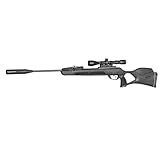
- ARS Mark8.4
ARS Mark is a ranking system developed by bestairriflescopes.com. ARS Mark has no relationship or impact from any manufacturers or sales agent websites. Learn more
- BrandGamo

- ARS Mark7.5
ARS Mark is a ranking system developed by bestairriflescopes.com. ARS Mark has no relationship or impact from any manufacturers or sales agent websites. Learn more
- BrandGamo
Last update on 2026-10-16 / Affiliate links / Images, Product Titles, and Product Highlights from Amazon Product Advertising API
FAQs
Why do airgun boxes advertise 1,300 feet per second if that hurts accuracy?
Manufacturers use extreme numbers primarily as marketing tools to attract buyers who assume faster always means better. To achieve those numbers on paper, companies use featherweight alloy pellets rather than standard lead hunting pellets. While high velocity numbers help sell guns, experienced shooters immediately switch to heavier lead pellets to slow the rifle down to an accurate speed.
Can shooting heavier pellets damage my spring or gas-piston rifle?
Shooting reasonably heavy lead pellets will not hurt your rifle, but you should avoid excessively heavy custom ammunition. An overly heavy pellet creates too much backpressure, which can cause the internal piston seal to bounce harshly against the cylinder wall. Stick with medium-heavy pellets produced by mainstream pellet brands to safely tame your velocity without straining the internal spring or gas piston.
How do I know if my pellet is breaking the sound barrier without a radar unit?
Listen closely to the sound of the shot. If your airgun makes a muffled pop or thud, your pellet is flying safely below the sound barrier. If the shot produces an ear-piercing crack like a rimfire rifle, your pellet has gone supersonic. Check your target paper afterward; if the paper shows torn, oval holes instead of clean circular cuts, your supersonic pellet is tumbling in flight.


12 Best 22 Pcp Air Rifle For Hunting of 2026 With Quiet Power

7 Best 22 Pcp Air Rifle Under 300 of 2026 For Backyard Pest Control

10 Best 22 Break Barrel Air Rifles of 2026 For Backyard Pest Control

10 Best 30 Caliber Pcp Air Rifle of 2026 For Medium Game

Top Best 177 Air Rifle Under 100: Budget-Friendly Picks for 2026

How to Safely Reload Shotgun Shells at Home

11 Best Co2 Air Rifle For Pest Control of 2026 To Ensure Humane Dispatch

12 Best Inexpensive Air Rifles of 2026 For Dependable Backyard Accuracy






