
Which Compound Bow Sight Fits Your Shooting Style?

A buck steps through the timber at dusk, and an archer comes to full draw only to freeze while sorting through a crowded stack of colored dots. For quick hunting shots inside thick woods, a fixed multi-pin sight offers instant aiming points without any moving parts. For open field shooting and stretched-out target ranges, an adjustable single-pin sight keeps the picture clean and clutter-free.
The right choice comes down to how quickly a shot must happen and how clear the sight picture needs to be. Thick brush and nervous game leave no time to turn dials, making preset pins a reliable choice. Archers shooting open fields or target bags usually have the extra seconds to dial an exact distance, enjoying a wide-open view without extra pins in the way. Looking closely at your shooting habits makes the decision simple.
Decide Between Instant Shooting Speed and a Clear Sight Picture
Upgrading from a basic factory bow sight usually brings you to a major fork in the road: choosing between a fixed multi-pin sight and an adjustable single-pin slider. Both styles put arrows on target, but they handle the pressure of the shot in completely different ways.
A fixed multi-pin sight features three, four, or five aiming pins stacked vertically inside the sight housing (the circular ring protecting the pins). You sight each pin in for a specific distance, typically spacing them at 20, 30, 40, and 50 yards. When an animal steps out at 30 yards, you draw your bow, settle your 30-yard pin behind the front shoulder, and release. You never have to reach forward, turn a dial, or guess holdover on moving game. That instant readiness is why multi-pin sights remain the traditional choice for fast-moving hunting situations.
The trade-off with a multi-pin setup is target clutter. Having several pins floating inside your sight window can feel like looking through a window blind. In high-stress moments when your heart is pounding, your eye can easily lock onto the wrong color pin. Shooting a 40-yard pin at a 20-yard target will send your arrow sailing clean over the animal's back. Archery targets can also feel crowded at longer ranges because the extra pins block your view of the lower half of the target face.
An adjustable single-pin slider sight eliminates visual clutter entirely. You look through your peep sight (the small viewing hole set in the bowstring) and see one clean, unobstructed aiming point right in the middle of your housing. Your target remains wide open and easy to see. To change yardage, you loosen a lock knob and slide an indicator needle along a pre-printed yardage tape mounted on the bracket. If a target stands at 43 yards, you dial the pointer directly to 43 yards and hold your pin dead-center.
The drawback to a slider sight is time and physical movement. If a buck walks into your shooting lane at 20 yards, spots movement, and then backs out to 35 yards, you must decide whether to let down your bow to adjust your dial, or hold your single pin high and guess where the arrow will strike. Adjusting a slider requires extra hand motion that can easily spook wary animals at close range.
Match Your Sight Design to Your Shooting Terrain
The terrain where you spend most of your shooting time should drive your sight choice. Different shooting environments reward different strengths, and picking the right layout keeps you from freezing up at full draw.
Dense woods, brushy river bottoms, and tight timber favor fixed multi-pin sights. Whitetail deer often appear without warning, step through narrow openings, and pause for only a few seconds before slipping into the brush. If you hunt from an elevated platform, choosing a dependable bow sight for treestand hunting with fixed pins ensures you never have to move your hands to dial a yardage wheel while balancing on a narrow footrest. You draw, pick your pin, and shoot.
Open western plains, high-country basins, and 3D target courses favor single-pin sliders. In open country, animals rarely appear right beneath your feet. You usually have extra time to check the distance with a rangefinder, dial your sight housing to the exact yardage, and make a careful, controlled shot. Dialing to the exact yard removes the guesswork of trying to hold your pin halfway between two fixed yardage marks when shooting past 40 yards.
Use this quick checklist to find your shooting match:
- Choose a fixed 3-pin or 5-pin sight if you hunt thick woods, shoot from tree stands, or take most of your shots under 35 yards where animals move without warning.
- Choose a single-pin slider sight if you practice at extended ranges past 50 yards, shoot 3D archery courses, or struggle with target panic caused by crowded sight windows.
- Choose a hybrid 3-pin slider sight if you want the best of both worlds: fixed pins for quick shots at 20, 30, and 40 yards, with an adjustable bottom pin you can dial for long-range target practice.
Pick the Right Pin Size for Low Light and Fine Accuracy
Sight pins use fiber optic strands (glowing colored plastic thread that gathers natural ambient sunlight) to create a sharp, luminous aiming dot. The diameter of that fiber directly affects how well you see your target in different lighting conditions.
The two standard pin sizes for compound bows are .019 inches and .029 inches. A .029-inch pin is thick, durable, and gathers a generous amount of light, making it very easy to find during the dim moments of early morning or late evening. However, that large bead creates problems at longer distances. At 40 or 50 yards, a .029-inch pin will cover up the entire vital area of a game animal or completely blot out the center ring on a target face, making precise aiming difficult.
A .019-inch pin is the most practical size for modern archers. It provides a fine, distinct aiming point that lets you settle on a tiny spot on your target without covering up the background. High-quality .019 fibers capture plenty of ambient light through protective clear spools, staying bright throughout legal shooting hours while offering the precision needed for tight arrow groups past 30 yards.
Low-light shooting also depends on how the fiber optic thread is routed around the sight housing. Long strands wrapped several times around the outside of the ring collect far more light than short, straight pins. Many modern sights also include a mounting port for a rheostat sight light (a tiny, battery-powered LED that screws into the sight frame). An LED light keeps your pins visible inside dark hunting blinds, but always turn the dial to its lowest setting. If the LED burns too bright, your eye pupil will contract, causing your target to disappear into darkness behind the glowing pin.
Check Your Bubble Level and Peep Sight Alignment Before Every Hunt
Hitting your mark consistently requires consistent alignment between your eye, your bowstring, and your sight. A high-grade sight cannot correct poor alignment habits, but it gives you the visual tools to spot errors before you squeeze the release.
Start by checking how your peep sight (the small viewing hole set in the bowstring) frames your sight housing (the circular ring protecting the pins) at full draw. When you anchor your hand against your jaw, the outer edge of your sight housing should sit dead-center inside the circle of your peep sight. You should see an even ring of light between the two circles. If you try to center individual pins inside your peep hole instead of centering the whole round housing, your anchor point will shift on every single shot, scattering your arrows up and down. Reviewing proper techniques on how to use a bow sight with better accuracy helps you lock in this sight picture so your eye centers the ring naturally every time you draw.
Next, watch the small bubble level built into the bottom of your sight ring. Compound bows are sensitive to hand torque, which happens when your grip hand twists the bow riser slightly to the left or right. Tipping the bow to the left causes your arrow to steer left and hit low, while tipping it to the right pulls your shot right and low. Checking that the liquid bubble sits perfectly centered between the two indicator lines before you release guarantees your bow limbs remain vertical.
Finally, confirm that your sight provides smooth windage (left-and-right adjustment) and elevation (up-and-down adjustment). Sights equipped with micro-adjustment click knobs allow you to move your point of impact in tiny, precise steps by simply turning a dial. Sights without micro-adjustments require you to loosen mounting bolts and slide the bracket manually, which often leads to over-adjusting and wasting arrows during practice sessions.
Avoid Heavy Brackets and Weak Plastic Parts That Shift on the Move
Compound bows produce sudden, violent vibrations every time string tension releases an arrow. Over time, that vibration will rattle loose screws and expose weak materials, causing your arrows to wander away from your zero point.
Avoid sights built with cheap plastic brackets or soft composite adjustment rails. Plastic frames tend to flex in hot summer weather, become brittle in freezing hunting conditions, and crack when bumped against tree trunks or bow cases. Always look for brackets made from CNC-machined aluminum. Machined aluminum stays rigid, holds adjustment screws tightly, and withstands the rough knocks of transport and field use.
Pay close attention to overall sight weight and balance. Long target extension bars that reach far out from the front of the bow look impressive, but they act like a long lever arm, making your bow feel front-heavy. If you shoot a lightweight, compact setup such as a specialized bow sight for Mathews archery rig, an overly heavy sight will pull your grip hand downward, causing your shoulder muscles to fatigue quickly. A direct-mount bracket that sits close to the bow riser keeps your setup balanced and stable in your hand.
Keep your sight solid and reliable with these practical maintenance checks:
- Apply a single drop of blue medium-strength thread-locking fluid to all sight mounting bolts so bow vibration cannot shake them loose over time.
- Tighten mounting hardware with an inch-pound torque tool or a firm hand wrench, avoiding excessive force that could strip threads out of soft aluminum frames.
- Inspect your fiber optic threads regularly to make sure dust, tree sap, or pinched sections have not dimmed their brightness.
- Verify that the yardage lock on a slider sight turns smoothly and clamps securely so string vibration cannot cause your housing to slip down the track mid-shot.
Select an Aluminum Sight That Matches Your Primary Shooting Distance
Choosing the right bow sight comes down to selecting solid metal hardware that supports your shooting style rather than getting in your way. A sight machined from sturdy aluminum keeps your zero locked in through rough hikes, weather swings, and thousands of practice shots.
Before you commit to a new setup, confirm that the sight offers tool-free micro-adjustments for left-and-right windage and up-and-down elevation. Turning a micro-click dial saves you hours of range frustration compared to wrestling with loose bracket bolts. Check that the sight housing contains a clear, easy-to-see bubble level along the bottom edge, and verify that the fiber optic pins run through protective metal tubes so twigs cannot snag and snap the delicate fibers.
Match the design to your most common shooting distance. If your hunting happens inside 40 yards in timber or from tree stands, a sturdy 3-pin or 5-pin sight provides immediate aiming points with zero moving parts. If you love shooting past 50 yards, shooting 3D field targets, or demand a clutter-free view of the target center, an aluminum slider sight gives you the precise yardage control and visual clarity you need to shoot with complete confidence.
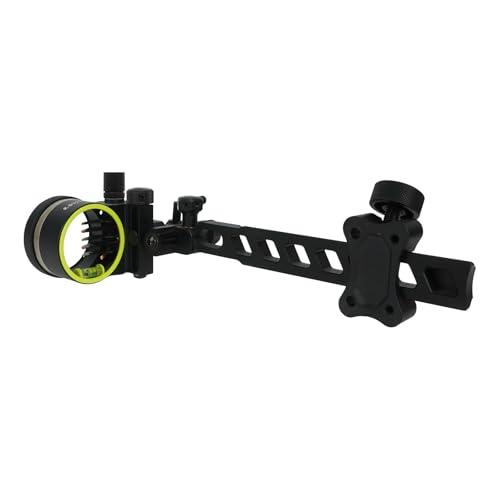
- ARS Mark9.4
ARS Mark is a ranking system developed by bestairriflescopes.com. ARS Mark has no relationship or impact from any manufacturers or sales agent websites. Learn more
- BrandLWANO

- ARS Mark9.4
ARS Mark is a ranking system developed by bestairriflescopes.com. ARS Mark has no relationship or impact from any manufacturers or sales agent websites. Learn more
- BrandNATUMER
- ARS Mark9.2
ARS Mark is a ranking system developed by bestairriflescopes.com. ARS Mark has no relationship or impact from any manufacturers or sales agent websites. Learn more
- BrandTrophy Ridge
- ARS Mark8.8
ARS Mark is a ranking system developed by bestairriflescopes.com. ARS Mark has no relationship or impact from any manufacturers or sales agent websites. Learn more
- BrandLWANO
- ARS Mark8.8
ARS Mark is a ranking system developed by bestairriflescopes.com. ARS Mark has no relationship or impact from any manufacturers or sales agent websites. Learn more
- BrandTrophy Ridge
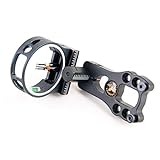
- ARS Mark8.6
ARS Mark is a ranking system developed by bestairriflescopes.com. ARS Mark has no relationship or impact from any manufacturers or sales agent websites. Learn more
- BrandTOPOINT ARCHERY

- ARS Mark8.6
ARS Mark is a ranking system developed by bestairriflescopes.com. ARS Mark has no relationship or impact from any manufacturers or sales agent websites. Learn more
- BrandSOPOGER

- ARS Mark8.0
ARS Mark is a ranking system developed by bestairriflescopes.com. ARS Mark has no relationship or impact from any manufacturers or sales agent websites. Learn more
- BrandSAS
Last update on 2026-09-30 / Affiliate links / Images, Product Titles, and Product Highlights from Amazon Product Advertising API
FAQs
Should I buy a single-pin or a 5-pin sight?
Buy a 5-pin sight if you hunt fast-moving game in thick woods where you need to aim and shoot immediately at different distances without touching a dial. Buy a single-pin sight if you want an uncluttered sight picture and you have the time to range your target and slide your pin to the exact yardage.
What pin size is best for hunting: .019 or .029?
A .019-inch pin is the best all-around choice for most bowhunters. It gathers plenty of ambient light for morning and evening shooting while remaining small enough that it does not cover up the vital area on targets past 30 yards. A .029-inch pin is bright, but it blots out too much of the target at longer ranges.
Why do I need a bubble level on a bow sight?
A bubble level keeps you from canting, or tilting, your bow limbs to the left or right at full draw. Tilting your bow directs the arrow off-target horizontally, causing you to miss left or right even when your pin rests right on the bullseye. Centering the bubble before you release ensures consistent arrow flight.
Do I need an LED sight light?
An LED sight light is helpful if you hunt from inside dark ground blinds or shoot under heavy tree canopies where natural sunlight cannot reach your fiber optic pins. Look for an adjustable rheostat light that lets you dim the brightness so the glowing pin does not create a blinding halo over your target.


12 Best 22 Pcp Air Rifle For Hunting of 2026 With Quiet Power

7 Best 22 Pcp Air Rifle Under 300 of 2026 For Backyard Pest Control

10 Best 22 Break Barrel Air Rifles of 2026 For Backyard Pest Control

10 Best 30 Caliber Pcp Air Rifle of 2026 For Medium Game

Top Best 177 Air Rifle Under 100: Budget-Friendly Picks for 2026

How to Safely Reload Shotgun Shells at Home

11 Best Co2 Air Rifle For Pest Control of 2026 To Ensure Humane Dispatch

12 Best Inexpensive Air Rifles of 2026 For Dependable Backyard Accuracy






