
Which Holographic Sight Is Right for Your Rifle?

The best holographic sight uses true laser projection. Unlike a standard reflex sight that bounces an LED off mirrored glass, a real holographic sight uses a laser to float the aiming dot directly in your field of view. This keeps the target crisp and lets you aim naturally with both eyes open.
Finding the right fit depends on your rifle and power priorities. Real laser optics handle harsh recoil and stay sharp for shooters with an astigmatism, but they draw battery power quickly. Many casual shooters actually prefer an affordable reflex sight in a tactical shell, which delivers a wide viewing window without draining batteries after a single weekend. Here is how both designs compare so you can choose the right optic for your setup.
True Holographic Sights Project Reticles Using A Laser
A true holographic sight creates an aiming dot using a miniature laser diode and internal mirrors. Instead of bouncing an ordinary light off glass, the laser projects a hologram recorded onto a special film layer inside the optic window. Think of it like a slide projector shining an image across a room. The laser beam travels through optical splitters and bounces toward the glass, projecting an aiming dot that appears to float out in the distance on your target.
A standard reflex sight works completely differently. Inside an open-window reflex sight or an enclosed tube sight, a tiny light-emitting diode (LED) shines backward against a curved, mirrored front lens. The front lens reflects that red dot back into your eye. When you tilt your head or move slightly, you are still looking at an LED reflection shining directly off that front piece of glass.
That optical difference changes how your aiming dot behaves under magnification. When you mount a 3x magnifier behind a regular reflex sight, the magnifier enlarges both the target and the dot. A 2 MOA aiming dot covers about 2 inches of a target at 100 yards or half an inch at 25 yards. Put a 3x magnifier behind that LED dot, and the dot looks three times larger in your sight picture, covering more of your target. With a true laser holographic sight, the center aiming dot is roughly 1 MOA. Because the laser projects a hologram at optical infinity, adding a magnifier makes your target look three times larger without blowing up the center dot. The dot stays a fine, crisp pinpoint, letting you aim at small bullseyes downrange without blocking your target.
Many inexpensive sights sold online are labeled as holographic sights even though they are standard reflex sights. Calling any square-shaped optic a holographic sight is common in marketing, but an open-window sight that uses an LED reflector is still a reflex sight. A genuine holographic optic always uses a laser diode, requires far more internal engineering, and carries a much higher manufacturing cost.
Laser Holographs Offer Faster Aim But Drain Batteries Quicker
Power consumption is the most significant trade-off when choosing between laser technology and reflected LED lights. Standard reflex sights sip electricity at an exceptionally low rate. A single coin battery can keep a basic LED dot running for 20,000 to 50,000 hours, which equals several years of continuous use. You can leave an LED reflex sight turned on inside your home defense closet, and the dot will still glow when you pick the rifle up years later.
Laser holographic sights demand substantial electrical juice to power their laser diodes and internal optical path. Most true holographic sights run for roughly 600 to 1,000 hours on a fresh battery before shutting down. That means you cannot leave a laser sight powered on around the clock. You need to turn the optic off when you finish your shooting session, and you should always keep spare batteries tucked inside your rifle grip or range bag.
Shooters accept that shorter battery life because laser holographic sights offer unmatched target acquisition speed. True holographic sights feature large, rectangular viewing windows protected by rigid metal hoods. Because there are no thick internal tubes or heavy lens coatings blocking your view, you get an expansive sight picture. Shooting with both eyes wide open feels natural. Your peripheral vision stays completely unobstructed, letting you track moving targets across an open field without experiencing tunnel vision.
The reticle pattern also speeds up your engagement. Most holographic reticles use a wide 68 MOA outer ring surrounding a fine 1 MOA center dot. The large outer ring immediately catches your eye as soon as you raise the stock to your cheek. For fast, close-range shooting inside 10 yards, you simply drop that large circle onto your target and pull the trigger. When you need to make a precise shot at 100 yards, the tiny center dot gives you match-grade accuracy without covering up the target.
Power controls also differ depending on the optic design. Some modern open-window reflex sights include motion-sensing auto-on that turns the reticle on when moved and sleeps to preserve battery life. True combat holographic sights generally avoid motion sensors so the user retains complete manual control. They use rubber push buttons to switch the laser on, select daytime brightness levels, or switch to dedicated night vision settings.
Focusing On The Target Keeps The Aiming Dot Sharp
When shooters look through a holographic sight for the first time inside a room, they often think the optic is broken. The red reticle can appear fuzzy, grainy, or pixelated, looking like glowing red sand rather than a smooth solid line. This appearance is completely normal and stems from a physical phenomenon called laser speckle.
Laser speckle happens when pure laser light bounces through optical glass and holographic film. The micro-reflections create a textured pattern that looks rough if you stare directly at the reticle on your living room wall. You fix this instantly by shifting where your eyes focus. If you stare at the glass window or look at the red dot itself, the image will stay blurry.
To see a sharp reticle, keep both eyes open and look directly through the glass at your distant target downrange. When your eyes lock onto the target, your brain merges the optical layers automatically. The grainy speckling disappears, and the red circle and dot sharpen into a crisp aiming point floating cleanly over your target.
Target-focused viewing is also a massive advantage for shooters who deal with astigmatism. Astigmatism is an uneven curve in your eye's cornea or natural lens that prevents light from focusing evenly on your retina. When someone with astigmatism looks at a standard LED red dot, the dot often smears into a distorted starburst, a comet tail, or a blurry cluster of grapes. That distortion makes accurate shooting difficult because you cannot easily tell where the true center of the dot rests.
Because a holographic sight projects light differently and relies on target focus, many shooters with astigmatism find holographic reticles far easier to use. Even if the outer ring shows minor grain, the center aiming dot remains a sharp, usable point rather than a bleeding streak of light. If regular mirrored red dots give your eyes trouble, looking through a holographic sight downrange often clears up the distortion.
Proper Rail Mounting Prevents Your Sight From Losing Zero
Before installing or adjusting any optic on your rifle, always follow safe firearm handling rules. Clear the firearm chamber, remove the magazine, and inspect the action to verify that the firearm is completely unloaded before handling any tools.
The most common problem rifle owners experience with budget tactical sights is losing zero. Zeroing means adjusting the dot so your shots land exactly where the dot points at a set distance, such as 50 yards for a centerfire rifle or 25 yards for a rimfire firearm. Left-to-right (windage) and up-and-down (elevation) adjustment click dials move the reticle into alignment. When an optic loses zero, the internal parts shift under recoil, causing your shots to wander away from where you are aiming.
Recoil puts sudden physical stress on mounting screws and internal optical assemblies. Centerfire rifle rounds send violent shockwaves through the receiver. If an optic uses weak internal adjustment springs, cheap glass adhesives, or soft mounting clamps, those shockwaves will shift the internal mirrors. After firing just a few rounds, your group will drift several inches off target.
To ensure your optic stays locked securely in place, use these mounting steps:
- Clean the rail slots: Most tactical rifles feature standard Picatinny or 20mm slotted accessory rails. Wipe the rail slots clean with a dry cloth to remove factory oil, grease, or dirt that could cause the mount to slip.
- Seat the sight forward: Set the optic onto the rail. Before tightening the cross-bolts, push the entire sight forward toward the rifle muzzle. Pushing the sight forward seats the mounting cross-bolt firmly against the front wall of the rail slot, preventing the optic from sliding forward or backward under heavy recoil.
- Tighten screws with a torque tool: Never guess when tightening mounting bolts. Over-tightening can strip aluminum threads, while under-tightening lets the optic vibrate loose. Use an inch-pound torque tool to tighten bolts to the manufacturer's recommended torque level, and place a tiny drop of blue thread-locking fluid onto the threads so vibration cannot back them out.
- Verify co-witness alignment: Co-witness means lining up your backup iron sights through the optic glass so you can still aim if your battery dies. An absolute co-witness centers the dot directly on your front iron sight post, while a lower one-third co-witness keeps iron sights in the bottom third of the window for an open view. If you run iron sights, review our guide to the best iron sights for cowitness with red dot sights to make sure your optic riser and iron sights line up at the correct height.
- Confirm zero at the range: Fire a three-shot group from a steady bench rest at your target distance. Inspect where the bullet holes land on the paper, turn the windage and elevation click dials toward the holes, and fire another group until the aiming dot rests dead center over your bullet impacts.
Choose Your Sight Based On Recoil And Real Needs
Selecting the right optic comes down to matching the sight build to the recoil of your firearm and your shooting purpose. You do not necessarily need an expensive combat sight for casual weekend target practice, but you must know what your rifle demands so you avoid optics that fail under recoil.
If you own a centerfire defense rifle, a hunting carbine, or shoot heavy-recoil calibers, choosing a rugged optic with certified shockproof internals is essential. Duty-ready laser holographic sights and heavy-duty enclosed tube sights feature rigid aluminum protective hoods, nitrogen-purged glass, and heavy-duty adjustment screws that hold zero through thousands of rounds of centerfire recoil. They carry a higher price tag and shorter battery life, but their ability to withstand hard use makes them reliable when safety counts.
If you shoot a light-recoil .22 LR rimfire rifle, an airgun, or shoot casually at paper targets, an affordable tactical open-window reflex sight can be a practical solution. Many budget reflex sights use an external metal hood styled after military holographic sights, giving you the same wide viewing window, selectable red and green dot colors, and multiple reticle patterns at a fraction of the cost. Because rimfire firearms produce very little recoil, a well-clamped tactical reflex sight can hold its zero reliably for light plinking without straining your budget.
Before buying any tactical dot sight, check these key factors on the product packaging or manual:
- Recoil and shock rating: Verify that the manufacturer lists the optic as shockproof for real firearm recoil rather than just airsoft use.
- Mount compatibility: Confirm that the base fits standard Picatinny or 20mm slotted accessory rails, and check whether it uses a quick-detach lever or a solid hex screw clamp.
- Glass coatings: Look for multi-layer coated lenses that prevent glare and maintain a bright, clear view under direct outdoor sunlight.
- Brightness controls: Check that the sight provides enough brightness adjustment levels so the reticle stays visible on bright sunny days without washing out your target.
- Reticle style: Decide whether you prefer a single fine aiming dot for precise target shooting or a wide circle-and-dot reticle for fast close-quarters target acquisition.

- ARS Mark10.0
ARS Mark is a ranking system developed by bestairriflescopes.com. ARS Mark has no relationship or impact from any manufacturers or sales agent websites. Learn more
- BrandAWETHE

- ARS Mark10.0
ARS Mark is a ranking system developed by bestairriflescopes.com. ARS Mark has no relationship or impact from any manufacturers or sales agent websites. Learn more
- BrandBMDYJK

- ARS Mark9.0
ARS Mark is a ranking system developed by bestairriflescopes.com. ARS Mark has no relationship or impact from any manufacturers or sales agent websites. Learn more
- BrandMAYMOC
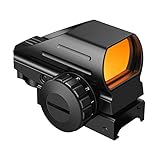
- ARS Mark8.8
ARS Mark is a ranking system developed by bestairriflescopes.com. ARS Mark has no relationship or impact from any manufacturers or sales agent websites. Learn more
- BrandEZshoot

- ARS Mark8.2
ARS Mark is a ranking system developed by bestairriflescopes.com. ARS Mark has no relationship or impact from any manufacturers or sales agent websites. Learn more
- BrandHCPMTUKM

- ARS Mark8.0
ARS Mark is a ranking system developed by bestairriflescopes.com. ARS Mark has no relationship or impact from any manufacturers or sales agent websites. Learn more
- BrandGeneric

- ARS Mark7.6
ARS Mark is a ranking system developed by bestairriflescopes.com. ARS Mark has no relationship or impact from any manufacturers or sales agent websites. Learn more
- BrandArc De TP

- ARS Mark7.6
ARS Mark is a ranking system developed by bestairriflescopes.com. ARS Mark has no relationship or impact from any manufacturers or sales agent websites. Learn more
- BrandBravary
Last update on 2026-09-30 / Affiliate links / Images, Product Titles, and Product Highlights from Amazon Product Advertising API


12 Best 22 Pcp Air Rifle For Hunting of 2026 With Quiet Power

7 Best 22 Pcp Air Rifle Under 300 of 2026 For Backyard Pest Control

10 Best 22 Break Barrel Air Rifles of 2026 For Backyard Pest Control

10 Best 30 Caliber Pcp Air Rifle of 2026 For Medium Game

Top Best 177 Air Rifle Under 100: Budget-Friendly Picks for 2026

How to Safely Reload Shotgun Shells at Home

11 Best Co2 Air Rifle For Pest Control of 2026 To Ensure Humane Dispatch

12 Best Inexpensive Air Rifles of 2026 For Dependable Backyard Accuracy






