
Which Red Dot MOA Should You Choose for Your Gun?

Sorting through dot sizes can feel confusing, but there is no reason to stress over making a bad choice. For most setups, a 2 MOA dot works best on rifles for precise hits at longer distances, while a 6 MOA dot is ideal for defensive pistols where catching the sight fast matters most. A 3 or 4 MOA dot serves as a dependable middle ground that handles both roles comfortably.
What changes that decision comes down to your firearm, your typical shooting distance, and how your eyes process the light. Handguns move around more, making larger dots much easier to track in a hurry. Long guns give you a steady cheek rest, so a smaller dot keeps your view clear past fifty yards without blocking the target. Astigmatism can also make smaller dots look flared or blurred. Here is how to match each size to your shooting style.
What Does MOA Actually Mean on Your Target?
MOA stands for minute of angle. While that sounds like geometry class, it simply measures your aiming dot size on the target. If you can picture a standard ruler, you can understand MOA right away.
At 100 yards, 1 MOA covers about one inch. At 50 yards, it covers half an inch. At 25 yards, common for indoor shooting lanes, it covers a quarter of an inch. As you move closer, the area covered by the dot shrinks. As you move farther out, that same dot covers more of your target.
Here is how that math translates to common dot sizes on real targets:
- 2 MOA dot size: Covers about 2 inches at 100 yards, 1 inch at 50 yards, and half an inch at 25 yards.
- 3 MOA dot size: Covers about 3 inches at 100 yards, 1.5 inches at 50 yards, and 3/4 inch at 25 yards.
- 4 MOA dot size: Covers about 4 inches at 100 yards, 2 inches at 50 yards, and 1 inch at 25 yards.
- 6 MOA dot size: Covers about 6 inches at 100 yards, 3 inches at 50 yards, and 1.5 inches at 25 yards.
This coverage matters because of target obstruction. If you try to hit a small clay pigeon at 100 yards, a 6 MOA dot hides the entire target behind the red dot. You cannot aim at the exact center when the dot covers the whole object. On the other hand, a tiny dot can be hard to spot quickly when drawing a handgun under stress. Dot size is always a trade-off between precision and speed.
Why Do Rifle Shooters Usually Choose a 2 MOA Dot?
Rifles offer three points of contact: your shoulder, cheek, and support hand. This stable hold keeps the firearm steady. Because your eye lines up in the exact same spot behind the optic window every time you shoulder the stock, you never have to hunt for the dot.
Since the dot is right in front of your eye, you do not need a big aiming dot to grab your attention. A fine 2 MOA dot lets you shoot with tight precision. At 100 yards, the dot covers only two inches. You can center it on a small bullseye or ring steel without covering your target.
A 2 MOA dot also pairs well with a flip-to-side magnifier. Magnifiers enlarge both the target and the dot together. A magnified 2 MOA dot stays crisp, while a magnified 6 MOA dot looks massive and can blot out fine target details.
Most long guns use enclosed tube sights mounted on standard Picatinny or 20mm slotted accessory rails. These sealed optics keep out rain, dust, and mud. They also make it simple to set up a co-witness, which means lining up your backup iron sights through the optic glass.
Zeroing is also straightforward. Zeroing means adjusting the dot so your shots land exactly where the dot points at a set distance, like 50 yards for a rifle. A 2 MOA dot keeps your point of aim sharp from 25 yards out past 100 yards.
Why Do Handgun Owners Often Prefer a 6 MOA Dot?
Shooting a handgun is completely different from shooting a rifle. You hold a pistol out at arm's length with no cheek rest to guide your aim. Under stress, your hands shake, and your presentation out of a holster might be slightly off center.
A small 2 MOA dot can slip outside the optic window if your grip angle is off by just a hair. You end up wobbling the pistol to hunt for the dot. A bold 6 MOA dot grabs your eye immediately. Even on an imperfect draw, your peripheral vision spots that red dot, helping you align the sight and fire without delay.
New shooters often worry that 6 MOA is too big for accurate shooting. But most self-defense encounters happen between 3 and 10 yards. At 7 yards, a 6 MOA dot covers less than half an inch. That is plenty small enough for tight defensive groupings while giving you maximum speed up close.
Handguns generally use open-window sights attached directly to the slide. Always put safety first: clear the firearm chamber, remove magazines, and visually confirm an empty chamber before handling tools around your firearm.
Pistols use specific mounting footprints, which are the specific screw-hole and recoil-lug pattern cut into a slide or adapter plate (such as RMR or RMSc patterns). Because pistol slides snap back violently under recoil, secure mounting screws with thread-locking fluid and tighten them to specification using an inch-pound torque tool so the sight does not shake loose.
Is a 3 or 4 MOA Dot the Sweet Spot?
If you want one red dot for multiple uses, picking between 2 MOA and 6 MOA can feel limiting. That is why 3 MOA and 4 MOA dots are so popular. They sit right in the middle, offering a practical balance between speed and precision.
A 3 MOA dot covers about 3/4 of an inch at 25 yards. On a pistol, that is large enough to acquire quickly on the draw, yet fine enough to shoot tight groups on paper at 25 yards. It is a favorite choice for competition shooting and rimfire target plinking, such as on target pistol setups like a Ruger Mark.
A 4 MOA dot leans slightly toward defensive speed. At 50 yards, it covers two inches of your target. That makes it an excellent match for home-defense shotguns, pistol-caliber carbines, and duty pistols. You can ring steel plates at 75 yards, but still run fast defensive drills at close range without losing the dot during recoil.
This middle size is a compromise. It is not quite as surgical as a 2 MOA dot on a benchrest rifle at 100 yards, nor quite as instant to catch as a 6 MOA dot on a subcompact carry gun. But for general shooting and everyday range fun, a 3 or 4 MOA dot handles almost every role smoothly.
How Do Brightness and Astigmatism Change Your Dot?
The dot size on the package is an exact measurement, but your eyes and lighting settings change how large that dot looks. Before deciding a dot is the wrong size, check these factors:
- Turn down the brightness dial: Setting your optic too bright causes optical blooming, where light flares outward like a glowing halo. A 2 MOA dot set to bright daylight levels inside a dim room can look like a blurry 8 MOA blob. Turn down the brightness until the edges look crisp and translucent.
- Check your eyes for astigmatism: Astigmatism is an eye shape issue that prevents light from focusing cleanly on your retina. Instead of a sharp dot, you might see a starburst, a smear, or a cluster of grapes. To check, take a photo of the dot with your phone camera. If the camera captures a clean round dot, your optic is fine and your eye has astigmatism.
- Look at the target, not the dot: Red dots work best with both eyes open, focusing entirely on the target. If you focus your eye on the glass or the emitter, the dot will naturally appear fuzzy. Keep your focus downrange and simply let the red dot float over your target.
- Consider multi-reticle circles: Multi-reticle optics feature a small 2 MOA center dot inside a wide 32 MOA circle. The big circle guides your eyes to the center on a fast draw, while the fine center dot gives you precision for distant shots.
- Rely on motion activation: Many optics feature motion-sensing auto-on that turns the reticle on when moved and sleeps to preserve battery life. This keeps your chosen brightness setting ready instantly without fumbling with buttons.
What Should You Check Before Buying a Red Dot Sight?
Finding the right red dot sight means matching dot size to your firearm type, shooting distance, and mounting setup.
First, match the dot size to your firearm and distance. For rifles and carbines past 50 yards, choose a 2 MOA dot for clean target visibility. For concealed-carry handguns inside 15 yards, pick a 6 MOA dot for quick pickup under stress. For shotguns or competition pistols, a 3 or 4 MOA dot gives you the best balance.
Second, verify the mounting system. Rifles and shotguns usually clamp to standard Picatinny or 20mm slotted accessory rails. Handguns require matching the optic base to the specific footprint cut into your slide or adapter plate. Getting the footprint right avoids thick plates that sit too high for your backup iron sights.
Third, examine the housing and battery design. Open-window sights provide an unobstructed view on compact pistol slides, while enclosed tube sights shield the emitter from rain and debris on field rifles. Choosing an optic with a top-loading or side-loading battery tray lets you swap batteries without removing the sight, saving you from having to zero the dot again at the range.

- ARS Mark9.4
ARS Mark is a ranking system developed by bestairriflescopes.com. ARS Mark has no relationship or impact from any manufacturers or sales agent websites. Learn more
- BrandSig Sauer
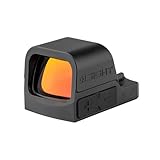
- ARS Mark9.2
ARS Mark is a ranking system developed by bestairriflescopes.com. ARS Mark has no relationship or impact from any manufacturers or sales agent websites. Learn more
- BrandOsight

- ARS Mark9.0
ARS Mark is a ranking system developed by bestairriflescopes.com. ARS Mark has no relationship or impact from any manufacturers or sales agent websites. Learn more
- BrandARORY

- ARS Mark8.6
ARS Mark is a ranking system developed by bestairriflescopes.com. ARS Mark has no relationship or impact from any manufacturers or sales agent websites. Learn more
- Brandohhunt
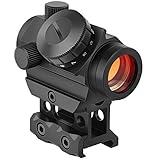
- ARS Mark8.6
ARS Mark is a ranking system developed by bestairriflescopes.com. ARS Mark has no relationship or impact from any manufacturers or sales agent websites. Learn more
- BrandMidTen

- ARS Mark8.4
ARS Mark is a ranking system developed by bestairriflescopes.com. ARS Mark has no relationship or impact from any manufacturers or sales agent websites. Learn more
- BrandYOIPA

- ARS Mark8.2
ARS Mark is a ranking system developed by bestairriflescopes.com. ARS Mark has no relationship or impact from any manufacturers or sales agent websites. Learn more
- BrandKiamine

- ARS Mark7.8
ARS Mark is a ranking system developed by bestairriflescopes.com. ARS Mark has no relationship or impact from any manufacturers or sales agent websites. Learn more
- Brandohhunt

- ARS Mark7.6
ARS Mark is a ranking system developed by bestairriflescopes.com. ARS Mark has no relationship or impact from any manufacturers or sales agent websites. Learn more
- BrandBushnell
Last update on 2026-09-30 / Affiliate links / Images, Product Titles, and Product Highlights from Amazon Product Advertising API
FAQs
Can You Shoot Accurately at 100 Yards with 6 MOA?
Yes, you can easily hit steel torso plates and silhouette targets at 100 yards with a 6 MOA dot. The dot covers six inches at that distance, fitting within an eight-inch steel plate. For small paper bullseyes, a 6 MOA dot covers too much target for fine precision.
Is a Green Dot Better for Older Eyes?
Human eyes detect green light wavelengths more easily than red light, so green dots often appear brighter at lower power settings. Many shooters with astigmatism find that green dots flare and bloom less than red dots. Red dots remain popular because they stand out sharply against outdoor foliage.
How Do You Zero a Red Dot Sight Properly?
Start with an unloaded firearm, mount your optic securely, and head to the range. Pick a set distance, like 25 yards for a pistol or 50 yards for a rifle. Fire a steady three-shot group, then use the left-to-right and up-and-down adjustment click dials to walk the dot onto your bullet impacts until point of aim matches point of impact.
Is a 2 MOA Dot Too Slow for Concealed Carry?
A 2 MOA dot can feel slow for newer shooters because a slight wrist tilt out of the holster pushes the tiny dot out of the window. Shooters with extensive draw practice find a 2 MOA dot quickly, but a larger 4 or 6 MOA dot is much more forgiving when drawing under stress.


12 Best 22 Pcp Air Rifle For Hunting of 2026 With Quiet Power

7 Best 22 Pcp Air Rifle Under 300 of 2026 For Backyard Pest Control

10 Best 22 Break Barrel Air Rifles of 2026 For Backyard Pest Control

10 Best 30 Caliber Pcp Air Rifle of 2026 For Medium Game

Top Best 177 Air Rifle Under 100: Budget-Friendly Picks for 2026

How to Safely Reload Shotgun Shells at Home

11 Best Co2 Air Rifle For Pest Control of 2026 To Ensure Humane Dispatch

12 Best Inexpensive Air Rifles of 2026 For Dependable Backyard Accuracy






