
What Is the Right Range to Sight In a .22LR?

For most rifles, 50 yards is the sweet spot to sight in a .22LR. That target distance shifts to 25 yards if the sight sits on a pistol or stays focused on short-range steel plinking. Setting a rifle at 50 yards keeps the small bullet flying flat, staying within half an inch of your aim point from 15 yards out past 50. That tight path saves ammunition and cuts out frustrating guesswork.
Choosing the exact distance comes down to the firearm style, the shooting goal, and the ammunition speed. Handguns lack the barrel length to push bullets at rifle speeds, so they perform far better with a closer target. At the same time, standard-velocity rounds drop much faster than high-velocity hollow points. Here is how the bullet actually travels downrange, along with simple steps to dial in your dot sight cleanly.
The 50-Yard Sweet Spot for .22LR Rifles
Setting your rifle zero at 50 yards gives you the most forgiving bullet path you can get from a rimfire cartridge. Zeroing simply means adjusting your sight so the reticle or aiming dot lines up with where your bullet actually hits paper. At 50 yards, standard and high-velocity rimfire rounds fly in a very gentle arch that stays close to your line of sight across normal shooting distances.
If you zero your rifle at 50 yards, you can aim dead center at a soda can, steel spinner, or small pest anywhere between 15 and 55 yards without having to guess your aim. The bullet will rise less than half an inch above your aiming dot at midrange and fall back through your aim point at 50 yards. That small half-inch window is smaller than a golf ball and matches the kill zone of a squirrel or rabbit.
Choosing a longer distance like 100 yards creates a high, looping arc at close range. Zeroing at 100 yards forces your bullet to rise two to three inches high at 50 yards, leading to missed shots on small targets. A 50-yard rifle zero eliminates that headache by keeping your shots flat and predictable across the exact yardages you shoot most often.
When a 25-Yard Zero Works Better for Pistols and Plinking
A 25-yard zero is the practical choice if you shoot a rimfire pistol, a short-barrel rifle, or spend your time plinking steel targets at close range. Pistols produce lower bullet speeds because their short barrels give gunpowder less room to burn. That lower speed causes the bullet to drop earlier, making a 50-yard target feel much farther away than it does through a full-length rifle barrel.
Handguns also trade fine crosshairs for red dots, such as when pairing a rimfire pistol with the best red dot sight for Ruger Mark series pistols. An open-window sight with a 3 MOA or 6 MOA aiming dot is built for quick target acquisition rather than punching tiny paper holes at long distance. At 25 yards, a 3 MOA dot covers less than an inch of your target, making it easy to align your shots cleanly.
Plinking at backyard spinners, tin cans, and steel plates usually happens between 10 and 30 yards. Setting your sight at 25 yards means you rarely have to think about where your bullet lands during casual target practice. If you shoot a handgun or keep your rifle sessions inside typical indoor range distances, 25 yards will save you time and frustration.
How a .22LR Bullet Travels from 10 to 75 Yards
Bullets do not travel in a straight laser line out of your barrel. Because your sight sits an inch or two above the bore axis (the center path through the barrel), the barrel points upward at a slight angle toward your line of sight. Gravity starts pulling the bullet toward the ground the instant it clears the muzzle, creating a curved flight path known as the bullet's trajectory.
When you set a 50-yard rifle zero, the bullet starts below your line of sight and climbs upward. At 10 to 15 yards, your shot will hit about a half-inch lower than your aiming dot. It crosses your line of sight around 20 to 25 yards, climbs to its peak height about one-third of an inch above your point of aim at 35 yards, and drops right back down to center at 50 yards.
Beyond 50 yards, the small .22LR bullet loses speed quickly and begins to drop steeply. By the time it reaches 65 yards, it lands about one inch low, and by 75 yards, it hits nearly two to three inches below your aiming point. Compensating for that drop requires holdover, which means deliberately aiming a couple of inches high on your target so the falling bullet drops into the center.
Four Simple Steps to Sight In Your .22LR at the Range
Always start by clearing your firearm before handling it at the range bench. Remove the magazine, pull the bolt back, visually inspect the empty chamber, and keep the muzzle pointed downrange. Once your firearm is confirmed unloaded and safe, follow these four steps to get your sight locked in.
-
Place your first target at 15 yards to get on paper.
Starting at close range ensures your very first live shots hit somewhere on the paper target rather than flying into the berm. Trying to zero at 50 yards right out of the box often wastes dozens of rounds just trying to figure out which direction your sight is misaligned.
-
Rest your rifle on solid sandbags or a shooting bench.
A solid bench rest removes your body wobble, breathing motion, and arm fatigue from the equation. Sighting in requires checking the alignment of your optic and barrel, not your ability to balance the rifle while standing or shooting off-hand.
-
Shoot a three-shot group and turn your adjustment dials.
Never adjust your optic after firing a single shot because one flinch or pulled trigger will throw you off. Fire three slow, steady shots at the same bullseye, find the center of that group, and use your windage (side-to-side) and elevation (up-and-down) click dials to walk the group toward the center.
-
Push the target back to 50 yards to confirm your zero.
A small alignment error at 15 yards grows much larger as the bullet travels farther down the range. Moving your target back to your final 50-yard distance and shooting one last three-shot group confirms that your bullet lands dead center where it matters.
Common Setup Mistakes That Ruin Your Zero
Many shooters blame their sight or ammunition when their groups will not stay centered, but the real issue is usually a small hardware or setup mistake. Running through a quick physical inspection before you spend money on ammo will save you hours of range frustration.
- Loose mounting screws: Firearm vibration can shake mounting plates and rail screws loose over time. Always tighten your screws with an inch-pound torque tool to match the optic maker's recommendations, and apply a small dab of non-permanent thread-locking fluid to keep them seated. If you use backup iron sights, verify that you set up your best iron sights for cowitness with red dot sights properly so your sight picture stays clean and rigid.
- Switching ammunition types midway: Different rimfire loads fly at vastly different speeds. Zeroing your rifle with high-velocity 36-grain hollow points and then loading 40-grain standard-velocity rounds will shift your point of impact by an inch or more. Pick one reliable brand and box of cartridges, and stick with it for the entire zeroing session.
- Resting the bare barrel on a hard surface: Laying your metal barrel directly on a wooden bench or hard sandbag causes the barrel to bounce slightly as the bullet travels down the bore. Always rest the wooden or synthetic stock forend on your shooting support, never the bare metal barrel.
- Chasing single holes on paper: Dialing your adjustment knobs after every single shot will keep you chasing your tail all afternoon. Always fire at least three shots into a cluster before touching the adjustment dials so you make changes based on true group patterns.
How Laser Bore Sighting Tools Save Range Time
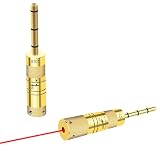
A red dot sight or rimfire optic works best when the reticle is already close to your barrel's path before you ever fire a live round. A laser bore sighter is a small alignment tool that mounts directly inside your chamber or slips into the end of your barrel to project a straight red beam downrange. This gives you a clear visual reference point you can see against a wall or paper target.
When shopping for an alignment tool for your rimfire firearm, look for models designed with durable metal casings and secure rubber adapters or caliber sleeves that fit .22 caliber barrels snugly without scratching the internal rifling. A tool-free setup makes installation fast, and a compact protective case keeps your adapters organized in your range bag. Aligning your aiming dot with the laser dot at 25 yards at home gets you directly onto paper, cutting your live-round sighting process down to just a handful of shots.

- ARS Mark9.4
ARS Mark is a ranking system developed by bestairriflescopes.com. ARS Mark has no relationship or impact from any manufacturers or sales agent websites. Learn more
- BrandAEROSHOT

- ARS Mark8.8
ARS Mark is a ranking system developed by bestairriflescopes.com. ARS Mark has no relationship or impact from any manufacturers or sales agent websites. Learn more
- BrandBefbox

- ARS Mark8.8
ARS Mark is a ranking system developed by bestairriflescopes.com. ARS Mark has no relationship or impact from any manufacturers or sales agent websites. Learn more
- BrandCVLIFE

- ARS Mark8.6
ARS Mark is a ranking system developed by bestairriflescopes.com. ARS Mark has no relationship or impact from any manufacturers or sales agent websites. Learn more
- BrandStrongTools

- ARS Mark8.6
ARS Mark is a ranking system developed by bestairriflescopes.com. ARS Mark has no relationship or impact from any manufacturers or sales agent websites. Learn more
- BrandTipfun

- ARS Mark8.6
ARS Mark is a ranking system developed by bestairriflescopes.com. ARS Mark has no relationship or impact from any manufacturers or sales agent websites. Learn more
- BrandSSI
- ARS Mark8.6
ARS Mark is a ranking system developed by bestairriflescopes.com. ARS Mark has no relationship or impact from any manufacturers or sales agent websites. Learn more
- BrandGotical

- ARS Mark8.4
ARS Mark is a ranking system developed by bestairriflescopes.com. ARS Mark has no relationship or impact from any manufacturers or sales agent websites. Learn more
- BrandBOOLIT EYE

- ARS Mark8.2
ARS Mark is a ranking system developed by bestairriflescopes.com. ARS Mark has no relationship or impact from any manufacturers or sales agent websites. Learn more
- BrandMOSANDON
Last update on 2026-09-30 / Affiliate links / Images, Product Titles, and Product Highlights from Amazon Product Advertising API
FAQs
Where will my bullet hit at 25 yards if I zero at 50?
If your .22LR rifle is zeroed at 50 yards, your bullet will cross your line of sight right around 22 to 25 yards. That means your shot will hit almost dead center at 25 yards, landing within a tenth of an inch of your aiming point. You can take aim at 25 yards without worrying about holdover adjustments.
Why does a .22LR bullet drop so quickly past 50 yards?
Rimfire bullets are small, lightweight lead projectiles that leave the barrel at relatively low speeds. Because they lack the aerodynamic shape and high velocity of centerfire rifle rounds, air drag slows them down rapidly. Once the bullet travels beyond 50 yards, that sudden loss of forward momentum causes gravity to pull it downward at a steep angle.
Can I zero my .22LR rifle at 100 yards instead?
You can zero at 100 yards, but it is rarely practical for standard rimfire shooting. To make a .22LR round reach 100 yards on center, your sight must point your barrel upward, causing your bullet to fly two to three inches high at 40 and 50 yards. Unless you are competing specifically in long-range rimfire matches, a 50-yard zero is far easier to use.
Should I sight in with high-velocity or standard-velocity ammo?
You should always sight in using the exact ammunition you plan to shoot most often. High-velocity ammunition travels faster and flies on a slightly flatter path, while standard-velocity rounds produce less noise and often deliver tighter groups. Pick the specific round you intend to use for hunting or target shooting and complete your entire zero with that single load.
How many shots should I fire before adjusting my sight dials?
Fire a minimum of three shots at the same spot before touching your adjustment knobs, though a five-shot group gives an even clearer picture. A single flyer caused by a loose grip or flinch does not represent your rifle's true point of impact. Shooting groups allows you to find the true center of your spread and make accurate clicks.


12 Best 22 Pcp Air Rifle For Hunting of 2026 With Quiet Power

7 Best 22 Pcp Air Rifle Under 300 of 2026 For Backyard Pest Control

10 Best 22 Break Barrel Air Rifles of 2026 For Backyard Pest Control

10 Best 30 Caliber Pcp Air Rifle of 2026 For Medium Game

Top Best 177 Air Rifle Under 100: Budget-Friendly Picks for 2026

How to Safely Reload Shotgun Shells at Home

11 Best Co2 Air Rifle For Pest Control of 2026 To Ensure Humane Dispatch

12 Best Inexpensive Air Rifles of 2026 For Dependable Backyard Accuracy






