
Which RMR Sight Is Right for Your Pistol in 2026?

Check the mounting cut on the pistol slide before buying any glass. That surface determines what fits, because the best RMR sight is either a duty-grade defense optic or a convenient model sharing the same screw layout. A duty-ready sight handles violent slide recoil and harsh drops for everyday protection. A target optic sharing that identical mounting pattern often adds a top-loading battery tray, saving you time at the shooting range.
Daily shooting needs decide which style serves you best. Defensive carry calls for a rugged housing that stays aligned through hard knocks. Target practice favors an optic that lets you replace batteries without unbolting the unit, which keeps you from having to sight the pistol in again. Slide fit also matters, since mounting directly without extra adapter plates keeps everything solid under recoil. The details below break down each pattern and feature so you can choose with confidence.
What does RMR actually mean for a pistol?
The letters RMR originally stand for Ruggedized Miniature Reflex, a specific sight built by Trijicon to survive the brutal abuse of riding on a handgun slide. For decades, red dot sights lived mainly on rifles or shotguns. Putting an optic on a semi-automatic pistol changes everything. Every time you fire a round, the pistol slide accelerates backward and slams forward with tremendous force. That slide motion delivers hundreds of Gs of shock directly into the glass, electronic housing, and mounting screws. The original RMR earned a fierce reputation because it held together under that constant beating, setting the benchmark for duty handguns.
Because that sight became so widely trusted by law enforcement, military units, and civilian shooters, handgun makers started machining optics-ready pistols to match its physical dimensions. Today, the term RMR often refers to two different things: the specific brand-name optic, and the universal RMR footprint. A footprint is the exact screw-hole layout and recoil-pin pattern cut into the metal of your pistol slide. When a company says a pistol slide or mounting plate has an RMR footprint, it means any sight sharing that layout can bolt onto it.
This creates confusion for many gun owners. You might see two sights from completely different manufacturers that both claim to be RMR optics. One might be an ultra-tough combat optic, while another might be an affordable optic sharing the same mounting pattern for range practice. Understanding this difference saves you from buying an optic that does not match your shooting needs. If you are outfitting a dedicated target gun, you might explore a specialized red dot sight for a Ruger Mark, but for centerfire defensive handguns, the standard RMR footprint remains the most common mounting pattern in the industry.
What features make an RMR optic truly dependable?
A dependable slide-mounted optic must excel in three areas: physical housing strength, battery accessibility, and electronic reliability under hard recoil. When you evaluate an optic for daily carry or home defense, the outer shell needs to take hard bumps without shifting its internal lenses. Optics with thick aluminum housings or patented curved shapes help push impact energy around the glass rather than straight through it. If you drop your pistol on concrete or rack the slide against a wooden barricade using the optic body, a duty-grade sight will shrug it off without losing its zero (the optic's alignment with where your bullets strike).
Battery placement is another critical feature that separates good sights from frustrating ones. Older, traditional designs place the coin-cell battery underneath the sight body. To change the battery on a bottom-loading optic, you must unscrew the sight completely from the slide, pull it off, drop in a fresh battery, re-apply thread-locking fluid, torque the screws down again, and head to the range to re-confirm your zero. Modern designs often feature a top-load tray or a side-loading battery compartment. A top-load design lets you swap a dead battery in seconds with a small screwdriver while the optic stays locked tightly to your slide, keeping your zero perfectly intact.
Electronic power management also matters if you keep a pistol ready for home defense. Sights with motion-sensing auto-on technology switch the reticle on the instant you pick up the pistol from your nightstand, and then go into a low-power sleep mode after several minutes of total stillness. This ensures your aiming dot is glowing bright the moment you grab your handgun, without draining the battery while the gun sits untouched in a safe. Adjustment dials for windage (left to right) and elevation (up and down) should offer crisp, tactile clicks so you can feel each movement when sighting in your handgun at the range.
How do you make sure the sight fits your slide?
Before ordering an optic, you must verify the physical cut on your handgun slide. Sights do not mount with universal clamps; they require matching holes and physical support pins. Here is what you need to check to make sure your sight will fit securely:
- Direct slide cut versus adapter plate: Check if your pistol slide has a cut machined specifically for an RMR footprint, or if it uses a modular plate system (such as Glock MOS). If your slide uses a modular system, you must install the specific adapter plate made for the RMR footprint before mounting the optic.
- Recoil lugs: Look closely at the top of the slide cut or plate. You should see two raised round or square posts near the front corners. These are recoil lugs. Recoil lugs carry the front-to-back shock of the firing slide so your thin mounting screws do not take the blunt force of recoil and snap in half.
- Footprint dimensions: Do not confuse the standard RMR footprint with micro cuts like the RMSc or K-footprint. Full-size RMR footprints measure roughly an inch wide and fit full-size or compact handguns. Micro cuts fit slim subcompact carry guns. A full-size RMR sight will overhang the edges of a slim subcompact slide and will not match its screw holes.
- Screw length and thread pitch: Handgun slides use specific screw threads, commonly 6-32 or M3. Always check that the screws seat at least four to five full turns into the slide without bottoming out. If a screw on the right side is even one thread too long, it can drive down into the internal extractor depressor plunger channel, locking up your pistol's extraction mechanism.
If your handgun slide has a cut made for Doctor, Fastfire, or Venom footprints, an RMR-pattern sight will not drop in. Those patterns use different spacing between the screw holes and different pin layouts. Trying to force an incompatible optic onto the wrong cut will strip the screw threads or ruin the mounting lugs on your pistol.
Which dot size works best for your shooting style?
Dot sights use MOA (minute of angle) to describe the size of the aiming dot on your target. One MOA covers roughly 1 inch at 100 yards, which translates to about a quarter-inch at 25 yards. Choosing the right dot size comes down to balancing raw speed with pinpoint accuracy.
A smaller dot, like a 2 MOA or 2.5 MOA reticle, is ideal for target shooting, competition, and precise shot placement at longer distances. Because the dot is fine, it covers very little of your target. At 25 yards, a 2 MOA dot covers only half an inch of target area, letting you clearly see tiny bullseyes or steel plates. The trade-off is speed. When drawing quickly from a holster under stress, a small dot can be harder for your eye to locate inside the glass window.
A larger dot, such as a 5 MOA or 6 MOA reticle, works exceptionally well for personal defense and concealed carry. At typical defensive distances of 5 to 10 yards, pinpoint target shooting matters far less than rapid sight picture acquisition. A bold 6 MOA dot grabs your visual attention immediately upon presenting the handgun, making it easier to track under rapid recoil. Some modern sights offer multi-reticle systems, allowing you to toggle between a fine center dot and a large outer ring (such as a 32 MOA circle). That outer ring directs your eye straight to the center of the window, giving you fast defensive speed up close along with a fine aiming point for distant targets.
If your aiming dot appears distorted, fuzzy, or looks like an uneven starburst rather than a crisp circle, you may be experiencing astigmatism (an eye shape flaw that bends incoming light unevenly). To confirm this, look at the dot through your smartphone camera. If the dot appears perfectly round on your phone screen but smeared to your naked eye, your eye shape is causing the blur. You can clean up the image by lowering the optic brightness dial, looking past the dot directly at your target, or selecting a green dot reticle, which many shooters with astigmatism find cleaner and easier to focus on than a red dot.
How do you mount the sight without losing zero?
A loose optic will wander across your slide, scatter your shots, and eventually shear its mounting screws off inside the pistol. Installing an optic correctly takes about fifteen minutes and ensures the sight stays solidly zeroed through thousands of rounds. Follow these steps carefully:
- Clear the firearm: Drop the magazine, rack the slide several times, lock it back, and visually and physically inspect the chamber. Remove all live ammunition from your workspace before retrieving your tools.
- Degrease the mounting surfaces: Factory slides, adapter plates, and screw holes often arrive coated in protective gun oils. Dampen a cotton swab with rubbing alcohol or electronic cleaner and scrub the slide pocket, recoil lugs, and female screw threads. Oil prevents thread-locking glue from curing properly.
- Dry-fit the optic: Set the optic squarely onto the slide cut, ensuring the housing drops completely over the recoil lugs. Hand-thread both screws without any glue. Look for gaps under the optic body, and cycle the pistol slide by hand to ensure the right-side screw does not pinch the internal extractor rod.
- Apply thread-locking fluid: Remove the screws. Apply one small drop of medium-strength blue thread-locking fluid to the threads of each screw. Never use permanent red thread-locker, as removing red thread-locker requires a blowtorch that can ruin the delicate electronic glass lenses.
- Torque to factory specification: Start each screw by hand to avoid cross-threading. Use a calibrated inch-pound torque tool (not a standard hand Allen wrench) to tighten the screws down. Most pistol manufacturers and optic makers recommend between 12 and 15 inch-pounds of torque. Never exceed the listed torque value, or you risk stripping the delicate threads in the slide.
- Let the glue cure completely: Set the handgun aside in a warm, dry place for a full 24 hours before shooting. Firing the gun while the thread-locking fluid is still wet will break the chemical seal, causing the screws to back out after a few magazines.
Once the mounting fluid cures, install a pair of tall iron sights for cowitness if you want mechanical backups visible through the lower portion of the optic window. Take the gun to the shooting range, support your hands on a stable shooting rest, and fire a three-shot group at 15 or 25 yards. Use the optic adjustment dials to shift the dot until your bullet impacts land directly behind your aiming point.
What should you look for when choosing your sight?
When selecting a sight for your handgun, focus first on your intended environment. If you plan to carry your pistol every day for personal protection, prioritize heavy-duty housing materials, recessed glass lenses, and proven recoil resistance. Duty environments subject optics to rain, dirt, sweat, and physical impacts, so a tough aluminum frame and a protected emitter are essential investments.
Next, consider how the sight handles routine maintenance. An optic that includes a top-loading or side-loading battery tray simplifies ownership by letting you replace dead cells without removing the sight from the slide. If you choose an optic with a bottom-mounted battery compartment, keep in mind that every battery swap will require new thread-locker, a torque wrench, and a trip to the shooting range to verify your zero.
Finally, evaluate the reticle color and window dimensions against your shooting habits. Red reticles stand out cleanly against green foliage and indoor targets, while green reticles can appear crisper to shooters with mild eye astigmatism and offer high contrast in desert or urban settings. Make sure the footprint pattern of the sight matches your pistol slide cut or available adapter plates exactly, and check that the sight includes the correct screw lengths for your specific handgun model.
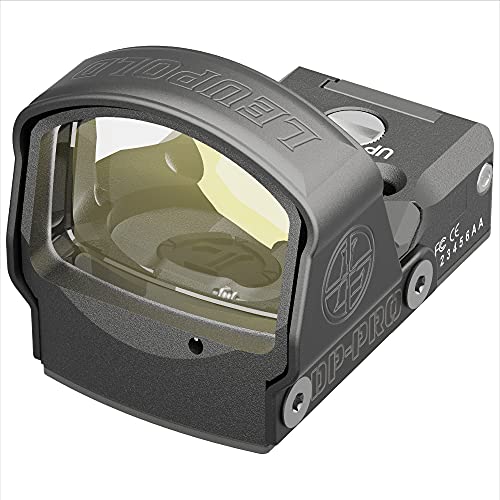
- ARS Mark9.4
ARS Mark is a ranking system developed by bestairriflescopes.com. ARS Mark has no relationship or impact from any manufacturers or sales agent websites. Learn more
- BrandLeupold

- ARS Mark8.6
ARS Mark is a ranking system developed by bestairriflescopes.com. ARS Mark has no relationship or impact from any manufacturers or sales agent websites. Learn more
- BrandAde Advanced Optics

- ARS Mark8.4
ARS Mark is a ranking system developed by bestairriflescopes.com. ARS Mark has no relationship or impact from any manufacturers or sales agent websites. Learn more
- BrandAde Advanced Optics

- ARS Mark8.2
ARS Mark is a ranking system developed by bestairriflescopes.com. ARS Mark has no relationship or impact from any manufacturers or sales agent websites. Learn more
- BrandAde Advanced Optics

- ARS Mark7.8
ARS Mark is a ranking system developed by bestairriflescopes.com. ARS Mark has no relationship or impact from any manufacturers or sales agent websites. Learn more
- BrandAde Advanced Optics
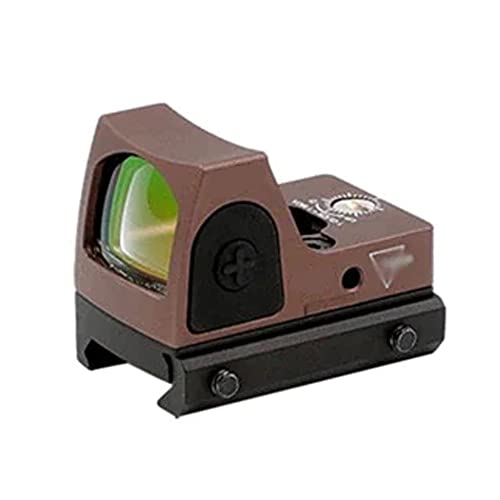
- ARS Mark6.6
ARS Mark is a ranking system developed by bestairriflescopes.com. ARS Mark has no relationship or impact from any manufacturers or sales agent websites. Learn more
- BrandGotical
- ARS Mark6.4
ARS Mark is a ranking system developed by bestairriflescopes.com. ARS Mark has no relationship or impact from any manufacturers or sales agent websites. Learn more
- BrandGotical

- ARS Mark6.0
ARS Mark is a ranking system developed by bestairriflescopes.com. ARS Mark has no relationship or impact from any manufacturers or sales agent websites. Learn more
- BrandGotical
Last update on 2026-09-30 / Affiliate links / Images, Product Titles, and Product Highlights from Amazon Product Advertising API
FAQs
Why does the red dot look blurry or smeared?
A blurry or starburst-shaped dot is usually caused by astigmatism, which is a common minor flaw in the curvature of your eye lens. You can confirm this by taking a photo of the dot with your smartphone camera. If the dot looks crisp on your phone screen but smeared to your eye, lowering the brightness setting or switching to a green dot reticle can help sharpen the image.
Do you need to re-zero after changing the battery?
If your optic uses a top-loading or side-loading battery tray, you do not need to re-zero because the sight stays clamped to your slide during the swap. If your sight has a bottom-loading battery compartment, you must take the optic off the slide to install a new cell. Removing the optic breaks the mount tension, which means you must re-torque the screws and shoot a test group at the range to confirm your zero.
Can you still use your pistol iron sights?
Yes, but standard factory iron sights are often too short to clear the base of a red dot optic. To see your iron sights through the lower portion of the optic window, you generally need to install taller suppressor-height sights. This setup allows you to align your backup sights instantly if the optic battery ever dies or the glass gets obscured.
Will an RMR sight fit on any optics-ready pistol?
No, an RMR sight only fits slides cut specifically for the RMR footprint or pistols equipped with an RMR-compatible adapter plate. Many factory optics-ready handguns use different mounting patterns, such as the Doctor footprint or micro RMSc cuts for slim carry guns. Always verify the screw hole spacing and recoil lug layout of your slide before purchasing an optic.


12 Best 22 Pcp Air Rifle For Hunting of 2026 With Quiet Power

7 Best 22 Pcp Air Rifle Under 300 of 2026 For Backyard Pest Control

10 Best 22 Break Barrel Air Rifles of 2026 For Backyard Pest Control

10 Best 30 Caliber Pcp Air Rifle of 2026 For Medium Game

Top Best 177 Air Rifle Under 100: Budget-Friendly Picks for 2026

How to Safely Reload Shotgun Shells at Home

11 Best Co2 Air Rifle For Pest Control of 2026 To Ensure Humane Dispatch

12 Best Inexpensive Air Rifles of 2026 For Dependable Backyard Accuracy






