
What Is the Effective Range of a Red Dot Sight?

Many shooters assume a red dot sight works like a magnified scope that pulls distant targets in close. In truth, an unmagnified red dot has a practical effective range of 50 to 100 yards for pinpoint shots, though a steady rifle can push out to 200 or 300 yards on larger silhouette targets. Because the glass does not magnify the view, your own eyesight sets the real boundary.
That working distance changes based on your setup. A small dot keeps distant targets visible, while a broad dot can completely cover them up. Handguns also reach their limits much sooner than rifles, though adding a flip-aside magnifier can easily extend your vision. Here is a clear look at what dictates your red dot range and how to get the most distance from your optic.
Realistic Distance Limits for Handguns, Shotguns, and Rifles
Practical effective range is not about how far a bullet can travel. It is about how far away you can reliably place your shot on target without optical magnification. Because an unmagnified red dot sight provides a 1x view with no zoom, your practical shooting distance depends on your firearm platform.
On a handgun, practical range for most shooters sits between 15 and 50 yards. Handguns lack a shoulder stock to stabilize your aim, so natural hand tremor shows up immediately downrange. At 15 to 25 yards, an aiming dot makes target acquisition fast and effortless compared to traditional notched iron sights. Ringing steel plates at 50 yards is doable with disciplined trigger control, but past that mark, pistol bullet drop and hand wobble make consistent hits difficult.
On a shotgun, practical red dot range is between 25 and 75 yards. With buckshot, pellet spread dictates your limits; past 30 yards, patterns widen significantly. When firing solid lead slugs, an open-window sight or enclosed tube sight gives you a crisp aiming point out to about 75 yards. Beyond 75 yards, heavy slugs drop rapidly, requiring vertical holdovers that an unmagnified dot sight is not designed to calculate.
On a rifle or carbine, practical range expands to between 50 and 300 yards. A rifle stock braced against your shoulder creates a steady shooting base. At 50 to 100 yards, you can shoot tight groups on small paper bullseyes. At 200 to 300 yards, standard rifle cartridges shoot flat enough to strike torso-sized steel silhouettes reliably.
Always clear your firearm before handling it. Remove the magazine, lock the action open, and visually inspect the chamber to confirm the firearm is completely unloaded before mounting or adjusting an optic.
How Dot Size Changes Your Aim at 100 Yards and Beyond
The size of your red dot reticle (the glowing red aiming dot inside your optic window) directly controls how far you can shoot before the dot covers your target. Dot sizes are measured in MOA, which stands for Minute of Angle. In plain language, 1 MOA covers about 1 inch of your target at 100 yards. Because optical angles spread outward as distance increases, 1 MOA covers half an inch at 50 yards, 2 inches at 200 yards, and 3 inches at 300 yards.
This math creates a massive difference between a fine 2 MOA dot and a larger 4 MOA dot. At 100 yards, a fine 2 MOA dot covers roughly 2 inches of target space, leaving plenty of room to see small bullseyes or steel plates. At 200 yards, that 2 MOA dot covers 4 inches, and at 300 yards, it covers 6 inches. On a torso-sized target, a 6-inch dot leaves most of the target visible.
A larger 4 MOA dot behaves differently. At 100 yards, a 4 MOA dot covers 4 inches. At 200 yards, it covers 8 inches, and at 300 yards, it covers 12 full inches. If you shoot at an 8-inch steel plate at 200 yards, a 4 MOA dot covers the entire plate. The red light completely blocks your view of the steel edges, forcing you to guess where the center is. A 6 MOA dot, which works well for close handgun defense, becomes impractical for precision beyond 75 yards because it blankets small targets entirely.
If your battery dies downrange, backup sights keep you running. You can check the best iron sights for cowitness with red dot sights in 2026 to see how backup iron sights align cleanly through your optic window.
Why Your Eyesight Sets the True Range Limit
The biggest obstacle to shooting long distances with a red dot is human eyesight. Red dot sights operate at 1x magnification, meaning they offer zero optical zoom. Looking through the glass provides the exact same view as looking past your firearm with the naked eye. The optic simply projects a focused point of light into your field of view so you do not need to align front and rear metal sights.
At 50 yards, most people with average vision can spot a small target clearly. At 100 yards, that same target looks half as big. By 200 or 300 yards, an 8-inch steel plate looks like a tiny speck. If your eyes cannot separate the target from its background, you cannot aim at it effectively. Lighting and contrast play a huge role; a white steel plate against dark soil is easy to spot at 200 yards, while a dark target in brush can blend into the shadows without magnification.
Reticle brightness also impacts how well your eye resolves targets at distance. In bright sunlight, you need a high brightness setting so the dot stands out. But if you leave the brightness turned up in shade, the glowing dot produces an optical flare known as blooming. Blooming makes the dot bleed light outward, turning a clean 2 MOA dot into a blurry blob that hides distant objects.
Natural eye conditions like astigmatism also alter how you see the reticle. An irregular curve in your cornea causes the pinpoint of LED light to appear as a starburst, comet, or cluster of tiny dots. While a slight starburst is easy to manage on a close 10-yard target, that distortion can stretch across several inches of target space at 150 yards.
Five Steps to Extend Your Practical Red Dot Range
To get the maximum effective range out of your red dot sight, you need a reliable zero, a secure mount, and good shooting habits. Follow these five checks and adjustments to stretch your range on the firing line:
-
Zero your optic to match your firearm and cartridge. Zeroing means turning your up-and-down and left-to-right adjustment click dials so your bullet strikes exactly where the dot points at a set distance. For a rifle, a 50-yard zero is ideal because high-velocity rifle bullets fly flat, staying within roughly two inches of your point of aim from 25 yards out past 200 yards. For a handgun, set your zero at 15 or 25 yards.
Reason: A balanced zero minimizes the vertical holdover adjustments you need to make at varied shooting distances. -
Secure your mounting base with an inch-pound torque tool. Attach your optic to your standard Picatinny or 20mm slotted accessory rail, or directly to your handgun slide footprint, using the correct screws. Apply a small drop of medium-strength blue thread-locking fluid to clean threads and tighten each screw to the manufacturer torque rating using an inch-pound torque tool.
Reason: Recoil vibrates loose mounting screws over time, causing your point of impact to wander unpredictably at 100 yards and beyond. -
Dial down your reticle brightness until the dot is crisp. Look through the optic at your target and lower the brightness dial until the aiming dot is just bright enough to see clearly without glowing edges or halo.
Reason: A dimmer dot stays sharp and compact, preventing red light flare from covering your target at extended distances. -
Keep both eyes open and lock your focus onto the target. Instead of staring at the red dot like a front iron sight post, keep both eyes open and look directly through the glass at the target. Allow the floating red dot to rest over your point of impact naturally while your vision remains locked downrange.
Reason: Target-focused shooting preserves your natural depth perception, helping your brain judge target distance accurately. -
Add a flip-to-side magnifier behind your red dot optic. A magnifier is an unpowered optical tube, usually offering 3x zoom, that mounts on your rail directly behind an enclosed tube sight or open-window sight. You can flip it to the side for close shooting, or flip it in line with the red dot past 100 yards.
Reason: A 3x magnifier makes your target look three times larger without increasing the dot size relative to the target, allowing cleaner shot placement out to 300 yards.
What to Look for in a Dot Sight for Longer Distances
If you plan to shoot past 50 yards, selecting the right optic design makes hitting distant targets much simpler. You need an optic that balances a crisp reticle with clean glass and reliable mounting options.
Start by prioritizing dot size. A fine 2 MOA aiming dot is ideal for rifles and target shooting because it covers very little target area, leaving your view clear at 100 to 200 yards. Larger 4 MOA and 6 MOA dots are fast to pick up in close-quarters shooting, but they blot out distant targets too quickly for precision work.
Next, consider the optic body style. Enclosed tube sights offer physical protection against rain and dust, and their cylindrical housing aligns cleanly with flip-to-side magnifiers on a rifle rail. Open-window sights offer an unobstructed view and save weight, making them a natural choice for handguns and lightweight rimfire pistols. If you shoot a dedicated target handgun, check out our guide on the best red dot sight for Ruger Mark in 2026 to see how compact optics enhance accuracy on rimfire platforms.
Finally, verify the glass coatings and brightness controls. Quality optical glass with minimal color tint ensures distant targets stay clear under overcast skies. Optics with motion-sensing auto-on features preserve battery life while keeping your reticle ready instantly whenever you pick up your firearm.

- ARS Mark9.4
ARS Mark is a ranking system developed by bestairriflescopes.com. ARS Mark has no relationship or impact from any manufacturers or sales agent websites. Learn more
- BrandSig Sauer

- ARS Mark9.4
ARS Mark is a ranking system developed by bestairriflescopes.com. ARS Mark has no relationship or impact from any manufacturers or sales agent websites. Learn more
- BrandCVLIFE

- ARS Mark9.0
ARS Mark is a ranking system developed by bestairriflescopes.com. ARS Mark has no relationship or impact from any manufacturers or sales agent websites. Learn more
- BrandCVLIFE

- ARS Mark9.0
ARS Mark is a ranking system developed by bestairriflescopes.com. ARS Mark has no relationship or impact from any manufacturers or sales agent websites. Learn more
- BrandARORY

- ARS Mark9.0
ARS Mark is a ranking system developed by bestairriflescopes.com. ARS Mark has no relationship or impact from any manufacturers or sales agent websites. Learn more
- BrandBushnell

- ARS Mark8.8
ARS Mark is a ranking system developed by bestairriflescopes.com. ARS Mark has no relationship or impact from any manufacturers or sales agent websites. Learn more
- BrandCVLIFE
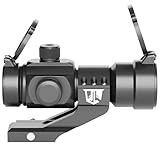
- ARS Mark8.8
ARS Mark is a ranking system developed by bestairriflescopes.com. ARS Mark has no relationship or impact from any manufacturers or sales agent websites. Learn more
- BrandOZARK ARMAMENT
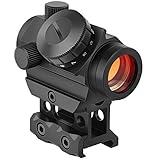
- ARS Mark8.6
ARS Mark is a ranking system developed by bestairriflescopes.com. ARS Mark has no relationship or impact from any manufacturers or sales agent websites. Learn more
- BrandMidTen
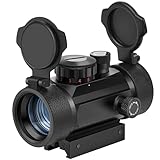
- ARS Mark8.6
ARS Mark is a ranking system developed by bestairriflescopes.com. ARS Mark has no relationship or impact from any manufacturers or sales agent websites. Learn more
- BrandEZshoot

- ARS Mark7.6
ARS Mark is a ranking system developed by bestairriflescopes.com. ARS Mark has no relationship or impact from any manufacturers or sales agent websites. Learn more
- BrandBushnell
Last update on 2026-09-30 / Affiliate links / Images, Product Titles, and Product Highlights from Amazon Product Advertising API
FAQs
Can you hit a target at 300 yards with an unmagnified red dot?
Yes, you can hit torso-sized steel plates or silhouette targets at 300 yards using an unmagnified red dot on a flat-shooting rifle. The main challenge is seeing the target clearly, because a 1x optic does not bring distant objects closer to your eyes. You also need to compensate for natural bullet drop by placing the aiming dot near the top edge of your target.
Does adding a 3x magnifier make the red dot cover more of the target?
No, a flip-to-side magnifier enlarges both the target and the red dot at the exact same ratio. If your 2 MOA dot covers two inches of a target at 100 yards, looking through a 3x magnifier makes the target appear three times larger while the dot still covers that exact same two-inch space. This visual boost helps you identify target edges and center your shot much more easily.
What is the best distance to zero a red dot on an AR-15 rifle?
A 50-yard zero is the most popular and practical distance for an AR-15 chambered in standard 5.56 or .223 ammunition. With a 50-yard zero, your bullets travel within about two inches high or low from 25 yards out to roughly 225 yards. That flat flight path allows you to hold your aiming dot dead center without calculating bullet drop across standard shooting distances.
Why does my red dot look like a blurry starburst instead of a round dot?
A starburst or clustered reticle is usually caused by eye astigmatism or setting the optic brightness dial too high for your surroundings. When brightness is too high, optical flare blooms around the LED emitter and distorts the dot shape. You can verify whether your eyes are causing the blur by looking at the dot through your smartphone camera screen; if the dot appears sharp on the screen, your eye astigmatism is responsible for the flare.


12 Best 22 Pcp Air Rifle For Hunting of 2026 With Quiet Power

7 Best 22 Pcp Air Rifle Under 300 of 2026 For Backyard Pest Control

10 Best 22 Break Barrel Air Rifles of 2026 For Backyard Pest Control

10 Best 30 Caliber Pcp Air Rifle of 2026 For Medium Game

Top Best 177 Air Rifle Under 100: Budget-Friendly Picks for 2026

How to Safely Reload Shotgun Shells at Home

11 Best Co2 Air Rifle For Pest Control of 2026 To Ensure Humane Dispatch

12 Best Inexpensive Air Rifles of 2026 For Dependable Backyard Accuracy






