
What Is the Front Sight of a Gun and How Does It Work?

Getting mixed up by gun parts is completely normal, and there is nothing to worry about here. The front sight is simply the small raised post or bead sitting near the muzzle, which is the front tip of the barrel where the bullet exits. It pairs with the rear sight opening closer to your eye, creating a straight reference line that guides your aim onto the target.
The exact shape changes depending on the firearm you hold. Handguns usually feature a short steel blade, shotguns often rely on a tiny round bead, and rifles may have a taller post or a folding backup piece. Some designs also use bright colored inserts that catch light to help your eye spot them right away. Getting familiar with your sight setup takes only a minute, so let us look at how it works and where your eyes should focus when shooting.
Where the Front Sight Sits and How It Pairs with the Rear Sight
Every traditional firearm uses two basic aiming points mounted along the top of the barrel or slide. The front sight is the small metal piece mounted at the far end of the barrel, resting right beside the muzzle (the front tip of the barrel where the bullet exits). Because it sits at the absolute front of the firearm, it acts as the primary steering point for your barrel. Wherever that front post points, the barrel points.
Before you inspect or touch any sights on your firearm, always follow basic safety rules. Remove the magazine, pull the slide or bolt back, visually check the empty chamber, and keep the gun pointed in a safe direction. Once you confirm the gun is clear, you can look down the top edge to see how the sighting system is laid out.
The front sight never works alone. It always pairs with a rear sight, which sits at the back of the gun closest to your face. On most handguns and rifles, the rear sight has a rear sight notch (a small cutout or opening near the back of the gun). Some rifles use a small round ring instead, often called a peep sight or aperture.
To understand why a gun needs both sights, imagine holding a plain broomstick out in front of you. If you close one eye and look down the round wooden stick, you can guess where it points, but you have no reference point near your eye. If your wrist tilts slightly up or to the side, the far end swings wildly off mark. A straight line requires two distinct points in space. The rear sight provides your near point, anchoring your visual perspective, while the front sight provides your far point. When you line up the front sight inside the rear sight opening, your eye forms an unbroken, level line that runs straight down the bore of the barrel and onto your target.
Missing either sight breaks this alignment. If a gun only had a rear notch, you would have nothing to steer onto the target. If it only had a front sight, your eye could wander left, right, high, or low without you noticing, sending shots completely off paper. Together, these two pieces create sight alignment (centering the front post inside the rear opening) so you can shoot with consistent accuracy.
Step-by-Step Guide to Lining Up Your Sights on a Target
Lining up iron sights can feel awkward the first time you try it. Your hands might wobble, and your eye might struggle to figure out which piece goes where. Follow these steps to build a consistent, accurate sight picture every time you raise your firearm:
- Check your firearm safety and establish your grip. Verify the chamber is empty, grip the firearm firmly with both hands, and face downrange toward your backstop. Keep your finger straight and rested along the frame, off the trigger.
- Bring the gun up to your eye line. Do not duck your head down or hunch your neck to meet the gun. Instead, keep your head level and raise the firearm up until the top edge of the slide or barrel meets your direct line of sight.
- Center the front post inside the rear notch. Look through the rear sight notch. Move the gun slightly until the front sight post sits squarely in the middle of that rear cutout. You should see an even sliver of daylight on the left side of the front post and an identical sliver of daylight on the right side. Shooters call this rule "equal light."
- Level the horizontal line. Look at the top flat edge of the front sight post. Adjust the tilt of your hands until the top edge of the front post sits completely flat and even with the top edges of the rear sight notch. Shooters call this rule "equal height." Combining both rules gives you equal height and equal light.
- Place the aligned sights on your target. Once the front post is perfectly centered and leveled inside the rear notch, move that entire sight package over the spot you want to hit. Most shooters place the flat top of the front sight post directly across the center bullseye of the target.
Understanding this alignment helps you diagnose why shots miss. Errors in your sight alignment affect elevation (adjusting a shot up or down) and windage (adjusting a shot left or right). If the front post peeks up higher than the rear notch, the muzzle points upward, and your bullet hits high above the bullseye. If the front post dips below the top edges of the rear notch, the muzzle points downward, and your shot lands low in the dirt. Similarly, if the front post hugs the left edge of the rear cutout, your shot drifts wide left. Practicing dry-fire drills with an unloaded gun lets you build the muscle memory needed to snap the front post into the center of the notch instantly.
The Front Sight Focus Rule: Where Your Eyes Must Look
One of the hardest lessons for new shooters is learning where to look when aiming. When you hold a gun at arm's length, your eye faces three distinct objects located at three different distances: the rear sight about eighteen inches away, the front sight about twenty-four inches away, and the target several yards downrange. The human eye cannot bring three different focal planes into sharp, crisp focus at the exact same moment.
Naturally, your brain wants to stare directly at the target. That target is the most interesting thing downrange, so your instinct is to lock your vision onto the bullseye. When you do that, both the front sight post and the rear notch turn into blurry, translucent shadows. This causes major problems. If you try to aim with a blurry front sight, you cannot see if the post is slightly tilted, dipping low, or drifting toward one side of the notch. A tiny misalignment of just one-sixteenth of an inch at the front sight can cause your bullet to miss the target by several inches at fifteen yards, or several feet at fifty yards.
The solution is front sight focus. You must consciously force your visual focus back to the front sight post. When you do this correctly, three things happen visually:
- The front sight post appears razor-sharp, with crisp, clean corners on its top edges.
- The rear sight notch blurs slightly, softening around the edges while still remaining visible enough to frame the front post.
- The target downrange blurs slightly into a soft shape behind your front post.
Do not let a blurry target worry you. You do not need to count the fine rings on a paper target to hit it. A soft silhouette gives you plenty of visual information to center your sights on the mass of the target. But you do need crystal-clear focus on the front post to guarantee that your barrel points exactly where you think it points. As you squeeze the trigger smoothly, stare right at the top edge of that front post, keeping it rock-steady inside the rear notch until the shot breaks.
Common Front Sight Styles and How to Adjust or Replace Them
Front sights come in several shapes and styles depending on the type of firearm you shoot. A standard handgun usually features a plain black steel post or a post marked with a white contrast dot. Shotguns, on the other hand, often feature a simple brass or silver bead mounted directly onto the barrel rib. Rifle sights vary widely, ranging from the tall, triangular A2 front sight tower found on classic military-style rifles to folding backup iron sights that lay flat on modern accessory rails.
Many shooters choose to replace their stock front sights with high-visibility upgrades. Fiber-optic sights are especially popular because they hold a tiny colored acrylic rod (often red or green) that gathers natural ambient daylight and glows brightly without needing batteries. Tritium night sights use a tiny, sealed radioactive vial that glows softly in complete darkness, making the front post easy to pick out in low-light home defense situations. If you run an optical sight, you might use taller backup iron sights to maintain co-witness, which means lining up your backup iron sights through the optic glass so you still have an aiming system if the red dot battery fails. You can learn more about configuring these setups in our guide to the best iron sights for cowitness with red dot sights in 2026.
If your shots consistently land high, low, left, or right even when your fundamentals are solid, you may need to adjust your front sight. Use this checklist before adjusting or changing any front sight:
- Unload and clear the firearm: Drop the magazine, rack the slide or bolt, visually inspect the chamber, and verify that no live ammunition is anywhere in your work area.
- Identify the mounting style: Look closely at the base of the front sight. Handgun sights often sit in a dovetailed horizontal slot or secure with a small hex screw under the slide. Many rifle posts screw directly into a threaded base, while some shotgun beads screw directly into the barrel rib.
- Select the right adjustment tools: Use a dedicated multi-prong tool for screw-in rifle posts. For dovetailed handgun sights, use a sight pusher tool or a nylon drift punch tool made of soft material that will not scratch, gouge, or leave marks on your gun finish. Never strike a steel sight with a bare steel hammer.
- Remember the reverse front sight rule: Adjusting a front sight works in the exact opposite direction of a rear sight. If your gun is shooting low, you must move the front sight post down (or file/replace it with a shorter post) to raise the point of impact. If your gun shoots high, raise the front post. If your gun shoots to the left, move the front sight to the left to push your shots back toward the center.
- Know when to consult a gunsmith: If a front sight is pinned in place, silver-soldered, or requires heavy mechanical press force, stop and bring the slide or barrel to a qualified professional to avoid warping your slide or ruining the sight channel.
Upgrading Your Front Sight and Choosing the Right Adjustment Tools
If you find that your factory front sight is hard to see or fails to align with your natural point of aim, replacing or upgrading it is one of the most effective modifications you can make. A bright, well-defined front post helps your eye acquire the sight rapidly, shaving critical fractions of a second off your target acquisition time and reducing eye strain during long range sessions.
When shopping for replacement front sights, start by verifying your gun exact make, model, and slide cut. Handgun manufacturers use specific dovetail dimensions, meaning a sight cut for one brand will not fit another without costly custom machining. Pay close attention to sight height as well. If you install a tall aftermarket front sight without matching the rear sight height, your elevation will be severely misaligned, causing your shots to land far below your point of aim. If you run an optic, confirm whether you need standard-height sights or suppressor-height sights designed to clear the base of your red dot window.
Equally important is investing in proper adjustment tools. Attempting to adjust or install sights using improper hand tools, like metal screwdrivers or steel punches, frequently slips and scratches the firearm slide or breaks fragile fiber-optic light pipes. Look for non-marring sight drift punches made of dense nylon or brass, or dedicated screw tools designed specifically for your firearm platform. Having the correct tools ensures your sight sits securely, remains perfectly centered, and withstands repeated recoil without shaking loose downrange.
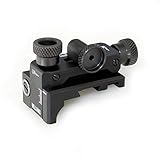
- ARS Mark9.2
ARS Mark is a ranking system developed by bestairriflescopes.com. ARS Mark has no relationship or impact from any manufacturers or sales agent websites. Learn more
- BrandWilliams Gun Sight Company

- ARS Mark9.0
ARS Mark is a ranking system developed by bestairriflescopes.com. ARS Mark has no relationship or impact from any manufacturers or sales agent websites. Learn more
- BrandAolamegs

- ARS Mark9.0
ARS Mark is a ranking system developed by bestairriflescopes.com. ARS Mark has no relationship or impact from any manufacturers or sales agent websites. Learn more
- BrandStinger

- ARS Mark8.8
ARS Mark is a ranking system developed by bestairriflescopes.com. ARS Mark has no relationship or impact from any manufacturers or sales agent websites. Learn more
- BrandSniper

- ARS Mark8.6
ARS Mark is a ranking system developed by bestairriflescopes.com. ARS Mark has no relationship or impact from any manufacturers or sales agent websites. Learn more
- BrandHIVIZ

- ARS Mark8.6
ARS Mark is a ranking system developed by bestairriflescopes.com. ARS Mark has no relationship or impact from any manufacturers or sales agent websites. Learn more
- BrandTRUGLO

- ARS Mark8.2
ARS Mark is a ranking system developed by bestairriflescopes.com. ARS Mark has no relationship or impact from any manufacturers or sales agent websites. Learn more
- BrandTACFUN

- ARS Mark8.0
ARS Mark is a ranking system developed by bestairriflescopes.com. ARS Mark has no relationship or impact from any manufacturers or sales agent websites. Learn more
- BrandHIVIZ
Last update on 2026-09-30 / Affiliate links / Images, Product Titles, and Product Highlights from Amazon Product Advertising API
FAQs
Can I aim and shoot a gun without a front sight?
You can physically fire the gun, but you cannot aim it reliably without a front sight. Without a front reference point near the muzzle, your eye has no way to tell if the barrel is tilted up, down, or sideways. Shooting without a front sight leads to wild misses, even at close self-defense distances.
Why do some front sights have colored dots or fiber optic rods?
Plain black front sights can blend into dark targets or shadowy shooting stalls, making them hard to see quickly. Bright white dots, high-visibility paint, and daylight-gathering fiber optic rods create high visual contrast against the target background. This helps your eye instantly snap onto the front post so you can align your sights much faster.
How do I know if my front sight is loose or off center?
With the firearm completely unloaded and clear, grasp the front sight post between your thumb and index finger to check for any wiggle or play. Next, look straight down the top of the slide to confirm the sight sits perfectly centered in its dovetail slot or mounting base. If your shots consistently group several inches to one side despite good trigger control, the sight may have drifted off center during recoil.


12 Best 22 Pcp Air Rifle For Hunting of 2026 With Quiet Power

7 Best 22 Pcp Air Rifle Under 300 of 2026 For Backyard Pest Control

10 Best 22 Break Barrel Air Rifles of 2026 For Backyard Pest Control

10 Best 30 Caliber Pcp Air Rifle of 2026 For Medium Game

Top Best 177 Air Rifle Under 100: Budget-Friendly Picks for 2026

How to Safely Reload Shotgun Shells at Home

11 Best Co2 Air Rifle For Pest Control of 2026 To Ensure Humane Dispatch

12 Best Inexpensive Air Rifles of 2026 For Dependable Backyard Accuracy






