
What Is the Most Accurate .22 Air Rifle?

A regulated PCP air rifle shoots the straightest. These guns draw air from a pressurized onboard tank, using an internal regulator valve to feed the exact same push behind every shot. Unlike spring-piston rifles that jolt and vibrate before the pellet even leaves the barrel, pre-charged pneumatics fire with zero recoil. The crosshairs stay pinned on your target from the moment you pull the trigger.
Real-world precision still hinges on how you match your gear. Pellets need to fit the unique rifling of your barrel, since an ill-fitting shape or weight creates erratic wobbles in the air. Driving a pellet too fast also ruins consistency, as exceeding the speed of sound causes turbulent flight. If you shoot a traditional break-barrel instead, your hold technique makes or breaks your groups. Here is what creates true precision and how to achieve it.
The Short Version
- Pre-charged pneumatic (PCP) rifles deliver the highest accuracy: Rifles filled with high-pressure air from a special hand pump, compressor, or external tank have virtually zero recoil and release identical air pressure behind every shot.
- Subsonic velocity keeps pellets flying straight: Pellets with a pinched waist travel smoothest below the speed of sound, whereas pushing pellets past 1,000 feet per second causes turbulence, wobbling, and wide shot groups.
- Barrel and pellet matching is essential: Every rifled barrel has small manufacturing variations, meaning your gun will prefer one specific lead pellet weight and dome shape over others.
- Break-barrel rifles require an open, loose grip: If you use a rifle cocked by pivoting the barrel down to compress an internal spring or gas piston, squeezing the stock tightly makes the rifle jump off target before the pellet exits the muzzle.
Why PCP Air Rifles Outshoot Break-Barrel Springers
If you want to place pellet after pellet through the exact same hole at thirty or forty yards, action type is the single most important factor. Pre-charged pneumatic airguns, commonly called PCPs, dominate target competitions and precision hunting for one simple reason: they remove almost all mechanical movement during the shot.
To understand why PCPs shoot so straight, consider what happens inside a traditional break-barrel rifle. When you cock a spring-piston rifle, you bend the barrel down to compress a heavy steel spring or pressurized gas cylinder. Squeezing the trigger releases that heavy internal piston, which violently slams forward inside the compression chamber to push air behind the pellet. This sudden surge produces a sharp, two-stage kick: first backward against your shoulder, then forward as the piston crashes into the front wall of the chamber.
Crucially, that violent shudder happens while the pellet is still sliding down the barrel. If your grip, cheek position, or shoulder pressure shifts by even a fraction of an inch between shots, the barrel points somewhere slightly different as the pellet leaves the muzzle. This behavior is called hold sensitivity, and it is the primary reason shooters get frustrated with wide, erratic shot groups on paper.
PCP airguns eliminate this issue entirely. A PCP rifle stores compressed air inside an onboard reservoir. When you pull the trigger, a light hammer taps a valve open for a split second, releasing a tiny pulse of pressurized air directly behind the pellet. There is no heavy piston slamming forward, no massive spring vibrating, and virtually zero movement in the stock. The crosshairs stay pinned on your bullseye through the entire trigger pull.
Many accurate PCP designs also include an internal regulator. A regulator is an internal valve that keeps air pressure identical for every shot, regardless of the remaining pressure in the main air reservoir. When every pellet leaves the muzzle at the exact same exit speed, gravity pulls them down by the exact same amount, eliminating the vertical stringing that ruins long-range targets.
The Speed Trap: Why High Velocity Hurts Precision
Many shoppers assume that higher speed automatically creates better accuracy. Manufacturers often play into this belief by advertising exit speeds of 1,200 or 1,300 feet per second (FPS) on rifle boxes. But in the world of pellet guns, pushing for maximum velocity is often the quickest way to ruin your shot groups.
Airgun pellets are built with a classic diabolo shape: a solid, rounded head, a narrow pinched waist, and a flared, hollow skirt. This shuttlecock profile creates natural drag that keeps the nose pointed forward without needing huge rotational stability. But that design is built specifically for subsonic flight, well below the speed of sound, which sits around 1,125 feet per second in standard air.
When a light pellet approaches the sound barrier or breaks through it, turbulent shockwaves build up along its curved head. These chaotic air currents spill over the pinched waist and hit the flared skirt, causing the pellet to wobble, spiral, or tumble out of control. A pellet leaving the muzzle at blistering supersonic speed might look impressive on a box label, but downrange at thirty yards, it will often drift unpredictably into wide, frustrating patterns.
True precision with a .22 caliber air rifle happens at subsonic speeds, typically between 800 and 920 feet per second. At these sensible velocities, the lead projectile cuts cleanly through the air without hitting turbulent buffeting. The .22 caliber pellet carries significantly more weight than a .177 pellet, meaning it retains its real punch, or foot-pounds of energy (FPE), downrange while resisting crosswinds far better, all without needing unstable speeds.
Barrel and Pellet Matching: How to Find the Right Lead Pellet
No two air rifle barrels are identical. Even two identical rifles coming off the same assembly line on the same afternoon have microscopic variations inside their rifled steel grooves. A specific pellet brand that stacks neat, single-hole groups in one rifle might scatter like birdshot in another.
Finding what your rifle prefers requires a systematic evaluation of pellet characteristics rather than buying whatever tin is sitting on the local store shelf. Keep this checklist in mind when choosing ammunition:
- Nose profile: Domed or round-nose pellets consistently deliver the tightest groups past twenty yards. Pointed pellets often have slight balance imperfections that lead to drift, while flat-headed wadcutter pellets punch clean holes in paper at ten yards but lose stability quickly over longer distances.
- Pellet weight: Standard .22 caliber lead pellets generally weigh between 14 and 18 grains. Lighter pellets can be pushed too fast by high-powered rifles, causing erratic flight, while heavier pellets drop faster but resist wind interference far better.
- Lead composition: Soft lead pellets deform slightly upon firing, expanding their hollow skirts to grip the internal rifling grooves tightly and create a perfect gas seal. Avoid hard alloy pellets that slide through the barrel without engaging the rifling cleanly.
- Head diameter: Premium pellet makers offer minute variations in head sizing, such as 5.51 mm, 5.52 mm, or 5.53 mm. Selecting the diameter that snugly engages your barrel lands can instantly tighten your shot groups.
There is also a critical ammunition rule every shooter must follow: never feed smooth steel BBs into a rifled pellet barrel. Steel BBs are designed for smoothbore plinking guns, and shooting them through a rifled barrel will permanently strip and gouge the delicate steel rifling, destroying the precision of your rifle forever. If you want high-volume rapid fire, look at dedicated smoothbore options like full-auto BB guns. If you want firearm drills, you can use a CO2 pistol for realistic training, while reserving your precision .22 pellet rifle strictly for shaped lead ammunition.
To identify the best round for your barrel, purchase a sampler box containing four or five different weights of domed lead pellets. Set up a secure target at twenty-five yards. Shoot distinct five-shot groups with each pellet style from a steady rest, without adjusting your scope between groups. You will quickly see one specific tin produce a neat cloverleaf, giving you the exact match your rifle requires.
How to Master the Artillery Hold for Springer Accuracy
If you prefer the simplicity of a break-barrel rifle that does not rely on air pumps or charging tanks, you can still achieve impressive precision. You simply need to adapt your shooting form to accommodate the rifle's internal piston movement. This traditional technique is called the artillery hold, named after heavy field cannons that are allowed to slide freely backward along their carriages when fired.
Firearm shooters are typically taught to pull a rifle firmly into the pocket of their shoulder and clamp their support hand tightly over the stock to manage recoil. If you grip a spring-piston or gas-piston break barrel this way, your rigid muscles will fight the natural forward-and-backward piston vibration, twisting the barrel as the pellet travels. Follow these steps to shoot a break barrel with consistent accuracy:
- Find the balance point: Rest the rifle's wooden or synthetic forend across the open palm of your non-dominant hand, directly beneath the rifle's natural balance point forward of the trigger guard.
- Open your support hand: Keep your support palm flat and relaxed, or allow the rifle to cradle gently between your fingers without closing your grip. Think of your front hand as a smooth shelf, not a clamp.
- Lighten shoulder contact: Bring the buttpad against your shoulder with only enough contact to keep the rifle seated. Do not pull the rifle hard into your torso.
- Relax your trigger hand: Wrap your firing hand gently around the pistol grip, placing your thumb along the side or over the top rather than white-knuckling the wood. Pull the trigger straight back using only the center pad of your index finger.
- Hold your sight picture: Keep your eye focused on the crosshairs through the entire shot and for a full second after the gun fires. Pellets leave the barrel slower than firearm bullets, so moving your head or body early will immediately pull your shot wide.
Choosing the Right Airgun Design for Your Needs
Selecting the most accurate rifle configuration comes down to how you plan to use it, where you shoot, and how much gear you want to manage. While a specialized target shooter might demand absolute pinpoint precision, a backyard shooter managing garden pests may value fast, self-contained operation.
Recoilless PCP systems represent the peak of bench-rest precision. Because they do not shake when fired, you can rest them directly on sandbags, hard wooden rails, or bipods without altering your point of impact. They allow you to concentrate entirely on reading the wind and squeezing the trigger. Before choosing a PCP model, verify how you intend to keep its onboard reservoir filled. High-pressure hand pumps offer self-reliance but demand serious physical muscle effort, while compact electric compressors or pre-charged disposable gas bottles provide fast, effortless refills.
Break-barrel models remain the king of grab-and-go convenience. You do not need air tanks, charging hoses, or hand pumps to operate them; simply pivot the barrel down, drop in a lead pellet, snap the barrel shut, and you are ready to fire. Modern multi-shot revolving pellet wheels make reloading even faster by indexing a fresh pellet into the breech automatically each time you cock the action. When choosing a break barrel, look for smooth gas-piston power plants over traditional coiled wire springs, as gas pistons settle faster and produce less twisting vibration.
Take time to examine your scope mounts as well. Because break-barrel rifles produce a unique two-way forward and backward recoil, they can quickly destroy scopes designed for ordinary rimfire or centerfire firearms. Always confirm that your optic is explicitly rated for spring airguns. Look for deep 11mm dovetail grooves equipped with a sturdy metal recoil stop pin, or notched Picatinny tactical rails that lock scope rings solidly against movement.
Finally, always build an appropriate backstop before shooting any precision airgun. While you might consider stopping power if you were selecting a shotgun for dependable home defense, backyard airgun practice is purely about safe target containment. Always shoot into a rated steel pellet trap, a heavy-duty box packed with dense rubber mulch, or a thick earthen berm that captures lead completely without any danger of ricochet.

- ARS Mark9.7
ARS Mark is a ranking system developed by bestairriflescopes.com. ARS Mark has no relationship or impact from any manufacturers or sales agent websites. Learn more
- BrandGamo

- ARS Mark8.9
ARS Mark is a ranking system developed by bestairriflescopes.com. ARS Mark has no relationship or impact from any manufacturers or sales agent websites. Learn more
- BrandUmarex

- ARS Mark8.5
ARS Mark is a ranking system developed by bestairriflescopes.com. ARS Mark has no relationship or impact from any manufacturers or sales agent websites. Learn more
- BrandDPMS
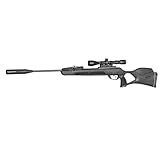
- ARS Mark8.4
ARS Mark is a ranking system developed by bestairriflescopes.com. ARS Mark has no relationship or impact from any manufacturers or sales agent websites. Learn more
- BrandGamo

- ARS Mark7.5
ARS Mark is a ranking system developed by bestairriflescopes.com. ARS Mark has no relationship or impact from any manufacturers or sales agent websites. Learn more
- BrandGamo
Last update on 2026-10-15 / Affiliate links / Images, Product Titles, and Product Highlights from Amazon Product Advertising API
FAQs
Why do pre-charged pneumatic rifles cost more to set up than break barrels?
PCP rifles require high-pressure air containment systems built to handle thousands of pounds per square inch safely. In addition to the rifle itself, you need specialized filling equipment, such as a high-pressure hand pump, an electric compressor, or a scuba tank with an adapter hose. Break barrels incorporate their entire power plant directly inside the receiver, requiring no extra filling accessories.
What distance can an accurate .22 air rifle reliably hit?
A quality .22 PCP rifle shooting matched lead pellets can easily place five shots inside a one-inch circle at fifty yards under calm wind conditions. A well-tuned break barrel in the hands of an experienced shooter using the artillery hold can reliably group shots inside an inch out to thirty or thirty-five yards. Past fifty yards, pellet drop and wind drift increase rapidly, demanding precise distance estimation.
Can dry firing damage an accurate air rifle?
Dry firing, which means pulling the trigger without a pellet loaded, is very dangerous for spring-piston and gas-piston break-barrel airguns. Without the air resistance of a snug lead pellet inside the barrel, the internal piston slams violently into the front of the compression cylinder, which can crack seals, shatter springs, and permanently damage the rifle. Many PCP rifles can be dry-fired safely because they only release compressed air from a valve, but you should always check the manufacturer manual to confirm.
Does pellet head shape really change group size?
Pellet head shape dramatically affects downrange stability and group sizes. Domed round-nose pellets create the smoothest aerodynamic flow and maintain balance over long distances, making them the standard choice for tight groups past twenty yards. Flat-nosed wadcutters lose speed rapidly and tumble at longer ranges, while pointed pellets are frequently unbalanced and drift off target as distances increase.


12 Best 22 Pcp Air Rifle For Hunting of 2026 With Quiet Power

7 Best 22 Pcp Air Rifle Under 300 of 2026 For Backyard Pest Control

10 Best 22 Break Barrel Air Rifles of 2026 For Backyard Pest Control

10 Best 30 Caliber Pcp Air Rifle of 2026 For Medium Game

Top Best 177 Air Rifle Under 100: Budget-Friendly Picks for 2026

How to Safely Reload Shotgun Shells at Home

11 Best Co2 Air Rifle For Pest Control of 2026 To Ensure Humane Dispatch

12 Best Inexpensive Air Rifles of 2026 For Dependable Backyard Accuracy






