
What Is the Most Accurate Air Rifle for Tight Groups?

A shooter sits at a backyard bench, staring at a paper target with holes scattered three inches wide despite steady crosshairs. Regulated pre-charged pneumatic rifles produce the tightest shot clusters because they push pellets with smooth compressed air rather than a thrashing metal spring. That steady air valve keeps pressure identical on every trigger pull, leaving the gun virtually motionless.
Even so, true precision still depends on how you balance your gear. Spring-piston guns shake violently before the pellet clears the barrel, and chasing extreme speeds often backfires by causing light pellets to wobble in flight. Finding the right pellet shape also matters, since each barrel prefers a specific weight to stabilize properly. Here is how these mechanisms compare and how to get your shots hitting the exact same spot.
Why do compressed-air rifles shoot the tightest groups?
Pre-charged pneumatic rifles, commonly known as PCP airguns, deliver the tightest shot clusters because they produce virtually zero recoil. These are rifles filled with high-pressure air from a special hand pump, compressor, or scuba tank. That compressed air rests inside an onboard cylinder, waiting behind a small internal valve. When you squeeze the trigger, a light hammer taps that valve open for a fraction of a second. A measured burst of air pushes the pellet down the barrel without any violent parts slamming around inside the gun.
The most precise models include an internal regulator. A regulator is a small internal valve that keeps air pressure identical for every shot. Without a regulator, an air reservoir starts at peak pressure and slowly drops each time you shoot. That pressure drop causes an uneven power curve where earlier pellets fly at different speeds than later pellets. A regulated valve fixes that issue entirely. It feeds the exact same air volume and pressure behind the pellet on every single shot until the main cylinder runs low.
Consistency is what creates tight groupings on a paper target. A grouping is simply the close pattern or cluster of multiple shots aimed at the same bullseye. When every pellet exits the barrel at the exact same muzzle velocity, gravity pulls them down by the exact same amount at 30, 40, or 50 yards. Your pellets land on top of one another rather than stringing up and down across the target paper.
The lack of internal movement also means your sight picture never shifts during the shot. When you pull the trigger, the crosshairs stay resting on the target. You do not have to fight heavy mechanical kick or anticipate a violent jump. That still, steady firing cycle makes pre-charged air rifles the most forgiving design for target shooters and backyard pest controllers who demand pinpoint precision.
Why does spring piston recoil ruin your aim?
Break-barrel rifles are cocked by pivoting the barrel down to compress an internal spring or gas piston. Shooters love them because they are self-contained and require no air pumps or gas cylinders. But their internal mechanism creates a violent, two-way recoil cycle that makes tight shot groups challenging to master.
When you pull the trigger on a spring-piston rifle, a heavy steel coil uncoils with massive force. That uncoiling spring drives a heavy steel piston forward inside a metal air chamber. As the piston flies forward, the rifle kicks backward into your shoulder. A millisecond later, that heavy piston crashes into the front wall of the air cylinder to compress the air pocket behind the pellet. That sudden, violent stop jerks the entire rifle forward.
This violent two-way kick happens while the pellet is still moving down the barrel. Pellets travel much slower than firearm bullets, spending extra time inside the rifled bore before clearing the muzzle. If you grip the rifle stock tightly on your first shot, loosely on your second, and slightly off-center on your third, the barrel vibrates in three different directions while the pellet is in flight. Those tiny movement changes scatter your shots across the target board.
This harsh forward-and-backward recoil also destroys standard firearm scopes. Firearm scopes are built to withstand kick in only one direction. Spring guns require specialized spring-airgun-rated scopes mounted on narrow 11mm dovetail grooves or notched tactical rails to prevent the crosshairs from shattering. Another hidden hazard is dieseling, which happens when excess grease or oil inside the compression chamber ignites from the sudden heat of the slamming piston. Dieseling creates a loud crack, puffs smoke out the barrel, and causes wild velocity spikes that scatter your shots several inches off target.
Does faster pellet speed make a rifle less accurate?
Gun packaging often advertises blazing exit speeds of 1,200 to 1,400 feet per second. Muzzle velocity is simply how fast the projectile leaves the barrel, measured in feet per second. Many shooters assume that higher exit speeds automatically produce flatter flight paths and tighter groupings. With air rifles, pushing pellets past normal speeds often ruins your accuracy completely.
Traditional lead airgun pellets are shaped like small shuttlecocks. They have a solid rounded head, a narrow waist, and a hollow, flared skirt. This waisted shape creates aerodynamic drag that stabilizes the pellet in flight, much like the feathers on an arrow or the skirt on a badminton bird. They are not shaped like long, sleek, copper-jacketed firearm bullets.
The speed of sound sits around 1,120 feet per second in standard outdoor air. When an airgun pellet approaches or crosses that sound barrier, air builds up into turbulent shock waves. Streamlined firearm bullets cut through these shock waves cleanly, but an airgun pellet skirt catches the turbulence. The shock wave hits the flared skirt, causing the pellet to wobble, pitch, and tumble out of control.
Once a pellet starts tumbling, it can spiral through the air like a bad knuckleball. It loses its straight flight path, drops unpredictably, and might even punch through paper sideways. The ideal speed window for pellet accuracy sits between 800 and 920 feet per second. In that sweet spot, the pellet cuts smoothly through the air with plenty of humane knockdown punch, but stays well below the turbulent sound barrier. If your rifle shoots too fast, switching to a heavier lead pellet brings the speed back down into that stable, accurate zone.
Which pellet shape flies the straightest?
Dome-head pellets, also called round-nose pellets, are the undisputed standard for long-range target shooting and small-game hunting. Their smooth, curved head slips through wind resistance with minimal drag. They keep their flight stable over long distances, resist wind drift better than any alternative, and carry their energy deep downrange.
Pointed pellets look sharp and aerodynamic, which leads many shooters to expect dart-like precision. In reality, manufacturing a perfectly centered, symmetrical point on a soft lead pellet is difficult. Any microscopic imperfection on that sharp tip catches passing air unevenly. At distances past 20 or 25 yards, pointed pellets often begin to drift and open your shot groups wide.
Hollow-point pellets have a deep cavity molded into the nose. They are designed to expand when hitting rodent pests, delivering solid knockdown energy on impact. But that hollow nose acts like a blunt cup in the air. Past short backyard distances, hollow points shed velocity quickly, drop faster, and wander in light breezes far more than rounded domes.
Wadcutter pellets feature completely flat heads. Target competitors use them for 10-meter indoor matches because the flat rim punches clean, round holes in paper that make scoring effortless. But outdoors, that flat face pushes against air like a parachute. Beyond 15 to 20 yards, wadcutters lose stability and tumble.
Rifled barrels have spiral grooves cut inside the bore to spin the pellet. Every barrel is unique, even among identical rifles made on the same assembly line. One barrel might shoot a 5.52-millimeter head size into a single ragged hole, while a 5.50-millimeter pellet from the same brand scatters widely. Check a few tins of quality domed lead pellets in different weights to discover what your specific bore prefers. Remember that lead or alloy pellets are made exclusively for rifled bores. Never shoot steel BBs in a rifled pellet barrel. Hard steel BBs are made for smoothbore plinking guns, and forcing them through a rifled barrel will strip the rifling and ruin your accuracy forever.
How do you hold an air rifle for steady shots?
Shooting a spring-piston or break-barrel rifle accurately requires an open, relaxed grip called the artillery hold. When firing a firearm, you pull the stock tightly into your shoulder pocket and clamp your support hand around the forend. If you do that with a spring airgun, you trap the piston vibration unevenly, which throws the barrel off target before the pellet leaves the muzzle.
To use the artillery hold, lay your front support hand flat, palm facing upward, with your fingers relaxed and open. Rest the rifle stock balance point loosely across your open palm. Do not wrap your thumb or fingers around the wood or synthetic stock. Pull the buttstock gently against your shoulder, applying just enough contact to keep the rifle from slipping. This loose hold lets the rifle slide backward and forward across your palm during its natural two-way recoil cycle, ensuring it jumps in the exact same direction on every shot.
Bench resting requires the same care. If you shoot from a bench, never rest a spring-piston rifle directly on a hard wooden block or rigid sandbag. The violent piston movement causes the hard stock to bounce off the firm surface, kicking your shot high or wide. Always place your soft, open hand between the rifle stock and the sandbag, or cushion the contact point with a rolled towel.
Trigger control and follow-through make up the rest of the equation. Place the center pad of your index finger on the trigger shoe, not the joint crease. Squeeze straight back smoothly so you do not pull the rifle sideways. Once the shot breaks, hold your eye firmly on the crosshairs for one full second. Because pellets travel relatively slowly, jumping your cheek off the stock early to see the target will deflect the barrel while the pellet is still moving through the bore.
Air rifle barrels do not collect powder fouling like firearms, so they rarely need cleaning. In fact, a thin seasoning layer of lead inside the rifling helps pellets slide smoothly and consistently. Clean your bore only when shot groups begin to spread out, and never use petroleum firearm solvents that rot internal rubber seals. Use a soft pull-through patch system with a drop of airgun-rated silicone oil to preserve your barrel.
What should you look for before buying an accurate rifle?
If your main goal is stacking pellets into dime-sized clusters at 30, 40, or 50 yards, a regulated pre-charged pneumatic rifle is the most dependable platform you can choose. Look for a model that includes a factory-installed air regulator, an adjustable two-stage trigger, and a shrouded barrel with internal noise baffles to keep your backyard shooting quiet. Keep in mind that compressed-air rifles require a dedicated high-pressure hand pump or a small home compressor to fill their onboard air cylinders.
If you prefer an independent, grab-and-go setup without air tanks or pumping gear, a break-barrel rifle can still deliver satisfying backyard accuracy out to 30 yards. Avoid break-barrels that market extreme speeds above 1,100 feet per second, as high speeds cause pellet wobble and excessive piston recoil. Instead, choose a model that produces moderate exit speeds around 800 to 950 feet per second with a smooth gas-piston strut and a proven, spring-rated scope.
Some shooters spend range time with a CO2 training replica to build quick handling and sight alignment habits, but when pure bullseye precision is the priority, a dedicated pellet rifle with a rifled bore is required. Make sure whatever rifle you choose has solid scope rails, such as notched tactical rails or deep dovetails, so your optics stay locked in place under repeated shooting.

- ARS Mark9.7
ARS Mark is a ranking system developed by bestairriflescopes.com. ARS Mark has no relationship or impact from any manufacturers or sales agent websites. Learn more
- BrandGamo

- ARS Mark8.9
ARS Mark is a ranking system developed by bestairriflescopes.com. ARS Mark has no relationship or impact from any manufacturers or sales agent websites. Learn more
- BrandUmarex

- ARS Mark8.5
ARS Mark is a ranking system developed by bestairriflescopes.com. ARS Mark has no relationship or impact from any manufacturers or sales agent websites. Learn more
- BrandDPMS
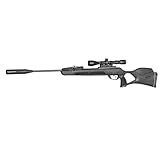
- ARS Mark8.4
ARS Mark is a ranking system developed by bestairriflescopes.com. ARS Mark has no relationship or impact from any manufacturers or sales agent websites. Learn more
- BrandGamo

- ARS Mark7.5
ARS Mark is a ranking system developed by bestairriflescopes.com. ARS Mark has no relationship or impact from any manufacturers or sales agent websites. Learn more
- BrandGamo
Last update on 2026-10-15 / Affiliate links / Images, Product Titles, and Product Highlights from Amazon Product Advertising API
FAQs
How often should you clean an air rifle barrel?
Air rifle barrels need very little cleaning because they do not collect hot powder soot or carbon fouling. In fact, most pellet barrels shoot tighter groups once a microscopic layer of lead seasons the steel rifling. You only need to pull a soft cleaning patch through the bore if your shot groups suddenly begin to open up, or if you switch to a brand of pellets that uses a noticeably different lead alloy.
Can you rest a break-barrel rifle on a hard sandbag?
Resting a break-barrel rifle directly on a hard sandbag will scatter your shots across the target. The violent internal piston slap causes the hard stock to bounce off the firm sandbag while the pellet is still traveling down the bore. To maintain tight groups, lay your open hand across the sandbag and let the rifle rest loosely in your palm so it recoils naturally.
Why are my shots suddenly spreading out?
Scattered shots are usually caused by loose scope mounts, damaged pellet skirts, or oil dieseling inside the compression tube. Check every screw on your scope rings and stock bracket to confirm nothing has shaken loose from recoil. Inspect your pellet tin as well, because bent or dented skirts create uneven air drag that throws pellets off their flight path.
Can you shoot steel BBs in an accurate pellet rifle?
Never shoot steel BBs through an air rifle built for pellets. Steel BBs are designed for smoothbore guns and are made from a hard metal that will scrape, gouge, and strip the spiral rifling inside a pellet barrel. Once that delicate rifling is damaged, the barrel will lose its ability to spin pellets properly, ruining the rifle accuracy permanently.


12 Best 22 Pcp Air Rifle For Hunting of 2026 With Quiet Power

7 Best 22 Pcp Air Rifle Under 300 of 2026 For Backyard Pest Control

10 Best 22 Break Barrel Air Rifles of 2026 For Backyard Pest Control

10 Best 30 Caliber Pcp Air Rifle of 2026 For Medium Game

Top Best 177 Air Rifle Under 100: Budget-Friendly Picks for 2026

How to Safely Reload Shotgun Shells at Home

11 Best Co2 Air Rifle For Pest Control of 2026 To Ensure Humane Dispatch

12 Best Inexpensive Air Rifles of 2026 For Dependable Backyard Accuracy






