
What Is the Most Accurate Sight for a Firearm?

Picking the right sight does not need to feel overwhelming. For absolute pinpoint precision, a magnified rifle scope is the most accurate choice because it enlarges the target and eliminates visual alignment errors. For quick shooting at closer distances, a red dot sight delivers the most reliable practical accuracy by letting you focus on the target with both eyes open.
The right choice for your gun depends on distance, weight, and how fast you need to aim. Compact handguns and home-defense setups work best with a simple dot that keeps your view wide open. Long-range precision rifles need magnifying glass to place bullets into a tight circle past a hundred yards. Balancing clear vision against aiming speed prevents you from buying a clumsy optic that slows you down. Here is how each option compares so you can pick the right tool for your goals.
Which Sight Type Is Mechanically the Most Precise?
If your goal is punching the tightest possible shot group into a paper bullseye, a magnified telescopic rifle scope is mechanically the most accurate sight you can put on a firearm. It wins on pure precision because of two mechanical features: target magnification and a fine reticle.
Magnification describes how many times larger a target appears through the glass compared to what you see with your naked eye. An eight-inch bullseye at 100 yards looks tiny without magnification, making it hard to center your shot consistently. A scope set to 12x or 16x enlarges that center ring until it fills your field of view. You no longer guess where the exact center lies; you can place your aim on a single printed line.
The reticle (the crosshair or illuminated aiming mark inside a sight) provides the second big advantage. Precision scopes use fine, etched-glass crosshairs. These thin lines cover only a tiny fraction of an inch on a target at long range. By comparison, an iron sight post or a large red dot covers a wide patch of target, obscuring your exact point of aim.
Rifle scopes also eliminate parallax, which is the aiming mark shifting when your eye moves off-center. Quality scopes feature a side-focus or parallax dial. Adjusting this dial places the target image on the exact same focal plane as the internal crosshairs. Once set, you can move your head slightly without the crosshairs drifting off the bullseye. That mechanical alignment removes human eye error completely.
How Scopes, Red Dots, and Iron Sights Compare in Practical Shooting
Bench-rest precision is only part of the story. Practical accuracy means placing fast, reliable hits under real-world conditions. At close or medium ranges, extreme magnification often slows you down and hurts your shooting.
Standard iron sights require you to align three separate objects: the rear sight notch, the front sight post, and the target downrange. The human eye cannot focus cleanly on three different depths at the same time. You must consciously focus on the front sight post, leaving both the rear notch and the target slightly blurry. At 50 yards, a standard front sight post covers eight inches or more of your target, making fine shot placement difficult.
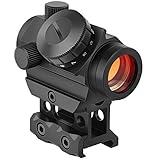
Red dot sights solve this problem by cutting those three visual planes down to one. A red dot reflects an internal light beam off a curved front lens. You keep both eyes open, look directly at the target, and raise the firearm. The illuminated dot appears to float on the target surface. Because you stay focused on the target, aiming is faster and causes far less eye fatigue.
Optics generally use two body styles. Open reflex designs, also called open-window sights, use a single exposed lens. They offer a broad view and very little weight, making them popular on handguns. Enclosed tube sights house the lenses inside a sealed cylinder, protecting the internal glass from rain, mud, and dust. On target handguns, a small dot turns tiny steel plates into easy hits. You can explore dedicated red dot sights for target pistols to get tight groups on rimfire platforms.
Many shooters pair their red dot with backup iron sights. Co-witness describes lining up your backup iron sights through the optic glass. If your optic battery dies, you can look straight through the window and use your iron posts immediately. Setting up reliable iron sights for cowitness with red dot sights guarantees you stay on target no matter what happens.
Matching the Right Sight to Your Firearm and Shooting Distance
No single sight works best for every firearm or distance. A high-power 18x scope is a severe handicap on a home-defense carbine because its narrow view makes tracking a moving target across a room nearly impossible. On the other hand, an unmagnified red dot will frustrate you if you try to hit small steel plates at 300 yards. Matching your optic to your firearm and distance gives you the tightest groups without fighting awkward gear.
Use this checklist to pick the most accurate sight style for your shooting needs:
- Handguns for personal defense (0 to 25 yards): Choose a compact red dot sight or night sights. Fast target acquisition with both eyes open matters far more than magnification at close defensive distances.
- Target rimfires and plinking pistols (15 to 50 yards): Choose a fine 2 MOA or 3 MOA red dot sight. It gives you precise shot placement on paper targets without adding clumsy weight.
- Carbines and shotguns for home defense (5 to 50 yards): Choose an unmagnified open-window or enclosed tube red dot sight. It provides maximum situational awareness and quick follow-up shots in low light.
- Hunting rifles (50 to 250 yards): Choose a variable low-power scope, such as a 2-7x or 3-9x model. This gives you enough magnification to identify game clearly while keeping a wide enough field of view to track movement.
- Precision bolt-action rifles (100 yards and beyond): Choose a high-power scope (10x to 24x or higher) with an adjustable parallax dial and a fine crosshair reticle for tiny shot groups at long range.
How Dot Size, Eye Astigmatism, and Mounting Steps Change Your Aim
Even a great sight fails if the aiming mark hides your target, if eye conditions blur the reticle, or if the mounting hardware shakes loose. Understanding these factors keeps your shots consistent.
Reticle size is measured in MOA (minute of angle), an angular target measurement covering roughly one inch at 100 yards, half an inch at 50 yards, and a quarter inch at 25 yards. A fine 2 MOA dot covers two inches of a target at 100 yards, leaving the bullseye clear for tight shot groups. A large 6 MOA dot covers six inches at that distance. Large dots work well for fast shooting on defensive pistols, but they blot out small targets at longer ranges.
Many shooters look through a red dot and see an irregular starburst or smeared blob instead of a round point. This is usually caused by astigmatism, an uneven curvature of your eye lens that scatters light. To confirm whether your eye or the optic is at fault, point the unloaded firearm at a blank wall and take a photo of the dot with your smartphone camera. If the camera screen shows a crisp circle while your eyes see a starburst, your eye is the cause. Lowering the brightness or switching to an etched-glass prism sight clears up the reticle.
Loose mounts ruin accuracy quickly. Always clear your firearm before handling tools. Remove the magazine, lock the action open, and visually inspect the chamber to ensure the firearm is completely empty.
Follow these steps to mount and align your sight properly:
- Check the mounting footprint: Verify that the optic base matches your slide footprint (the specific screw-hole and recoil-lug pattern cut into a slide or adapter plate) or fits cleanly onto standard Picatinny or 20mm slotted accessory rails.
- Degrease the threads: Clean all screw threads and mounting holes with rubbing alcohol to remove factory oils.
- Use thread-locking fluid: Place one drop of medium-strength blue thread-locking compound onto the threads of each mounting screw to stop recoil from loosening them.
- Torque with the right tool: Use an inch-pound torque tool to tighten each screw to manufacturer specifications, typically between 12 and 15 inch-pounds. Tighten evenly, alternating between screws.
- Zero the sight: At the range, use the windage and elevation click dials (left-to-right and up-and-down adjustment dials) to move your point of impact until bullets land dead-center on your aiming mark.
What to Look for in a Dot Sight and Alignment Setup
When picking a dot sight, look for features that protect your zero and make shooting straightforward. Choose an optic with a tough aluminum body and multicoated glass lenses that reduce glare in bright sun. A motion-sensing auto-on feature (often called shake-awake) is especially helpful for defensive guns. It turns the reticle on instantly when it senses movement, then enters a sleep mode when still to save battery life.
Make sure the sight has crisp, tactile windage and elevation adjustment dials. Mushy clicks make zeroing unpredictable. On handguns, check that the sight housing sits flush with your slide cuts so it does not snag on holsters or clothing.
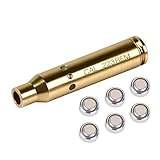
To save ammunition and time when zeroing, pick up a laser bore sight. These tools chamber into the barrel like an empty cartridge or attach to the muzzle with caliber adapters. The tool projects a straight red laser beam onto a target across the room. Adjust your optic dials until the dot rests directly over the laser mark, giving you a close starting zero before you fire a single live round.

- ARS Mark9.0
ARS Mark is a ranking system developed by bestairriflescopes.com. ARS Mark has no relationship or impact from any manufacturers or sales agent websites. Learn more
- BrandATG

- ARS Mark9.0
ARS Mark is a ranking system developed by bestairriflescopes.com. ARS Mark has no relationship or impact from any manufacturers or sales agent websites. Learn more
- BrandCVLIFE
- ARS Mark8.8
ARS Mark is a ranking system developed by bestairriflescopes.com. ARS Mark has no relationship or impact from any manufacturers or sales agent websites. Learn more
- BrandMidTen

- ARS Mark8.8
ARS Mark is a ranking system developed by bestairriflescopes.com. ARS Mark has no relationship or impact from any manufacturers or sales agent websites. Learn more
- BrandStrongTools

- ARS Mark8.8
ARS Mark is a ranking system developed by bestairriflescopes.com. ARS Mark has no relationship or impact from any manufacturers or sales agent websites. Learn more
- BrandCVLIFE

- ARS Mark8.8
ARS Mark is a ranking system developed by bestairriflescopes.com. ARS Mark has no relationship or impact from any manufacturers or sales agent websites. Learn more
- BrandVisiofire

- ARS Mark8.8
ARS Mark is a ranking system developed by bestairriflescopes.com. ARS Mark has no relationship or impact from any manufacturers or sales agent websites. Learn more
- BrandCVLIFE

- ARS Mark8.6
ARS Mark is a ranking system developed by bestairriflescopes.com. ARS Mark has no relationship or impact from any manufacturers or sales agent websites. Learn more
- BrandEZshoot
- ARS Mark8.6
ARS Mark is a ranking system developed by bestairriflescopes.com. ARS Mark has no relationship or impact from any manufacturers or sales agent websites. Learn more
- BrandMidTen

- ARS Mark8.4
ARS Mark is a ranking system developed by bestairriflescopes.com. ARS Mark has no relationship or impact from any manufacturers or sales agent websites. Learn more
- BrandMidTen
Last update on 2026-09-30 / Affiliate links / Images, Product Titles, and Product Highlights from Amazon Product Advertising API
FAQs
Is a red dot really more accurate than standard iron sights?
A red dot is practically more accurate for most shooters because it puts the aiming mark and the target on the same visual plane. You can keep both eyes open and stay focused on the target rather than squinting at a front sight post. This speeds up target acquisition and produces tighter shot groups with less eye fatigue.
What dot size should I pick if I want small shot groups?
Choose a 1 MOA or 2 MOA aiming dot if you want tight groups on paper targets. A 2 MOA dot covers only about two inches of your target at 100 yards or half an inch at 25 yards, keeping the bullseye visible. Larger 4 to 6 MOA dots are quicker to find up close, but they cover too much target area for precision shooting.
Can a high-magnification scope work well on a defensive firearm?
A high-magnification scope performs poorly on a defensive firearm because its narrow field of view makes finding close targets very difficult. In a home-defense situation, an unmagnified red dot or 1x optic is much more effective. It lets you keep both eyes open for full peripheral awareness and quick target transitions.


12 Best 22 Pcp Air Rifle For Hunting of 2026 With Quiet Power

7 Best 22 Pcp Air Rifle Under 300 of 2026 For Backyard Pest Control

10 Best 22 Break Barrel Air Rifles of 2026 For Backyard Pest Control

10 Best 30 Caliber Pcp Air Rifle of 2026 For Medium Game

Top Best 177 Air Rifle Under 100: Budget-Friendly Picks for 2026

How to Safely Reload Shotgun Shells at Home

11 Best Co2 Air Rifle For Pest Control of 2026 To Ensure Humane Dispatch

12 Best Inexpensive Air Rifles of 2026 For Dependable Backyard Accuracy






