
What Is the Quietest BB Gun for Backyard Shooting?

Spring lever models make the least noise. A traditional lever gun or a hand-pump air gun filled just two times creates a soft mechanical thud rather than a sharp report. These low-power designs push the round out at gentle speeds below 350 feet per second, releasing only a tiny puff of air that easily blends into ordinary neighborhood background sound.
Actual volume still depends on your power source, projectile speed, and backstop material. Small gas cartridges snap with a noticeable crack, while forcing BBs to higher speeds causes a harsher blast at the barrel tip. In many yards, the steel ball smacking a hard board or tin can creates far more noise than the gun itself. Understanding how these parts work together makes it easy to keep your target practice peaceful and neighbor-friendly.
The Short Version
- The quietest action: Classic spring lever-action guns and hand-pump air guns pumped only two or three times produce the lowest shooting sound.
- Keep the speed low: Keeping projectile speed below 350 to 400 feet per second prevents loud air blasts and keeps the report to a soft puff.
- Skip the gas cartridges: Models running on disposable CO2 cylinders create a sharp muzzle crack that carries right over suburban fence lines.
- Silence the target: A steel BB smacking a tin can or wood fence makes more racket than the gun itself, so you must use a soft, ricochet-free backstop.
The Quietest BB Gun Mechanism
If you want to shoot targets in your backyard without drawing attention, the mechanical design of the gun makes all the difference. The quietest option you can shoot is a low-power, spring-powered lever-action rifle. These classic designs rely on a simple internal spring connected to a small piston. When you cock the under-barrel lever, you compress the spring. When you pull the trigger, that spring releases forward, pushing a tiny puff of air through the smooth barrel to launch the BB. You hear a mechanical clink inside the frame and a faint, muffled thud at the muzzle. There is no pressurized blast of expanding gas dumping into the open air.
Another exceptionally quiet choice is a hand-pump air gun, which uses three to ten forearm hand pumps to store air in a small internal valve. The big benefit of a hand-pump gun is total control over your power. If you are target shooting across ten or fifteen feet in a small backyard, you do not need full power. Pumping the forearm lever just two or three times stores barely enough air to push the steel ball out at roughly 300 feet per second. At that low level, the muzzle report sounds like someone popping a dry twig or opening a fresh can of tennis balls. If you were to pump that same rifle eight or ten times, the sudden release of higher air pressure would produce a distinct pop that neighbors could easily track.
For casual plinking where noise is your top worry, low-output lever rifles remain the gold standard. You can find well-made lever-action BB guns for backyard plinking that deliver reliable target fun while keeping sound levels well below regular conversation volume. They let you focus on hitting paper targets or knocking down cards without worrying about an angry knock at the back door.
Why Power Source and Projectile Speed Change Sound Levels
The sound an airgun makes comes from two distinct sources: the sudden release of expanding gas at the muzzle and the sound of the projectile moving through the air. Understanding how different power sources release that air explains why some models stay peaceful while others sound like small powder-burning firearms.
Disposable gas cylinders create the most common noise headache in suburban neighborhoods. Models powered by small twelve-gram gas cylinders rely on liquid gas stored under high internal pressure, usually around 800 to 900 pounds per square inch. When the internal hammer hits the firing valve, that liquid instantly expands into gas and rushes out behind the BB. When that high-pressure blast hits the still air at the end of the barrel, it expands violently. The result is a sharp, snappy crack that carries far across open yards. Semi-automatic blowback pistols powered by gas cylinders also feature metal slides that rack back and forth with each shot. That metal slide creates an unmistakable mechanical clatter on top of the sharp muzzle pop, making CO2-powered air guns noticeably louder than simple spring-powered rifles.
Projectile exit speed, measured in feet per second, also controls how loud your shooting session will be. When any object moves through the air, it pushes air molecules out of the way. If a high-powered hunting air rifle pushes a projectile past the sound barrier (roughly 1,100 feet per second depending on local air temperature), it creates a miniature sonic boom. That supersonic crack is impossible to quiet with any muffler. Standard BB guns never approach the sound barrier, but projectile speed still matters. A steel BB pushed at 600 feet per second releases twice the air volume of a BB traveling at 300 feet per second. That extra volume turns a quiet thud into a sharp slap. Keeping your exit speed under 400 feet per second keeps the air blast so small that natural outdoor sounds easily mask it.
Barrel Mufflers and Legal Realities
Shooters often wonder if they can simply buy an aftermarket silencer to thread onto their BB gun. The short answer is no, because of strict federal laws. In the United States, the federal Bureau of Alcohol, Tobacco, Firearms and Explosives defines a firearm silencer by its construction, not just by what you attach it to. If an aftermarket sound dampener can be unscrewed from an airgun and attached to an actual powder-burning firearm, or if it can be modified to do so, federal law treats that tube as a regulated firearm silencer. Buying or building an unapproved, detachable suppressor for an airgun can land you in serious legal trouble.
Because of these strict rules, manufacturers do not sell screw-on mufflers for standard smoothbore BB guns. Instead, quiet airguns rely on permanent, non-removable built-in noise baffles or muffled barrels. In these factory designs, the outer barrel casing extends past the actual inner barrel. Inside that extra space, small plastic or metal cones (baffles) trap the expanding blast of air right behind the projectile. The trapped air bleeds out slowly through tiny vents instead of smacking the atmosphere all at once.
Factory-built muffled barrels are common on high-powered pellet rifles, but you will rarely find them on pure BB guns. Steel BBs are smooth, round balls that sit loosely inside smooth metal barrels. Air naturally leaks around the edges of a round BB as it travels down the tube. Because BB guns cannot form an airtight seal the way soft lead pellets do, building internal baffles onto a BB gun yields very little sound reduction. The best way to keep a BB gun quiet is not through barrel mufflers, but by using a low-pressure mechanism that never creates a loud blast to begin with.
Silencing the Impact Sound
You can buy the quietest rifle in the world, but your neighbors will still hear you if your target makes a racket. In a suburban yard, the impact of a steel BB striking a hard surface is almost always louder than the gun firing. A round steel ball hitting an empty soda can, a metal tin, or a wooden fence board creates a sharp slap that sounds like a hammer striking plywood. To shoot peacefully at home, you must silence the impact point.
Steel BBs also present a major safety hazard when they hit hard surfaces: dangerous ricochets. Unlike soft lead pellets that flatten out and drop when they hit an obstacle, steel BBs retain their round shape and bounce off hard backstops with surprising force. A BB bouncing off a brick wall or plywood board can easily fly back toward your eyes or sail over a fence into a neighbor's yard. You need a backstop that completely swallows the steel ball while making zero noise.
Follow this checklist to build a completely silent, ricochet-free target backstop for your yard or basement:
- Build a rubber mulch trap: Buy a cheap plastic storage tub or sturdy wooden box with an open front. Pack the interior tightly with shredded rubber garden mulch, filling it at least six to eight inches deep. When a steel BB hits the rubber mulch, it buries itself silently in the rubber without any bouncing or cracking sound.
- Hang heavy fabric curtains: Hang two layers of old carpet scraps, heavy denim, or thick moving blankets loosely behind your target area. Do not pull the fabric tight like a drum. Leaving the fabric hanging loose allows it to swing back slightly, soaking up the BB's energy like a catcher's mitt.
- Use silent paper targets: Pin your paper target sheets to the front of a thick cardboard box stuffed tightly with old rags, denim, or bundled newspapers. The BB punches cleanly through the paper and sinks into the cloth without making a sound louder than a dull thump.
- Avoid noisy metal traps: Steer clear of cheap commercial sheet-metal target traps. While they stop the BB, the thin steel creates a loud ringing clang every single time you hit the bullseye.
- Establish a secure safety berm: Always position your silent trap so that a missed shot hits an impenetrable barrier, such as a tall dirt mound or solid earth. Never rely on a neighbor's wooden privacy fence as your backstop, as BBs can chip the wood and produce loud, alarming thumps.
BB Guns Versus Muffled Pellet Guns
When searching for quiet backyard shooting, you will quickly notice the distinction between BB guns and pellet guns. Understanding the difference between these two designs helps you decide which one best keeps the peace with your neighbors.
BB guns feature smooth inner barrels designed specifically for hard, round steel balls. They are built for casual plinking at close range, knock-down target games, and teaching basic marksmanship. Because steel BBs do not expand, they do not engage the barrel tightly, and they deliver relatively modest accuracy past fifteen or twenty yards. Their sound comes from mechanical spring actions or small puffs of gas, and they rarely come equipped with built-in noise baffles.
Pellet guns, on the other hand, fire shaped, aerodynamic projectiles made from soft lead or lead-free alloys. These guns feature rifled barrels, meaning spiral grooves are cut into the inside of the steel tube. When you fire a pellet, the soft skirt of the projectile expands to grip those spiral grooves. This creates an airtight seal that spins the pellet for rifle-grade accuracy at longer distances. Because pellet rifles generate much higher internal pressures and higher exit speeds, manufacturers often build them with integrated muffled barrels that cut down the muzzle report.
This difference leads to an unexpected result: a modern pellet rifle with a factory-muffled barrel can actually sound quieter at ten yards than an un-muffled CO2 BB pistol. The baffled barrel on the pellet rifle muffles the high-pressure air blast into a dull, low-frequency whisper. However, you must observe one critical safety and maintenance rule: never load round steel BBs into a rifled pellet barrel. Hard steel BBs will strip the soft spiral rifling right out of a pellet rifle barrel after just a few dozen shots, permanently ruining the gun's accuracy. Keep steel BBs in smoothbore plinkers, and save shaped pellets for rifled barrels.
What to Look for When Choosing a Quiet Airgun
When you are ready to pick out an airgun for backyard practice, you do not need to decipher confusing marketing terms. You simply need to verify a few practical features that keep sound levels low and neighborhood relations friendly.
Start by checking the power mechanism. For the absolute quietest backyard shooting, prioritize adjustable hand-pump models or gentle spring-cocking lever designs. Hand-pump models give you the freedom to match your power to your yard size: use two pumps for quiet basement practice, or four pumps for slightly longer backyard distances. If you prefer the convenience of cocking a lever once per shot, look for models engineered specifically for youth training or indoor marksmanship. These models feature lighter internal springs that produce a soft click rather than a harsh mechanical slap.
Next, verify the manufacturer's rated exit speed. For quiet suburban target shooting, look for ratings between 250 and 450 feet per second. High numbers might look exciting on the box, but high speed requires high air pressure, and high air pressure creates noise. Lower speeds keep the muzzle report discreet, reduce the risk of stray shots penetrating fences, and minimize target impact noise.
Finally, inspect the barrel construction. If you decide to step up to a pellet rifle for greater accuracy, confirm that the model features a factory-installed, non-removable barrel shroud with built-in baffles. Built-in sound dampening allows you to shoot shaped pellets with pinpoint precision while keeping the audible report as soft as a quiet hand clap. Combine the right low-power action with a well-built silent backstop, and you can enjoy hours of peaceful target practice without your neighbors ever knowing you are shooting.

- ARS Mark9.7
ARS Mark is a ranking system developed by bestairriflescopes.com. ARS Mark has no relationship or impact from any manufacturers or sales agent websites. Learn more
- BrandGamo

- ARS Mark8.9
ARS Mark is a ranking system developed by bestairriflescopes.com. ARS Mark has no relationship or impact from any manufacturers or sales agent websites. Learn more
- BrandUmarex

- ARS Mark8.5
ARS Mark is a ranking system developed by bestairriflescopes.com. ARS Mark has no relationship or impact from any manufacturers or sales agent websites. Learn more
- BrandDPMS
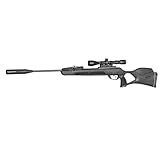
- ARS Mark8.4
ARS Mark is a ranking system developed by bestairriflescopes.com. ARS Mark has no relationship or impact from any manufacturers or sales agent websites. Learn more
- BrandGamo

- ARS Mark7.5
ARS Mark is a ranking system developed by bestairriflescopes.com. ARS Mark has no relationship or impact from any manufacturers or sales agent websites. Learn more
- BrandGamo
Last update on 2026-10-16 / Affiliate links / Images, Product Titles, and Product Highlights from Amazon Product Advertising API
FAQs
Can my neighbors hear a BB gun from next door?
Neighbors usually cannot hear a low-power spring or hand-pump BB gun from across a suburban fence line. The soft mechanical click and faint muzzle pop blend easily into everyday neighborhood sounds like traffic, air conditioning units, or rustling trees. However, they will definitely hear a steel BB repeatedly smacking against metal cans, hard wood fences, or plastic buckets, which is why a sound-absorbing backstop is essential.
Why are CO2 BB pistols so much louder than pump rifles?
Gas-powered pistols release liquid gas stored under hundreds of pounds of pressure in a single fast burst when the valve opens. When that high-pressure gas dumps suddenly into the open atmosphere at the end of the short pistol barrel, it expands violently, creating a sharp crack. Hand-pump rifles pumped only two or three times release a much smaller volume of low-pressure air, which creates a gentle puff instead of a loud blast.
Is it safe to shoot a quiet BB gun inside a basement?
Shooting in a basement is safe as long as you follow basic shooting safety rules and set up an enclosed, ricochet-free trap. Always use a dense rubber mulch box or thick cloth trap to prevent round steel BBs from bouncing off concrete walls or floors. Everyone in the room must wear safety glasses, and you should ensure the basement is completely clear of pets and family members before you begin.
Does shooting heavier ammo make an airgun quieter?
Using slightly heavier ammo can reduce noise in high-powered air rifles because the extra projectile weight slows down the exit speed, preventing the projectile from breaking the sound barrier. In standard low-power BB guns, however, steel BBs all share virtually the same standard size and weight, so changing ammunition will not alter the sound level. Adjusting your gun's power mechanism and muffling your target backstop remain the only effective ways to lower noise.


12 Best 22 Pcp Air Rifle For Hunting of 2026 With Quiet Power

7 Best 22 Pcp Air Rifle Under 300 of 2026 For Backyard Pest Control

10 Best 22 Break Barrel Air Rifles of 2026 For Backyard Pest Control

10 Best 30 Caliber Pcp Air Rifle of 2026 For Medium Game

Top Best 177 Air Rifle Under 100: Budget-Friendly Picks for 2026

How to Safely Reload Shotgun Shells at Home

11 Best Co2 Air Rifle For Pest Control of 2026 To Ensure Humane Dispatch

12 Best Inexpensive Air Rifles of 2026 For Dependable Backyard Accuracy






