
What Is the Smallest Red Dot Sight for Concealed Carry?

Measure the flat top of your pistol slide before browsing for glass. That single dimension sets your true boundary, because the smallest practical red dots are micro reflex sights built to sit flush on slim carry handguns. Sights in this tiny class measure roughly an inch and a half long, stay under an inch wide, and weigh about an ounce while still holding their aim through repeated recoil.
What works best on your setup still depends on your slide cut and the housing style. Fully enclosed models shield the light projector from pocket lint and rain, but they add slight bulk compared to bare glass. Shrinking the window too much can also make it harder to catch the aiming point under pressure. Understanding these limits makes it easy to balance a featherweight profile with dependable accuracy.
How Small Can a Red Dot Sight Actually Get?
When people ask about the smallest red dot sight, they usually want to avoid bolting a heavy brick onto a slim carry handgun. The smallest practical sights designed for live firearms belong to the micro reflex category. These tiny open-window sights measure roughly 1.5 to 1.6 inches in total length, sit right around 0.9 to 1.0 inch in width, and stand less than an inch high. In terms of weight, an optic in this class typically tips the scale between 0.06 and 0.13 pounds, which is barely one to two ounces.
In comparison, standard enclosed tube sights often measure around 4.7 inches long, span over 3 inches tall, and weigh roughly 0.32 pounds. That extra mass works on a hunting carbine, but it creates a bulky snag hazard on an everyday carry pistol tucked inside a waistband holster.
Red dots cannot shrink indefinitely to the size of a coin due to glass physics. Every optic requires a battery, an electronic projector diode, and an angled glass window that reflects the aiming dot. If the glass shrinks too far, your eye must align in one exact spot behind the slide to locate the dot.
Durability sets another strict boundary. When a semi-automatic handgun fires, the slide violently cycles in a fraction of a second, subjecting the optic to thousands of Gs of shock force. Plastic novelty sights might look tiny on paper, but live recoil will shear their screws, shatter internal circuits, or crack the glass. Practical micro sights require rigid housings, often forged from 7075 aluminum, to withstand real firing without shifting out of alignment.
Will a Micro Red Dot Fit Your Slim Pistol?
A small optic must also mount cleanly without protruding past the slide edges. Subcompact handguns feature narrow profiles, usually measuring 0.9 to 1.1 inches across. Installing a full-size duty sight causes slide overhang. Those protruding edges dig into your waist, snag clothing during a draw, and scrape the inside of your holster.
Optic fit depends entirely on the mounting footprint, which is the specific screw-hole and recoil-lug pattern cut into the slide. Full-size footprints like RMR use wider screw spacing and larger recoil posts. Forcing a full-size sight onto a slim slide requires a thick adapter plate that raises the glass awkwardly. Micro sights solve this by using slimline footprints, such as the Shield RMSc pattern, that sit flush on narrow slides.
Before inspecting slide cuts or handling your optic, follow standard firearm safety steps. Drop the magazine, rack the slide to eject any chambered round, lock the slide open, and visually check the empty chamber with your finger. Keep all ammunition in another room while working.
Follow this checklist to confirm whether a micro optic will mount cleanly to your handgun:
- Check the slide cut style: Look at your pistol to see if the slide has a direct factory optic cut or if it uses a modular plate system. A direct micro cut lets the optic sit low, while modular systems require a slim adapter plate.
- Measure the slide width: Confirm your slide width with calipers or your owner manual. Narrow slides need an RMSc or similar micro footprint rather than a full-size pattern.
- Inspect the recoil lug pins: Recoil lugs are raised posts that absorb shock so screws do not shear under recoil. Some slides use four corner pins, while some micro sights accept only two front pins. Verify that your optic base matches the slide posts.
- Verify mounting screw length: Screws must thread deeply without bottoming out. On many slim handguns, a right-side screw that runs even one thread too long pushes into the extractor spring rod below the cut, causing feeding and extraction failures. If a screw binds before seating flush, back it out and check its length.
What Are the Real Trade-Offs of Tiny Optics?
Choosing a compact optic prevents holster bulk, but miniature dimensions bring usability compromises. The primary challenge involves the viewing window. A micro reflex sight is an open-window sight with an exposed light projector aimed at curved glass. Because the window is small, catching the aiming dot requires consistent draw presentation. A large duty optic keeps the dot visible even with uneven wrists, while a micro window loses the dot if your presentation angle shifts slightly.
Dot size is measured in MOA, which stands for minutes of angle and describes how much of the target the dot covers. A fine 2 MOA dot covers roughly 2 inches at 100 yards, which equals about half an inch at 25 yards and just an eighth of an inch at defensive distances of 7 yards. While accurate for target shooting, a 2 MOA dot can be hard to catch quickly inside a miniature window. For carry defense, many shooters prefer a 3 MOA or 4 MOA dot, or a reticle with a 2 MOA center dot and a 32 MOA outer ring to guide the eye rapidly.
Open-window designs also leave the projector exposed. In a waistband holster, body heat, dust, and clothing lint gather behind the glass. If lint covers the emitter diode, it scatters or blocks the aiming dot. Inspect the housing weekly and clear debris using a soft lens pen or a rubber air bulb.
You must also prepare for battery failure. Co-witness means lining up your backup iron sights through the optic glass so you can still aim effectively if the electronic dot fails. Because micro red dots mount low on slim slides, they often provide a lower 1/3 co-witness using standard-height factory sights. Selecting the best iron sights for cowitness with red dot sights in 2026 ensures your backup sights remain visible in the lower portion of the window without blocking your view of the target.
Which Features Are Non-Negotiable on a Carry Optic?
For personal defense, tiny dimensions must not compromise reliability. The optic must hold zero consistently. Zeroing means adjusting the dot so your shots land exactly where the dot points at a chosen distance, like 25 yards. The optic uses left-to-right and up-and-down adjustment click dials to align point of aim. A solid carry sight locks those dials tight against violent slide recoil.
Battery tray placement saves hours of maintenance. Older micro optics placed the battery compartment beneath the housing. Swapping a battery required unbolting the sight, removing old threadlocker, installing the cell, remounting, and traveling to a range to re-zero. Choose a sight with a side-loading or top-loading battery tray. A side tray lets you swap the coin cell in seconds without loosening mounting screws or disturbing zero.
Because compact housings hold small batteries, battery-saving features are essential. Look for motion-sensing auto-on that turns the reticle on when moved and sleeps to preserve battery life when stationary. The sight sleeps in your safe, then wakes instantly the moment you draw your pistol.
Secure mounting is mandatory. Never tighten screws by feel with a standard wrench, which can warp the base or strip threads. Clean factory oil from screw holes with alcohol, apply a drop of blue thread-locking fluid, and tighten screws to factory specifications using an inch-pound torque tool. If screws bind or strip, stop and visit a qualified gunsmith.
What Should You Look for in a Micro Sight?
When choosing a small red dot for slim pistol carry, look for an open-window micro reflex sight built specifically for subcompact slide widths. Check that the body is machined from solid aluminum rather than plastic so it survives slide recoil without cracking. Confirm the optic matches your pistol slide footprint directly to avoid thick adapter plates that add height. Choose models with top or side battery trays so you can swap batteries without removing the sight. Finally, select a dot size that fits your eyes, such as a 3 MOA dot or a circle-dot reticle, for fast target acquisition under stress.

- ARS Mark9.4
ARS Mark is a ranking system developed by bestairriflescopes.com. ARS Mark has no relationship or impact from any manufacturers or sales agent websites. Learn more
- BrandSig Sauer

- ARS Mark9.0
ARS Mark is a ranking system developed by bestairriflescopes.com. ARS Mark has no relationship or impact from any manufacturers or sales agent websites. Learn more
- BrandARORY

- ARS Mark8.8
ARS Mark is a ranking system developed by bestairriflescopes.com. ARS Mark has no relationship or impact from any manufacturers or sales agent websites. Learn more
- BrandCVLIFE
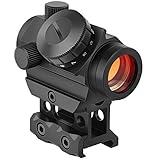
- ARS Mark8.6
ARS Mark is a ranking system developed by bestairriflescopes.com. ARS Mark has no relationship or impact from any manufacturers or sales agent websites. Learn more
- BrandMidTen
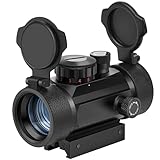
- ARS Mark8.6
ARS Mark is a ranking system developed by bestairriflescopes.com. ARS Mark has no relationship or impact from any manufacturers or sales agent websites. Learn more
- BrandEZshoot

- ARS Mark7.8
ARS Mark is a ranking system developed by bestairriflescopes.com. ARS Mark has no relationship or impact from any manufacturers or sales agent websites. Learn more
- BrandUniqueFire

- ARS Mark7.6
ARS Mark is a ranking system developed by bestairriflescopes.com. ARS Mark has no relationship or impact from any manufacturers or sales agent websites. Learn more
- BrandBushnell

- ARS Mark7.0
ARS Mark is a ranking system developed by bestairriflescopes.com. ARS Mark has no relationship or impact from any manufacturers or sales agent websites. Learn more
- BrandOHHLION
Last update on 2026-09-30 / Affiliate links / Images, Product Titles, and Product Highlights from Amazon Product Advertising API
FAQs
How much weight does a micro red dot add?
Most micro reflex sights weigh between one and two ounces, or roughly 0.06 to 0.13 pounds. Because this weight sits directly across the slide, it adds very little bulk inside a waistband holster. It is light enough that it does not disrupt the cycling timing of the firearm mechanism.
Can you mount a micro red dot on a full-size pistol?
You can mount a micro optic on a full-size pistol if your slide has a matching micro cut or uses an adapter plate. However, the smaller window makes dot acquisition slower than with a full-size reflex sight. Micro optics work best on slim carry pistols, while larger optics fit wider duty slides better.
Is a micro red dot hard to use with astigmatism?
An astigmatism can make an illuminated red dot look like a blurry starburst or cluster rather than a crisp dot. In a small optic window, that distortion can block your target view. Lowering the brightness setting or choosing a reticle with an outer reference ring helps make the aiming point clearer.
How often do you need to zero a micro carry optic?
A well-built micro sight properly mounted with thread-locking fluid should hold zero through thousands of rounds. You only need to re-zero if you remove the optic from the slide, switch to ammunition with a different bullet weight, or drop the pistol on a hard surface. Checking your dot against backup iron sights confirms your alignment has not shifted.


12 Best 22 Pcp Air Rifle For Hunting of 2026 With Quiet Power

7 Best 22 Pcp Air Rifle Under 300 of 2026 For Backyard Pest Control

10 Best 22 Break Barrel Air Rifles of 2026 For Backyard Pest Control

10 Best 30 Caliber Pcp Air Rifle of 2026 For Medium Game

Top Best 177 Air Rifle Under 100: Budget-Friendly Picks for 2026

How to Safely Reload Shotgun Shells at Home

11 Best Co2 Air Rifle For Pest Control of 2026 To Ensure Humane Dispatch

12 Best Inexpensive Air Rifles of 2026 For Dependable Backyard Accuracy






