
What Are Bowfishing Arrows Made Of?

A newcomer picking up a bowfishing arrow at the counter immediately notices how remarkably heavy and stiff it feels compared to a standard hunting shaft. That extra weight comes from the build: nearly all of these arrows are made from solid fiberglass, solid carbon, or a composite blend of both materials. Archery makers leave them completely solid so they carry enough punch to drive through thick water rather than skipping off the surface or shattering on rocks.
Your choice between these materials depends mainly on the water depth and the bottom terrain where you shoot. Pure fiberglass bends under pressure and takes brutal beatings against shallow gravel beds without cracking. Stiffer carbon blends cost a bit more, but they stay straighter on longer shots and punch deeper into big fish. Here is how each material performs once you pull back the bowstring and take aim.
Match your arrow material to your water depth and riverbed
Solid fiberglass shafts are the traditional standard across the sport. They are made by bonding countless strands of glass fiber with resin into a dense, solid rod. This makes them heavy and remarkably bendable. When released, a fiberglass arrow absorbs the thrust of the bowstring, flexes slightly, and drives forward with tremendous momentum.
Fiberglass handles hard impacts better than almost any other material. If your shot passes through a fish and smashes into limestone or riprap rock, the shaft bounces off with light scuffs. It flexes under stress rather than snapping in half. This resilience makes solid fiberglass the top pick for shallow creeks, rocky riverbeds, and muddy banks.
Solid carbon shafts use tightly bound carbon fibers molded into a dense core. While standard archery shafts are hollow tubes, solid carbon bowfishing arrows are packed tight with material. Carbon is naturally stiffer than fiberglass, so the shaft recovers from its initial flex almost immediately after leaving your arrow rest.
This stiffness makes carbon shafts fly faster and flatter through the air. If you shoot fish in clear lakes, deeper pools, or across longer distances, solid carbon gives you pinpoint accuracy. The main trade-off comes against hard rocks. Severe impacts against sharp granite or concrete pilings can splinter the fibers, requiring you to retire the shaft immediately.
Carbon-fiberglass composite shafts blend both materials to eliminate individual weaknesses. Manufacturers wrap an outer sleeve of woven carbon around an inner core of solid fiberglass. The fiberglass core gives the arrow brute impact resistance, while the carbon outer shell adds rigidity. Composite shafts work best with bows that require 40 to 50 pounds of muscular pull weight, keeping the shaft stable in flight.
Choose solid shafts instead of hollow hunting tubes to punch through water
Picking up a bowfishing arrow for the first time usually surprises people because of its weight. A typical hunting arrow weighs around 350 to 450 grains, while a complete bowfishing arrow often weighs between 1,200 and 1,600 grains. That massive difference comes entirely from solid construction rather than hollow tubing.
Water is roughly 800 times denser than air, creating an immediate wall of resistance when your arrow strikes the surface. When a lightweight, hollow arrow hits water, that resistance pushes against the tip and causes the shaft to skip across the surface like a flat stone. Even if it enters the water, drag quickly robs a hollow arrow of forward speed, leaving it with zero punch.
Solid shafts solve this problem through raw momentum. A heavy solid rod of fiberglass or carbon carries enough forward energy to slice through surface tension and drive straight toward the target. The weight of the solid shaft overcomes water friction, allowing you to hit fish holding several feet deep.
River and lake bottoms present another hazard for hollow tubes. When hunting game animals on land, your arrow passes through soft tissue into dirt, as seen when choosing the best arrow for elk hunting. In bowfishing, missed shots strike submerged rocks, logs, and hard clay at full speed. A hollow arrow shatters instantly, while a solid shaft absorbs the blow and stays intact.
Rely on hardened stainless steel points and barbs to lock onto fish
The tip of a bowfishing arrow does two jobs that field points cannot perform: it penetrates tough fish scales and prevents the target from sliding off the shaft. These tips are machined from heavy metals, primarily hardened stainless steel and plated carbon steel, to survive violent impacts and constant moisture.
Stainless steel is the top choice for bowfishing points. Because bowfishing gear gets completely soaked on every outing and sits in wet boat bins, rust is a constant threat. Hardened stainless steel resists corrosion from freshwater lakes and coastal marshes. It also maintains a sharp cutting chisel tip after repeatedly striking underwater gravel.
Plated carbon steel tips offer a dependable, budget-friendly alternative. These heads feature a carbon steel core coated in zinc or black oxide to delay rusting. While carbon steel resists blunt chipping, the protective plating eventually wears off from scraping against sandy bottoms, exposing the bare metal to surface rust if not dried properly.
Attached to these metal heads are barbs, which are swinging metal hooks designed to lock the fish onto the shaft. When the arrow strikes, the barbs fold flat against the metal body for smooth entry. Once you pull backward on the retrieval line, the barbs swing open like an anchor, gripping firmly inside the fish so it cannot pull free.
Modern points feature quick-release mechanisms that let you remove fish in seconds. Some tips let you loosen the head by two hand turns, allowing the barbs to pivot forward so you can slide the fish off cleanly. Other designs use reversible wire barbs that you flip by hand, saving valuable minutes during fast shooting action.
Strip off plastic vanes and feathers to keep your shot straight underwater
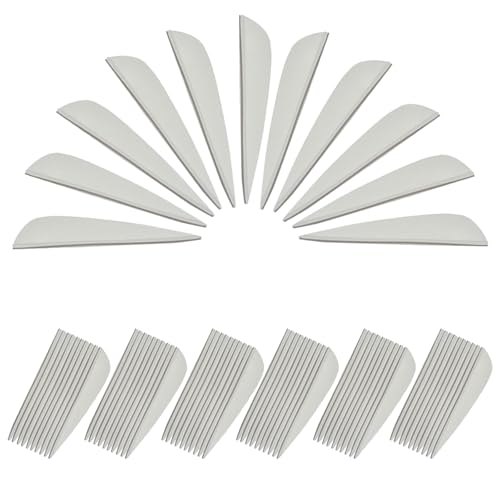
Anyone looking at a bowfishing arrow immediately notices that the rear of the shaft is completely bare. Standard archery arrows rely on fletching, which are plastic vanes or feathers attached near the nock to spin the arrow and keep it stable in flight. Bowfishing arrows skip fletching entirely because what works in the air fails underwater.
Water behaves differently from air. When an arrow with plastic vanes hits water, the liquid exerts massive pressure against those thin surfaces. If the arrow enters at an angle, the bottom vane strikes first, acting like a miniature rudder. This causes the tail to kick upward, a problem called water planing that steers the arrow off target.
The friction of water entry also destroys traditional fletching within a handful of shots. Glued plastic vanes tear off almost instantly when hitting water at high speed. Feathers become waterlogged immediately, turning into a soggy clump that ruins arrow flight.
Bowfishing does not require aerodynamic stabilization because shot distances are short, usually between 5 and 20 feet. Over that distance, a straight, heavy solid shaft flies stable without vanes. In addition, a smooth, bare shaft prevents the trailing retrieval line from tangling around fletching during flight.
Install safety slides and solid nocks before tying off your line
A bare solid shaft cannot catch fish on its own; it requires specialized hardware to connect safely to your retrieval reel. Never tie your fishing line directly to the back of an arrow, as this creates a hazard called arrow snapback. Snapback occurs when the line snags on the bow riser, arrow rest, or bowstring during release, yanking the arrow backward toward your face.
To prevent snapback and ensure reliable performance, inspect these three critical hardware components on every shaft before shooting:
- Safety slide: This is a sliding plastic ring that wraps loosely around the arrow shaft. Your braided retrieval line ties to a loop on the slide. When you draw the bow, the slide sits near the front arrow rest. Upon release, the shaft zips through the slide until it hits the rear stop, keeping the loose line safely in front of your bowstring.
- Stop screw and shock pad: Located a few inches ahead of the nock, a small metal screw is drilled through the solid shaft to act as a barrier. A rubber shock pad sits in front of the screw to absorb impact when the safety slide slams backward. Check regularly that this screw is tight and the pad is intact.
- Reinforced solid nock: The nock is the grooved plastic piece at the rear that snaps onto your bowstring. Bowfishing uses heavy-duty plastic nocks designed to withstand the violent launch force of a heavy shaft. Verify that the nock is firmly glued into the shaft and shows no cracks.
Select tough replacement points and safety hardware built for heavy use
Equipping your setup with the right hardware makes the difference between landing fish and dealing with broken gear. When shopping for bowfishing shafts and accessories, focus first on heavy-duty construction that can withstand repetitive impacts with river gravel and submerged timber.
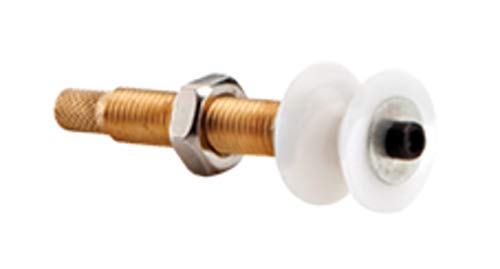
Look for arrow rests specifically engineered for bowfishing. Standard hunting rests with delicate plastic brushes or drop-away parts cannot handle the friction and heavy mass of solid fiberglass arrows. Instead, choose sturdy roller rests featuring rust-proof wheels that support heavy shafts without chewing into the finish or dragging down arrow speed.
Choose replacement tips that offer tool-free fish removal. When standing in a boat at night, you do not want to spend minutes loosening stubborn screws with a wrench. Look for heads with quick-spinning collars or reversible wire barbs that let you release fish smoothly with a quick twist of your fingers.
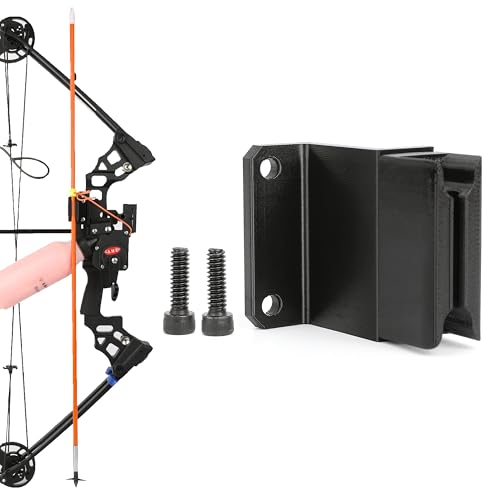
Confirm that your safety slide kits match the outer diameter of your shafts, which are commonly 5/16 inch across. The slide must glide smoothly along the shaft without binding. Using a bow-mounted arrow holder or clip will also keep your sharp metal points safely parked when moving across the boat.

- ARS Mark9.6
ARS Mark is a ranking system developed by bestairriflescopes.com. ARS Mark has no relationship or impact from any manufacturers or sales agent websites. Learn more
- BrandVictory Archery

- ARS Mark9.6
ARS Mark is a ranking system developed by bestairriflescopes.com. ARS Mark has no relationship or impact from any manufacturers or sales agent websites. Learn more
- BrandCajun Bowfishing

- ARS Mark9.2
ARS Mark is a ranking system developed by bestairriflescopes.com. ARS Mark has no relationship or impact from any manufacturers or sales agent websites. Learn more
- BrandBasbon
- ARS Mark9.2
ARS Mark is a ranking system developed by bestairriflescopes.com. ARS Mark has no relationship or impact from any manufacturers or sales agent websites. Learn more
- BrandKURUGEILI

- ARS Mark8.6
ARS Mark is a ranking system developed by bestairriflescopes.com. ARS Mark has no relationship or impact from any manufacturers or sales agent websites. Learn more
- BrandSAS
- ARS Mark8.2
ARS Mark is a ranking system developed by bestairriflescopes.com. ARS Mark has no relationship or impact from any manufacturers or sales agent websites. Learn more
- BrandCajun Bowfishing

- ARS Mark7.4
ARS Mark is a ranking system developed by bestairriflescopes.com. ARS Mark has no relationship or impact from any manufacturers or sales agent websites. Learn more
- BrandFENJANER
- ARS Mark6.0
ARS Mark is a ranking system developed by bestairriflescopes.com. ARS Mark has no relationship or impact from any manufacturers or sales agent websites. Learn more
- Brandlimaity
- ARS Mark2.0
ARS Mark is a ranking system developed by bestairriflescopes.com. ARS Mark has no relationship or impact from any manufacturers or sales agent websites. Learn more
- BrandZSHJGJR
Last update on 2026-09-29 / Affiliate links / Images, Product Titles, and Product Highlights from Amazon Product Advertising API
FAQs
Can I shoot fish using regular carbon hunting arrows?
No, you should never shoot standard hunting arrows into the water. Hollow carbon hunting arrows are too light to punch through water resistance and will shatter violently when they hit rocks or hard clay. Hollow shafts also cannot hold safety slide stop screws securely, creating a severe snapback hazard.
Why do bowfishing arrows feel so much heavier than standard archery arrows?
Bowfishing arrows feel heavy because they are made from solid rods of fiberglass or carbon rather than hollow tubes. This extra mass is necessary to overcome water resistance, which is roughly 800 times denser than air. The heavy weight creates forward momentum to drive the shaft deep into the water and pierce tough fish scales.
How do I check if my fiberglass bowfishing arrow is damaged?
Inspect your arrow by running your fingers along the shaft to feel for splintering, gouges, or soft spots. Gently bend the shaft with both hands while listening closely for any cracking sounds that indicate internal fiber damage. If you find deep scrapes, cracked nocks, or loose stop screws, replace or repair them before shooting.
Do bowfishing arrows need a specific arrow spine rating to shoot accurately?
Bowfishing arrows do not follow strict spine ratings because shots are taken at close range without fletching. Standard solid fiberglass shafts are naturally stiff enough to handle bows with pull weights between 30 and 50 pounds. If you shoot a traditional bow setup and want to calculate arrow tuning for dry land practice, consult a best arrow spine calculator recurve guide to see how standard archery spine mechanics work.


12 Best 22 Pcp Air Rifle For Hunting of 2026 With Quiet Power

7 Best 22 Pcp Air Rifle Under 300 of 2026 For Backyard Pest Control

10 Best 22 Break Barrel Air Rifles of 2026 For Backyard Pest Control

10 Best 30 Caliber Pcp Air Rifle of 2026 For Medium Game
Top Best 177 Air Rifle Under 100: Budget-Friendly Picks for 2026

How to Safely Reload Shotgun Shells at Home

11 Best Co2 Air Rifle For Pest Control of 2026 To Ensure Humane Dispatch

12 Best Inexpensive Air Rifles of 2026 For Dependable Backyard Accuracy






