
What Size Battery Does Your Bow Sight Take?

Dawn breaks over the woods, and an archer twists the small dial on their bow, but the aiming pin stays completely dark. Most standard screw-in pin lights run on a stack of three small LR41 or LR44 button batteries, while electronic dot sights usually take a single flat CR2032 coin cell.
The correct replacement depends on the shape and size of the battery compartment. Narrow metal tubes typically hold tiny LR41 cells, while slightly wider barrels require thicker LR44 discs. Some light modules need two cells stacked together, while others require three to reach the right power level. Electronic dot sights skip the tube entirely and house a broad disc under a sealed side cap. Checking the chamber width and depth prevents jamming the wrong size into fragile aluminum threads. Here is how to identify what your sight needs and decode the confusing numbers on the package.
Match Your Sight Style to the Right Battery Shape
Bow sights come in two main styles, and each style uses a completely different power setup. Before you buy any replacements, look at where the light actually lives on your bow. Knowing whether you have a threaded pin light or an electronic dot sight housing solves your size question right away.
Most standard compound bows use a sight light. This is a small, screw-in aluminum cylinder that threads directly into your sight guard above the fiber-optic pins. These cylinders are narrow tubes. Because the tube is slender, it cannot hold a wide, flat disc. Instead, it uses small round disc batteries, known as button cells, stacked on top of one another. These lights almost always take a stack of three 1.5-volt button cells to produce a combined 4.5 volts. The two common barrel sizes are narrow chambers that hold 7.9-millimeter wide cells, or slightly thicker chambers that hold 11.6-millimeter wide cells.
Electronic dot sights, rangefinding sights, and digital reticles use a very different system. These units look more like miniature rifle scopes or enclosed glass windows mounted to your bow riser. Instead of stacking tiny discs in a cylinder, these electronic sights usually hold a single, wide 3-volt lithium coin battery inside a flat, coin-slotted cap. This battery looks like a shiny nickel with a thin profile, measuring 20 millimeters across.
If you are holding an empty sight light tube with no old batteries to look at, measure the inside opening of the threaded barrel with a household ruler. If the opening is just over a quarter of an inch wide (about 8 millimeters), your light takes the smaller LR41 family. If the opening is closer to half an inch wide (about 12 millimeters), your light takes the wider LR44 family. Never force a battery into the tube. Bow accessories use soft aluminum threads, and pressing the wrong size into the chamber can strip the delicate metal before you even reach the woods.
Check Equivalent Battery Numbers Before You Buy
Walking down the battery aisle at a local hardware or grocery store can be overwhelming. Every manufacturer uses its own set of letters and numbers for the exact same physical size. A package marked LR41 might sit right next to a package marked 392 or AG3. Understanding these codes ensures you do not walk away empty-handed when your exact sight manual code is missing from the shelf.
Here is how to decode the common bow sight battery codes so you get the right match every time:
- Small pin light barrels (7.9 mm wide, 3.6 mm thick): Look for labels marked LR41, AG3, 392, 192, 384, L736, or L736F. These are all identical in size and deliver 1.5 volts each. You will also find pre-wrapped sleeves labeled 3LR41, which contain three individual LR41 cells packaged together into a single 4.5-volt stick.
- Medium pin light barrels (11.6 mm wide, 5.4 mm thick): Look for packages marked LR44, AG13, 357, 303, A76, L1154, or SR44. These also deliver 1.5 volts per cell and are widely available in multipacks.
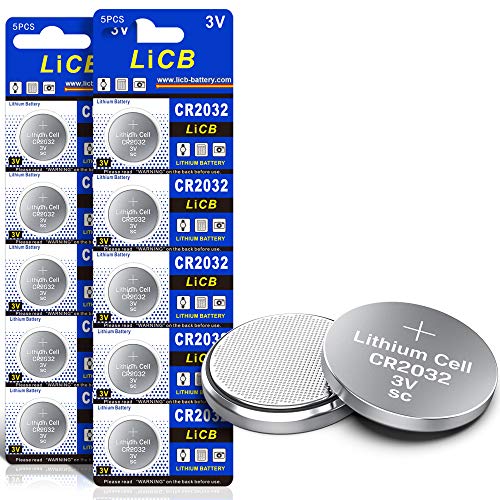
- Digital and open-window electronic bow sights: Look for CR2032 or DL2032. The number itself gives you the dimensions: 20 millimeters across and 3.2 millimeters thick. These provide 3 volts from a single cell.
You may also notice differences in battery chemistry. Cells labeled with an "LR" prefix are alkaline, while cells with an "SR" prefix or numbered codes like 357 and 392 are silver oxide. Both types share identical physical measurements and run safely in your bow sight. But silver oxide cells hold their output steady until they are nearly dead, keeping your aiming dot bright right up to the end. Alkaline cells gradually fade, dimming your aiming pins as the voltage drops. Learning how to use a bow sight with steady pin brightness makes aiming much more consistent in shifting daylight.
Stack Your Button Cells in the Correct Direction
Installing stacked button cells can be frustrating because dropping one in the wrong way keeps the circuit open and leaves your sight completely dark. Because button cells are small, it is easy to flip them by accident when dropping them into a narrow aluminum tube. Taking your time and checking polarity (the positive and negative ends) prevents wasted trips back to your workbench.
- Wipe down the battery chamber: Unscrew the knurled cap from your sight light. Blow out any grit or dust trapped in the threads. Wipe the inside of the tube with a dry cotton swab to clean away moisture or leftover oil.
- Identify the positive and negative sides: Look closely at each small disc battery. The flat, smooth face stamped with lettering and a plus sign (+) is the positive end. The opposite side, which has a slightly raised rim or raised center nub, is the negative end.
- Stack the cells face to back: In nearly all three-cell sight lights, the flat positive (+) sides face forward toward the light-emitting diode (the tiny LED bulb), while the raised negative (-) ends face outward toward the removable cap. Drop the first cell in with the flat positive side pointing down the tube. Drop the second cell on top of it facing the same way, followed by the third cell. They must sit completely flat against each other like a stack of coins.
- Inspect the contact spring: Look inside the threaded cap you removed. You should see a small metal coil spring or a flexible brass prong. This spring presses against the raised negative end of the top cell. If the spring is crushed flat, gently lift it a fraction of an inch with a toothpick so it makes firm contact with the battery.
- Thread the cap on by hand: Turn the cap counterclockwise until you feel the threads seat with a soft click, then gently twist it clockwise until snug. Never use pliers or wrenches on a bow sight light cap. Finger-tight pressure is plenty to complete the electrical circuit without crushing the internal seals.
Stop Aiming Pin Flickering and Unexpected Battery Drain
Few things are as frustrating as pulling your bow to full draw at prime hunting time only to find your aiming pin flickering or dead. Archery gear takes a beating. The violent snap of a bowstring and the shock of bow limbs create heavy vibration that travels directly into your accessories. Understanding why sight lights fail helps you fix the issue before you head out to shoot.
The most common cause of pin flickering is loose contact caused by shot vibration. Every time your bow fires, the shock wave can rattle the threaded cap outward just enough to break the circuit between the stacked disc batteries. If your sight light blinks on and off when you tap the bow riser, snug the cap down another eighth of a turn. You can also inspect the internal spring. If vibration has flattened the spring over time, the batteries will bounce inside the tube during each shot.
Unexpected battery drain usually happens for two distinct reasons: dirty contacts or switch creep. Button cells rely on direct metal-to-metal contact. Touching the flat faces of your batteries with bare fingers leaves behind natural skin oils. These oils attract grime and create electrical resistance, causing weak current flow and faster internal discharge. Wipe each cell with a clean microfiber cloth before sliding it into the chamber.
Switch creep happens on twist-style sight lights. Many popular models turn on by twisting the outer cap a half-turn clockwise, and turn off by backing it off counterclockwise. If you only back the cap off a tiny fraction, vibration in your bow case can easily bump the contacts back together, draining your brand-new cells overnight. Turn twist switches a full half-turn back, or remove the battery stack entirely when traveling between hunts.
Cold weather also plays a major role in sudden power loss. If you spend cold autumn mornings sitting still, such as during chilly hunts from the best bow sight for treestand hunting, freezing temperatures slow down the chemical reaction inside small alkaline button cells. The battery might drop below the voltage needed to illuminate the LED, even if the cells are fresh. Keeping a spare set of batteries inside a warm, zippered interior jacket pocket keeps them at body temperature so they deliver full brightness the second you drop them into your sight.
Choose the Right Replacement Power Pack for Your Bow
When selecting replacement batteries for your bow sight, always buy multipacks rather than individual cells. Because standard pin lights consume two or three button cells at a time, buying a pack of ten or twenty ensures you can replace the entire stack at once and still keep fresh spares inside your archery tackle box.
Mixing old batteries with new batteries is a common mistake that ruins performance. An old cell with low remaining voltage acts like an electrical sponge, drawing down the power of the fresh cells stacked beside it and causing early failure. Always replace every cell in the stack simultaneously so the voltage stays balanced across the entire circuit.
Pay attention to storage dates and packaging features on your replacement packs. Quality silver oxide and alkaline cells offer shelf lives ranging from three to five years, meaning you can store backups in your gear bag without them losing power before next season. If you shoot high-performance equipment like the best bow sight for Mathews bows, keeping fresh, premium-grade replacement cells ready guarantees your aiming references remain crisp and visible through every practice session and hunt.
- ARS Mark9.6
ARS Mark is a ranking system developed by bestairriflescopes.com. ARS Mark has no relationship or impact from any manufacturers or sales agent websites. Learn more
- BrandEnergizer

- ARS Mark9.6
ARS Mark is a ranking system developed by bestairriflescopes.com. ARS Mark has no relationship or impact from any manufacturers or sales agent websites. Learn more
- BrandDURACELL
- ARS Mark9.4
ARS Mark is a ranking system developed by bestairriflescopes.com. ARS Mark has no relationship or impact from any manufacturers or sales agent websites. Learn more
- BrandDURACELL

- ARS Mark9.4
ARS Mark is a ranking system developed by bestairriflescopes.com. ARS Mark has no relationship or impact from any manufacturers or sales agent websites. Learn more
- BrandDURACELL

- ARS Mark9.4
ARS Mark is a ranking system developed by bestairriflescopes.com. ARS Mark has no relationship or impact from any manufacturers or sales agent websites. Learn more
- BrandPGSONIC

- ARS Mark9.4
ARS Mark is a ranking system developed by bestairriflescopes.com. ARS Mark has no relationship or impact from any manufacturers or sales agent websites. Learn more
- BrandPKCELL

- ARS Mark9.2
ARS Mark is a ranking system developed by bestairriflescopes.com. ARS Mark has no relationship or impact from any manufacturers or sales agent websites. Learn more
- BrandYKM

- ARS Mark9.2
ARS Mark is a ranking system developed by bestairriflescopes.com. ARS Mark has no relationship or impact from any manufacturers or sales agent websites. Learn more
- BrandEveready
- ARS Mark9.2
ARS Mark is a ranking system developed by bestairriflescopes.com. ARS Mark has no relationship or impact from any manufacturers or sales agent websites. Learn more
- BrandLiCB

- ARS Mark8.6
ARS Mark is a ranking system developed by bestairriflescopes.com. ARS Mark has no relationship or impact from any manufacturers or sales agent websites. Learn more
- BrandSUZEYAR
Last update on 2026-10-02 / Affiliate links / Images, Product Titles, and Product Highlights from Amazon Product Advertising API
FAQs
How long do bow sight light batteries usually last?
Battery life depends heavily on your brightness setting and how often you shoot. On low or medium rheostat settings, a fresh stack of button cells typically provides twenty to forty hours of continuous illumination. If you leave the light twisted on high, tiny LR41 or LR44 cells can drain completely within eight to ten hours.
Can I use silver oxide batteries instead of alkaline in my bow sight?
Yes, silver oxide batteries fit the exact same physical housing and operate safely in bow sight lights. Models like the 392 (matching LR41) or the 357 (matching LR44) provide a more stable voltage curve than alkaline cells. They maintain full pin brightness throughout their lifespan rather than slowly dimming as they wear down.
What happens if I put my bow sight batteries in backwards?
Putting button cells in backwards will not harm the sight, but the LED bulb will not light up at all. Light-emitting diodes require direct electrical current flowing in one specific direction to function. If you assemble the stack and the sight stays dark, simply remove the cap, flip the entire stack over so the positive faces point the right way, and tighten the cap again.
Why does my bow sight pin light flicker after every shot?
Flickering is almost always caused by bow vibration loosening the battery cap or flattening the contact spring. The shock of the string release momentarily separates the stacked cells from the circuit. Snug the threaded cap finger-tight, or gently stretch the small metal contact spring inside the cap so it presses firmly against the battery stack.


12 Best 22 Pcp Air Rifle For Hunting of 2026 With Quiet Power

7 Best 22 Pcp Air Rifle Under 300 of 2026 For Backyard Pest Control

10 Best 22 Break Barrel Air Rifles of 2026 For Backyard Pest Control

10 Best 30 Caliber Pcp Air Rifle of 2026 For Medium Game

Top Best 177 Air Rifle Under 100: Budget-Friendly Picks for 2026

How to Safely Reload Shotgun Shells at Home

11 Best Co2 Air Rifle For Pest Control of 2026 To Ensure Humane Dispatch

12 Best Inexpensive Air Rifles of 2026 For Dependable Backyard Accuracy






